
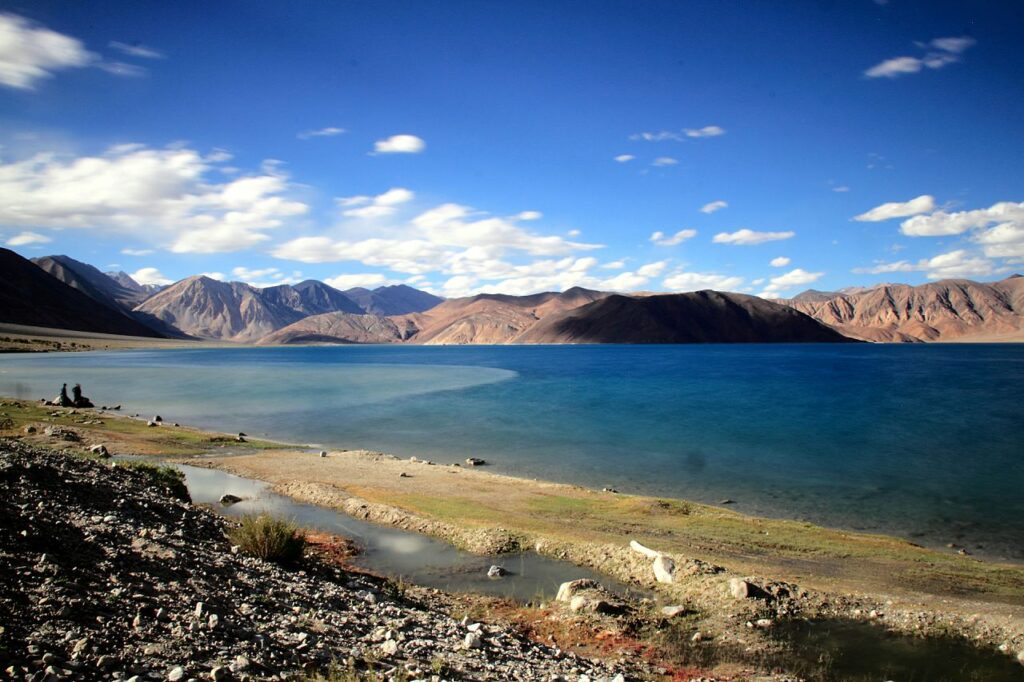
Pangong Tso, India for Adventurers: 7 High-Altitude Experiences That Will Leave You Breathless (2026)
Your lungs burn as you pedal your mountain bike along the rugged, unpaved track, the wind whipping salt spray from the shimmering, turquoise lake. At 4,350 meters (14,270 feet), the air is thin, but the sheer, otherworldly beauty of Pangong Tso—stretching 134 kilometers from India into Tibet—pushes you forward. The silence is broken only by the crunch of tires on gravel and your own ragged breath. This isn’t a scenic drive; this is a full-body challenge against one of the planet’s most extreme landscapes.
The Main Event: The Pangong Tso Mountain Bike Expedition
For the true adrenaline seeker, the main event at Pangong Tso isn’t just looking at the lake—it’s battling it. The Pangong Tso Mountain Bike Expedition is a multi-day, self-supported or guided ride along the lake’s northern and southern shores, a route most tourists never see. You’ll start your journey from the village of Spangmik, the main tourist hub on the Indian side. From there, you’ll follow a rough, 4×4 track that hugs the shoreline, crossing glacial streams and navigating rocky moraines. The full circuit, if you’re ambitious enough to attempt it (and have the necessary permits for the Inner Line), covers roughly 80 kilometers of off-road terrain.
Plan for a 2-day, 1-night expedition, camping wild on the lakeshore. The difficulty is undeniably Hard—the altitude, the rugged terrain, and the unpredictable weather make it a serious undertaking. The best time to start is at 6:00 AM sharp, when the winds are calmest and the light is golden. You’ll need a high-altitude mountain bike (rentals are available in Leh for around ₹1,500-2,000 per day from shops like Leh Mountain Bikes or Adventure Sports Leh), plus a repair kit, extra tubes, and a satellite phone. The cost for a guided expedition, including permits, support vehicle, and camping gear, runs between ₹25,000 and ₹40,000 per person. Insider tip: Most tourists overlook the northern shore, but savvy visitors know that the stretch from Spangmik to the village of Merak offers the most dramatic, untouched views and far fewer crowds. It’s where you’ll truly feel like an explorer.
Activity #1: High-Altitude Trek to Lukung Village
If the bike expedition sounds too intense, the trek from Spangmik to the remote village of Lukung offers a perfect, moderate alternative. You’ll start at the Spangmik camp, following a well-worn trail that runs parallel to the lake’s edge. The walk is roughly 8 kilometers one way, taking 4-5 hours at a steady pace. The trail is relatively flat but the altitude makes every step a conscious effort. You’ll pass by nomadic Changpa herders’ camps, their yaks and pashmina goats grazing on the sparse, high-altitude grass. The best time to do this is between 7:00 AM and 12:00 PM, before the midday winds pick up. No guide is strictly required, but locals recommend hiring a local from Spangmik (costing around ₹1,500) for safety and for their stories about the region’s history. You’ll end at Lukung, a tiny settlement where you can catch a shared jeep back to Spangmik for ₹500 per person.
Activity #2: Off-Road Jeep Safari to the Indo-China Border
For a different kind of adrenaline, book a jeep safari that pushes beyond the lake to the actual Line of Actual Control (LAC) at the village of Chushul. This is a full-day, bone-rattling adventure. You’ll depart from Leh at 4:00 AM, passing through the Changthang Wildlife Sanctuary. The road is a mix of gravel, sand, and river crossings. Your driver will navigate the rough terrain while you scan the horizon for the elusive snow leopard. The destination is the Chushul War Memorial, a stark tribute to the 1962 Sino-Indian War. The cost for a shared jeep is around ₹8,000-12,000 per person, including permits and lunch. You’ll need to arrange this through a local tour operator in Leh, such as Leh-Ladakh Tours or Himalayan Travellers. This is a journey for history buffs and those who want to say they’ve stood at the edge of the world’s highest battlefield.
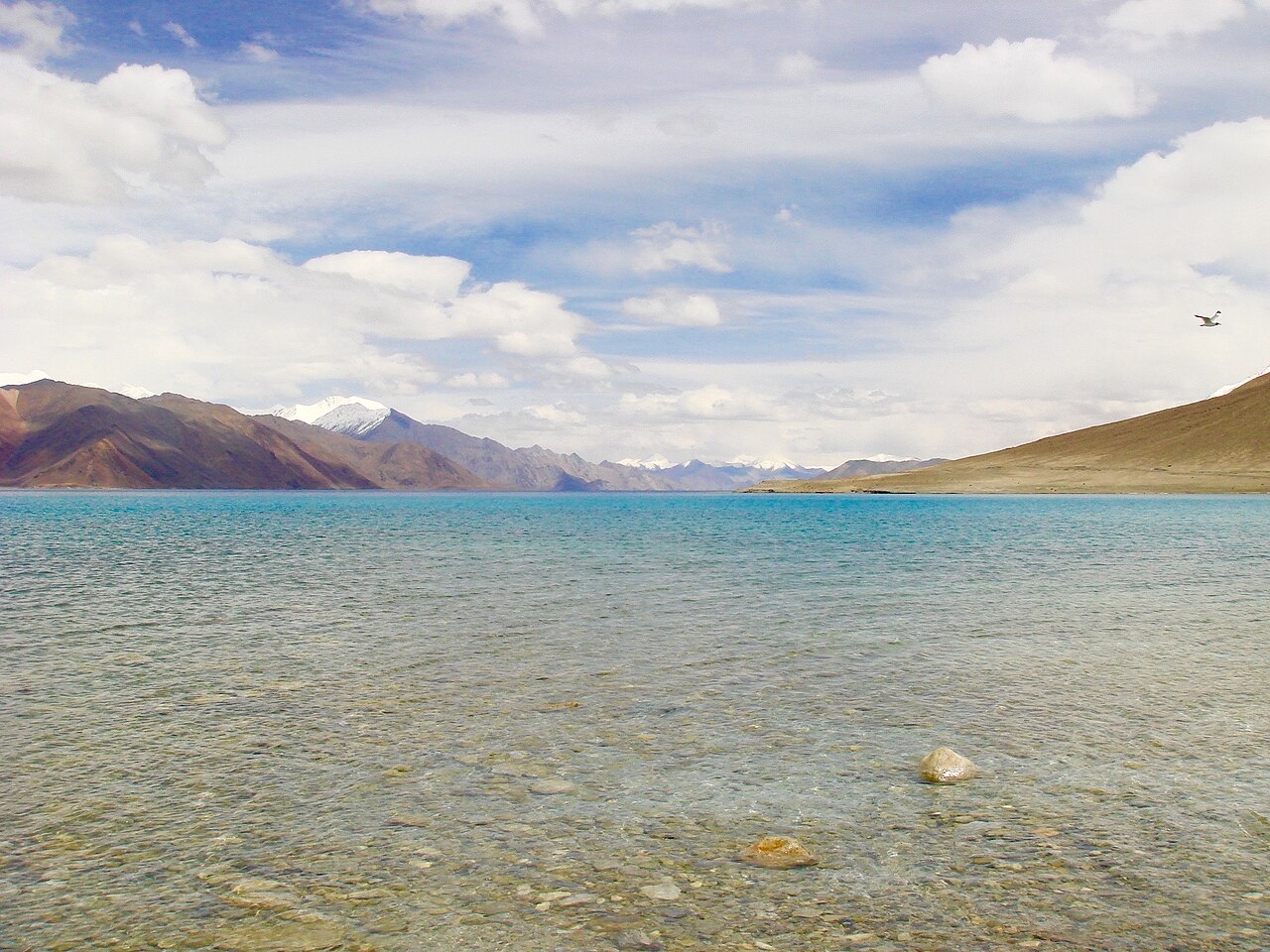
Flocked with migratory birds and surrounded by snow-clad mountains, Pangong Tso, India
Refuel: Where Adventurers Eat
After a day of exertion, your body craves fuel, and the local kitchens deliver. The Pangong Kitchen in Spangmik is a traveler’s favorite. Locals recommend their thukpa (a hearty noodle soup, ₹250) and momo (steamed dumplings, ₹200 for a plate). It’s warm, filling, and perfect for the altitude. For a more substantial meal, Lake View Restaurant serves a surprisingly good dal makhani with rice (₹350) that tastes like comfort food at 14,000 feet. The owner, a former army cook, knows how to pack flavor into every dish. For a quick breakfast before your trek, grab a paratha and chai from Changthang Cafe (₹150), where the owner’s family has been serving travelers for a decade. Avoid the tourist-trap buffets at the larger camps; the small, family-run spots are where you’ll find the real taste of Ladakh.
Base Camp: Where to Stay
You need a base that lets you rest hard and wake early. Pangong Tso Camp (part of the Ladakh Sarai chain) is the gold standard. They offer sturdy, insulated Swiss tents with real beds and hot water bottles (₹4,000-6,000 per night). They also provide early breakfast packs (₹300) for those hitting the trail at dawn. For a more budget-friendly option, Spangmik Homestay (₹1,500 per night) offers a room in a local family’s home. You’ll get a simple bed, a shared bathroom, and a home-cooked dinner. The family is a wealth of local knowledge. For the true adventurer, wild camping is free, but you must have a permit and a guide. Book your stay on Booking.com in advance, as spots fill up during the summer months.

Blue yellow and red textile on gray sand near lake and mountain during daytime, Pangong Tso, India
Gear & Prep Checklist
- High-Altitude Sleeping Bag: Rated to -15°C (5°F). Nights are brutal cold, even in summer.
- Windproof & Waterproof Jacket: The wind at Pangong is relentless; a simple fleece won’t cut it.
- Polarized Sunglasses: The glare off the lake and snow can cause snow blindness within hours.
- Fitness Requirement: You must be comfortable with sustained cardio at altitude. Aim for a 4-hour hike at 3,000 meters before you go.
- Safety Consideration: Acute Mountain Sickness (AMS) is a real risk. Acclimatize in Leh for 2 days before heading to Pangong. Carry Diamox (acetazolamide) and know the symptoms.
Getting There & Around
- Flights: The nearest airport is Kushok Bakula Rimpochee Airport (IXL) in Leh. It’s a stunning flight over the Himalayas. Book at Skyscanner. Fares range from ₹5,000-15,000 from Delhi.
- Local Transport: From Leh, you’ll hire a shared jeep or private taxi for the 5-6 hour drive to Pangong. Shared jeeps cost ₹1,500-2,000 per person; private taxis cost ₹12,000-15,000. The road is rough, so book a vehicle with good ground clearance.
- Best Season: The road opens from mid-May to late October. The best conditions for adventure activities are from June to September, when the weather is most stable.

Person standing on gray sand near lake and mountains during daytime, Pangong Tso, India
Is Pangong Tso, India Worth It?
Honestly? It’s a grueling destination. The drive from Leh is punishing, the altitude is unforgiving, and the facilities are basic. But for the adventurer who craves raw, untamed beauty, it’s unmatched. The lake’s color—a shifting palette of turquoise, emerald, and sapphire—is a reward you have to earn. Travelers who seek luxury will be disappointed. Those who seek the thrill of standing on the edge of the world, pedaling into a 40-km/h headwind, or sleeping under a sky so thick with stars it feels like a dome of diamonds—they will find a piece of themselves here. If you’re comparing it to the Swiss Alps or Patagonia, Pangong Tso is wilder, more remote, and far less forgiving. It’s not for everyone. But if you’re ready for the challenge, it will change you. Go.
Explore More Destinations
- Jozani, Tanzania on a Budget: an Ancient Forest for $35/Day (2026)
- Nsumbu, Zambia on a Budget: Wild Africa for $40/Day (2026)
- Semporna, Malaysia on a Budget: Paradise for $35/Day (2026)
- Khuzestan, Iran on a Budget: Ancient Empires for $30/Day (2026)
- Ngerulmud, Palau on a Budget: Island Majesty for $45/Day (2026)
Ready to Visit Pangong Tso?
Start planning your trip today. Compare hotels, find the best tours, and get insider tips.
Your adventure in Pangong Tso starts here →
{“@context”: “https://schema.org”, “@type”: “FAQPage”, “mainEntity”: [{“@type”: “Question”, “name”: “What is the best time to visit Pangong Tso?”, “acceptedAnswer”: {“@type”: “Answer”, “text”: “The best time to visit Pangong Tso depends on your preferences. Generally, the dry season offers the most pleasant weather for sightseeing and outdoor activities. Check local climate patterns for specific months.”}}, {“@type”: “Question”, “name”: “How many days do I need in Pangong Tso?”, “acceptedAnswer”: {“@type”: “Answer”, “text”: “Most travelers spend 3-5 days in Pangong Tso to see the main attractions. A week allows for a more relaxed pace and day trips to nearby areas.”}}, {“@type”: “Question”, “name”: “Is Pangong Tso expensive to visit?”, “acceptedAnswer”: {“@type”: “Answer”, “text”: “Pangong Tso can be visited on various budgets. Accommodation ranges from hostels to luxury hotels. Street food and local restaurants offer affordable dining options.”}}]}
Related Guides
Explore more destinations similar to Pangong Tso:

