
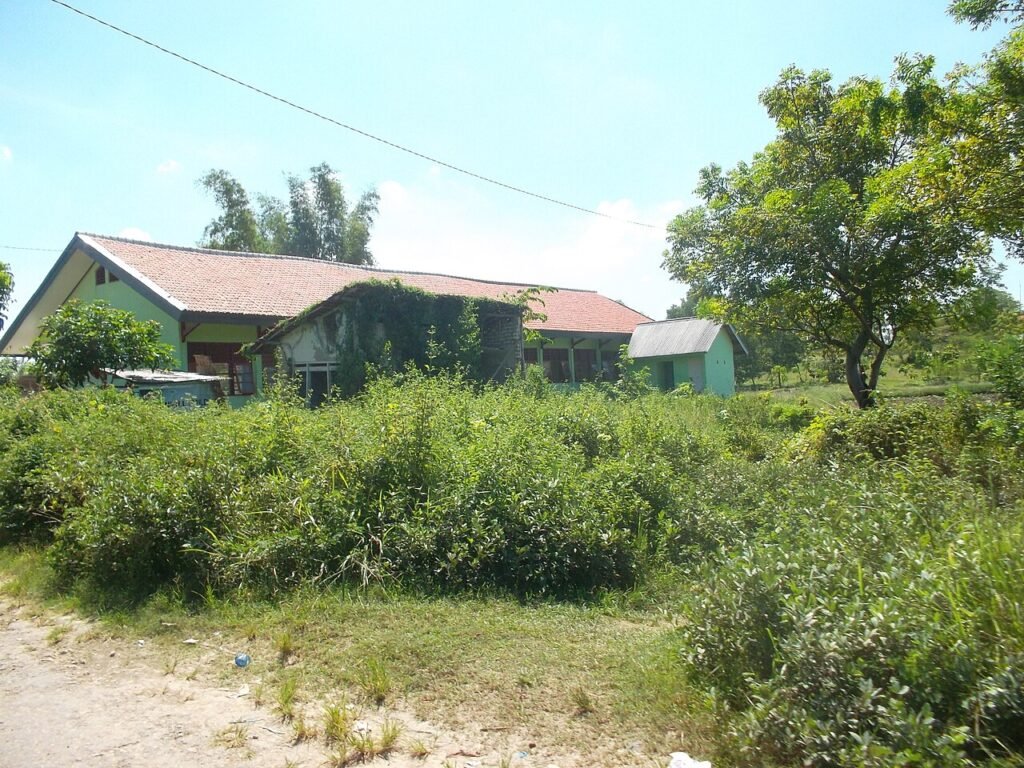
Pamekasan, Indonesia Weekend: Batik Villages, Bull Races & Soto That Warms the Soul (2026)
You step out of your bemo onto the dusty main street, and the scent of clove-spiced soto mingles with the low rumble of gamelan from a nearby wedding. The afternoon sun casts long shadows over the kraton’s peeling yellow walls, and a vendor calls out “sate madura!” – a sound you’ll learn to trust. This is Pamekasan, Madura’s proud heart, where life moves to the rhythm of morning markets and the thunder of bull hooves. You have exactly 48 hours to fall in love with it.
Quick Facts Before You Go
- Best Months: April to October (dry season) – bull races run July–October; avoid February–March for rain that turns streets to rivers.
- Currency: Indonesian Rupiah (IDR) – roughly 1 USD = 15,500 IDR. ATMs at Bank Mandiri on Jalan Bonorogo.
- Language: Madurese and Indonesian. English is spoken at decent hotels and a few warungs; download Google Translate for market haggling.
- Budget: $20–35 USD/day for budget travelers (eating local, staying in homestays); $50–80 USD for mid-range comfort (AC rooms, restaurant meals, private driver).
- Getting There: Fly into Surabaya’s Juanda Airport (SUB). From Surabaya, take a 2.5-hour bus to the port of Kamal, then a 30-minute ferry to Madura, followed by a 1.5-hour bus to Pamekasan. Book flights at Skyscanner
Day 1: Between the Sultan’s Court and the Clatter of Hooves
You begin your weekend at the crack of dawn, because in Pamekasan the best things happen before the heat settles. The air is still cool, carrying the tang of frying shallots from a roadside nasi pecel stall. You’re headed toward the buzzing heart of town – not the tourist trail, but the real Madura: the morning market and the kraton that has watched it all for centuries.
- Morning (8–11am): Start at Pasar Pagi Pamekasan (Jalan Pasar Pagi, free entry). By 7:30am the market is in full swing. You’ll weave past bins of ruby tomatoes, baskets of bitter melon, and mounds of fresh shrimp from the nearby coast. Bargain with the batik ladies for a hand-drawn batik Madura (starting at 150,000 IDR). The secret is to show interest in the natural indigo dye – locals respect that. Afterward, walk 10 minutes to Keraton Sumenep (actually in Sumenep, 2 hours away? No – Pamekasan has its own palace ruins: Keraton Pamekas, or Palace of Pamekasan, on Jalan Veteran. It’s free, but the caretaker appreciates a small donation of 10,000 IDR. Built in the 1800s, the kraton’s whitewashed walls and faded arabesques whisper of the sultanate’s faded glory.
- Lunch (11:30am – 1pm): Head to Soto Pak Man on Jalan Trunojoyo (open 10am–4pm). You order the soto Madura – a rich, turmeric-golden broth with shreds of beef, glass noodles, and a boiled egg, topped with crispy fried shallots and a dollop of sambal petis (shrimp paste chili). Every bowl costs 25,000 IDR. The vendor, a third-generation soto master, will tell you the recipe is unchanged since his grandmother’s time. You’ll believe him after the first slurp.
- Afternoon (1–5pm): Post-lunch, you visit Kampung Batik Pohbatu (Jl. Batik, 15-minute bemo ride from town center, 10,000 IDR). Here you watch women stamping wax onto fabric with wooden blocks carved by their great-grandfathers. You can try your hand at batik for 50,000 IDR – a workshop that lasts about an hour. Next, make your way to Taman Prestasi (Jl. Pahlawan, free), a small park with a replica of a traditional Madurese bull-racing cart. You’ll catch kids practicing with miniature wooden bulls – it’s adorable. Finally, for a dose of history, stroll Museum Madura (Jl. Raya Sumenep 10, 10,000 IDR). Expect a dusty but endearing collection of ancient knives, royal heirlooms, and photos of 1970s bull race champions.
- Evening (6pm onward): As dusk falls, you head to Warung Makan Bu Mirda (Jl. Merdeka Barat, 7, open until 10pm). Their signature dish is bebek sinndhe – fried duck simmered in coconut milk with a fiery chili sauce – served with lontong (rice cakes). A plate with two ducks and sambal is 40,000 IDR. For atmosphere, eat on the wooden veranda; locals gather here for the live karaoke (mostly off-key but charming). After dinner, wander the Alun-Alun Pamekasan – the town square comes alive with food carts selling pisang goreng (fried bananas, 5,000 IDR for five) and kids playing soccer under the orange streetlights. You’ll feel the city exhale.

Monumen Arek Lancor merupakan landmark Kabupaten Pamekasan, Pamekasan, Indonesia
Day 2: Bull Dust and the Rhythms of the North Coast
Day two is about raw energy – the thunder of racing bulls and the quiet of a fishing village frozen in time. You trade the city’s hum for the open plains of the east. Travelers often discover that Sunday is the best day to catch a local bull race, but you need insider timing.
- Morning (6–10am): It’s bull-race day – weather permitting, a Karapan Sapi exhibition race takes place at Paseban Lapangan (the main racetrack on Jalan Raya Sapi). Check with your hotel the night before (or ask any driver – they all know). If there’s a match, arrive by 7:30am; entry is free, but you’ll want a good spot near the finish line. Sights: two bulls yoked to a wooden cart, a jockey riding behind, and a muddy dirt track. The beasts thunder by in 15 seconds, dust flying, the crowd shrieking “Sapi! Sapi!” You can bet small amounts – 10,000 IDR – with local bookies (entirely unofficial). After the adrenaline, grab a quick breakfast at the track side: sate lilit (minced fish sate on lemongrass sticks, 3,000 IDR each).
- Midday (10am – 1pm): Drive 20 minutes north to Pantai Lombang (Jl. Pantai Lombang, 5,000 IDR entrance). It’s a long stretch of honey-colored sand, but the real draw is the walking forest of casuarina trees whose roots dig into the beach. Most tourists come for selfies; savvy visitors pass the grove and head to the far end where fishermen repair nets. You can hire a small boat for 1 hour – 150,000 IDR – to see the coral reefs (snorkel gear included, but bring your own mask if you’re picky). Locals recommend going before 11am to avoid the midday sun and the tour buses from Surabaya.
- Afternoon (1–4pm): Back in town, explore Kampung Cina Pamekasan (the Chinese quarter, along Jalan Khairil Anwar). You’ll find old shophouses with red-and-gold facades and an 18th-century Kongco Boen San Bio temple (free). The area is quiet in the afternoon, perfect for photographing peeling paint and hanging incense. Prices at antique stalls are negotiable – a ceramic teapot might cost 100,000 IDR. Don’t miss the Pasar Ikan (fish market) at dusk: the catch of the day is laid out on wet newspaper, and the air smells of brine and mackerel. You can buy a whole grilled snapper for 30,000 IDR from a vendor who will char it right there.
- Final Evening (5–8pm): Your farewell dinner is at Rumah Makan Pondok Madura (Jl. Mayjend Sungkono 20, open 5–10pm). Order bebek songkem – duck steamed in banana leaves with a medley of spices like candlenut and galangal. It falls off the bone, cost 50,000 IDR, and arrives with a side of raw vegetable salad called karak. For dessert, try es duren (durian ice cream) from a cart outside – 10,000 IDR. Sit on the terrace and watch the city wind down. As you finish, a group of young men walk by carrying a reog lion mask, heading to practice for a festival. This is Pamekasan: an unpolished gem that reveals its beauty slowly, over two days of dust, soto, and the soft thrum of a culture that refuses to fade.

Aerial shot of Tugu Pahlawan, Pamekasan, Indonesia
The Food You Can’t Miss
Madurese cuisine is the unsung hero of Indonesian food. You’ll find sate Madura (chicken sate with peanut sauce) everywhere, but the real star in Pamekasan is soto – the turmeric-tinged beef soup that tastes of ginger, lemongrass, and the Madurese sea. The best bowl is at Soto Pak Man, but for street-level authenticity, wander to the Jalan Kramat night market (7pm onwards). Vendors serve soto Madura from bubbling cauldrons for 20,000 IDR, ladled into clay bowls. You eat standing up, dipping in lontong – dense rice cakes that soak up the broth.
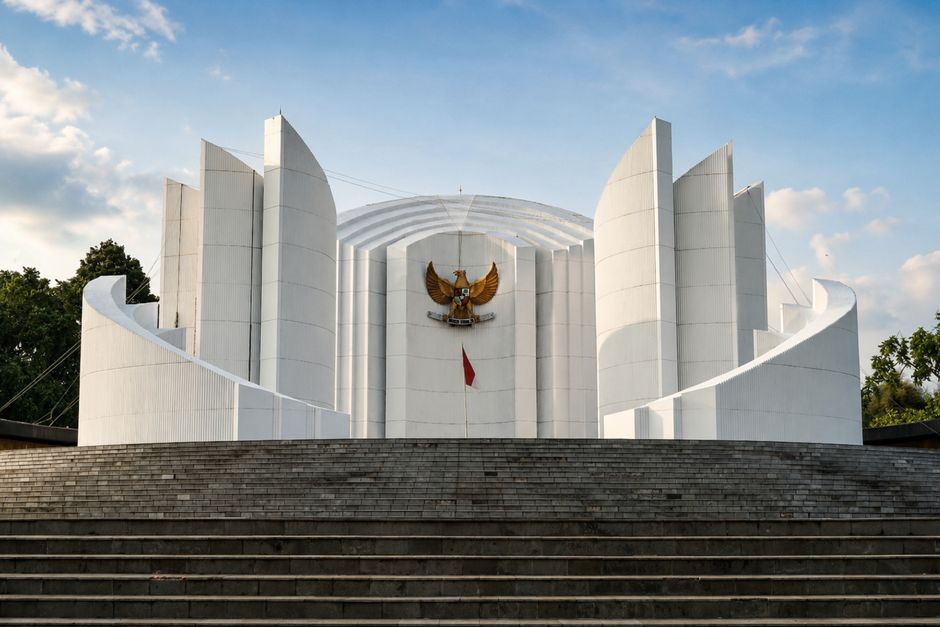
Architectural monument in Bandung, West Java, showcasing modern design elements., Pamekasan, Indonesia
Another must-try is nasi jagung – corn rice mixed with shredded coconut and served with fried fish (available every morning at Warung Bu Tari on Jalan A. Yani, 15,000 IDR). Locals recommend adding a squeeze of lime and a pinch of terasi (shrimp paste). For a snack, look for emping melinjo – chips made from melinjo nuts, pressed flat and deep-fried. A bag costs 10,000 IDR from any market.
For a full sit-down dinner, you can’t skip Rumah Makan Pondok Madura (mentioned above). But if you want a late-night bite, find the sate klatak cart near the bus terminal – goat sate grilled over coconut shells, served with ketupat and sweet soy sauce. Five skewers and a small rice cake run 25,000 IDR. It’s messy, spicy, and utterly unforgettable.
Where to Stay for the Weekend
To be close to the action, base yourself in central Pamekasan, within walking distance of the alun-alun and soto spots. The best mid-range choice is Hotel Garuda (Jl. Pintu Gerbang 10, rooms from 350,000 IDR/night). It’s a classic Indonesian-style hotel with a massive marble lobby, AC, and a rooftop terrace where you watch the sunset over the mosques. The staff will help you arrange a bull-race visit.
For a quieter, more atmospheric stay, choose Hotel Ramayana Bunda (Jl. Trunojoyo 18, rooms 250,000–400,000 IDR). It’s a former Dutch colonial guesthouse – high ceilings, creaky floorboards, and a garden that smells of frangipani. The downside is the bathroom – hot water is inconsistent. But the charm makes up for it.
Budget travelers and solo explorers should try Homestay Madura Rasa (Jl. Makam Pahlawan 5, dorm beds from 100,000 IDR, private rooms 200,000 IDR). Run by a local family, you’ll eat breakfast with them (nasi pecel every morning) and get tips on bull races. It’s also within walking distance of the batik village. Book on Booking.com or Airbnb for easy comparison and free cancellation.
Before You Go: Practical Tips
- Getting Around: Pamekasan is compact, so you can walk between most central sites. For longer distances (Kampung Batik, Pantai Lombang), use bemo (shared minibus) – rides are 5,000–10,000 IDR per person, and you just yell the destination to the driver. For the bull race or beach tours, negotiate a day-rate with a ojek (motorbike taxi, around 200,000 IDR for 6 hours). Avoid renting a scooter unless you’re confident in Madurese traffic – intersections are chaotic and lanes are suggestions.
- What to Pack: A light scarf or sarong – you’ll need it to enter mosques (even the Alun-Alun mosque) and it doubles as a sunshade at the beach. Sturdy sandals or closed-toe shoes – the market streets are dusty and uneven. Reusable water bottle – hotels provide refill stations; avoid buying single-use plastic. Earplugs – mosques call to prayer from 4am, and they’s loud but beautiful (you’ll appreciate the quiet after the first day).
- Common Tourist Mistakes: Many visitors assume Madura is just like Java. It isn’t – the culture is more conservative. Dress modestly even in tourist areas (cover shoulders and knees). Also, don’t photograph locals (especially women or bull jockeys) without asking – a smile and gesture suffice, but a small tip of 10,000 IDR is appreciated. Another mistake: skipping the afternoon heat. Plan outdoor activities for morning and late afternoon; use 11am–2pm for lunch, market shopping under shade, or a rest.
- Money-Saving Tip: Eat at warung tenda (tented street stalls) for lunch and dinner. A generous plate of nasi campur with fried egg, tempe, and sambal costs just 15,000 IDR. By eating at two street stalls each day instead of a restaurant, you save about 100,000 IDR – enough for a nice batik scarf. Also, bargain hard at Pasar Pagi: start at half the asking price, then settle at 60–70%.

