
Okuizumo, Japan for Adventurers: Canyoning the Gorges That Put the Alps to Shame (2026)
You’re standing knee-deep in the Hii River, the current tugging at your legs as cool mountain water splashes your face. Above, sheer rock walls rise through dense cedar forest; below, the riverbed is a maze of polished boulders and hidden pools. The air smells of moss and wet stone. Your guide points to a ten-foot drop ahead, a natural waterslide carved by centuries of meltwater. “Trust the water,” she says. You take a breath, and then you’re sliding into the pulse of Okuizumo.
The Main Event: Canyoning on the Hii River
Okuizumo’s Hii River is the undisputed heart of adventure here, and canyoning is the way to experience it. You’ll start at the Okuizumo Canyoning base near the town of Yokota, where your guide fits you with a wetsuit, helmet, and buoyancy aid. The standard course – known as the “Upper Hii Gorge” – takes about three and a half hours, covering roughly two kilometers of river. The difficulty is moderate: you don’t need prior experience, but you should be comfortable in moving water and ready for a few heart-pumping jumps (the tallest is about five meters). Cost is ¥8,500 per person, including all gear and a professional English-speaking guide. The best time of day is the 9:00 AM session; you’ll beat the heat and have the gorge nearly to yourself. Insider tip: bring a pair of water shoes with a sturdy sole – the rental shoes work fine, but locals who do this every week swear by their own broken-in pair to avoid slipping on slick rocks. You’ll rappel down a small waterfall, slide through natural chutes, and leap into crystal-clear pools. Between adrenaline bursts, you’ll float on your back, staring up at the narrow slot of sky far above. Travelers often discover that the silence between rapids is just as memorable as the thrills.
7 Things to Do in Okuizumo, Japan
| # | Activity | Difficulty | Cost | Time Needed |
|---|---|---|---|---|
| 1 | Canyoning on the Hii River | Moderate | ¥8,500 | 3.5 hours |
| 2 | Hike Mt. Sentsu (1,142 m) | Hard | Free | 5–6 hours |
| 3 | Cycling the “Tatara Iron Road” | Easy–Moderate | ¥2,000 (bike rental) | 4–6 hours |
| 4 | Rafting on the lower Hii River | Moderate | ¥7,000 | 2.5 hours |
| 5 | Visit Okuizumo Tatara Sword Museum | Easy | ¥620 | 1.5 hours |
| 6 | Night kayaking under stars | Easy | ¥6,000 | 2 hours |
| 7 | Mountain biking the Unkan Forest Trails | Hard | ¥4,000 (guide + bike) | 3–4 hours |
Activity #1: Hike Mt. Sentsu
For a true lung-buster, point your boots toward Mt. Sentsu, the highest peak in the Chugoku Mountains at 1,142 meters. The trailhead is a twenty-minute drive south of Yokota, at the Sentsu-kyo Gorge parking lot. You’ll start with a gentle walk along the Hii River, then the path kicks up steeply through a bamboo grove and into a rhododendron forest. Allow five to six hours round trip; the last section involves scrambling over exposed granite. The view from the top – a full 360-degree panorama of layered green mountains fading into the Sea of Japan – is your reward. No cost for the trail itself, but you’ll want to bring at least two liters of water and a packed lunch. The best months are May and October, when temperatures are cool and the humidity low. Locals recommend starting by 6:00 AM to avoid afternoon thunderstorms and to catch the morning mist burning off the valleys. Savvy visitors know to download the offline trail map from the Okuizumo Tourism website before you go – cell service fades fast above 800 meters.

Road side Station Okuizumo., Okuizumo, Japan
Activity #2: Rafting on the Lower Hii River
If canyoning sounds too vertical, you can still get your whitewater fix on the gentler lower section of the Hii River. The outfitter Okuizumo Rafting runs 2.5-hour trips from March to November, with class II–III rapids that give a solid adrenaline kick without the jumps. You’ll meet at the Nagato-gawa put-in, five minutes north of Yokota station. Cost is ¥7,000 per person, including wetsuit, helmet, and life jacket. The afternoon session (1:00 PM) is best for warmer water and more sunlight on the canyon walls. Your guide will teach you paddle commands and the proper lean into each wave. Travelers often discover that the most exciting part isn’t the biggest rapid but the unexpected “sneak wave” that soaks you from behind. Insider tip: book through the Okuizumo Outdoor Center’s website at least two days in advance, especially during August when Japanese tourists flock here. After the trip, you can dry off at the onsen (hot spring) at Yumura Onsen, just a 15-minute drive away – entry ¥600.
Refuel: Where Adventurers Eat
After a day on the river or mountain, you’ll need serious fuel. Head to **Kappo Sennen** in the town of Yokota, a rustic soba house that’s been feeding locals for three generations. Their signature dish is *zaru soba* with a side of tempura – the buckwheat is ground daily from Okuizumo-grown grains. A set meal runs ¥1,200, and the owner will happily tell you about the traditional tatara iron-furnace culture while you eat. For something heavier, **Kurogane Grill** near the Tatara Museum serves a no-nonsense *hibachi-grilled* beef bowl (¥1,500) that sticks to your ribs. The owner, a retired canyoning guide, knows exactly what hungry adventurers crave: extra sauce, extra rice, and cold local beer (¥600). On Sundays, the **Michi-no-Eki Okuizumo** roadside station sets up a barbecue stand where you can grill your own *Okuizumo beef* (¥2,000 for a set with vegetables). Travelers with a sweet tooth should stop at **Café Gassho** for their *kuri (chestnut) mont blanc* (¥550) – the chestnuts come from the surrounding hills. Locals recommend eating dinner early; most restaurants close by 7:30 PM, so plan to arrive by 6:00 PM.
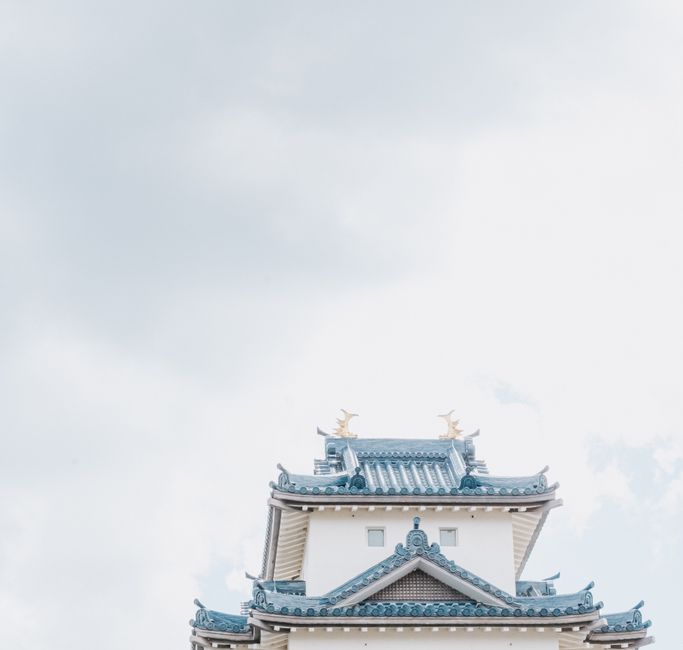
Elegant view of a traditional Japanese castle rooftop against a bright sky., Okuizumo, Japan
Base Camp: Where to Stay
For adventurers, proximity to the river and trails matters. **Minshuku Kawaguchi** sits just 500 meters from the canyoning base and offers simple tatami rooms with shared bath for ¥4,000 per person per night (including breakfast). The family that runs it will pack you a bento box for your hike. **Guesthouse Okuizumo** is a modern hostel with dorm beds (¥3,000) and private rooms (¥6,000), plus a gear-drying room and bike storage. They also arrange early breakfasts as early as 5:30 AM if you’re catching a sunrise hike. For a splurge, **Ryokan Yamaboshi** in the hills above Unkan offers hot-spring baths and kaiseki dinners (¥18,000 per person with two meals). The on-site onsen is open until 10:00 PM, perfect for soaking sore muscles. Book all accommodations through Booking.com – note that Okuizumo fills up on weekends from June to October, so book at least two weeks ahead.
Gear & Prep Checklist
- Water shoes with grippy soles (or bring your own wetsuit boots for canyoning)
- Dry bag (10 liters minimum; rain is common, and you’ll want to keep your phone and snacks dry)
- Quick-dry synthetic shirt and shorts (cotton is dangerous when wet and cold)
- Fitness tip: you don’t need to be an athlete, but you should be able to swim 50 meters confidently and walk uphill for 30 minutes without stopping
- Safety consideration: the Hii River can rise quickly after rain – always check the weather forecast and river levels at the Okuizumo Outdoor Center before heading out; guides will cancel trips if the flow exceeds safe levels
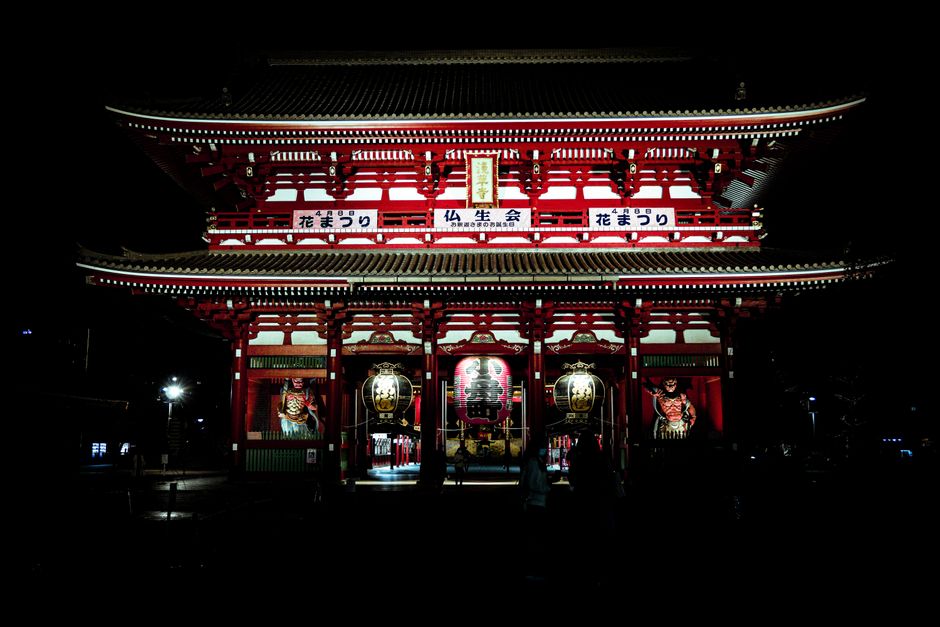
A captivating night photograph of the iconic Senso-ji Temple in Tokyo, Okuizumo, Japan
Getting There & Around
- Flights: The closest airport is Izumo Airport (IZO), with daily flights from Tokyo (Haneda) and Osaka (Itami) on JAL and ANA. From the airport, take a bus to Izumo-shi Station (40 minutes, ¥1,000), then a local train to Yokota Station on the Kisuki Line (1 hour, ¥700). Book flights at Skyscanner.
- Local Transport: Once in Okuizumo, renting a car is your best bet – most activities are spread out. Yamasa Rent-a-Car near Yokota Station charges ¥5,000/day for a compact car. Alternatively, use the Okuizumo Community Bus (¥200 per ride), which runs four times daily between Yokota, the canyoning base, and the Tatara Museum. Timetables are in Japanese; ask at the Yokota Tourist Information Center (open 9:00 AM–5:00 PM) for an English copy.
- Best Season: June to October for canyoning and rafting (water temperatures are tolerable with a wetsuit; July and August are warmest but busy). Hiking is best in May (wild azaleas) and October (fall colors). November offers crisp air and low crowds, but many outdoor operators close after mid-November. Winter (December–March) brings snow – cross-country skiing is possible on the Unkan highlands, but facilities are minimal.
Is Okuizumo, Japan Worth It?
Honestly? If your idea of adventure is scaling a remote, undeveloped gorge without selfie sticks or Instagram queues, Okuizumo is a gem. You’ll love it if you want to feel like you’ve discovered something – a place where the local canyoning guide knows your name by the second day and the only sounds are water and birds. Travelers who need constant nightlife or luxury amenities will find it too quiet. Compare it to the Japanese Alps near Kamikochi: Okuizumo is less polished, less crowded, and far more intimate. The canyoning here rivals anything in the Kii Mountains but at half the price and a tenth of the visitors. Most tourists overlook this corner of Shimane Prefecture entirely, which is exactly the point. If you book one thing, make it the 9:00 AM canyoning session on the Hii River – you’ll come out grinning, soaking wet, and already planning your return.

