
Marajó Island, Brazil (2026)
The two-hour catamaran crossing from Belém does something quiet to your pulse. You push away from the busy port noise of Icoaraci and step off in Soure onto a wooden ramp that creaks under the weight of baskets, backpacks, and a snoozing water buffalo tied to a palm tree. The air smells of damp grass, river silt, and açaí—here served thick, dark, and savory, the way Pará state insists it must be. It’s Friday afternoon, and your weekend has officially begun.
Quick Facts Before You Go
- Best Months: June through November, when the island’s dry season (the verão marajoara) turns dirt roads into drivable lanes and the river beaches open their golden sands. Avoid March through May, when heavy rain floods the savanna and swallows the trails.
- Currency: Brazilian Real (R$). Approximately R$5.20 = $1 USD or €1.05. Carry cash; ATMs on the island are scarce and unreliable.
- Language: Portuguese. English is rarely spoken outside the larger hotels, but travelers find that a few warm phrases and a smiling phone translator go a long way.
- Budget: R$250–R$450 (~$48–$86) per person per day, including meals, lodging in a mid-range pousada, and guided tours. Buffalo-wrangling adventures cost extra.
- Getting There: Fly into Belém’s Val-de-Cans International Airport (BEL), then take a 20-minute taxi (R$50–R$70) to the Icoaraci ferry dock. Catamarans (Frota Marajó, 2–2.5 hours) depart twice daily for Soure, around R$60–R$80 one way. Book your flight at Skyscanner.
Day 1: The Rhythm of Soure & the Buffalo Shore
You start your morning on the terrace of your pousada in Soure, a town of just over 23,000 people that somehow feels like a village of 400. A trader rides past on a bicycle with two live chickens strapped to the handlebars; a herd of buffalo lumbers along the main street as if they own the place—which, locals will tell you, they absolutely do. This is Marajó’s beating heart: rustic, dusty, gloriously slow.

The Copernicus Sentinel-2A satellite takes us over part of northern Brazil’…, Marajó Island, Brazil
- Morning (8–11am): Walk to the Mercado Municipal de Soure (Avenida Visconde de Souza Franco, open daily 6am–noon) for a living postcard of island commerce. Farmers unload piles of tapioca flour, jungle herbs, and palm fruits, while women in embroidered blouses sell cups of freshly pressed açaí—dark, thick, and so pure you could stand a spoon in it—for R$5. Sign up for a buffalo cart tour at the nearby tourism kiosk (R$60–R$80 per person; 90 minutes), which rattles you through soy-colored savanna fields, past herds of gray buffalo lounging in muddy lagoons—a scene straight out of the Pantanal, but with river traffic instead.
- Lunch: Head to Restaurante Aojé (Travessa 13 de Maio, no. 213) for the definitive Marajó plate. Order pato no tucupi—duck slow-cooked in a tangy, golden wild-cassava broth with jambu leaves that make your lips tingle with a gentle electric buzz. At R$48, the portion is generous enough to share, and the sweet-spicy vinagreira rice alongside will haunt your food dreams for months. Finish with buffalo cheese ice cream—a creamy, salty-sweet marvel unique to the region.
- Afternoon (1–5pm): Take a 10-minute tuk-tuk ride (R$15) to Praia do Pesqueiro, the island’s most loved beach—a wide, warm stretch of taupe-colored sand where the Amazon’s fresh water meets the Atlantic. The trick is to time your swim with the high tide (check the day’s table at your pousada); at low tide, you’ll be walking a kilometer just to wet your knees. Rent a shaded barraca (R$20 for the afternoon), order a chilled coconut (R$8), and watch local kids play football against a backdrop of grazing buffalo. Sunbathers love this spot, but savvy visitors know that the best shade and coldest beer come from the stalls at the beach’s north end.
- Evening (6pm onward): As dusk falls, you wander back to Soure’s main square, the Praça da Bandeira, where the town celebrates its favorite inheritance: carimbó. This hypnotic Afro-Indigenous rhythm—driven by handcrafted drums, maracas, and the rhythmic stamp of flared-skirt dancers—was born here on Marajó and once banned by colonial authorities for being “too pagan.” Several local groups perform for visitors on weekends; the Grupo de Carimbó Indiano Marajoara regularly plays at the square’s stage at 8pm (free, though donations of R$10–R$20 are appreciated). For dinner afterward, slip into Bar do Pescador on the waterfront, a simple, dimly lit open-air shack where the fishermen eat. Their charcoal-grilled tambaqui (a giant Amazon river fish) with pirarucu linguine and farofa runs about R$55, and the view of the moon over the river is priceless.
Day 2: Savanna, Ancient Hands & the Art of Marajó
Morning arrives with the lowing of buffalo and the clatter of horseshoes on the street outside your window. Today is about digging deeper—into the island’s immense savanna plains, its ancient craft heritage, and its softer, quieter side. You’ll trade Soure’s buzzing market energy for open horizons and the cool, quiet hands of potters shaping clay that carries a thousand years of memory.
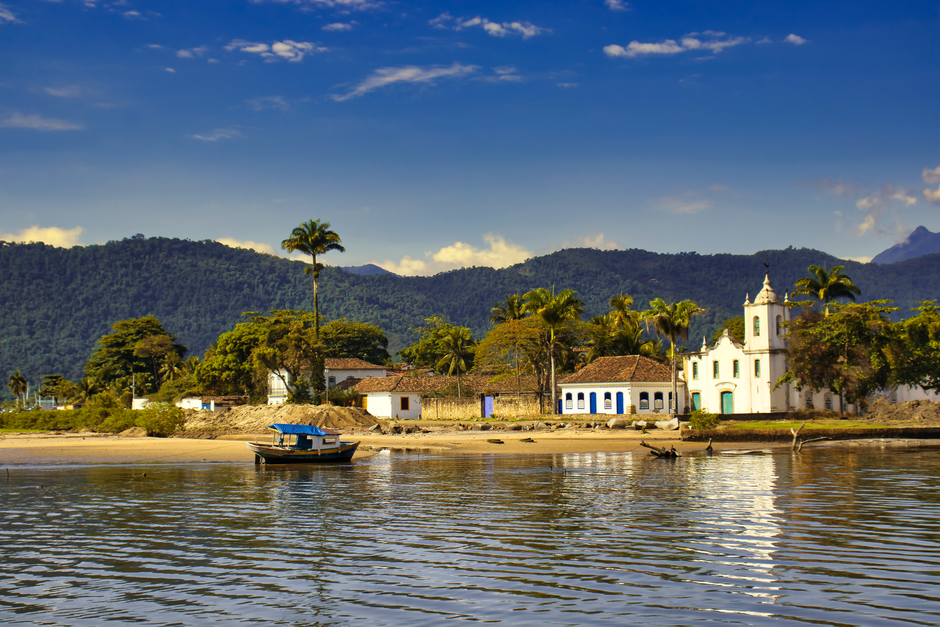
Picturesque view of the historic waterfront with the Church of Our Lady of …, Marajó Island, Brazil
- Morning (7:30–10:30am): Rise early for the 20-minute drive (or 30-minute bus ride, R$6) to Salvaterra, Soure’s laid-back neighboring town and home to the island’s best colonial architecture. Break fast at Padaria Aroma de Pão (Rua Henrique Santos, R$12 for a coffee and a flaky pão de queijo, Brazil’s legendary cheese bun). Then take a guided visit to Fazenda São Jerônimo (tours at 9am, R$70 per person), a working cattle and buffalo ranch established in the early 20th century. The tour takes you through wide pastures dotted with water buffalo, whose numbers now rival the island’s human population. The guides—many of them the ranch hands themselves—will show you how buffalo milk becomes the island’s famous cheese, and if you’re brave, you can even try milking one. It’s messier than it looks, travelers soon discover, but it makes for an unforgettable photo.
- Midday (11am–1pm): Drive or cycle the short stretch to Praia Grande de Salvaterra, a sweeping crescent of fine sand framed by cashew trees and clay cliffs. Unlike Pesqueiro’s livelier buzz, this beach feels abandoned in the best way—just you, a few fishermen repairing their nets, and a horizon of blue meeting green. Locals recommend that you bring your own mat and snacks; the low-key beachside kiosks serve cold beer and grilled cheese-on-a-stick (R$10) but close if the crowd is thin. The secret to avoiding the small tour groups that arrive at 2pm is to claim your spot before noon.
- Afternoon (2–5pm): Head back to Soure’s Casa do Artesão (Rua Rui Barbosa, 140; open Tue–Sun 9am–6pm), a workshop and gallery that celebrates the island’s greatest cultural treasure: Marajoara pottery. This sophisticated ceramic tradition dates back to the Marajoara culture of roughly 400–1300 AD, whose intricately painted vessels and funerary urns are some of the earliest advanced art in the Americas. You’ll watch modern artisans hand-paint geometric serpents and spirals onto bowls and vases, using natural pigments extracted from local bark and clay, just as their ancestors did. Sign up for the 90-minute hands-on workshop (R$90, daily at 3pm), where you’ll attempt your own small vessel under an artisan’s patient eye. Most visitors produce something that looks less gallery-worthy and more like a preschool project—but the laughter and clay-stained hands are half the reward.
- Final Evening (6pm onward): For your last night, make reservations at Pousada dos Debret in Salvaterra (Av. Beira-Mar, 51), a French-Brazilian-run pousada whose restaurant is considered the island’s finest. Their chef works magic with buffalo in every iteration: try the fil

Historic coastal church surrounded by palm trees and tranquil waters under …, Marajó Island, Brazil


