
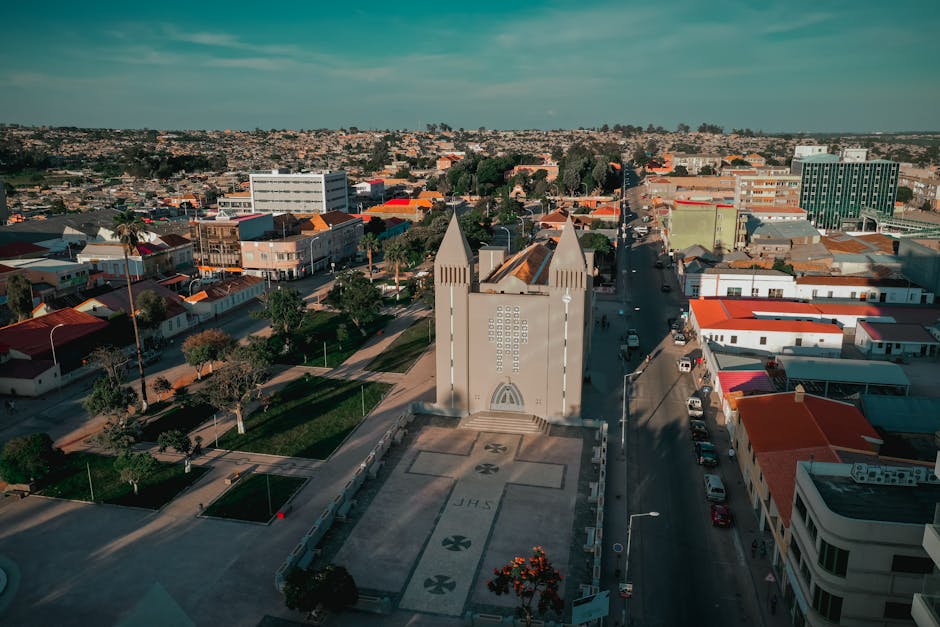
Lubango, Angola’s Essential Christ the King, Canyons & Cool Mountain Air (2026)
Sunrise from the summit of Tundavala Gap reveals a world split in two: the lush green plateau of Lubango abruptly ends, plunging 2,200 meters into the arid plains of the Namib Desert below. The cool, pine-scented air at 1,760 meters above sea level is a welcome surprise in Angola, a country often associated with tropical heat. This is the heart of Huíla province, a city of colonial echoes and dramatic landscapes where travelers often discover they have world-class views all to themselves.
Why Lubango, Angola Stands Out

Top-down view of a man lying on dry grass in a field, creating a peaceful scene., Lubango, Angola
- Historic Architecture: The Sé Catedral de Lubango, completed in 1936, is a stunning pink-hued landmark with twin bell towers, showcasing the city’s deep Portuguese colonial heritage.
- Cultural Scene: The annual Festa da Nossa Senhora do Monte, held every August, transforms the city with vibrant processions, traditional Mucope music, and a powerful sense of local devotion.
- Local Specialties: You must try Muamba de Galinha, a rich, slow-cooked chicken stew with palm oil, okra, and garlic, best enjoyed with funge (cassava porridge).
Pro Tip: Your best bet for clear skies and comfortable hiking is during the dry season from May to October. For the Festa da Nossa Senhora do Monte, book accommodation at least three months in advance, as the city fills with pilgrims and visitors.
Map of Lubango, Angola
Use these interactive maps to explore Lubango, Angola and plan your route:
📍 View Lubango, Angola on OpenStreetMap
🗺️ Open Lubango, Angola in Google Maps
Planning Your Trip: Practical Essentials
Getting There and Around
- By Air: Fly into Lubango Airport (SDD) via TAAG Angola Airlines from Luanda (90-min flight). A taxi to the city center costs around 5,000 AOA. Book flights at Skyscanner for best deals.
- By Train: The Moçâmedes Railway offers a scenic, slow journey from Namibe on the coast, but services are infrequent. It’s more an adventure than efficient transport. Check with CFM (Portos e Caminhos de Ferro de Angola) for schedules.
- By Car: The EN-280 from Namibe is a well-paved, dramatic mountain road. Parking in Lubango’s center is manageable. Compare car rentals at RentalCars.com.
- Local Transport: Use “candongueiros” (shared minibuses) for 200 AOA per ride, or negotiate fares with yellow taxi drivers. For day trips to Tundavala, hiring a private taxi for 4-5 hours costs approximately 15,000 AOA.
Best Time to Visit
Lubango’s high-altitude location gifts it with a mild, subtropical climate year-round, but the dry season offers the most reliable conditions for exploring the dramatic landscapes it’s famous for.
| Season | Weather | Highlights |
|---|---|---|
| Dry Season (May–Oct) | Sunny, cool nights (10°C), warm days (25°C), zero rain. | Ideal for hiking Tundavala, clear photography, and the August festival. Peak tourist season. |
| Rainy Season (Nov–Apr) | Warm, humid with afternoon showers (17-28°C). Lush greenery. | Landscapes are vividly green, fewer visitors, but some dirt roads to waterfalls can be muddy. |
| Shoulder (Apr/Oct–Nov) | Pleasant, transitional weather with occasional brief showers. | Best value, comfortable temperatures, and a good balance between accessibility and scenery. |
Budgeting for Lubango, Angola
Delicious homemade Nigerian chin chin with star anise served in a white bow…, Lubango, Angola
| Category | Budget | Mid-range | Luxury |
|---|---|---|---|
| Accommodation | Guesthouse: 10,000-15,000 AOA/night | Hotel: 25,000-40,000 AOA/night | Premium Hotel: 60,000+ AOA/night |
| Meals | Street food/taverna: 1,500-3,000 AOA | Restaurant: 5,000-8,000 AOA | Fine dining: 12,000+ AOA |
| Transport | Candongueiros: 200 AOA/ride | Taxi day hire: 15,000 AOA | Private driver: 30,000 AOA/day |
| Activities | Hiking (free), Cathedral (free) | Museum entry: 1,000 AOA | Guided canyon tour: 10,000 AOA |
| Daily Total | 15,000-20,000 AOA | 40,000-60,000 AOA | 90,000+ AOA |
Top Attractions and Must-See Sights
| Attraction | Description | Hours | Entry Fee |
|---|---|---|---|
| Cristo Rei (Christ the King) | This 30-meter statue on a hilltop offers panoramic city views and is Lubango’s most iconic landmark. | Daily, 8 AM – 6 PM | 500 AOA |
| Fenda da Tundavala (Tundavala Gap) | A breathtaking geological fault creating a sheer cliff drop of over 1,000 meters, with unforgettable vistas. | 24/7 (visit daylight hours) | Free |
| Museu do Huíla | Housed in a former governor’s palace, it showcases the rich cultural history of the region’s ethnic groups. | Mon-Fri, 8 AM – 3 PM | 1,000 AOA |
| Sé Catedral de Lubango | The beautiful pink cathedral is the spiritual heart of the city and an architectural masterpiece. | Daily, 7 AM – 7 PM | Free (donation welcome) |
3-Day Itinerary: Lubango, Angola’s Highlights & Hidden Gems
Day 1: City Icons & Colonial Echoes
- Morning (7-9 AM): Start early with the climb up to the Cristo Rei statue. The morning light is perfect for photos, and you’ll avoid the midday sun. The 500 AOA fee is worth it for the unmatched 360-degree view.
- Afternoon (12-3 PM): Explore the city center, visiting the pink Sé Catedral. For lunch, head to Restaurante Nossa Choupana for a hearty plate of Muamba de Galinha (around 4,500 AOA).
- Evening (6-8 PM): Take a leisurely stroll through the Jardim da Cultura park. For dinner, savor Portuguese-Angolan fusion at Casa da Dona Arlete, known for its fresh seafood.
Day 2: Canyon Country & Cultural Depths
- Morning (8 AM): Hire a taxi (approx. 15,000 AOA round-trip) for the 30-minute drive to Fenda da Tundavala. Stand at the edge of the abyss—the sheer scale is humbling. Watch for black eagles soaring on the thermals.
- Afternoon (1 PM): Return to town and visit the Museu do Huíla (1,000 AOA). Grab a late lunch at Churrascaria Moçâmedes for excellent grilled meats.
- Evening (7 PM): Experience local life at a “barraca” (local tavern). Bar Avenida is a great spot to try the local beer, Cuca, and mingle with friendly residents.
Day 3: Market Life & Scenic Serenity
- Morning (9 AM): Immerse yourself in the sights and sounds of the Mercado Municipal. It’s a vibrant hub for fresh produce, traditional crafts, and colorful textiles. Negotiate politely for souvenirs.
- Afternoon (12 PM): Enjoy a relaxed lunch at Pizza Gully, a popular spot with a garden terrace. Afterwards, take a short drive to the Serra da Leba pass viewpoint to see the famous winding mountain road from above.
- Evening (6 PM): For your final evening, enjoy sundowners at a café on Avenida Dr. António Agostinho Neto, the city’s main boulevard, reflecting on the dramatic contrasts that define Lubango.
Cultural Insights & Etiquette
- Language: Portuguese is the official language. Learning a few phrases like “Bom dia” (Good day), “Obrigado/a” (Thank you), and “Quanto custa?” (How much?) is appreciated. English is not widely spoken.
- Customs: Greetings are important. A handshake with direct eye contact is standard. Always ask for permission before taking photos of people, especially in rural areas or markets.
- Tipping: Not mandatory but appreciated. In restaurants, rounding up the bill or leaving 5-10% is a good gesture. For taxi drivers, rounding up the fare is common.
- Dress Code: Dress modestly, especially when visiting religious sites. Smart-casual is fine for most restaurants. For hiking, wear sturdy shoes and layers for the changing mountain temperatures.
- Business Hours: Shops typically open 8 AM – 12 PM, close for lunch, and reopen 2 PM – 6 PM. Government offices and banks often close by 3 PM. Many businesses are closed on Sundays.
Where to Eat: Lubango, Angola’s Best Bites
Lubango’s cuisine is a delicious testament to its blend of Portuguese influence and local Angolan flavors. Dining is a social, relaxed affair. You’ll find everything from bustling market stalls serving quick bites to upscale restaurants offering international fare.
Must-Try Local Specialties
- Muamba de Galinha: The national dish: a savory, oily stew of chicken, palm pulp, okra, and garlic. Find an authentic version at family-run spots like Restaurante Nossa Choupana.
- Calulu: A dried fish or meat stew with tomatoes, onions, and sweet potato leaves. It’s a staple with a deep, complex flavor.
- Funge: The ubiquitous side dish made from cassava flour, served as a doughy mound to scoop up stews. The best is smooth and elastic.
Restaurant Recommendations by Budget
| Type | Restaurant | Specialty | Price Range |
|---|---|---|---|
| Budget | Mercado Municipal Stalls | Grilled chicken, empadas (savory pastries) | 500 – 2,000 AOA |
| Mid-range | Churrascaria Moçâmedes | Exquisite “espetada” (beef skewers) and grilled fish | 4,000 – 7,000 AOA |
| Fine dining | Hotel Serra da Chela Restaurant | Upscale Portuguese and international cuisine with superb service | 10,000 – 18,000 AOA |
Where to Stay
Accommodation in Lubango ranges from basic guesthouses to a few comfortable, modern hotels. The city center is compact, making most places conveniently located for exploring. Compare prices and book at Booking.com or Airbnb for apartments.
Best Neighborhoods for Accommodation
- City Center (Centro): The most convenient area, close to the cathedral, museums, and main restaurants. It can be bustling. Ideal for first-time visitors who want to walk everywhere.
- Alto da Bela Vista: A quieter, more residential hill area with great views. You’ll need taxis to get downtown, but it offers more peace and space. Suits travelers seeking tranquility.
- Along Avenida Dr. António Agostinho Neto: This main boulevard is lined with several hotels and eateries. It’s a good transport hub and offers a mix of convenience and local street life.

A rustic lubricant shop and cantina in rural Luanda, Lubango, Angola
FAQs: Your Lubango, Angola Questions Answered
1. Is Lubango, Angola safe at night?
Lubango is generally considered one of Angola’s safer cities. As in any urban area, take common-sense precautions: avoid walking alone in poorly lit areas at night, keep valuables discreet, and use registered taxis for evening transport. The city center is often lively and feels secure until late.
2. What currency is used and are credit cards accepted?
The Angolan Kwanza (AOA) is the currency. While major hotels and some upscale restaurants in Lubango may accept Visa credit cards, cash is king. You’ll need it for markets, taxis, and most local eateries. Withdraw cash from ATMs (Multicaixa network is reliable) in the city center.
3. How do I get from the airport to the city center?
Lubango Airport (SDD) is about 5km from downtown. Your best bet is to take an official airport taxi. The fixed fare is approximately 5,000 AOA for the 15-minute ride. There is no public bus service from the airport. Book airport transfers at GetYourGuide for convenience.
4. Do I need to speak the local language?
You can manage without Portuguese, but it will greatly enhance your experience. English is not widely spoken outside the tourism and hotel industry. Learning basic greetings and numbers is highly recommended. Locals are patient and will appreciate your effort.
5. What’s the appropriate dress code?
Dress is generally conservative. For daily sightseeing, comfortable, modest clothing is fine. Pack a light jacket or sweater for cool evenings and the plateau’s microclimates. If visiting churches, ensure shoulders and knees are covered. Sturdy walking shoes are essential for visiting Tundavala.
Final Thoughts: Lubango, Angola Awaits
Lubango offers a travel experience defined by powerful contrasts: the cool mountain air against the African sun, the serene Christ statue overlooking a vibrant city, and the sheer drop from fertile highlands into desert plains. It’s a destination for those seeking authenticity over luxury, landscape over nightlife, and cultural connection over convenience. Savvy travelers discover that its true magic lies in these juxtapos
Related Guides
Explore more destinations similar to Lubango:
- Moab, USA’s Ultimate Red Rock Adventures, Stargazing & Desert Thrills (2025)
- Panajachel, Guatemala’s Best Textiles, Volcanoes & Lakeside Serenity (2026)
- Bafia, Cameroon’s Best Culture, Crafts & Untamed Landscapes (2026)
- Sarmizegetusa Regia, Romania: Essential Ancient Mysteries, Mountain Majesty & Dacian Heritage (2025)

