
Kinmen, Taiwan Weekend: Battlefield Relics (2026)
The first thing you notice is the quiet. Not a city quiet, but the deep, earthy silence of a place that has exhaled after decades of tension. It’s broken only by the rhythmic clang of a blacksmith’s hammer in a 300-year-old village and the distant, sweet scent of sorghum mash wafting from the distillery. This is Kinmen, an archipelago of wind-sculpted granite and crimson-tiled Fujianese villages, where history is etched into every bunker and every bowl of noodles. Your 48-hour escape begins here, between the echoes of war and the warmth of the kitchen.
Quick Facts Before You Go
- Best Months: October to December. The oppressive summer heat and humidity have passed, the northeasterly winds are mild, and the sorghum fields turn a stunning gold. It’s perfect for cycling and exploring.
- Currency: New Taiwan Dollar (NT$). Approximately NT$31 = US$1. Cash is king, especially in local markets.
- Language: Mandarin Chinese and the local Minnan (Hokkien) dialect. Basic English is understood at hotels and major tourist sites, but not widely spoken. A translation app or a few key phrases go a long way.
- Budget: A comfortable weekend costs NT$2,500 – NT$4,000 per person per day, excluding flights and accommodation. Meals and transport are very affordable.
- Getting There: Fly into Kinmen Airport (KNH) from Taipei (Songshan or Taoyuan), Taichung, Tainan, or Kaohsiung. Flights from Taipei take about 60 minutes. Book at Skyscanner
Day 1: Echoes of Granite and Gunpowder
You start your morning not in a café, but in the belly of a mountain. Kinmen’s history as a frontline fortress is its most palpable narrative, and to understand the island, you must first walk its defensive labyrinths. The day is a journey from the hidden depths of war to the sunlit, resilient villages that endured it.
- Morning (8-11am): Descend into the Zhaishan Tunnel (NT$80). This astonishing 357-meter-long waterway was carved by hand into the granite in the 1960s to hide patrol boats. The air is cool and damp, and the only sound is water lapping against the dock. It’s a profound, slightly eerie start. Afterwards, drive five minutes to Juguang Tower, the island’s most iconic landmark. This hybrid Chinese-Western tower, built in 1953, commemorates the Kinmen soldiers of the 1949 Battle of Guningtou. The views over the harbor are sweeping.
- Lunch: Head to Juguang Tower Old Street and join the queue at Lao Zhou Beef Noodles. Their signature hong shao niu rou mian (braised beef noodle soup, NT$180) is legendary—a rich, aromatic broth with fall-apart tender beef, a recipe perfected over decades. It’s the ultimate Kinmen comfort food.
- Afternoon (1-5pm): Explore the Kinmen National Park Headquarters for excellent historical context. Then, make your way to the Shueitou Village (free entry). This is a living museum of Southern Fujian architecture. Get lost in its maze of ornate “swallowtail” roof ridges, intricate brickwork, and the stunning “Western-style” house, Jinshui Elementary School. Your final stop is the Kinmen Kaoliang Liquor Inc. factory (free tour). The pungent, fermenting scent fills the air as you learn how the island’s signature sorghum spirit is made. A tasting of the potent 58-proof Kaoliang is a must.
- Evening: For dinner, savor fresh seafood at Haifeng Seafood Restaurant in Shamei fishing port (dishes from NT$250). As dusk falls, take a leisurely stroll along Ou Beach. Here, you’ll find the surreal “Weeping Woman” sound installation—a series of trumpet-shaped speakers embedded in anti-landing spikes that moan hauntingly with the wind, a powerful art piece reflecting on war’s human cost.

1968 Map of Beijing, front, Kinmen, Taiwan
Day 2: Villages, Vinegar & Vistas
Today trades the monumental for the intimate. You’ll wander through villages where time seems to have paused, taste a century-old culinary tradition, and find panoramic views that stretch all the way to mainland China. The pace is slower, inviting you to absorb the details.
- Morning: Begin in the impeccably preserved Shanhou Folk Culture Village (free). This cluster of 18 traditional courtyard homes, built by a wealthy merchant in the late Qing Dynasty, feels like a film set. For breakfast, stop at a nearby doujiang shop for savory soy milk and a shaobing youtiao (clay oven roll with fried dough, ~NT$60).
- Midday: Visit the Maestro Wu’s Knife Shop in Bishan Village. Kinmen’s knives are famous, forged from artillery shells fired during the 1958 artillery bombardment. Watching the blacksmith work is mesmerizing. Insider Tip: Most tour buses head here mid-morning. Come right at opening (9 am) or just before lunch (11:30 am) to avoid the crowds and have a more personal experience.
- Afternoon: Explore the charming Qionglin Village. Its narrow alleys are adorned with protective fujian (talisman plaques). Seek out the Qionglin Civil Defense Tunnel (NT$50) for a short, claustrophobic but fascinating walk through the underground shelters villagers used. Then, head to the Chenggong Winery & Vinegar Factory. Kinmen’s aged vinegar, made from sorghum lees, is a culinary treasure. Sample the rich, complex black vinegar and buy a bottle for home (from NT$300).
- Final Evening: For your farewell dinner, secure a table at Mark’s Kitchen in Jincheng. This beloved spot, run by a local legend, serves incredible fusion and local dishes. You must order the oyster vermicelli (NT$120) and the fried pork with sweet potato balls (NT$200). It’s a flavorful, hearty, and perfectly Kinmen end to your journey.

Brown bird on tree branch shallow focus photography, Kinmen, Taiwan
The Food You Can’t Miss
Kinmen’s cuisine is a story of resilience and ingenuity, born from island isolation and military history. Your culinary journey is non-negotiable. The star is undoubtedly the braised beef noodle soup. The beef here is often from local cattle, and the broth gains a unique depth from being simmered with Kinmen Kaoliang liquor. You’ll find debates over who serves the best bowl, but the passion is universal.
For a true street food experience, you must try “guo jian” (NT$40-50). This is Kinmen’s answer to a stuffed pancake or quesadilla, where a thin dough is fried on a griddle and filled with ingredients like pork, leek, or oysters. Find it at night markets or small stalls in Jincheng. Another unique specialty is taro paste (NT$80), a sweet, velvety dessert made from Kinmen’s famously sandy-soil taro, which gives it an exceptional texture and flavor.
And you cannot leave without tasting the sorghum. Whether it’s the fiery clear Kaoliang liquor, the milder sorghum wine, or the vinegar, this golden grain is the soul of the island. Locals recommend trying Kaoliang with pickled peanuts—a classic combination that smooths out the spirit’s potent kick.

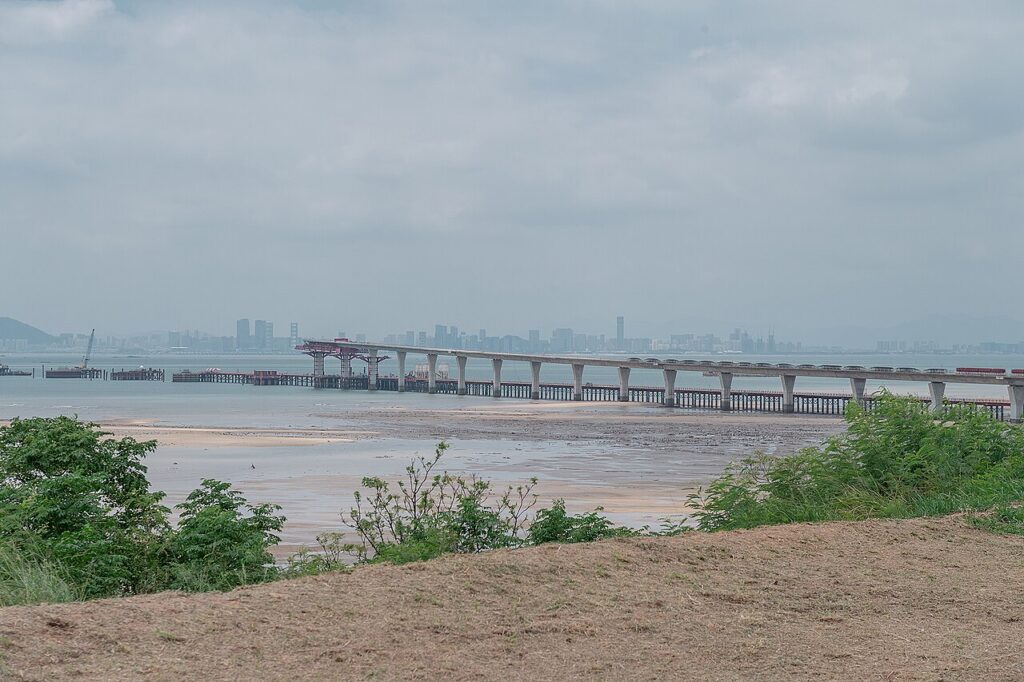
A view of a large body of water with a city in the background, Kinmen, Taiwan
Where to Stay for the Weekend
Your choice of neighborhood defines your Kinmen experience. Jincheng Township is the bustling administrative and commercial heart. You’ll find the most dining options, shops, and the historic old quarter here. It’s practical and lively. Hotel options like Ho Jia B&B or Kingmen Hotel range from NT$2,000 to NT$4,500 per night. Search on Booking.com.
For a more atmospheric and tranquil stay, seek out a renovated traditional homestay in a historic village like Shanhou, Shueitou, or Qionglin. Waking up in a centuries-old Fujianese house, with its central courtyard and intricate carvings, is magical. These are often listed as B&Bs or unique stays on Airbnb, with prices similar to Jincheng hotels. The trade-off is that you’ll need a scooter or taxi to get to restaurants in the evening.
Savvy visitors often split their stay: one night in a village for the ambiance, and one night in Jincheng for convenience and a final feast.
Before You Go: Practical Tips
- Getting Around: Renting an electric scooter (NT$400-600/day) is the best and most fun way to explore. It offers freedom to stop at hidden bunkers and villages. For those uncomfortable on two wheels, hiring a taxi for a half-day or full-day tour (NT$2,000-3,000) is a great alternative. There are public buses, but they are infrequent and not ideal for a tight weekend schedule.
- What to Pack: 1) Sturdy walking shoes for uneven village paths and tunnel floors. 2) A windbreaker or light jacket—the island is windy year-round. 3) Sun protection—hat, sunglasses, and sunscreen, as shade can be scarce. 4) A reusable water bottle to refill; the tap water is generally safe, but locals often boil it.
- Common Tourist Mistakes: 1) Underestimating distances. While the island looks small on a map, attractions are spread out. Plan your days geographically to avoid backtracking. 2) Assuming everything is open on Monday. Many smaller museums, shops, and even some restaurants close on Mondays. Always check opening hours in advance.
- Money-Saving Tip: Purchase the Kinmen Classic Attractions Pass (NT$250). It grants single entry to six major paid sites including Zhaishan Tunnel, Juguang Tower, and the Qionglin Tunnel. If you plan to visit just three of these, it pays for itself. You can buy it at the first attraction you visit.
Frequently Asked Questions About Kinmen
Is Kinmen worth visiting?
Yes, Kinmen offers unique attractions and experiences for travelers.
How many days do I need in Kinmen?
2-4 days is ideal for first-time visitors to Kinmen.
What is the best time to visit Kinmen?
Spring and fall offer the best weather for visiting Kinmen.
{“@context”: “https://schema.org”, “@type”: “FAQPage”, “mainEntity”: [{“@type”: “Question”, “name”: “Is Kinmen worth visiting?”, “acceptedAnswer”: {“@type”: “Answer”, “text”: “Yes, Kinmen offers unique attractions and experiences for travelers.”}}, {“@type”: “Question”, “name”: “How many days in Kinmen?”, “acceptedAnswer”: {“@type”: “Answer”, “text”: “2-4 days is ideal for first-time visitors to Kinmen.”}}, {“@type”: “Question”, “name”: “Best time to visit Kinmen?”, “acceptedAnswer”: {“@type”: “Answer”, “text”: “Spring and fall offer the best weather for visiting Kinmen.”}}]}
Ready to Visit Kinmen?
Start planning your trip today. Compare hotels, find the best tours, and get insider tips.
Your adventure in Kinmen starts here →
Related Guides
Explore more destinations similar to Kinmen:

