
Karnali, Nepal Weekend: Rara, Jumla’s Orchard Gold & The Birthplace of Nepali (2026)
Your lungs are still adapting to the 2,990-metre altitude when you catch your first glimpse of Rara Lake — a sheet of improbable, glacier-fed blue unfurling in a cradle of pine and juniper. The only soundtrack is the whisper of wind and the faint tinkle of yak bells strung from grazing flocks. You’ve just unlocked Nepal’s best-kept secret, a province so remote that even seasoned trekkers overlook it.
Quick Facts Before You Go
- Best Months: March–May (spring rhododendron blooms, clear skies) and October–November (autumn’s crisp visibility, perfect for the Rara Lake circuit). Avoid monsoon months of June–September when flights get grounded regularly.
- Currency: Nepalese Rupee (NPR). Roughly NPR 133 = $1 USD. You’ll need cash — ATMs are scarce beyond Nepalgunj and Surkhet.
- Language: Nepali and Khas Nepali. English is surprisingly limited; your phrasebook and a warm smile go a long way. Locals appreciate even a clumsy “Namaste.”
- Budget: $80–120 per day for a comfortable weekend, including internal flights, a decent lodge, and all meals. Travelers can stretch it to $60 if you use guesthouses and eat where locals eat.
- Getting There: Fly from Kathmandu (Tribhuvan International Airport) to Nepalgunj Airport (KEP) — just under 1 hour, $60–110 one-way — then a scenic 35-minute hop to Talcha Airport (Rara’s gateway) on a Twin Otter. Book at Skyscanner.
Day 1: The Alpine Lake That Rewards the Brave

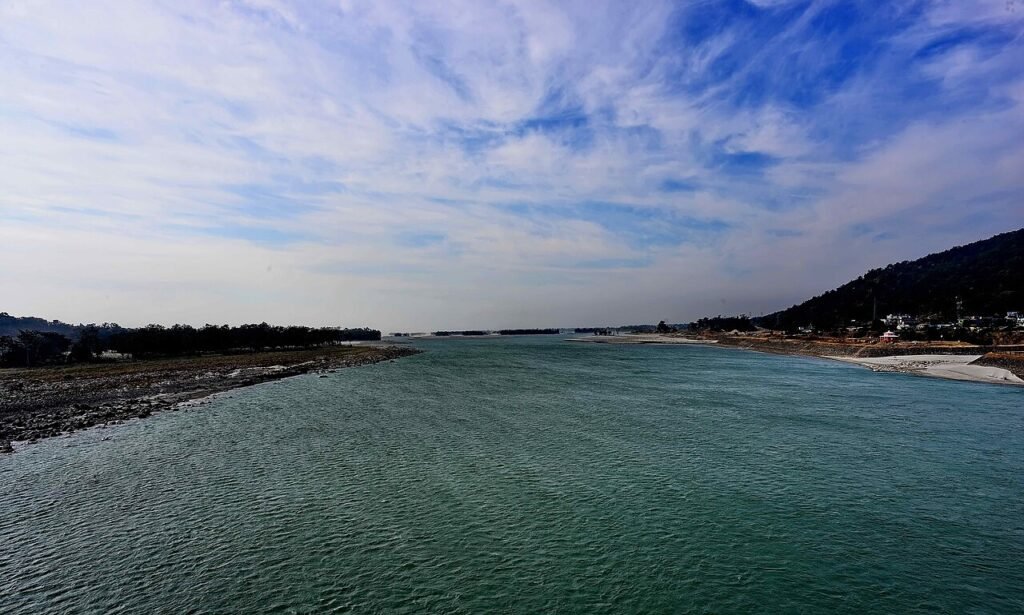
Karnali Bridge of Chisapani in Kailali District, Karnali, Nepal
You start the morning in Kathmandu with a 6:00 a.m. iced coffee, then press your face to the plane window as the Himalayas swing past your shoulder — a jagged white lullaby. By mid-morning you’re descending into Talcha’s tiny airstrip, one of the highest in Nepal, where the entire terminal is a single tarmac and a wooden sign. The air smells of pine resin and woodsmoke, and the mountain quiet is almost disorienting after Kathmandu’s honking chaos.
- Morning (8–11am): Land at Talcha Airport (2,618m) and catch a shared jeep to Rara National Park gate — NPR 1,000 per person, about 45 minutes of bumping along gravel switchbacks. You’ll pay the park entry fee (NPR 1,500 for foreign nationals, NPR 100 for SAARC visitors) at the checkpoint and register your entry. From the park gate, prepare for the day’s real event: a gradual 90-minute hike to Murma Top, a 3,655-metre viewpoint that delivers the most famous panorama in western Nepal. The trail climbs through moss-draped silver fir forest — you’ll hear the unmistakable call of the Himalayan black bear territory before you see the lake’s first shimmer. Altitude is no joke; take it slow, carry water, and pop a few diamox before you leave if you’re prone to mountain sickness.
- Lunch: At the cluster of lakeside lodges in Rara village, order the thakali khana set at Rara Lake Eco Resort‘s dining room — NPR 600 including rice, gundruk (fermented leafy greens), chicken curry, spicy pickle, and unlimited daal. Locals recommend pairing it with dhindo — a thick millet porridge that’s the region’s soul food — though you’ll want to request it in advance; it takes 30 minutes to cook.
- Afternoon (1–5pm): Rent a wooden rowboat at the jetty (NPR 500 per hour) and glide across Rara’s impossibly clear water — it’s 167 metres deep, so deep that the lake shows 20 shades of blue depending on the angle of the sun. Your oarsman, a local Thakuri who knows every ripple, will point out the submerged temple of Tripura Sundari that appears only in dry years. Afterwards, follow the lake’s southern shore on foot to the charming Rara Village — 25 households, one monastery, and yak cheese factories that produce wheels of pungent cheese you can sample free. You’ll also spot the lake’s famous snowtrout, a fish that exists nowhere else on Earth. End the afternoon with the short climb to the monastery above town; travelers often discover the resident monks will happily brew butter tea for NPR 100.
- Evening: Return to Rara Lake Eco Resort for dinner — the lake trout with butter and garlic, fresh from these waters, NPR 900 — then walk down to the jetty after dark. The sky above Rara is officially among the darkest in South Asia; you’ll see the Milky Way so clearly it looks like a silver road across the sky. If a local guide is around, ask about the legend of the lake: locals believe it was once a valley where a shepherd’s wife refused to share her drink of water, and the goddess Parvati drowned her in a flood. There’s no light pollution, no generators after 9 p.m., just the lapping of water and, if you’re lucky, the howl of a wolf in Rara National Park.
Day 2: Apple Orchards & The Cradle of Nepali

A man wearing a hat and a jacket, Karnali, Nepal
You wake at dawn to a world rimmed with frost, grab a thermos of hot milk tea, and head for the same Murma Top you conquered yesterday — this time when the lake is glassy and the first light pours gold into its basin. The contrast will stun you. Then you fly 25 minutes south to Jumla, where the air smells of ripening apples and history runs thinner than the Himalayan air. This is the land where the Khas kingdom was born, and somewhere among the ruined palaces of Sinja Valley, your guide will tell you, the Nepali language itself was first written down.
- Morning: After a 6:30 a.m. lakeside breakfast of porridge, honey from the park’s wild bees, and fresh mountain eggs (NPR 400 total), you’ll catch the early flight to Jumla Airport — currently a Twin Otter charter run, but check with your hotel; schedules change seasonally (NPR 7,000–9,000 per person). Land at Jumla (2,514m), drop your bag at a guesthouse, and head straight to Karnali Milk & Apple Café — a tiny, wood-panelled institution near the airstrip. Order a glass of fresh Jumla apple juice (NPR 150) and a plate of khir — rice pudding with roasted almonds — while you watch farmers hauling sacks of crimson fruits on horseback.
- Midday: Your main act today is Sinja Valley, 45 minutes by jeep (NPR 1,200 round trip, shared with other travelers). This lush, terraced valley was the capital of the mighty Khas Empire between the 11th and 14th centuries, and it’s where linguists believe the modern Nepali language (then called Khas Bhasa) was born. You’ll visit the crumbling brick foundations of Sinja Palace, wander the ruins of the 13th-century copper temple of Bhairava, and stand by the stone slab where scholars say King Prithvi Malla carved the first known inscription in the Nepali language in 1201 AD. The site is gloriously uncommercialised — no ticket booth, no crowds, just a few shepherds — and the feeling of standing at the source of a modern nation’s tongue is something you’ll carry home. Insider tip: arrive before noon; by 1 p.m. tour groups from Jumla occasionally turn up and the quiet vanishes.
- Afternoon: Return to Jumla town and explore its weekly market (Friday is prime shopping day, but any afternoon has stalls). You’ll find sacks of crimson Jonagold and Royal Delicious apples — the region grows some of the world’s highest-altitude apples, thanks to cold nights and volcanic soil — selling for just NPR 60 per kilogram at the source, a fraction of Kathmandu prices. Wander the narrow lanes behind the market where Gurungs and Thakalis sell handwoven radi blankets (NPR 800 for a lap blanket) and jars of wild Apis honey (NPR 1,500 per litre). Your best bet is Himal Amber Business, a family-run shop with the widest apple brandy selection in town.
- Final Evening: Splash out at Karnali Frontier Kitchen, Jumla’s best restaurant, a warm two-floor establishment lit by tungsten bulbs. The signature dish is yaksu khasi — a slow-braised mutton curry scented with Timur, the local Szechuan pepper that leaves a gentle electric buzz on your tongue (NPR 700 with rice). Pair it with a glass of marcha — a sweet, cloudy millet beer brewed in bamboo barrels (NPR 150) — and finish the night with a local apple brandy (N
Aerial photography of blue lake viewing mountain under white and gray sky d…, Karnali, Nepal


