
Jūrmala, Latvia Weekend: Wooden Villas, White Sands & Baltic Spa Serenity (2026)
The whistle of the morning train from Riga fades as you step onto the platform at Majori station, and the first thing that hits you is the scent of pine mingling with sea salt – a clean, resinous aroma that defines this 25-kilometer stretch of Latvian coast. Underfoot, the wooden planks of the platform feel worn smooth by generations of weekenders, while beyond the station building, the dune-backed beach glimmers through a thin haze. You’ve arrived in Jūrmala, and the Baltic has already claimed your senses.
Quick Facts Before You Go
- Best Months: June through August for peak beach season (water temps reach 18–20°C), but May and September offer fewer crowds, lower prices, and crisp, golden light ideal for walks along the shore.
- Currency: Euro (€). As of early 2025, €1 ≈ $1.08 USD, though exchange rates fluctuate.
- Language: Latvian is the official tongue, but English is widely spoken in hotels, restaurants, and tourist offices – you’ll have no trouble getting by. Many locals also speak Russian and some German.
- Budget: €80–€150 per person per day for mid-range hotels, two meals, local transport, and a spa treatment. A tighter budget of €50–€60 is possible with hostel stays and street food.
- Getting There: Riga International Airport (RIX) is just 20 minutes by taxi or 40 minutes by bus/train from Jūrmala. Direct flights from London (2h 45m), Berlin (1h 45m), and Helsinki (1h) make it an easy weekend dash. Book at Skyscanner
Day 1: Sand Between Your Toes & Art Nouveau Dreams
Your first morning in Jūrmala unfolds gently, like the slow roll of a Baltic wave. You start at the edge of Majori, the resort’s unofficial heart, where art nouveau villas painted in soft yellows and pale greens line Jomas iela. The street is quiet at 8 a.m., save for the clink of coffee cups at a terrace cafe and the distant cry of gulls. You’ll discover that Jūrmala rewards early risers with empty beaches and the mossy scent of dew on pine needles – a moment of peace before the day-trippers arrive.
- Morning (8–11am): Walk the length of Jomas iela, the pedestrian-only main artery, from Majori to Dzintari. Pop into the Jūrmala City Museum (at Tirgoņu iela 29, €4 admission) housed in a restored wooden villa. The exhibits on the town’s 19th-century resort heyday will make you appreciate the architecture you see outside. Then head to the beach at Majori (free entry; lifeguards on duty June–August). Your best bet is to claim a spot near the wooden promenade where you can rent a paddleboard (€12/hour) or just sink your toes into the fine white sand.
- Lunch: At Kafejnica Tornis (Jomas iela 63), a charmingly rustic café with a glass-walled terrace. Must-order: the Latvian classics – a bowl of creamy cold beetroot soup (aukstā zupa) for €5.50 and a generous slice of cottage-cheese pie (bizējs) for €4. Follow it with a strong drip coffee (€2.20). Locals recommend sitting near the back window for a view of the old water tower.
- Afternoon (1–5pm): First, visit the Dzintari Concert Hall (Turaidas iela 1, guided tour €8), a wooden art nouveau masterpiece from 1936 where countless Baltic music festivals have been held. Look for the original hand-carved stage decorations. Then stroll east along the beach to the Lielupe River embankment. Savvy visitors know to check the tide tables – at low tide you can walk all the way to the jetty and spot the remains of a 19th-century shipwreck that locals call “the skeleton.” Return via the pine forest path for a different perspective.
- Evening: Dinner at Restaurant 36 (Pludmales iela 1, Majori) – a gleaming glass-and-wood space overlooking the Gulf of Riga. Order the pan-seared Baltic herring with dill cream and new potatoes (€18). The atmosphere is clean and luminous, with the sound of waves replacing background music. Afterward, take a slow night walk along the strand; the beach is unlit, so bring a flashlight. You’ll often see the Milky Way on a clear, dark evening – a rare treat so close to the city.

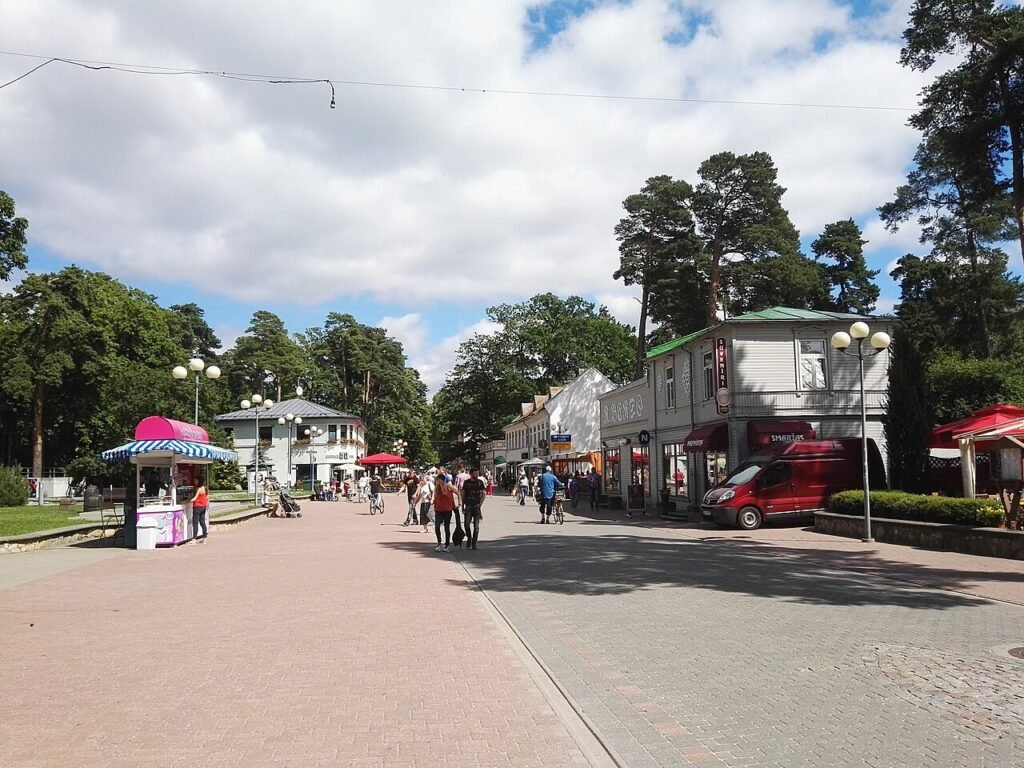
A street with people, Jūrmala, Latvia
Day 2: Spa Serenity & Forest Tranquility
Day two demands a slower pace – you’re here to soak up the spa culture that made Jūrmala famous among 19th-century aristocrats. You wake to the scent of pine and perhaps a light drizzle that layers the village in a silver sheen. No matter – the real magic happens indoors today. Travelers often discover that the region’s mineral-rich mud and sulfur springs work best in this kind of soft, rain-washed light, as if nature itself is inviting you inward.
- Morning: Breakfast at Pīrāgi (Jomas iela 52), a beloved local bakery. Order a plate of freshly baked bacon-and-onion buns (speķa pīrāgi, €2.50 for three) and a glass of warm kefir (€1.80). The bakery’s interior is all worn wood and old photographs – you’ll feel like you’ve stepped into a 1930s kitchen. Afterward, head to the Kemeri branch of the town (20 minutes by taxi, €12) and visit the Ķemeru Kūrorts spa complex (Kūrorta iela 1). Book a 90-minute mud wrap and massage session – expect to pay around €80. The sulfur-rich peat mud has been used since 1836 to treat joint pain and skin ailments; you’ll emerge feeling both purified and deeply relaxed.
- Midday: On your way back, take a detour to the Ķemeri Bog Boardwalk (Melnā iela, free entry). This 4.5-kilometer wooden path winds through a raised bog with bird-watching towers and a canopy of pine and birch. The secret is to go around 11:30 a.m., just before the tour buses roll in. You’ll have the boardwalk almost to yourself – only the sound of your footsteps on the damp wood and the occasional call of a common crane. Most tourists skip this gem, but it’s the best way to understand the source of Jūrmala’s famed healing air.
- Afternoon: Explore the artistic enclave of Sloka, a quieter neighborhood of Jūrmala with a unique bohemian flair. On Slokas iela, visit Mākslas stacija Sloka (Slokas iela 26), a converted train station that now houses rotating contemporary art exhibitions (free entry). Then pop into Dizaina tirgus (Design Market) at Brīvības iela 7, where local craftspeople sell amber jewelry, handwoven linens, and wooden toys (prices from €5 to €50). This is your chance to pick up souvenirs that aren’t mass-produced – look for the work of Inese, a jeweler who sources Baltic amber from the local coast.
- Final Evening: For your farewell dinner, head to Paviljons (Jomas iela 49), a restored wooden pavilion that looks like a wedding cake, all white filigree and fairy lights. The crowd is a mix of well-dressed locals and discerning travelers. Order the wild mushroom soup in a rye bread bowl (€9) and the grilled pike-perch with lingonberry sauce (€22). The wine list highlights Latvian fruit wines – try a glass of cloudberry wine (€7) for a tart, aromatic finish. As you leave, walk back to the beach one last time. The moon will be reflecting off the Baltic, and you’ll understand why Latvian poets call Jūrmala “the beach of endless farewells.”
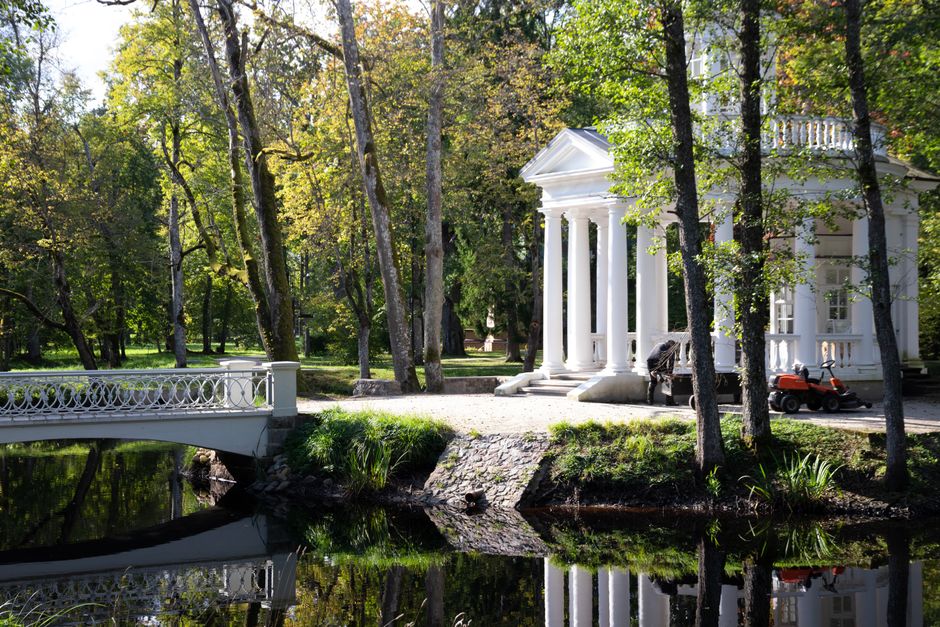
Serene autumn park in Jūrmala featuring a classic bridge and white pavilion., Jūrmala, Latvia
The Food You Can’t Miss
The cuisine of Jūrmala is a love letter to the Baltic’s larder – smoked fish, dark rye, foraged berries, and dairy so fresh it tastes like sunlight. You’ll find street-food stalls along Jomas iela offering pelēkie zirņi ar speķi (grey peas with bacon, €3.50 per cup) – a savory, earthy dish that’s a staple of Latvian picnics. For a sit-down experience, Krauja (Pludmales iela 17) serves a phenomenal pike-perch ceviche with sea-buckthorn dressing (€12). Travelers often rave about the open-faced sandwich (sviestmaize) at the Staburadze café chain, where thin slices of smoked eel are piled on buttered black bread with a dollop of sour cream – €6 will buy you a memorable lunch. The key is to eat what’s in season: in July, wild bilberries appear in desserts; in autumn, chanterelles and boletes star in stews. Always ask about the day’s catch – many restaurants source fish directly from the local fisherman at the Lielupe River market (weekday mornings, €8 for a kilo of smoked bream).
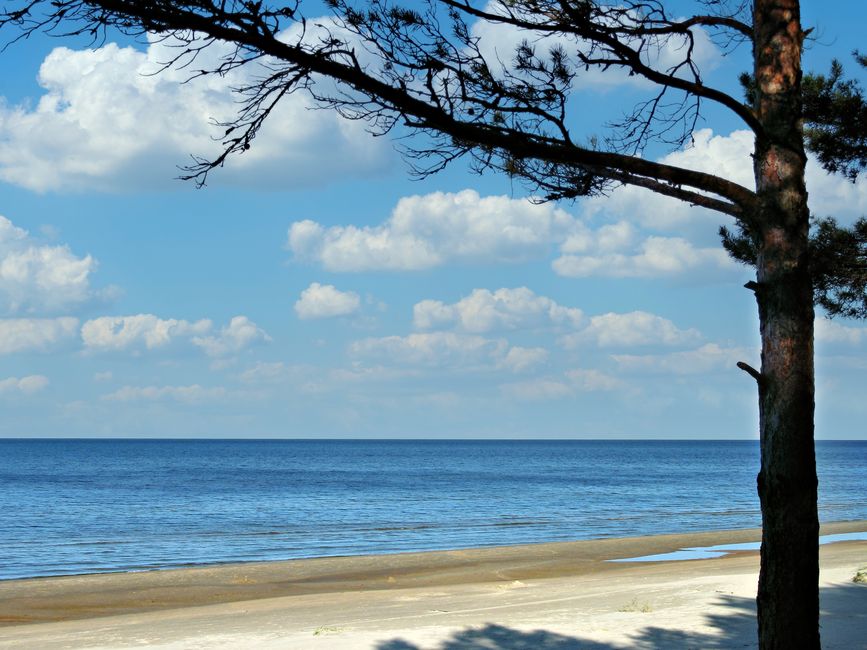
Peaceful view of Jūrmala beach with pine trees, Jūrmala, Latvia
Don’t leave without trying a sklandrausis, a sweet and savory carrot-potato pie baked with caraway seeds, typically €2 at any bakery. And for a truly local ritual, find a pivnizīca (beer cellar) like Bruhas (Majori, Jomas iela 71) and order a glass of kvass – a fermented rye beverage – alongside a plate of grilled sausages and sauerkraut (€8 total). The barn-like interior with communal tables invites conversation with strangers; you’ll hear old men telling stories of Jūrmala during the Soviet era, when the beach was reserved for the Party elite.
Insider tip: Seasoned travelers skip the overpriced restaurants on Jomas iela’s main strip and instead wander one block east or west. Down Brīvības iela, for example, you’ll find Bistro Liepa (Brīvības iela 15), a no-frills spot where the day’s soup (€4) and pelmeni (€6) are as authentic as it gets. The secret is the table in the back corner – it’s the only seat with a direct view into the open kitchen, where you can see a four-generation family running the show.
Where to Stay for the Weekend
Your choice of neighborhood makes all the difference in Jūrmala. For first-time visitors, the area around Majori (centered on Jomas iela) is ideal – you’re steps from the beach, shops, and the most lively dining scene. The flagship property is the Baltic Beach Hotel & Spa (Jūras iela 23, from €140/night in summer). This sleek, modern building offers direct beach access, a full-scale wellness center, and a rooftop pool overlooking the gulf. Book early, as it fills fast – reserve via Booking.com.
If you prefer a quieter, more nostalgic atmosphere, base yourself in Dzintari, one stop east on the train. Here, Hotel Jūrmala Spa & Resort (Miera iela 22, from €110/night) is a sprawling complex that keeps the old-style sanatorium vibe alive with mud baths, massage pools, and saunas included in the room price. The building itself is a Soviet-era architectural curiosity, but the service is warm and the pine forests are right at your doorstep.
For travelers on a tighter budget, consider an Airbnb in Kemeri (rooms from €40/night). You’ll trade nightlife for peace, but you’ll have the bog boardwalk and the historic spa practically to yourself. Check options on Airbnb. Just ensure you’re within a 10-minute walk of a train station – Jūrmala’s electric train from Riga is the most convenient way to hop between neighborhoods.
Before You Go: Practical Tips
- Getting Around: The electric train from Riga Central Station to Majori costs €2.30 one-way and runs every 20 minutes. Inside Jūrmala, use the same train to move between stations (Majori, Dzintari, Bulduri, and Kemeri). A day pass for the entire Riga–Jūrmala rail zone is €5.50 and covers unlimited rides. Buses exist but are slower – taxis from Majori to Kemeri cost around €15.
- What to Pack: (1) A swimsuit – even in cool weather, the geothermal spa pools at Kemeri are inviting. (2) A light rain jacket – Baltic weather can pivot from sun to drizzle in 20 minutes. (3) Mosquito repellent – the forests and bogs host persistent insects from June to August. (4) Comfortable walking shoes – the wooden boardwalks and cobblestone streets are charming but unforgiving on heels.
- Common Tourist Mistakes: Many visitors assume Jūrmala is all beach, but the real magic is in the interior – the pine forests, the bog, the art nouveau architecture. Don’t spend your entire trip on the sand. Also, avoid eating on Jomas iela’s most prominent terraces; they charge a premium

