
Jezreel Valley, Israel Weekend: Hiking, History & Hummus in the Biblical Heartland (2026)
You pull into the valley just as the sun slips behind Mount Tabor, painting the wheat fields in amber and gold. The air thick with the scent of wild sage and thyme, mingled with the faint, clean smell of freshly turned earth from a nearby kibbutz field. Through the open car window, you hear the distant, rhythmic clatter of a tractor and the muezzin’s last call drifting from a minaret in a small Arab village. This is the Jezreel Valley – not a postcard, but a living, breathing landscape where ancient battles and modern harvests share the same soil.
Quick Facts Before You Go
- Best Months: March–May and September–November. Spring brings wildflower carpets and mild 20–25°C days; autumn offers harvest festivals and clear hiking weather without the summer humidity.
- Currency: Israeli New Shekel (ILS). Roughly 1 USD = 3.5 NIS, 1 EUR = 3.8 NIS. Cash is still king in rural markets, though most restaurants and guesthouses accept credit cards.
- Language: Hebrew and Arabic. English is widely spoken in tourist sites and by younger Israelis; you’ll manage fine with English in all guesthouses and recommended restaurants.
- Budget: A realistic daily cost for meals, entrance fees, and local transport is 250–400 NIS ($70–110) per person. Add 300–500 NIS for accommodation. Savvy travelers can stay under 600 NIS/day by picnicking and using kibbutz guesthouses.
- Getting There: Ben Gurion Airport (TLV) is the nearest international hub – about 1.5–2 hours’ drive east on Route 6 and the Haifa–Afula road. Direct flights from New York (11 hours), London (5 hours), and Frankfurt (4 hours). Book at Skyscanner.
Day 1: Ancient Hills & Market Flavors
You start the morning with the sun warming your back as you climb the excavated ramparts of Tel Megiddo – the biblical Armageddon. From the top, the entire valley unfolds below like a green patchwork quilt. The dry August air carries the faint hum of tractors and the occasional call of a hoopoe bird. Later, you’ll wander through Afula’s bustling market, where the scents of warm pita, za’atar, and fried kibbeh pull you from stall to stall. Today is about tasting the layers of history and flavor that define this crossroads of civilizations.
- Morning (8–11am): Arrive at Tel Megiddo National Park (open 8am–5pm; entry 28 NIS). Spend two hours walking the water tunnel and the ancient Canaanite gate. Arrive by 8:30 to have the site almost to yourself – most tour buses roll in after 10am. Bring a flashlight for the water system’s dark passage.
- Lunch: Head to Hummus Afula (5 HaHistadrut Street, Afula). Order the classic hummus masabacha (warm chickpeas with tahini, 32 NIS) and a side of fresh pita. Locals recommend adding the tangy pickled mango called “amba” for a spicy kick. The place is no-frills but legendary – expect a 10-minute queue at noon.
- Afternoon (1–5pm): Drive 15 minutes to Beit Alfa Synagogue National Park (entry 22 NIS) to see the stunning sixth-century mosaic floor depicting the zodiac. Then, cool off at Gan HaShlosha National Park (also known as Sachne – entry 40 NIS), where natural springs feed warm, crystal-clear pools surrounded by eucalyptus trees. Plan to stay for an hour’s swim; the water stays a constant 28°C. Savvy visitors bring a picnic and claim a shaded spot by the lower pool.
- Evening: Dinner at Mizra Dining Room (Kibbutz Mizra, advance reservation recommended). This farm-to-table restaurant serves slow-cooked lamb shank with seasonal vegetables (89 NIS) and a fresh herb salad picked from the kibbutz garden. The atmosphere is communal, with long wooden tables and the soft glow of oil lamps. After dinner, take a short stroll through the peaceful kibbutz lanes – you’ll hear nothing but crickets and the occasional cat.

Jezreel Valley
Israel, Jezreel Valley, Israel
Day 2: Kibbutz Dawn & Spring-Fed Valleys
On your second morning, you wake to the crow of a rooster and the clatter of a dining hall breakfast being set out. At Kibbutz Sde Eliyahu, you’ll join guests and volunteers for a spread of just-made labaneh, cucumber-tomato salad, and hard-boiled eggs from the coop. The vibe is unhurried – a complete contrast to yesterday’s archaeological dash. Today is about slowing down: floating in a natural pool on Mount Tabor, browsing an open-air market, and eating your final meal under a carob tree.
- Morning: Drive to Kibbutz Sde Eliyahu for a guest breakfast (available to non-guests by advance arrangement, 60 NIS per person). You’ll sit at a communal table overlooking the Jordanian border hills. Must-eats: the silky labaneh with olive oil that tastes of grass, and the honey-drenched malawach pastries. Afterwards, take a guided tour of the kibbutz organic insectary (20 minutes, free) – travelers are fascinated to see how they breed beneficial bugs for natural pest control.
- Midday (11am–1pm): Hike Mount Tabor (entry free; parking 20 NIS). Walk the steep east path to the summit – it takes about 40 minutes. At the top, the Franciscan Church of the Transfiguration glows softly in the white light. The secret to avoiding crowds: go early on a weekday (before 10am); you’ll likely share the summit with only a few pilgrims and a herd of grazing goats. Bring a water bottle – you’ll need at least a liter each.
- Afternoon (1–4:30pm): Drive to the picturesque town of Kfar Tavor (Tabor Village). Explore the main street, HaMa’yan, where you’ll find a small artisan market on Fridays (10am–2pm) with local honey, soap, and woven baskets. At Pina Bar Café (27 HaMa’yan Street), order a caprese shakshuka (29 NIS) – baked eggs with cherry tomatoes and fresh basil – and sit on their leafy patio. After lunch, pop into the Old Winery next door for a complimentary tasting of three local reds.
- Final Evening: Head to Kibbutz Ein Harod Meuhad for dinner at Ha’emek Restaurant (on the kibbutz grounds, no reservation needed on weeknights). Their specialty is grilled sea bass fillet with tahini and pomegranate molasses (82 NIS). For dessert, try the malabi – a rosewater milk pudding topped with coconut and pistachios (22 NIS). The terrace overlooks the valley; as dusk settles, the lights of Nazareth begin to twinkle in the distance.
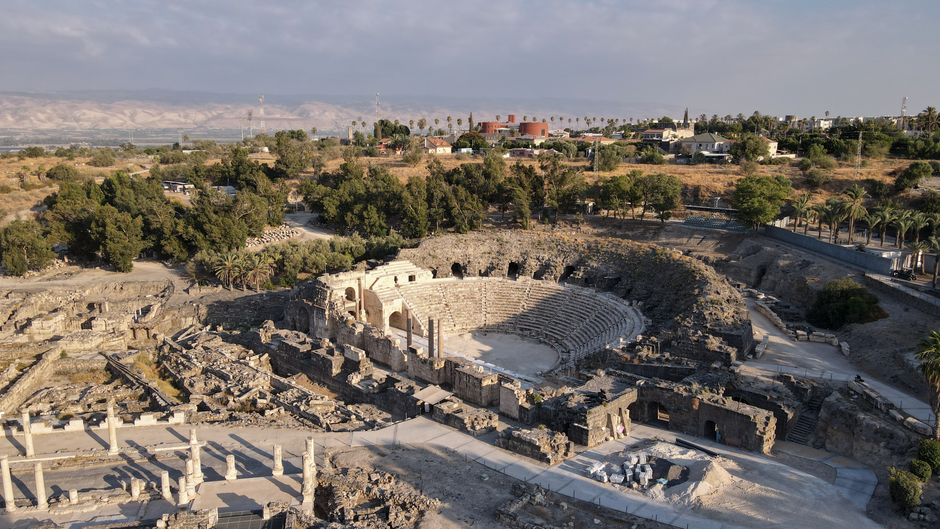
Aerial view of the ancient Roman amphitheater in Beit She’an, Jezreel Valley, Israel
The Food You Can’t Miss
The Jezreel Valley is a living pantry, drawing on its diverse communities – Jewish kibbutzniks, Arab farmers, Druze villagers, and Bedouin shepherds. You’ll taste this history in every bite. Start your culinary journey at Sabich Afula, a tiny stand on HaAliya Street that locals consider the best in the north (open until the eggplant runs out, usually by 2pm). For 27 NIS, you get a warm pita stuffed with fried eggplant slices, a hard-boiled egg, amba, tahini, and a crunchy cabbage slaw. The secret? The cook slices the eggplant fresh to order, so it’s never greasy.
For a sit-down meal that captures the valley’s soul, book a table at Abu Ali’s Grill (in the Druze village of Maghar, 15 minutes east of Afula). Their mixed grill plate (89 NIS) comes with skewers of spiced chicken hearts, merguez sausages, and a fluffy couscous with caramelized onions. Travelers often discover that the real treasure is the free side of labaneh ma’abara – a dried yogurt that you crumble over everything. Wash it down with a glass of sour cherry juice diluted with soda (10 NIS).
Street food lovers should also hunt down a kubbeh aduma stall in Afula’s market. These bulgur-wheat dumplings stuffed with ground beef and pine nuts are simmered in a tangy beet soup. A bowl costs 18 NIS – you’ll see three generations of families slurping them shoulder-to-shoulder at plastic tables. For a sweet finale, stop at Halva House on Yehoshua Street in Afula, where they hand-shave halva from giant blocks of sesame paste. Their marble halva (swirled with cocoa and almonds) is addictive – buy a piece for the ride home (about 40 NIS per kilo).
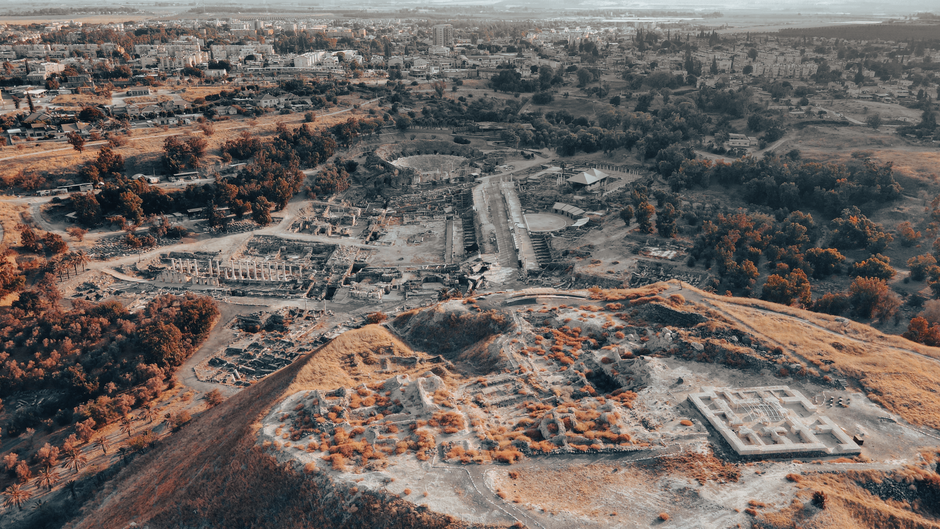
Stunning aerial shot of ancient ruins in Beit She’an, Jezreel Valley, Israel
Where to Stay for the Weekend
Your accommodation choice shapes the valley’s experience. For a classic kibbutz immersion, Kibbutz Ein Harod Meuhad Guesthouse (rates: 350–500 NIS/night for a double) offers simple, clean rooms set in manicured gardens. Guests can use the kibbutz swimming pool and attend the Friday evening communal dinner – a true insider experience. Book directly or via Booking.com.
If you

