
Itaituba, Brazil Weekend: Gold Rush History (2026)
The air thickens with the earthy scent of the Tapajós River, a low, constant hum of outboard motors punctuated by the cheerful shouts of children playing on the sandy banks. You’re standing on the waterfront in Itaituba, a frontier city in the heart of the Brazilian Amazon, where the legacy of gold miners still lingers in the dusty streets. You can almost taste the sweet, purple pulp of a just-pressed açaí bowl—an essential breakfast for locals—mixed with the faint whiff of grilled tambaqui fish drifting from a riverside barraca. This is not a typical weekend escape; it’s raw, real, and utterly unforgettable.
Quick Facts Before You Go
- Best Months: June to November – the dry season brings lower river levels, easier boat access, and fewer mosquitoes, though temperatures remain high (30–35°C / 86–95°F).
- Currency: Brazilian Real (BRL). As of early 2025, 1 USD ≈ 5.2 BRL, 1 EUR ≈ 5.6 BRL. Carry cash; many small vendors and tuk-tuk drivers do not accept cards.
- Language: Portuguese. English is very rarely spoken outside major hotels or tour agencies. Invest in a translation app or learn a few key phrases like “obrigado” (thank you) and “quanto custa?” (how much?).
- Budget: A comfortable weekend will cost $50–$100 per person per day, including meals, lodging, and a guided boat tour. Budget travelers can get by on $30–$40 by eating at local markets and staying in simple pousadas.
- Getting There: Fly into Itaituba Airport (ITB) from Manaus (1 hour, 20 minutes) or Santarém (50 minutes) via Azul Conecta or MAP Linhas Aéreas. Alternatively, fly to Santarém (STM) on major airlines, then take a 5-hour bus or 4-hour speedboat down the Tapajós River. Book flights at Skyscanner for route comparisons.
Day 1: Gold Dust & River Dreams
You start your morning with the sun already high over the Tapajós, a fierce orange disc that promises another sweltering day. The streets of Centro are already busy: men in loose shirts and rubber boots head to the docks, women carry bundles of river grass to market, and the clatter of metal on metal comes from a small workshop repairing gold-panning sieves. Itaituba’s past as a gold rush boomtown is still visible in the faded colonial buildings and the eager chatter of prospectors in the bars after dark. Today, you’ll dive into that history and then let the river carry you away.
- Morning (8–11am): Head to the Museu do Ouro (Gold Museum), housed in a modest building on Avenida Getúlio Vargas. Entry costs R$10 (about $2). You’ll see artifacts from the 1970s gold rush – scales, pickaxes, old photographs of the garimpeiros who once made this town one of Brazil’s richest. The guide, Sr. Antônio, will tell you how the gold was extracted using mercury, and how the river still runs reddish-brown from silt. “We don’t mine like that anymore,” he says, “but the spirit of the garimpeiro never leaves Itaituba.” Afterward, walk three blocks down to the Mercado Municipal (Municipal Market), open every day. Travelers often spend an hour here watching locals bargain over fresh river fish, bags of farinha (cassava flour), and cheap plastic flip-flops.
- Lunch: At Restaurante do João, a no-frills eatery on Rua 7 de Setembro. The specialty is tambaqui assado na brasa – grilled tambaqui, a massive Amazon river fish with a subtle, buttery flavor. A full plate with rice, farofa, and a pile of vinegary tomato salsa costs R$30 ($6). Locals recommend ordering the tacacá – a soup made with tucupi (manioc broth), jambu (a numbing herb), and dried shrimp – on the side for just R$8 ($1.50). It’s a spicy, lip-tingling ritual that every visitor should try at least once.
- Afternoon (1–5pm): Book a 3-hour speedboat tour with Amazon River Tours Itaituba (R$120 per person, about $23). You leave from the main dock at Avenida Beira-Rio. The boat zips past floating houses, fishermen casting nets, and the occasional flock of scarlet macaws. Your first stop is the Ilha da Paciência (Patience Island), a small sandbar where you can wade into the warm, dark water. Your guide, a quiet man named Paulo, will point out giant water lilies and the distant calls of howler monkeys. The second stop is a ribeirinho community – a small river village built on stilts. You’ll meet Dona Maria, who sells handmade farofa de banana (fried plantain farofa) and cups of cold açaí for R$5 ($1). Savvy visitors bring a reusable bag to buy her dried fish or small woven baskets.
- Evening: As the sun turns the sky pink, return to town for dinner at Peixaria do Pelé on Rua 15 de Novembro. The place is always buzzing with families and couples sharing platters of caldeirada (a thick fish stew) or camarão na moranga (shrimp in a pumpkin pot). Your best bet is the filé de pintado – a catfish fillet grilled with garlic and butter, served with a fresh salad – for R$45 ($8.50). After dinner, walk to the riverfront promenade, where you’ll catch the sound of brega music blasting from a floating bar called Bar do Vadinho. Join the crowd for a cold Skol beer (R$6 / $1.20) under strings of Christmas-like lights, watching the stars appear above the dark mirror of the Amazon.

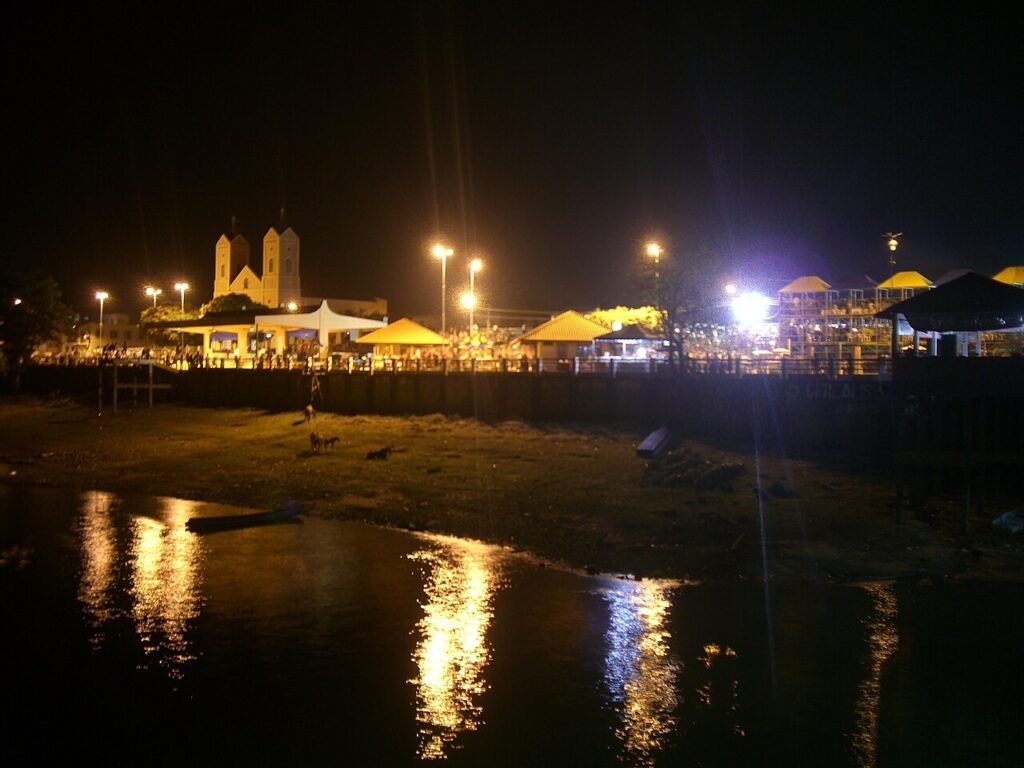
Itaituba – State of Pará, Brazil, Itaituba, Brazil
Day 2: Into the Forest, Into the Bowl
The second day begins with a gentler rhythm, the tropical birds already calling from the mango trees that line the streets. You’ve come to realize that Itaituba isn’t a polished tourist town – it’s a working Amazon city where daily life revolves around the river. Today, you’ll escape into the forest and taste the region’s most famous fruit.
- Morning (7–10am): Start with breakfast at Padaria Central on Rua Marechal Deodoro. The line at dawn tells you this is the real deal. Grab a tray and help yourself to an espresso (R$4 / $0.70), a warm pão de queijo (cheese bread roll – R$2), and a bowl of açaí na tigela (R$12 / $2.30). The açaí here is thick, dark purple, and far less sweet than the versions you know – it’s served with granola, banana, and a drizzle of honey. Travelers often remark that the taste is “earthy, almost nutty.” Eat it quickly before the heat turns it soupy.
- Midday (10am–2pm): Take a taxi (R$30, about $6) 45 minutes east to the Floresta Nacional do Tapajós (Tapajós National Forest). Entry is free, but you must register at the IBAMA station. The park protects 600,000 hectares of primary rainforest, with trails leading to the stunning Cachoeira do Aruã, a 15-meter waterfall that drops into a cool, shallow pool. Insider tip: go on a weekday to have the place to yourself. If you take the main trail (1.5 km, easy walking), you’ll pass massive kapok trees and hear the buzz of insects. Bring a swimsuit – the water feels like heaven after the hike. Look for the red and blue butterflies that gather near the edge of the pool. “They come for the minerals in the rocks,” a local guide told me. “And maybe for the visitors’ sweat.”
- Afternoon (2–5pm): Return to town and explore the Bela Vista neighborhood, a hillside area with panoramic views of the river and the distant rainforest. Wander down Rua São José, where tiny workshops sell artesanato – crafts made from seeds, wood, and river grass. At Artesanato da Amazônia, a cooperative run by women, you can buy a bolsa de buriti (a handwoven palm-fiber bag) for R$20 ($4) or a carved jabuti (tortoise) for R$15 ($3). The women are happy to explain how each piece is made; they’ll also let you taste a slice of cupuaçu, a fruit that tastes like a cross between chocolate and pineapple. Later, walk down to the floating dock near the Colônia de Pescadores (Fishermen’s Colony) to see fishermen bring in the day’s catch – large tucunaré (peacock bass) that glisten in the fading light.
- Final Evening: Your farewell dinner deserves a special setting. Go to Restaurante Sabor da Amazônia on Avenida Tapajós, a family-run place that feels like dining in someone’s verandah. The signature dish is pato no tucupi – a slow-cooked duck in the sour broth of wild manioc, served with jambu leaves that make your mouth tingle and go slightly numb. It’s a dish that dates back centuries, originally prepared by Indigenous Tapajó people. A full plate costs R$40 ($7.70). For dessert, order the mousse de cupuaçu (R$12 / $2.30) – a creamy, tangy mousse that perfectly balances the meal. As you eat, you’ll hear the night sounds of the Amazon: geckos chirping, frogs croaking, and the distant splash of a caiman slipping into the river. Seasoned travelers often say that this is the moment Itaituba truly sinks into your soul.

Captivating view of Pampulha Church in Belo Horizonte, Itaituba, Brazil
The Food You Can’t Miss
Itaituba’s food culture is an edible map of the Amazon’s bounty, shaped by Indigenous, ribeirinho (riverine), and Portuguese influences. If you only eat one street food, make it the pastel de peixe – a deep-fried pastry filled with shredded pirarucu (a giant Amazonian fish) and cream cheese, sold at the corner of Rua 13 de Maio and Avenida Castelo Branco for R$7 ($1.35). The vendor, Dona Irene, has been frying them since 1998. “The secret is the fish must be fresh from the morning catch,” she says with a wink. Eat it straight from the paper bag, letting the steam rise into the humid air.
For a sit-down meal, locals recommend Restaurante do Lúcio on Rua Marechal Rondon. He serves a daily prato feito (set plate) for R$20 ($4) that always includes fresh grilled fish, rice, beans, and a simple salad. But the real star is his açaí grosso – a thick açaí purée that he churns with tapioca starch and condensed milk, served in a gourd bowl. “This is how we ate açaí before it became a health drink,” he says. “Pure energy for a day on the river.”
If you want to taste the region’s most iconic fruit combination, find a vendor selling açaí com cupuaçu – a purple-and-white swirl in a paper cup, topped with granola and condensed milk, for R$10 ($2). You’ll see them at the Feira da Beira-Rio, an open-air market that sets up every Saturday morning on the waterfront. Savvy visitors go early (7:30 a.m.) to avoid the heat and snag the freshest bowls.
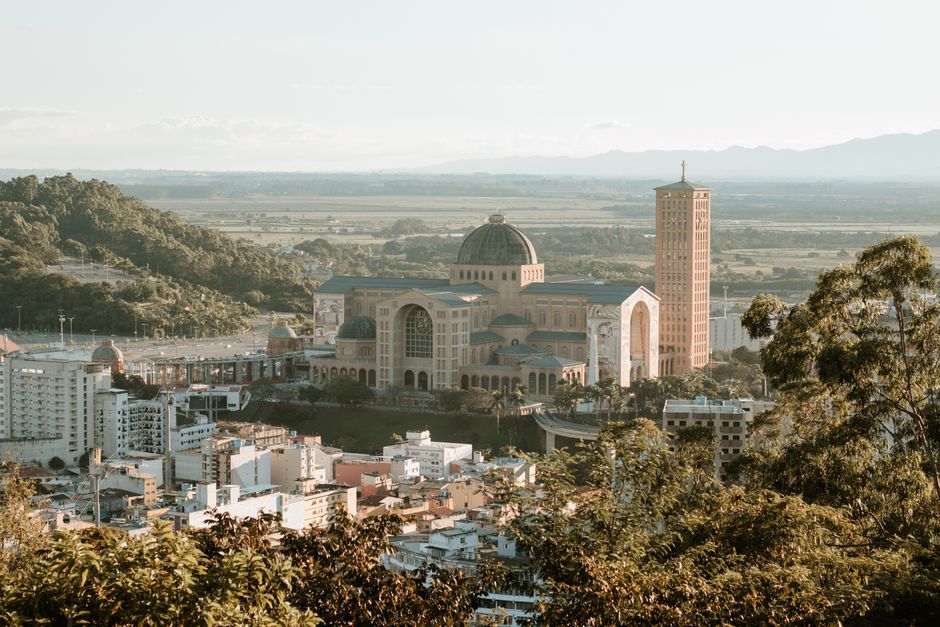
Scenic aerial view of Nossa Senhora Aparecida Basilica in Aparecida, Itaituba, Brazil
Where to Stay for the Weekend
Itaituba’s accommodations are modest but clean. The best neighborhoods for visitors are Centro (central, walking distance to markets and restaurants) and Bela Vista (quieter, with river views). Avoid the newer suburbs north of the airport – they’re far from attractions.
- Centro: Hotel Itaituba on Rua 15 de Novembro offers basic double rooms for R$120–160 per night ($23–$31). Rooms have air-conditioning and electric showers, but don’t expect luxury. The rooftop terrace provides a view over the city and river. Book via Booking.com.
- Bela Vista: Pousada do Rio on Rua São José is a mid-range favorite with cheerful painted rooms, a small pool, and a garden bursting with heliconia flowers. Doubles start at R$200 ($39). The owner, Seu Raimundo, can arrange tours and river transfers. Check Airbnb for private rooms in the same area, often under R$180 ($35).
- Riverside Lodge: For a splurge, book a night at Pousada Tapajós, a small eco-lodge 20 minutes by boat from Itaituba. The lodge offers raised wooden

