
Into the Stone Gates: What San Ignacio’s ATM Cave Reveals About Belize’s Maya Underworld (2026)
In 1989, a team of local cave explorers led by Dr. Jaime Awe pushed through a narrow limestone fissure deep in the Belizean jungle. When their headlamps swept across the chamber, they froze. Before them lay the skeletal remains of a young woman, her bones shimmering with crystallized calcite—the “Crystal Maiden.” That moment, just over three decades ago, opened a literal door into Xibalba, the Maya underworld, and changed everything you thought you knew about Belize’s ancient past.
The Story Behind San Ignacio’s ATM Cave, Belize
Long before tourists waded through the cool, tea-colored water of the cave entrance, the Maya considered Actun Tunichil Muknal—or ATM Cave—a sacred portal between the living world and the realm of the dead. Archaeologists have dated most of the cave’s use to the Late Classic period, roughly between 700 and 900 AD, when the nearby city of Caracol was at its peak. You’ll find evidence of this everywhere inside: broken ceremonial pots, incised with glyphs, still lie where they were placed over a thousand years ago.
The cave system stretches for nearly three miles, but the ritual chambers lie about a mile in. Travelers often discover that reaching them requires swimming, climbing, and sometimes crawling through narrow passages—a deliberate physical journey meant to mimic the soul’s descent into the underworld. What makes ATM unique, even among Maya cave sites, is the state of preservation. The mineral-rich drip water has coated bones, pottery, and even woven fibers in a thin layer of calcium carbonate, freezing them in time. When you first see the skeleton of the Crystal Maiden, still resting on a stone ledge, you understand why the Maya feared and revered this place. She likely died around 800 AD, possibly as a sacrificial victim to appease the rain god Chaac during a drought. Her bones, now scattered by centuries of water flow, tell a story of desperation and faith that feels tragically human.
Since its discovery, the Belizean government and local guides have strictly controlled access to protect the site. You can only enter with a certified guide, and you must wear socks to avoid contaminating the floor. Cameras and phones are forbidden—no photos, no video. This rule, which frustrates some visitors, forces you to experience the cave in its purest form: with your eyes, your ears, and your sense of wonder. You’ll emerge hours later with memories that no screen could ever replicate.
Neighborhood by Neighborhood
Downtown San Ignacio
The heart of San Ignacio beats along the narrow streets near the market. You’ll find the town’s character in the peeling pastel facades of buildings that have housed family-run shops for generations. Start at the San Ignacio Market, open daily from dawn until noon, where farmers sell papayas, plantains, and the fiery habanero peppers that locals call “hickates.” The market spills onto Burns Avenue, the main drag, where you’ll hear the clatter of wooden carts loaded with limes and the shouts of vendors offering fresh-squeezed orange juice for a dollar. For a taste of town history, duck into the San Ignacio Hotel, built in the 1970s, whose veranda has seen everyone from rugged archaeologists to package tourists. You’ll notice the mix of Creole, Mestizo, and Maya faces—a living museum of Belize’s cultural layers. Your best bet for a quick bite is Pop’s Restaurant, a no-frills spot on Far West Street where stewed chicken with rice and beans costs $5 and comes with a side of fry jacks.
Santa Elena
Across the Hawksworth Bridge, the only suspension bridge in Belize, you enter Santa Elena—the more laid-back, residential side of the Cayo District’s twin towns. While San Ignacio buzzes with commerce, Santa Elena offers quiet tree-lined streets and a slower pace. Locals recommend starting your morning at Ko-Ox Han-Nah, a beloved breakfast joint where the fry jacks are impossibly fluffy and the coffee is strong and bottomless. As you walk east along the old Western Highway, you’ll pass wood-frame houses with wide verandas and bougainvillea spilling over fences. The neighborhood feels like a postcard of rural Belize, yet it’s only a ten-minute walk from the market. Savvy visitors know that the best place to buy handmade crafts—carved mahogany bowls and woven baskets—is from the women who set up tables near the bridge on Saturday mornings. If you want to see where most local tour guides live, head to the quiet cul-de-sacs off San Jose Street, where mango trees shade the porches.
Bullet Tree Road
Just north of downtown, Bullet Tree Road follows the bank of the Macal River and quickly leaves the town grid behind. This is where San Ignacio’s eco-lodges and adventure outfitters cluster, and the neighborhood has a frontier energy you’ll feel immediately. You’ll pass Maya Mountain Lodge, a family-run property that pioneered cave and jungle tours in the 1990s, and Chaa Creek, a sprawling resort that feels more like a private nature reserve. But don’t think this area is just for tourists. The road is dotted with small bars and grills where locals gather for cold Belikin beer and grilled chicken on Saturday nights. The real draw, however, is the river access. You can rent a tube from a roadside stand for $10 and float lazily downstream, or paddle a kayak to spot iguanas sunning on the rocks. By late afternoon, the light filters through the broad leaves of the ceiba trees, and the only sounds are flowing water and laughter. This is the San Ignacio that travelers often fall in love with—a place where adventure and tranquility coexist.
The Local Table: What San Ignacio Natives Actually Eat
You’ll quickly learn that Belizean cuisine is a fusion, but in San Ignacio it leans toward the hearty, home-cooked dishes that have sustained families for generations. Rice and beans cooked in coconut milk, stewed chicken, and coleslaw form the backbone of every lunch. But the true secret of the local table is the recado—a dark, smoky paste made from achiote seeds, cumin, garlic, and bitter orange, used to marinate meats. Women in the market sell it in little plastic bags for less than a dollar, and you’ll want to buy some to take home. The dish you absolutely cannot miss is garnaches. These fried corn tortillas are topped with refried beans, crumbled white cheese, and pickled cabbage slaw. The best version in town is at Eva’s Restaurant on Burns Avenue, a two-story hangout where backpackers and locals share wooden tables. Eva’s garnaches cost only $3, and you’ll want at least two orders—they disappear fast. For a deeper dive into the food culture, visit the San Ignacio Market on a Friday afternoon, when the fresh tortilla ladies press masa into perfect rounds over wood-fired comals. The smell of charred corn will guide you straight to their stalls.
Evening meals in San Ignacio are early. Most families eat by 6 p.m., so restaurants start filling up around 5:30. Travelers who linger over dinner at Guatemalan Lady (a tiny hole-in-the-wall on West Street) discover that the town’s culinary soul is in its simplicity: a bowl of black bean soup with a squeeze of lime, a hunk of fry jack, and the quiet hum of the street outside. You’ll also find plenty of street food: smoked barbecue chicken from a cinderblock grill at the entrance to the market, or tamales wrapped in banana leaves and sold out of Styrofoam boxes. If you’re adventurous, ask for salbutes—puffy fried tortillas topped with shredded chicken, avocado, and a pickled jalapeño-onion relish that has just enough heat to wake you up.
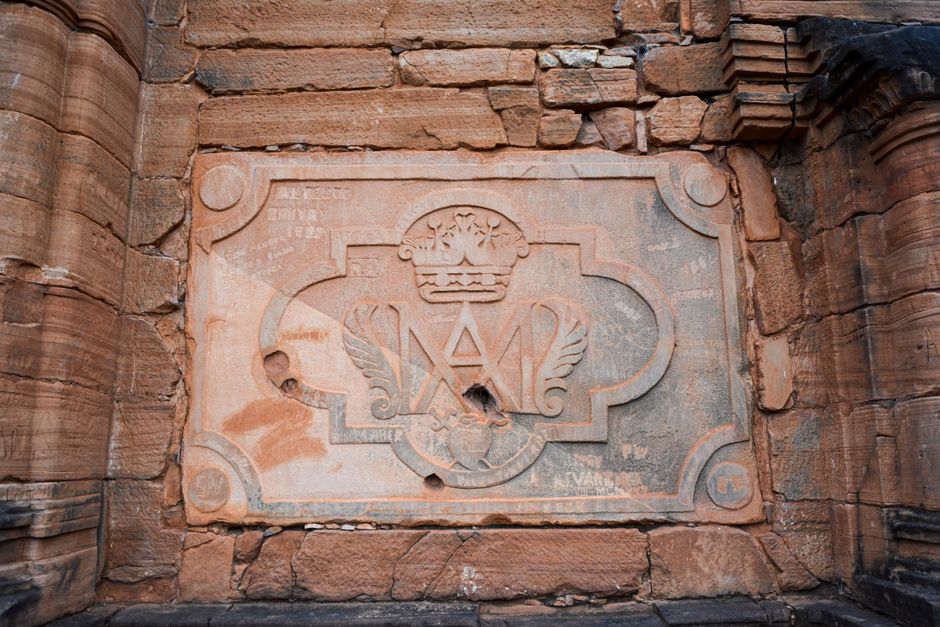
Intricate stone carving at Jesuit Mission ruins in Misiones, Argentina., San Ignacio’s ATM Cave, Belize
Art, Music & Nightlife
San Ignacio’s creative pulse is quieter than Belize City’s but no less vibrant. You’ll find it at Cayo Arts and Crafts Museum, a small gallery on Savannah Street that displays contemporary Maya painting and carved slate sculptures. Local artists like Eduardo Hic Acal charge prices that feel like steals for the quality—a small canvas runs about $20. On Friday nights, the courtyard behind Mike’s Bar on Burns Avenue fills with live punta music, a fast-paced Garifuna rhythm driven by turtle-shell drums and coconut graters as percussion. If you’re here in late April, don’t miss the Cayo Festival, a week-long celebration of music, dance, and food that draws musicians from across Belize. The parade through downtown San Ignacio—complete with costumed dancers, stilt walkers, and brass bands—feels like a giant block party. For a quieter evening, stop into La Galleria de la Florencia, a wine bar and art space tucked behind the market. Local painters often hang their latest works on the exposed brick walls, and the owner, Florencia, will happily tell you the story behind each piece while you sip a Belizean rum and Coke.
The nightlife here is relaxed rather than wild. Bars close by midnight on weekdays, and the only exception is Saturday, when Jaguar’s Foot—a thatched-roof open-air club on Bullet Tree Road—hosts a DJ spinning soca and reggaeton until 2 a.m. Most travelers, however, prefer a different kind of after-dark adventure: night jungle walks. Locals recommend booking a tour with Belize Nature Trails ($25 per person) to spot tarantulas, tree frogs, and sleeping birds along the river. The darkness of the Belizean bush is absolute, and when you turn off your flashlight for a moment, the sound of cicadas and distant howler monkeys will stay with you long after you return home.
Practical Guide
- Getting There: Fly into Philip S. W. Goldson International Airport (BZE) in Belize City. You can book flights at Skyscanner. From the airport, take a taxi to the main bus terminal ($5), then catch a James Line or Maya Island Air bus to San Ignacio ($6, 2 hours). Alternatively, book a shared shuttle door-to-door ($25 per person).
- Getting Around: San Ignacio is walkable—you can cross the entire town in 20 minutes. For trips to ATM Cave, your tour operator will provide transport ($15 round trip). Taxis within town cost $5. To explore the wider Cayo District, rent a car from Crystal Auto Rental (about $50/day).
- Where to Stay: Stay downtown for easy market access: San Ignacio Resort Hotel (from $120) offers a pool and iguanas roaming the grounds. For budget options, Pedro’s Hostel (dorms from $15) is social and clean. Along Bullet Tree Road, Maya Mountain Lodge (from $80) has jungle casitas. Check availability at Booking.com.
- Best Time: December through April is the dry season, with clear skies and lower humidity. The cave is accessible year-round, but heavy rains (June–November) can raise river levels and close tours. For fewer crowds, visit in late February or early March.
- Budget: You’ll spend about $50–$70 per day on a mid-range budget: $15 for meals, $30 for a dorm bed, $20 for activities beyond ATM. The ATM Cave tour itself costs $95–$130 per person (including guide, park fees, and lunch).
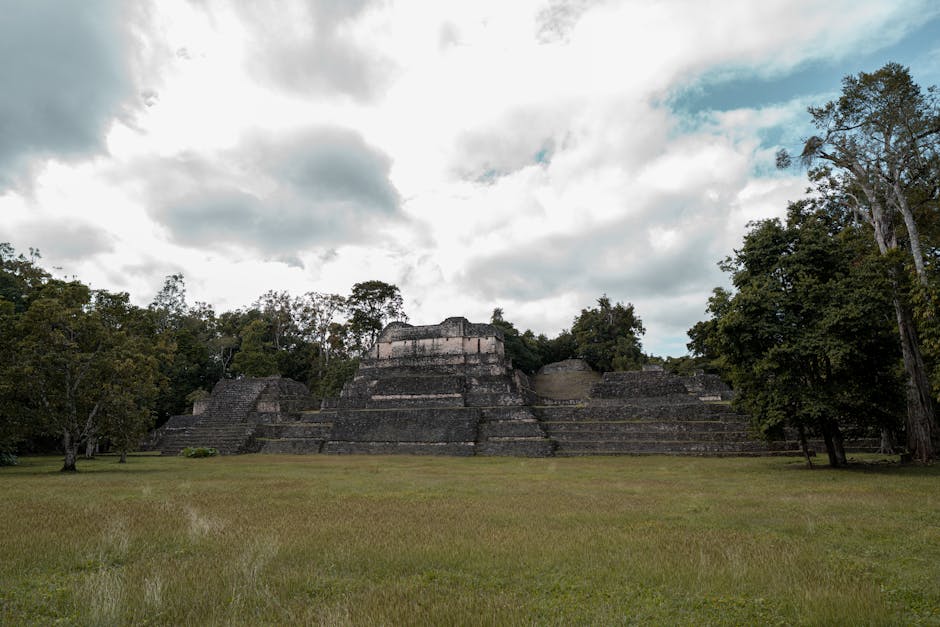
Explore the Caracol Pyramid, San Ignacio’s ATM Cave, Belize
What Surprises First-Time Visitors
Most travelers arrive expecting a simple cave walk, but ATM is a full-body adventure. You’ll swim across chest-deep water, climb over boulders, and squeeze through tight passages—all in wet socks. The surprise is how physically demanding it feels, even if you’re reasonably fit. Seasoned visitors know to wear sturdy closed-toe water shoes and leave any fear of enclosed spaces at home. Another shock: the silence. Once the group passes the first chamber, the guide asks everyone to stay quiet. The only sounds are the drip of water and your own breathing. That silence deepens the sense of reverence—you’re standing in a temple that hasn’t changed in a thousand years.
What also catches people off guard is the almost complete lack of infrastructure around the cave. There’s no visitor center, no souvenir shop, not even a paved path. You park on a dirt road, walk a mile through jungle, wade a river, and enter a hole in the hillside. This raw authenticity is exactly why the site feels so special, but it means you must carry water, snacks, and a change of clothes. Many first-time visitors also underestimate the strict no-camera rule. Without the distraction of a phone, you’re forced to be fully present—and that turns out to be the biggest surprise of all. Nobody leaves ATM wishing they’d taken more photos. They leave wishing they could stay inside just a little longer.
Finally, the town of San Ignacio itself surprises many with its warmth. Travelers from big cities often expect a tourist-trap vibe, but here locals wave as you pass, and shopkeepers remember your name after one visit. The town’s heart is the market, and if you arrive on a Saturday morning, you’ll be welcomed into a swirl of color, smell, and sound that feels like the real Belize—the one that exists beyond the brochures and Instagram shots.
Your San Ignacio’s ATM Cave, Belize Questions
Do I need

Explore the ancient Mayan ruins at Xunantunich, San Ignacio’s ATM Cave, Belize

