
Hiva Oa, French Polynesia: Ultimate Ancient Petroglyphs, Gauguin’s Sanctuary & Untamed Volcanic Landscapes (2026)
While over 200,000 visitors a year descend on Bora Bora and Tahiti, fewer than 3,000 make the extra 2.5-hour flight to Hiva Oa in the remote Marquesas Islands. Here, you won’t find overwater bungalows, but you will discover a Polynesia that feels untouched by time—a dramatic island of 1,200-foot cliffs, sacred stone temples called *me’ae*, and the final resting place of painter Paul Gauguin and singer Jacques Brel. This is where the South Pacific’s soul feels most palpable.
Why Hiva Oa, French Polynesia Stands Out

Gray pool lounge chair in island, Hiva Oa, French Polynesia
- Historic Architecture: The restored 19th-century Notre-Dame Cathedral in Atuona, built from rare woods like *tou* and *miro*, features intricate Marquesan carvings on its altar and pulpit.
- Cultural Scene: The July Heiva festival transforms the island with traditional *haka* dance competitions, stone-lifting contests, and tattoo artistry demonstrations.
- Local Specialties: You must try *poisson cru à la Marquisienne*—raw tuna marinated in coconut milk and lime, but uniquely flavored with wild basil (*purau*) and *miti hue* (fermented coconut cream).
Pro Tip: Visit in May or October. You’ll avoid the peak tourist influx from cruise ships (which can double the island’s population on a single day) and experience the lush, post-rainy season greenery or the drier, comfortable temperatures of the austral spring. Book accommodation and 4×4 rentals at least 4-6 months in advance, as availability is extremely limited.
Map of Hiva Oa, French Polynesia
Use these interactive maps to explore Hiva Oa, French Polynesia and plan your route:
📍 View Hiva Oa, French Polynesia on OpenStreetMap
🗺️ Open Hiva Oa, French Polynesia in Google Maps
Planning Your Trip: Practical Essentials
Getting There and Around
- By Air: All visitors arrive via Hiva Oa Airport (AUQ), served by Air Tahiti flights from Papeete (3.5 hours) or Nuku Hiva (45 min). Flights are infrequent (2-3 times weekly), so booking early is critical. Book flights at Skyscanner for best deals.
- By Train: No train service exists on the island or to the Marquesas.
- By Car: A 4×4 rental is non-negotiable for exploring the rugged interior and north coast. Roads are often unpaved, steep, and narrow. Rentals cost ~$100-150/day and must be booked months ahead. Compare car rentals at RentalCars.com.
- Local Transport: There is no public bus system. Your options are rental car, expensive taxis (a 10km ride can cost $50), or guided tours which include transport.
Best Time to Visit
The climate is tropical and humid year-round, with a hotter, rainier season and a slightly cooler, drier period. The shoulder seasons offer the best balance of good weather and manageable visitor numbers.
| Season | Weather | Highlights |
|---|---|---|
| Wet Season (Dec–Mar) | Hot (82-88°F), humid, with frequent heavy showers. Risk of cyclones. | Lush, vibrant landscapes; fewer tourists. Some trails may be muddy or closed. |
| Dry Season (Apr–Nov) | Pleasant (77-84°F), less humidity, and more sunshine. Ideal for hiking. | Best for outdoor exploration, festivals like July’s Heiva. Peak for cruise ship visits. |
| Shoulder (Apr–May/Oct–Nov) | Warm (79-86°F), lower rainfall, comfortable for activity. | Optimal conditions for trekking and sightseeing with thinner crowds than mid-year. |
Budgeting for Hiva Oa, French Polynesia

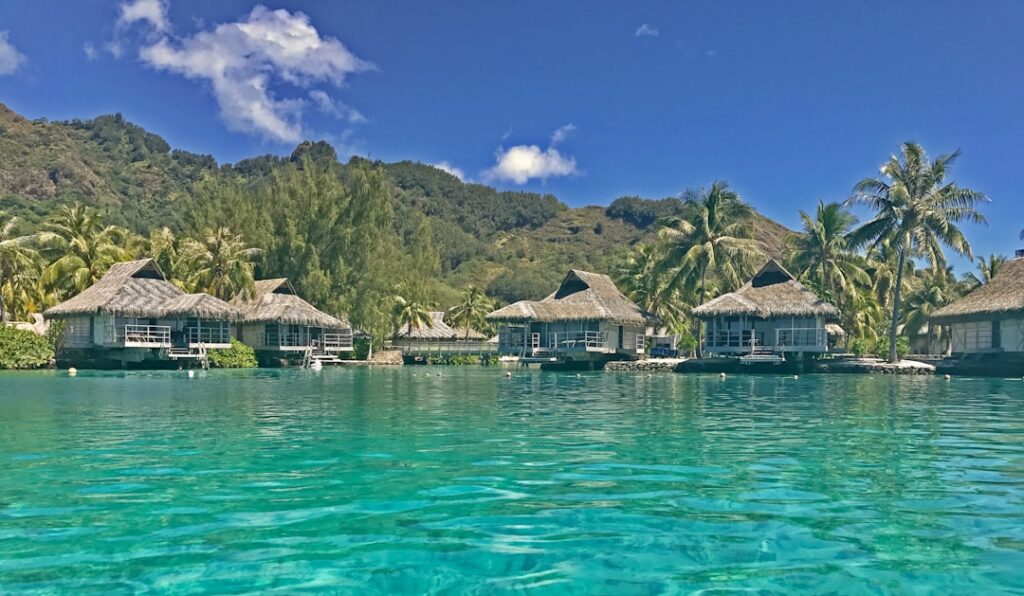
Wooden dock over sea near huts and mountain at daytime, Hiva Oa, French Polynesia
| Category | Budget | Mid-range | Luxury |
|---|---|---|---|
| Accommodation | $80-120/night (simple pension) | $150-250/night (comfortable lodge with meals) | $300+/night (top guesthouse, all-inclusive) |
| Meals | $15-25 (snack bars, self-catering) | $30-50 (table d’hôte at your pension) | $60+ (restaurant with à la carte) |
| Transport | $0 (walking in Atuona only) | $100-150/day (4×4 rental, split between 2-4 people) | $200+/day (private guide with vehicle) |
| Activities | Free (beaches, some *me’ae*) | $50-100 (museum entry, guided half-day hike) | $200+ (full-day boat/4×4 safari) |
| Daily Total | $100-150 | $250-400 | $600+ |
Top Attractions and Must-See Sights
| Attraction | Description | Hours | Entry Fee |
|---|---|---|---|
| Calvary Cemetery (Cimetière Calvaire) | The hilltop graves of Paul Gauguin (1903) and Jacques Brel (1978), offering panoramic views of Atuona Bay. | Sunrise to Sunset | Free |
| Paul Gauguin Cultural Center (Espace Culturel Paul Gauguin) | Houses reproductions of Gauguin’s works, historical context, and a reconstruction of his “House of Pleasure” (*Maison du Jouir*). | Mon-Sat: 7:30 AM-12 PM, 1:30-4 PM | ~$12 USD |
| Taaoa Valley Archeological Site | One of Polynesia’s largest *me’ae* complexes, with massive stone tikis and platforms hidden in a lush, atmospheric valley. | Daylight hours (guide recommended) | Free (Guide: ~$50) |
| Puamau Village & Iipona Archeological Site | Home to the island’s most impressive ancient tikis, including the famous 8-foot “Takaii,” believed to represent a deified chief. | Daylight hours | ~$8 USD community fee |
3-Day Itinerary: Hiva Oa, French Polynesia’s Highlights & Hidden Gems
Day 1: Atuona’s History & Bay Views
- Morning (7:30 AM): Start at the **Paul Gauguin Cultural Center** ($12) to understand the artist’s tumultuous final years. Your best bet is to go early to avoid any potential tour groups.
- Afternoon (12:30 PM): Enjoy a lunch of grilled mahi-mahi at **Snack Make Make** in Atuona village. Then, drive 10 minutes up the hill to the **Calvary Cemetery**. Find the simple graves with stunning ocean vistas.
- Evening (6:00 PM): Take a short walk to **Tahauku Bay** to watch the cargo ships unload. Dine at your pension’s *table d’hôte* for an authentic family-style Marquesan meal.
Day 2: Ancient Spirits of the Taaoa Valley
- Morning (8:00 AM): Hire a local guide (~$50 for a half-day) for the **Taaoa Valley**. They’ll bring the site’s history to life, pointing out petroglyphs and ceremonial platforms you’d easily miss alone.
- Afternoon (1:00 PM): Return to Atuona for a casual lunch at **Snack Rotui**. Then, visit the **Jacques Brel Museum** (small aircraft hangar) near the airport, dedicated to the Belgian singer’s years flying medicine around the islands.
- Evening (5:30 PM): Drive to **Miromi Point** for a spectacular sunset. For dinner, savor poisson cru at **Pension Gauguin’s** restaurant.
Day 3: The Rugged North Coast & Sacred Tikis
- Morning (7:00 AM): Pack for a full-day 4×4 adventure. The 3-hour drive to **Puamau** is an attraction itself—winding past wild horses, thousand-foot drops, and the black sand beach at **Hanaiapa**. Fuel and snacks are unavailable en route, so pack water and food.
- Afternoon (12:00 PM): Arrive in Puamau. Pay the small community fee ($8) to visit the sacred **Iipona site**. Afterward, have a simple lunch arranged by the local family who guards the site.
- Evening (6:00 PM): Return to Atuona, stopping at viewpoints for photos of **Mt. Temetiu**. For your final night, enjoy a farewell dinner, often featuring *chevreffes* (local freshwater shrimp) if in season.
Cultural Insights & Etiquette
- Language: French and Marquesan are spoken. Basic French phrases (*bonjour, merci*) are appreciated. English is understood in tourist spots but not universally.
- Customs: Always greet people when entering a shop or home. It’s respectful to ask permission (*”Est-ce que je peux…?”*) before taking photos of people or even their property. The Marquesans have a deep, spiritual connection to their land (*’enana*).
- Tipping: Not expected or customary, but a genuine thank you is. In high-end lodges or for exceptional guided service, a small tip is a kind gesture.
- Dress Code: Modesty is key, especially outside Atuona. Cover shoulders and knees when visiting villages. Swimwear is for the beach only. Sturdy hiking shoes are essential for archaeological sites.
- Business Hours: Shops and services typically operate 7:30 AM-12 PM and 1:30-4 PM, Monday to Friday, with limited hours Saturday morning. Almost everything is closed on Sunday.
Where to Eat: Hiva Oa, French Polynesia’s Best Bites
Dining revolves around your accommodation’s *table d’hôte* (host’s table), a set-menu dinner that’s the heart of the Marquesan social experience. Independent “snacks” (small, casual eateries) offer lunch and simpler fare. Fine dining, as known elsewhere, doesn’t exist here—culinary luxury is about the freshness and authenticity of the ingredients.
Must-Try Local Specialties
- Poisson Cru à la Marquisienne: The Marquesan version of this classic is richer and more aromatic. Try it at any pension’s *table d’hôte* or at **Snack Make Make**.
- Breadfruit (*Uru*): A staple, prepared in countless ways—roasted, fried as chips, or mashed. Locals recommend trying it baked in an underground oven (*ahimaa*) during a festival.
- Roasted Wild Goat (*Chevreuil*): Often served at festive meals. The meat is lean and flavorful, typically marinated and slow-cooked.
Restaurant Recommendations by Budget
| Type | Restaurant | Specialty | Price Range |
|---|---|---|---|
| Budget | Snack Rotui (Atuona) | Hearty plates of chow mein, burgers, and local fish. | $10-20 |
| Mid-range | Table d’hôte at Pension Gauguin (Atuona) | Authentic multi-course Marquesan feasts in a garden setting. | $30-40 per person |
| Fine dining | Relais Moehau (Puamau, by prior arrangement) | Freshly caught fish and local dishes served with incredible ocean views. | $40-60 |
Where to Stay
Accommodation is in small, family-run pensions or guesthouses, often with half-board (breakfast & dinner) included. True resorts don’t exist. Most are clustered in or near Atuona for convenience, but a few remote options offer deep immersion. Compare prices and book at Booking.com or Airbnb for apartments.
Best Neighborhoods for Accommodation
- Atuona Village: The administrative and social hub. You’ll be within walking distance of museums, snacks, and the dock. Best for first-time visitors and those without a rental car for their entire stay.
- Tahauku Bay Area (near Atuona): A quieter setting just a few minutes’ drive from the village, often with beautiful bay views. Ideal for travelers seeking more tranquility while keeping amenities close.
- Remote North Coast (e.g., near Hanaiapa): For true escapists. You’ll experience profound peace and stunning landscapes but will be entirely dependent on your 4×4 and need to plan meals carefully.

Palm tree near body of water during daytime, Hiva Oa, French Polynesia
FAQs: Your Hiva Oa, French Polynesia Questions Answered
1. Is Hiva Oa, French Polynesia safe at night?
Yes, it is exceptionally safe. Violent crime is virtually unheard of. However, standard precautions apply: there is minimal street lighting, so a flashlight is useful for evening walks. The main “hazards” are uneven pavements and the occasional roaming pig or horse.
2. What currency is used and are credit cards accepted?
The currency is the French Pacific Franc (XPF or CFP). Euros are sometimes accepted. Credit cards (Visa/Mastercard) are accepted at most pensions, the Gauguin Center, and some snacks, but cash is king, especially in remote villages, for small purchases, and for community site fees. Withdraw cash at the Banque Socredo in Atuona upon arrival.
3. How do I get from the airport to the city center?
Atuona village is about a 10-minute drive from the airport. Most pensions offer a pre-arranged transfer service (approx. $15-25 per vehicle). Taxis are available but can be scarce; it’s wise to have your transfer confirmed. There are no ride-sharing apps. Book airport transfers at GetYourGuide for convenience.
4. Do I need to speak the local language?
You can manage with English at key tourist sites, but your experience will be infinitely richer with basic French. Learning a few Marquesan greetings like *”Kaoha”* (Hello) will earn you warm smiles. Locals recommend carrying a phrasebook or translation app for deeper interactions.

