
Haa, Bhutan for Adventurers: 7 Trails That Put the Alps to Shame (2026)
Your boots crunch on frost-kissed gravel as the first rays of Himalayan light set the whitewashed temple ablaze. At 3,650 meters, the wind carries the sharp bite of juniper incense and centuries-old prayer flags crack like whips above your head. Below, the Haa Valley unfurls in a patchwork of barley fields and pine forests, while ahead—a trail that drops into mist-shrouded ravines. This isn’t a pilgrimage. This is your starting line.
The Main Event: The Meri Puensum Ridge Traverse
Forget crowded Swiss paths—your best bet in Haa is the Meri Puensum Ridge Traverse, a full-day, 14-kilometer scramble that locals quietly regard as the most thrilling day hike in western Bhutan. You’ll start at the Lhakhang Karpo parking area (marked by a chorten at 7:00 AM sharp—guides insist on an early start to beat afternoon cloud cover) and ascend through dwarf rhododendron forests before breaking treeline onto a spine of wind-sculpted granite. The trail is unmarked beyond the 4,200-meter saddle, so seasoned travelers book a certified guide through Bhutan’s official tourism portal for Nu 2,500 per person (about $30 USD). Difficulty is Moderate-to-Hard: you’ll gain 1,100 meters over six hours, with two exposed sections requiring careful foot placement. The cost includes a packed lunch of ema datshi (chili cheese) and red rice from the trailhead lodge. Insider tip: stash a pair of trekking poles in your daypack—the descent on loose scree after the 4,350-meter false summit will save your knees, and most tourists overlook this simple gear that transforms the final two hours from agony to exhilaration.
The traverse culminates at a natural rock amphitheater where, on clear mornings, you can see the curve of the earth from Kula Kangri to Mount Jomolhari. Savvy visitors know to pause here for fifteen minutes of silence—guides often share the story of the 7th-century treasure revealer Pema Lingpa, who locals believe meditated in this exact spot. Your reward is a descending traverse through a hanging valley dotted with yak herder camps, where you’ll arrive back at Lhakhang Karpo by 4:30 PM, just in time for butter tea at the monastery canteen. Plan to spend Nu 500 on the tea and a plate of momos—you’ve earned it.
Activity #1: Whitewater Kayaking on the Haa Chhu River
Travelers often discover that the Haa Chhu—a glacier-fed tributary of the Paro Chhu—offers some of Bhutan’s most accessible whitewater, with Class III-IV rapids that peak during the monsoon flush from June through August. Your launch point is a gravel bank 3 kilometers north of Lhakhang Karpo, where local operator Bhutan Whitewater Adventures (booking through Viator or direct at +975-1765-4321) sets up at 8:00 AM daily. The cost of Nu 4,000 per person includes a high-quality Perception kayak, paddle, helmet, and a certified guide who has run this stretch over 200 times. You’ll navigate a 12-kilometer run of continuous rapids—the highlight being “Dragon’s Tail,” a technical Class IV chute between granite boulders that demands precise eddy turns. The total time on water is about 3.5 hours, with a rest stop at a riverside meadow where your guide will unpack thermoses of butter tea and dried yak cheese. What makes this special is the solitude—on any given day, you’re likely the only paddlers on the river. Locals recommend bringing a dry bag for your phone and a change of clothes; the water temperature hovers around 8°C even in August, and the take-out point has no shelter. Book at least three days ahead during peak season—groups are capped at six to preserve the wilderness experience.
Activity #2: Overnight Yak Herder Homestay at Geyzhing
For adventurers who want to trade adrenaline for altitude—and still earn bragging rights—the overnight yak herder homestay at Geyzhing village, accessible via a three-hour hike from Lhakhang Karpo, is a cultural deep dive that many travelers call the highlight of their Bhutan trip. You’ll depart at 1:00 PM, following a gentle switchback trail that climbs through ancient blue pine forests before emerging into a high pasture at 3,800 meters. Your host is Sangay Wangmo, a third-generation yak herder who welcomes up to four guests into her family’s traditional stone-and-wood home. The cost is Nu 3,000 per person, which includes a dinner of yak stew with buckwheat pancakes, breakfast of sweet millet porridge, and unlimited ara (local grain spirit) by the fire. You’ll sleep on thick wool mattresses in a shared room heated by a clay stove—temperatures drop to -5°C even in summer, so your best bet is to bring a -10°C sleeping bag. The experience includes a dawn walk to the herd (3:45 AM—don’t hit snooze), where you’ll learn to milk yaks using a bamboo pail, and afterward, you can try your hand at churning butter the traditional way. Seasoned travelers prefer this over any hotel stay because of the raw authenticity: no Wi-Fi, no electricity after 9:00 PM, and the only soundtrack is the yak bells and wind. Book through Bhutan Homestay Network at least two weeks in advance—Sangay’s home is the only one in the valley offering this experience, and spots fill quickly.

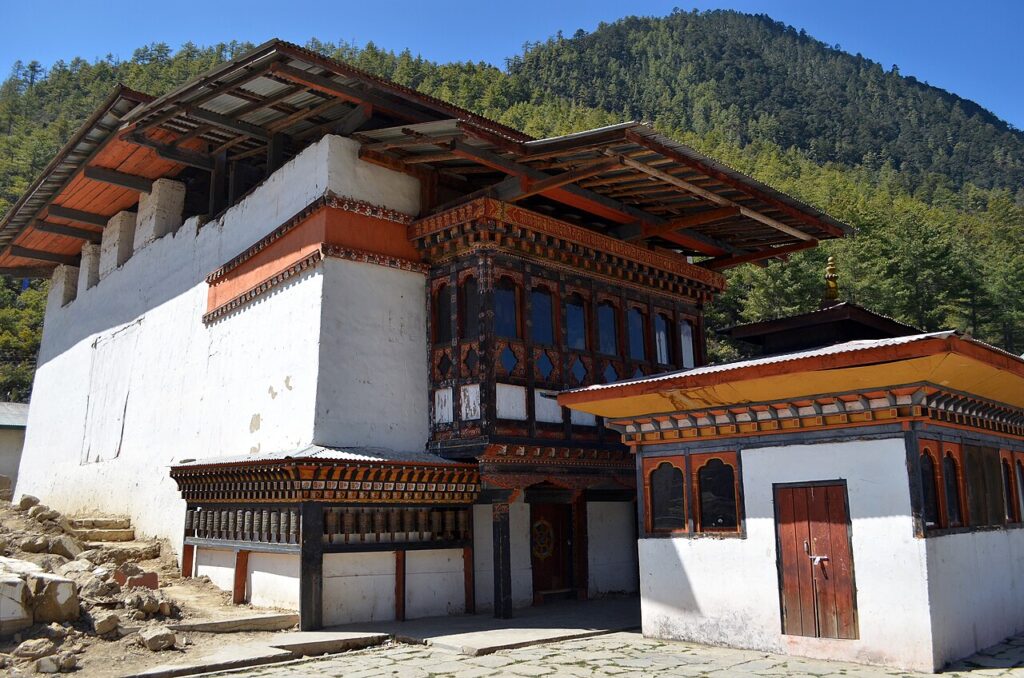
Photos from Bhutan during LGFC – Bhutan 2019, Haa’s Lhakhang Karpo, Bhutan
Refuel: Where Adventurers Eat
After a day on the ridge or the river, your body demands fuel, and Haa’s small but mighty food scene delivers. Start at Zhey Restaurant on the main road (open 7:00 AM to 8:00 PM, Nu 150-350 per dish). Locals recommend their signature phaksha paa (spicy pork belly with dried radish) served with a side of kewa datshi (potato and cheese)—it’s the kind of meal that rebuilds muscle after a long traverse. The owner, Dorji, is a former trekkking guide who will happily share trail beta over a glass of hot ginger tea.
For a quick lunch between activities, Haa Valley Cafe (open 10:00 AM to 5:00 PM, Nu 200-400) is the go-to for savvy visitors. Their jasha maru (spicy minced chicken) is legendary among guides, and you’ll want to order two plates—trust us. The cafe also sells homemade energy bars (Nu 80 each) made with roasted barley and honey, perfect for stashing in your daypack.
For dinner, Wangchuk’s Kitchen (open 5:00 PM to 9:30 PM, Nu 400-700) offers a set menu that changes daily based on what’s fresh. The hoentay (buckwheat dumplings stuffed with turnip greens) are a hands-down winner, and the suja (salted butter tea) is the best in the valley—you’ll find yourself ordering a second pot. Wangchuk himself is a former mountaineer who summited Gangkhar Puensum in 1999, and he loves chatting with adventurers about gear and routes. Reserve by 2:00 PM—his eight tables fill fast with the after-hike crowd.
Base Camp: Where to Stay
Adventurous travelers need a base that prioritizes early breakfasts, gear storage, and quick access to trails. Hotel Haa Valley Retreat (starting at Nu 4,000 per night, bookable on Booking.com) is the top choice: it sits just 400 meters from Lhakhang Karpo, offers a dedicated gear room with locking cubbies, and serves a grab-and-go breakfast from 5:00 AM (included in the rate). The property’s hot-water showers are powerful enough to melt a day’s worth of trail grime, and the manager, Karma, will arrange packed lunches for your hikes at Nu 500 per person.

Exterior of Taktsang Lakhang monastery located on stony mountain near green…, Haa’s Lhakhang Karpo, Bhutan
For budget-conscious dirtbags, Haa Backpackers Lodge (Nu 1,200 per night, dorm bed) offers no-frills comfort with an unbeatable location 200 meters from the temple. You’ll share a bathroom, but the common room has a wood stove, a map wall where travelers mark their routes, and a notice board for finding hiking companions. The owner, Tashi, is a former guide who runs free 30-minute stretching sessions every evening at 6:00 PM—a game-changer for your next day’s muscles. Neither accommodation has an elevator (none in Haa does), so your best bet is to pack light.
Gear & Prep Checklist
- Trekking poles with carbide tips: Essential for the Meri Puensum descent; the loose scree is treacherous without them. Rent at Haa Outdoor Gear (Nu 300/day) on the main road.
- Buff or neck gaiter: The wind at altitude is relentless; a merino wool buff (like Buff Original, Nu 1,200) will save your face from frostnip on the ridge.
- Hydration system with insulated tube: Water freezes above 3,500 meters by late afternoon—use a 2-liter CamelBak with an insulated sleeve (Nu 2,500 at Kathmandu’s North Face store; pick one up before you fly).
- Fitness prep: Three months before your trip, aim for a 10-kilometer trail run with 500 meters of elevation gain weekly. If you can’t manage that, start with stair climbing at a local high school stadium for 30 minutes, four times a week.
- Safety consideration: Acute Mountain Sickness (AMS) is real at Haa’s altitudes. Your best bet is to spend your first night at 2,600 meters in Paro before ascending to Haa, and carry Diamox (acetazolamide, Nu 1,500 at Paro Pharmacy) as a preventive—take 125mg twice daily starting 24 hours before you ascend. If you experience constant headache, vomiting, or confusion, descend immediately to Paro—the Haa hospital (on the main road, +975-1765-7890) handles basic cases but lacks hyperbaric chambers.
Getting There & Around
- Flights: Paro International Airport (PBH) is the only gateway—Drukair and Bhutan Airlines fly from Bangkok, Delhi, Kathmandu, and Singapore. Book at Skyscanner at least 8 weeks ahead; flights cost $400-$800 round trip depending on season. From Paro, you’ll drive 2.5 hours to Haa via the Chele La Pass (3,988 meters)—the highest motorable pass in Bhutan.
- Local Transport: Shared taxis from Paro’s bus stand cost Nu 1,500 per person and leave at 7:00 AM daily (cash only). Private taxis (Nu 4,000 one-way) can be booked through 12Go Asia and are your best bet for flexibility—drivers will wait while you take photos of the pass. Once in Haa, the temple and most trailheads are walkable, but for remote activities (like the Geyzhing homestay), hire a local driver through your lodge for Nu 500 per hour.
- Best Season: April to October is prime. For the best balance of weather and adrenaline, target May (clear skies, wild rhododendron bloom, consistent river levels) or September (post-monsoon clarity, fewer crowds, golden barley fields). Avoid December-February when heavy snow closes the ridge traverse and the Haa Chhu is too low for kayaking.
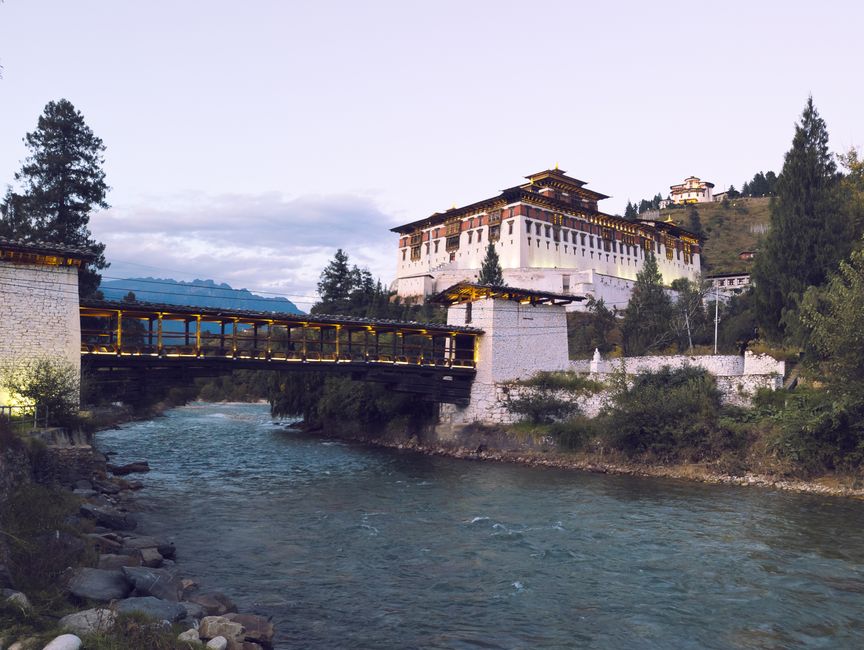
Serene view of Paro Dzong and river with a bridge in Bhutan, captured at dusk., Haa’s Lhakhang Karpo, Bhutan
Is Haa’s Lhakhang Karpo, Bhutan Worth It?
Honest answer: if you’re a thrill-seeker looking for un-crowded, high-altitude adventure that blends physical challenge with deep cultural immersion, this is one of the most rewarding destinations in the Himalayas. The Meri Puensum Ridge Traverse alone rivals anything in the Swiss Alps or Patagonia for pure, raw beauty—and you’ll have it almost to yourself. Travelers who love the Khumbu region of Nepal will find Haa’s trails less developed but more intimate; you won’t see another group for hours. That said, if your idea of adventure involves nightlife, gear shops on every corner, or a well-marked trail network with cafes every kilometer, you’ll find Haa frustrating—there’s one ATM, no bar scene, and trails are faint at best. You’ll also need to be comfortable with altitude and basic infrastructure; the “hardest” activities here require real fitness, not just a GoPro and a good attitude. But for the traveler who wants to earn their views, who finds joy in a cold river paddle at dawn or a 1,000-meter descent on scree, Haa’s Lhakhang Karpo is pure magic. Come for the temple, stay for the ridge, and leave with the kind of stories that make other adventurers jealous. Your best bet: book a five-day trip, do the traverse and the kayaking back-to-back, and save the homestay for your final night—it’s the perfect cool-down after a week of adrenaline.

