
Galiwin’ku, Australia Weekend: Sacred Hollow Logs (2026)
The twin-engine plane curves low over the Arafura Sea, and the first thing that hits you is the sound—not of waves, but of wind ripping across the corrugated iron roofs of Galiwin’ku, punctuated by the distant throb of a didgeridoo warming up for a bunggul (ceremony). You step onto the tarmac into thick, salt-laden air that smells of mangroves, smoke and crushed pandanus leaves. On Elcho Island, 550 kilometres east of Darwin, time doesn’t just slow down; it rearranges itself. Here, the oldest living culture in the world runs on a schedule that has nothing to do with your watch and everything to do with the tide, the season and the stories embedded in the land. This is not a typical weekend escape—there are no latte bars or souvenir stands—but for travellers willing to trade convenience for connection, it’s an unforgettable deep dive into the heart of Arnhem Land.
Quick Facts Before You Go
- Best Months: May to August (the dry season). You’ll escape the oppressive humidity of the wet (November–March), enjoy reliably sunny days and 28°C temperatures, and have the best access to fishing spots and walking tracks.
- Currency: Australian Dollar (AUD). $1 AUD ≈ $0.65 USD, but expect little to no ATM on the island—bring all the cash you need in small notes.
- Language: Yolngu Matha is the local language family, with several dialects. English is widely spoken by community members under 40, but learning simple greetings like “Yolngu” (person) or “Bălanya” (white/stranger) shows respect. Locals appreciate effort, no matter how clumsy.
- Budget: $150–$250 AUD per day realistically. This includes modest accommodation ($80), permit fees ($13.10 for 7 days), takeaway meals ($20 each), and charter fishing ($120 shared). Alcohol is restricted and expensive—skip it and save cash.
- Getting There: Fly to Nhulunbuy (Gove) from Darwin (1.5hrs) with Skyscanner, then catch the twice-weekly Airnorth flight to Galiwin’ku (30 minutes, $150 return). Book well ahead—the 20-seat plane sells out fast. Travellers can also arrange a private speedboat from Gove Harbour (2hrs, $400).
Day 1: Red Dust, Salt Water & The Art of Arriving
You start the morning at Galiwin’ku’s gravel strip, where the terminal is a modest shed with a hand-painted sign. The only thing more striking than the heat is the silence—until a cluster of children on bikes gather to stare at you, then wave wildly. You’re a rare sight. Lugging your bag past a line of shade-singing honeyeaters, you’re guided by a local elder named Mandjarr, who you’ll meet through your pre-arranged permit host. She leads you past the mission-era church and humble homes, pointing out where the Indian Ocean (yes, it’s actually the Arafura Sea, but locals smile at the subtlety) glitters between houses. By late morning, you’ve already learned more about kinship and land rights than any guidebook could teach you.
- Morning (8-11am): Land at Galiwin’ku Airport (GUL) and check in with the Northern Land Council office (open 8am–4pm weekdays) to activate your permit. Pay the $13.10 fee. Join a 10am guided walk of the township with a local guide arranged through Northern Land Council. This 90-minute stroll costs $50 per person and includes visits to the mission cemetery (established 1942 by Methodist missionaries) and the Mary River Wetlands lookout. You’ll hear the legendary story of the 1968 Yirrkala Bark Petition, which preceded Galiwin’ku’s own land rights activism—a powerful moment of Australian history.
- Lunch: Head to the “Bulelan–garduk” Takeaway near the community store. It’s an unassuming counter shop that locals call “The Shed.” Must-order: the barramundi burger (market price, usually $18) made with freshly caught fish, plus a side of bush apple chutney ($2). The owner, Dianne, is a grandmother of six and an avid football fan; she’ll probably braid your hair if you ask nicely. Savvy visitors bring their own damper bread to double-dip in the tartare sauce.
- Afternoon (1-5pm): Spend 2 hours at the Elcho Island Art & Craft Centre (officially “Buku-Larrnggay Mulka” satellite, open Mon–Fri 1–4pm, entry by donation $5). It displays vibrant paintings of ancestral figures—the legendary “Djalumbu” (creator serpent)—plus carved hollow logs and ceremonial poles. Artists charge between $150 and $1,500 for original pieces; you can arrange a direct commission. Then, at 3pm, join a beachcombing walk from the eastern end of the township along rocky foreshores. Well-worn trails lead to boulder art from the 1930s where you’ll see ochre hand stencils. Guide cost $40, or you can sign up for a free 4pm community volleyball match—travellers are cheerfully drafted.
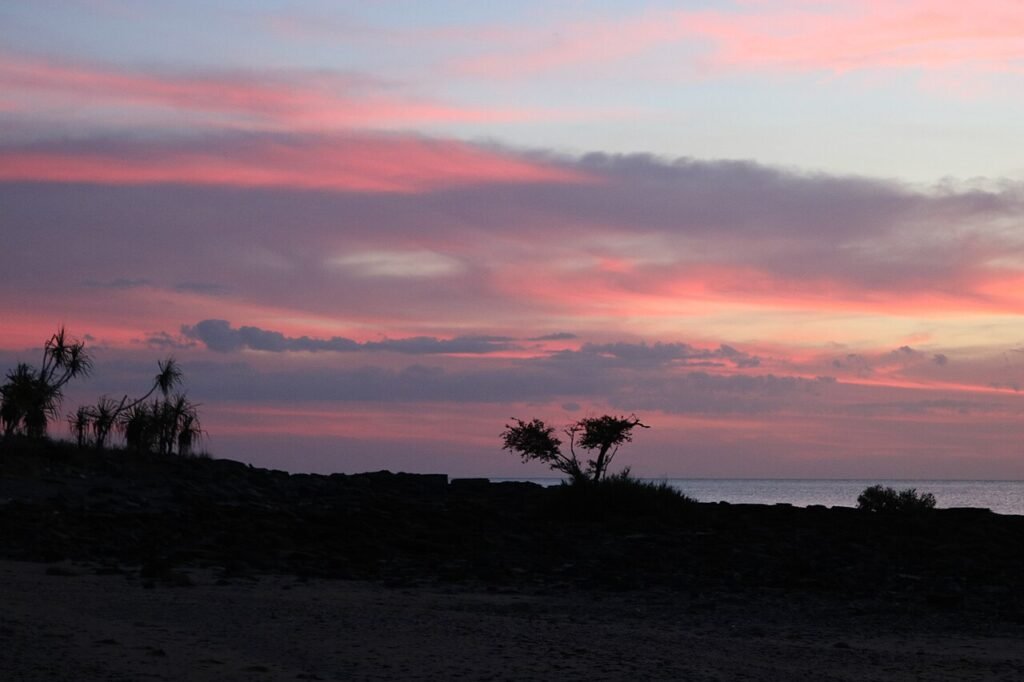
- Evening: For dinner, book a table at the Miyarrka Community BBQ ($25 per person, every Friday night in the dry season). You’ll eat grilled Spanish mackerel, yams, and pineapple salsa under strings of bulb lights while local musicians play yidaki (didgeridoo). The atmosphere is a mix between a church social and a beachside shindig—bring a hat and an open heart. After dinner, wander to the northern point at 7:15pm to watch the sun plunge into the Arafura Sea, turning the water to liquid copper. You’ll likely be joined by a pack of feral but friendly dogs; locals will tell you their names are various members of the AFL premiership team.

An artistic mindirr (aka dillybag), Galiwin’ku, Australia
Day 2: Fishing Lines, Ancestor Tracks & A Feast of Permission
Day two flips the rhythm—you’re up before first light, not for sightseeing, but for the island’s true obsession: fishing. People here fish not for sport but for breakfast and community feasts. The morning air is cool and smells of wet sand; you hear the slap of mullet jumping, and the low murmur of old men in tinny boats on the horizon. For the first two hours, you’ll be all nerves and tangled line. Then, as the sun clears the treetops, the barramundi strike—a heavy, sideways hit that reconfigures your whole Sunday. A Yolngu man named Djamik laughs and says, “That’s the boss. Now he says you’re welcome.” By midday, you’ll be a believer in the spiritual dimension of a fresh catch.
- Morning (6-10am): Cast off at dawn with Elcho Island Fishing Charters (departs 6:30am from the jetty, $120 per person for 4 hours). You’ll head to the groper boulders near Gatju Island, a sacred girls’ site. The price includes tackle, bait, soft drinks, and a patient explanation of how to fillet a silvery trevally. No fishing licence is required for saltwater, but be careful—the crew will rib you about any undersized fish you catch (“snapper for later,” they joke). Local tip: use the fresh squid bait they provide—artificial lures are ignored by these picky northern fish.
- Midday: Have a regenerating breakfast–lunch hybrid at the Galiwin’ku Community Store (open 8am–6pm, deli counter until 4pm). Try the “bultji” (green plum) smoothie ($6) and a hot beef-and-onion roll ($7), and be sure to check the noticeboard for cultural events. The insider move is to ask for the “kitchen special” (a curry of local mud crab) which isn’t listed but is often available around noon for $12. Grab supplies here, but note that shop hours flex around funeral and ceremony days—be patient; you’re on Yolngu time.
- Afternoon (1-5pm): Drive or walk the 5-kilometre loop road around the island’s southern end, through cashew and mango groves that were planted by missionaries in the 1950s. You’ll arrive at the Banumbirr Serpent Mound, a raised cultural site marked by a circle of stone. The sacred story says the ancestral snake Djalumbu created the river here; locals recommend you sit quietly and listen to the wind for a few minutes. For a lighter break, wander through the town’s small market (every Saturday 2–5pm at the community hall). There you’ll find hand-woven pandanus baskets ($35), carved turtle shells ($55), and fresh damper with warrigal greens. Savvy visitors know to bring loose change—the market has no card facility.
- Final Evening: For your farewell feast, book at the Galiwin’ku Community Hall for their Sunday night “seven seas” buffet (6pm, $35, requires reservation the day before). You’ll eat pearl perch, crab legs, roast sweet potato and perhaps crocodile curry, all laid out on banana leaves. Locals recommend arriving 15 minutes early to chat with the cooks—usually aunties who’ll insist that “you are too skinny” and feed you extra damper. After dinner, join the informal storytelling circle under the banyan tree near the school. Visitors often discover that this is the highlight of the trip—listening to elders weave tales of the Dreamtime, peppered with jokes about tourists who mistook stingrays for shadows. It’s a final gift: permission to hold this place lightly in your memory.
Black and white geometrical facade of modern Sydney Opera House in expressi…, Galiwin’ku, Australia
The Food You Can’t Miss
Food on Galiwin’ku is not a spectacle; it’s an identity. The staples are barramundi, mackerel, crab, and shellfish caught that morning, plus bush fruits and vegetables like green plums (bultji), bush apple, and wild passionfruit. The most famous dish you’ll find is wulukpuyguma—a powerfully flavoured stew of turtle meat, lime juice and chili, traditionally cooked underground in a pit with hot stones. You won’t see it on any menu; you’ll only get it if you’re invited to a family feast. But the closest you’ll come legitimately is at the Thursday night community dinner at the Church Hall (admission $15, open to all visitors). They serve it over turmeric rice, and you’re encouraged to eat with your fingers.
For street food, the Bulelan–garduk Takeaway is the go-to. Its star item is the “barrgi and chips”—a whole fried flounder, crisp and sweet, served in a paper wrapper with wedge-cut potato cooked in fish-scented oil. A full order is $14. The secret is the house-made, smoky bush tomato BBQ sauce, which the owner

Stunning view of Melbourne’s skyline featuring Princes Bridge and Yarra River., Galiwin’ku, Australia

