
Enrekang, Indonesia Weekend: Mountain Mists (2026)
The first thing you notice is the air—crisp and cool against your skin at dawn, carrying the faint, earthy scent of roasted coffee beans from a roadside warung. As the morning mist lifts over the jagged peaks surrounding Enrekang, the clatter of a becak (pedicab) echoes down the main street, and somewhere, a vendor is already slicing open a durian, its sweet, pungent aroma mingling with the smoke from charcoal grills. This is Enrekang, a highland town in South Sulawesi that most travelers speed past on their way to Tana Toraja—and that, savvy visitors know, is precisely its charm.
Quick Facts Before You Go
- Best Months: April to October (dry season). The mountain views are clearest in July and August, but you’ll find the coffee harvest at its peak in May.
- Currency: Indonesian Rupiah (IDR). Approximately IDR 15,500 to USD 1. Check current rates before you go.
- Language: Bahasa Indonesia is the national language, while the local Enrekang dialect is spoken among locals. English is limited—you’ll get by with basic Indonesian phrases and a translation app. Young people in cafes and hotels speak some English.
- Budget: IDR 300,000–500,000 (USD 19–32) per day for a comfortable mid-range experience—meals, transport, and one paid activity. Budget travelers can manage on IDR 200,000 (USD 13).
- Getting There: Fly into Sultan Hasanuddin International Airport (UPG) in Makassar, then take a 4-hour drive via scenic mountain roads. Book flights at Skyscanner. Alternatively, buses run hourly from Makassar’s Terminal Daya (IDR 80,000, 4–5 hours).
Day 1: The Coffee Trail & The Mountain That Whispers
You start your Saturday with the sun still hidden behind the Latimojong Mountains, a golden glow just beginning to spill over the ridges. The streets of Enrekang town are quiet, save for the sound of a broom sweeping a café threshold. This is the hour when the coffee farmers are already at work, and you, lucky traveler, are about to follow their lead. Your day unfolds like a slow pour-over—measured, rich, and deeply satisfying.
- Morning (8–11am): Head to Kampung Kopi Buntu Batu, a coffee village perched at 1,200 meters above sea level, a 20-minute drive from town. Join a guided walk through the arabica and robusta plantations (IDR 50,000 per person, 1.5 hours). You’ll see the cherries ripening on the branches, and your guide—often a third-generation farmer—will explain the entire process from bean to cup. The views over the valley are so sweeping you’ll forget to check your phone. Finish with a tasting session at the village’s communal pavilion, where you’ll sip a cup so fresh it was roasted yesterday. Local tip: arrive by 8am to beat the heat and catch the farmers at work.
- Lunch: Make your way to RM. Pinasung on Jalan Poros Enrekang, a no-frills warung beloved by locals. Order kapurung (IDR 25,000)—a tangy sago-based soup with fish, lime, and chili that’s the signature dish of the Enrekang region. The sourness will wake up your palate after all that coffee. Pair it with a cold es teh manis (sweet iced tea, IDR 5,000).
- Afternoon (1–5pm): Spend the early afternoon at Air Terjun Baringang (Baringang Waterfall), a 30-meter cascade about 40 minutes south of town by ojek (motorcycle taxi, IDR 60,000 round trip). The hike down is steep but short—15 minutes through dense tropical foliage. You’ll hear the roar before you see it. The pool at the base is a deep, dark green and surprisingly cool; travelers often discover that a quick dip here is the most refreshing thing you’ll do all weekend. Bring a towel and waterproof bag. On your way back, stop at Pasar Sentral Enrekang (Central Market) to wander among the stalls of spices, coffee beans, and woven fabrics. Look for the tenun Enrekang—handwoven cloth with bold geometric patterns, priced from IDR 150,000 for a scarf.
- Evening: Dinner at RM. La’bo & Bakso Akbar, a lively spot on Jalan Jenderal Sudirman where the grill smoke rises in fragrant plumes. Order sop konro (beef rib soup, IDR 35,000)—a rich, dark broth flavored with keluak nut and lemongrass that’s a Sulawesi classic. For a lighter option, try the coto makassar (beef offal soup, IDR 30,000). After dinner, walk to Alun-Alun Enrekang, the town square, where families gather in the cool evening air and vendors sell pisang epe (grilled banana, IDR 10,000) drizzled with palm sugar. The energy is gentle, unhurried—the opposite of a big-city night out, and exactly what you came for.

Foto Andi Tenri Liwang La Tinro Wabup Enrekang, Enrekang, Indonesia
Day 2: The Lake, The Legends & A Farewell Feast
Sunday arrives with a different rhythm—slower, more reflective. You’ll find yourself waking without an alarm, the morning light soft through your window. Today is about water and stories. Locals recommend starting early because by midday, the lake shimmers under a tropical sun and draws the weekend crowds from Makassar. You’ll be glad you listened.
- Morning (7–10am): Drive 30 minutes north to Danau Sidenreng (Lake Sidenreng), a vast, placid body of water that stretches to the horizon. Rent a traditional wooden boat (IDR 100,000 per hour) and glide through the lotus pads and water hyacinths while your boatman—usually an older fisherman who knows every bird call—points out kingfishers and egrets. Locals believe the lake is guarded by a mystical white crocodile, a legend passed down for generations. You might not spot the crocodile, but the stillness of the water at dawn feels almost sacred. Stop for a simple breakfast of nasi kuning (yellow rice with fried chicken, IDR 20,000) at a floating warung near the dock.
- Midday (10am–12pm): Visit Benteng Alla’, a 17th-century fort ruin on a hill overlooking the lake. The drive takes 20 minutes through winding roads and pine forests. Most tourists overlook this site in favor of the lake itself, but savvy visitors know the views from the top are worth the detour. The fort’s stone walls are crumbling and overgrown with moss, and the only sound is the wind through the casuarina trees. You’ll have the place nearly to yourself. Insider tip: arrive just before 11am when the light is perfect for photos and the heat hasn’t peaked.
- Afternoon (1–4pm): Explore the Kampung Tenun Kelurahan Buntu weaving village, 15 minutes from town. Watch the women work at traditional looms, their hands moving with a rhythm that seems almost musical. The tenun cloth from Enrekang is distinct from other Sulawesi weavings—the patterns are bolder, the colors deeper, often inspired by the mountains and coffee plants around them. You can buy directly from the weavers (a full sarong costs IDR 250,000–400,000 depending on complexity). Learn to identify the suku motifs, each representing a different local clan. It’s a souvenir with a story—and your support keeps a generations-old craft alive.
- Final Evening: Your farewell dinner belongs at Warung Nikmat Lestari, a family-run gem on Jalan Poros Enrekang that feels like eating in someone’s home—because that’s exactly what it is. Order the ayam bakar rica-rica (grilled chicken in chili paste, IDR 35,000) and tahu gejrot (fried tofu with sweet-sour soy sauce, IDR 15,000). The chicken comes sizzling on a ceramic plate, the skin crisp and caramelized, the chili heat lingering in the best way. End with kolak pisang (banana in coconut milk, IDR 10,000)—a warm, comforting dessert that tastes like the highlands themselves. As you eat, the family might share stories of their village or offer you a glass of homemade coffee liqueur. Stay as long as you like; there’s no rush to leave Enrekang.
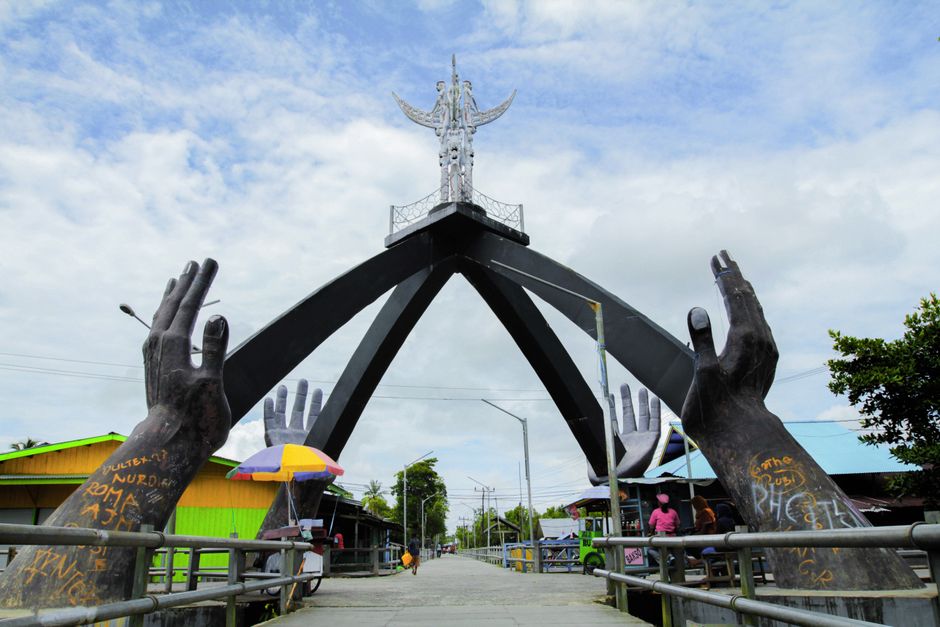
Monument in Agats, Papua with large hands sculpture and urban surroundings., Enrekang, Indonesia
The Food You Can’t Miss
Food in Enrekang is a revelation—not because it’s fancy (it’s not), but because it’s deeply, unapologetically local. The cuisine draws from both the highlands and the nearby lake, and every dish tells a story of geography and tradition. Your taste buds will remember this place long after you’ve returned home.
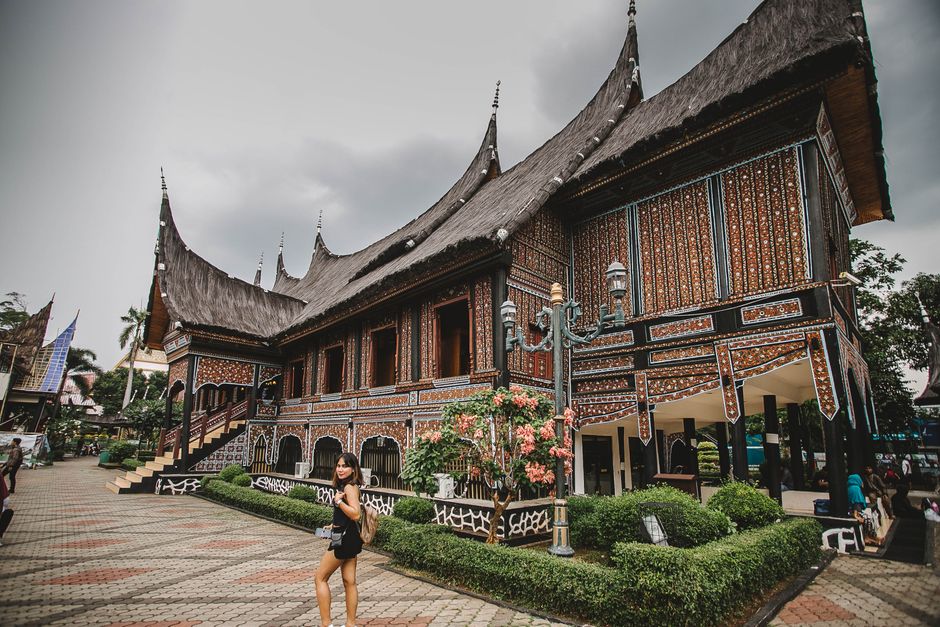
Beautiful traditional Indonesian building with detailed architecture and a …, Enrekang, Indonesia
Start with kapurung, the dish that defines Enrekang. It’s a sago-based porridge or dumpling served in a clear, sour broth flavored with fish, lime, galangal, and a generous punch of chili. The texture is uniquely slippery and satisfying, and locals consider it a hangover cure, a comfort food, and a cultural emblem all in one. You’ll find the best version at RM. Pinasung for IDR 25,000, but every warung has its own twist—some add shrimp, others use buffalo meat. Don’t leave Enrekang without at least two bowls.
For street food, track down pisang ijo (green banana in coconut sauce) from a cart near the market—IDR 8,000 gets you a generous portion served in a banana leaf. The bananas are steamed until tender, coated in a bright green rice-flour batter, then drizzled with thick coconut milk and palm sugar syrup. It’s sweet, creamy, and utterly addictive. For a proper dinner, the grilled chicken at Warung Nikmat Lestari is the standout, but the sop konro at RM. La’bo & Bakso Akbar runs a close second. Seasoned travelers prefer to eat early—around 6pm—because the best cuts sell out fast, and the atmosphere peaks just as the evening prayers echo from the nearby mosque.
Where to Stay for the Weekend
Enrekang isn’t a big-city destination, and its accommodation options reflect that—small, family-run, and full of character. Your choice of neighborhood shapes your experience. Stay in town if you want to be within walking distance of markets and restaurants; stay outside town if you’re here for the tranquility.
In Town: Hotel Berkah on Jalan Poros Enrekang offers clean, comfortable rooms with air conditioning and hot water from IDR 250,000 per night. The staff are exceptionally warm—one might even bring you a cup of local coffee at breakfast. It’s not luxurious, but it’s genuine. Book via Booking.com or call ahead.
Outside Town: Penginapan Alam Indah sits on a hill 10 minutes south of the center, with views over the coffee plantations and mountains from IDR 350,000 per night. The rooms are simple wooden bungalows with verandas where you can sit and watch the mist roll in. The on-site restaurant serves excellent kapurung, and in the morning, you’ll wake to birdsong and the clatter of coffee being roasted in the valley below. Check availability on Airbnb.
For a Splurge: Villa Eksklusif Enrekang (yes, it calls itself “exclusive”) is a cluster of private villas on the slopes near Lake Sidenreng, from IDR 700,000 per night. Each villa has a plunge pool and a kitchen, making it ideal for families or groups. The views of the lake at sunset are unforgettable.
Before You Go: Practical Tips
- Getting Around: The best way to explore Enrekang is by renting a scooter (IDR 80,000 per day from Rental Motor Beta near the market). Roads are winding and occasionally unpaved, so experienced riders only. Alternatively, hire an ojek driver for the day (negotiate IDR 150,000–200,000 for a full day of sightseeing). There are no ride-hailing apps here.
- What to Pack: A light jacket or fleece (mornings and evenings can drop to 18°C), waterproof shoes for waterfall hikes, a power bank (power outages are common in remote areas), and a phrasebook or translation app—English is limited outside the tourist trail.
- Common Tourist Mistakes:Common Tourist Mistakes: The biggest error travelers make is rushing. Enrekang is a place to slow down—don’t try to pack in too many sights in a single day. Also, many visitors skip the local weaving villages in favor of the lake; you’ll regret missing the chance to watch master weavers at work. Finally, don’t assume you can pay with a card—bring enough cash for the weekend; ATMs are limited in town and often run out of bills on weekends.
- Money-Saving Tip: Eat at the market or at roadside warungs rather than the few tourist-oriented restaurants. A full meal at Pasar Sentral Enrekang costs IDR 15,000–25,000, and the quality is just as good—if not better—than restaurants. You’ll save at least IDR 50,000 per day on food alone.
Enrekang doesn’t shout. It whispers—through the rustle of coffee leaves in the morning breeze, through the gentle lapping of lake water against a wooden boat, through the quiet pride of a weaver showing you her latest pattern. Travelers often discover that what they expected to be a simple weekend stopover becomes something more: a place that settles into your memory like the lingering taste of good coffee. You’ll leave with dusty shoes, a full stomach, and a feeling that you’ve just scratched the surface. That, perhaps, is the best reason to come back.

