
Dallol, Ethiopia’s Incredible Alien Landscapes, Salt Flats & Extreme Adventure (2026)
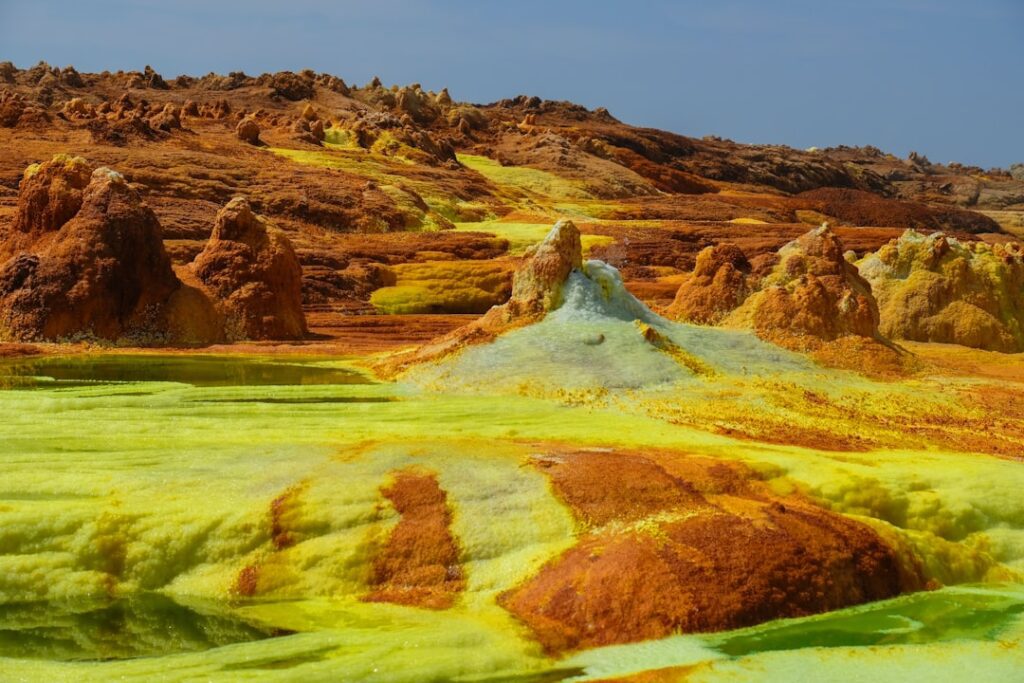
What if you could walk on a landscape that looks more like Jupiter than Earth? Dallol, Ethiopia proves this is possible, with its psychedelic hot springs, neon-yellow sulfur fields, and acidic geysers creating the hottest average year-round temperatures anywhere on the planet. Here, in the Danakil Depression, you’ll traverse a geological wonder so extreme it’s often used to simulate conditions on Mars. This isn’t a casual stroll; it’s a full-scale expedition into one of the planet’s most inhospitable and visually stunning frontiers.
Why Dallol, Ethiopia Stands Out

Colorful Meskel parade in Addis Ababa, Dallol, Ethiopia
- Historic Architecture: The ancient salt mining settlement of Dallol, abandoned in the 20th century, features crumbling, salt-block structures that stand as a ghostly testament to human endurance in an extreme environment.
- Cultural Scene: Witness the centuries-old tradition of the Afar salt cutters, who manually extract slabs from the crust of Lake Karum, a practice largely unchanged since camel caravans first traded the “white gold.”
- Local Specialties: While dining options are expedition-based, you must try traditional Ethiopian coffee (buna) prepared over a campfire, a rich, ceremonial experience that connects you to the nation’s soul.
Pro Tip: The only feasible time to visit is between November and February. Outside these months, temperatures soar past 50°C (122°F), making travel dangerous and most tours unavailable. Book your expedition at least 3-4 months in advance, as reputable operators have limited departures.
Map of Dallol, Ethiopia
Use these interactive maps to explore Dallol, Ethiopia and plan your route:
📍 View Dallol, Ethiopia on OpenStreetMap
🗺️ Open Dallol, Ethiopia in Google Maps
Planning Your Trip: Practical Essentials
Getting There and Around
- By Air: All expeditions start with a flight to Mek’ele Airport (MQX). Ethiopian Airlines offers daily flights from Addis Ababa Bole (ADD). From Mek’ele, you will be collected by 4×4 as part of your mandatory guided tour. Book flights at Skyscanner for best deals.
- By Train: There are no train services to the Danakil region. The only rail access in Ethiopia is the Addis Ababa–Djibouti line, which does not service the north.
- By Car: Independent travel is strictly prohibited and incredibly dangerous due to extreme terrain, security concerns, and the need for military permits. You must book an organized tour that provides armed scouts and all transport in convoy. Compare car rentals at RentalCars.com for other parts of Ethiopia, but not for Dallol.
- Local Transport: Your transport is the 4×4 convoy provided by your tour operator. There is no public transport. Movement between sites is strictly controlled by your guide and security personnel.
Best Time to Visit
Timing is not about preference but survival. The Danakil Depression is one of the hottest places on Earth year-round, but a narrow window exists for human exploration.
| Season | Weather | Highlights |
|---|---|---|
| Cool Season (Nov–Feb) | Daytime 25-35°C (77-95°F), nights can drop to 15°C (59°F). Dry, clear skies. | The *only* safe time for tours. All expeditions operate now. Comfortable for camping and hiking the sulfur fields. |
| Hot Season (Mar–Oct) | Extreme heat, regularly exceeding 45°C (113°F) and peaking above 50°C (122°F). Blistering and hazardous. | Virtually no tours operate. Travel is strongly discouraged due to severe health risks from heatstroke and dehydration. |
| Shoulder (Oct/Nov & Feb/Mar) | Temperatures begin to climb or descend. Early Nov and late Feb are ideal. | Potential for slightly fewer visitors on expeditions. Book the very start or end of the season for optimal conditions. |
Budgeting for Dallol, Ethiopia

Stunning view of Addis Ababa’s skyline against a vibrant sunset backdrop., Dallol, Ethiopia
| Category | Budget | Mid-range | Luxury |
|---|---|---|---|
| Accommodation | Camping included in tour ($0 extra) | Basic lodge in Mek’ele pre/post tour (~$30/night) | Premium hotel in Addis/Mek’ele (~$120+/night) |
| Meals | All meals provided on tour | Local eateries in Mek’ele (~$5-10/meal) | Fine dining in Addis Ababa (~$25+/meal) |
| Transport | All 4×4 transport included in tour | Domestic flight ADD-MQX (~$150-200 roundtrip) | Private charter flights ($$$) |
| Activities | All sights included in tour package | Tip for guides/scouts (~$20-30 total) | Private, bespoke expedition (prices on request) |
| Daily Total | Tour-dependent (~$150-250/day all-in) | $200-350/day | $500+/day |
*Note: Costs are primarily dictated by your chosen multi-day tour package, which typically ranges from $450 to $800 for a 3-4 day all-inclusive expedition from Mek’ele.
Top Attractions and Must-See Sights
| Attraction | Description | Hours | Entry Fee |
|---|---|---|---|
| The Dallol Hydrothermal Field | A surreal, multi-colored landscape of acidic hot springs, neon sulfur, and salt pillars—often called the most alien place on Earth. | Daylight hours only | Included in tour |
| Lake Karum (Salt Lake) | A vast, crusted salt pan where Afar miners cut salt slabs by hand, continuing a trade route that is over a thousand years old. | Daylight hours only | Included in tour |
| Erta Ale Volcano | One of the world’s few permanent lava lakes; a night hike to peer into its bubbling, fiery cauldron is a rite of passage. | Night hike (approx 10 PM-3 AM) | Included in tour |
| The Yellow & Green Sulfur Lakes | Pools of vividly colored, highly acidic water and formations of crystalline sulfur that create a breathtaking, if pungent, spectacle. | Daylight hours only | Included in tour |
3-Day Itinerary: Dallol, Ethiopia’s Highlights & Hidden Gems
Day 1: Descent into the Danakil & Camel Caravans
- Morning (7-9 AM): Depart Mek’ele in a 4×4 convoy with armed scouts. The 3-hour drive descends 1000 meters into the depression, offering dramatic views of the escarpment.
- Afternoon (12-3 PM): Arrive at Lake Karum. Watch salt cutters (called *bered*) extract slabs. Visit the market at Hamad Ela, where camel caravans are loaded. Lunch is a packed picnic provided by your tour.
- Evening (6-8 PM): Set up camp near Hamed Ela. Enjoy a simple dinner of pasta, vegetables, and bread under a blanket of intense stars. The silence of the desert is profound.
Day 2: Alien Landscapes & Volcanic Fire
- Morning (5-11 AM): Early start to beat the heat for the drive to Dallol. Explore the hydrothermal field for 2-3 hours. The vibrant oranges, yellows, and greens are most vivid in the morning light. Do not touch the water—it’s highly acidic.
- Afternoon (12-4 PM): Return to camp for lunch and rest during the peak heat. Later, visit the nearby salt canyons and the “Black Mountain” for more geological wonders.
- Evening (6 PM – 3 AM): Drive to the base of Erta Ale (~2 hours). Begin the 3-hour night hike (moderate difficulty) up the volcano. At the summit, peer into the mesmerizing, active lava lake—a truly unforgettable sight. Sleep in basic stone huts at the rim.
Day 3: Sunrise on a Volcano & Return to Civilization
- Morning (6-9 AM): Witness sunrise over the Erta Ale caldera for a different perspective on the lava lake. Hike back down to the base camp for a hearty breakfast.
- Afternoon (12-5 PM): Long drive back to Mek’ele, stopping for a final swim (if you dare) in the salty, buoyant waters of Lake Afdera (subject to route). A packed lunch is en route.
- Evening (7 PM): Celebrate your survival and success with a proper meal in Mek’ele. Try the local specialty, *tibs* (sautéed meat), at Gheralta Restaurant before your flight the next day.
Cultural Insights & Etiquette
- Language: The local Afar people speak Afaraf. Amharic is Ethiopia’s official language. Guides will translate. Learn “Ameseghinalehu” (Thank you in Amharic) and a smile goes a long way.
- Customs: The Afar are proud and traditional. Always ask permission before taking photographs of people, especially the salt miners. It’s respectful to engage through your guide.
- Tipping: Tipping your guide, driver, cook, and armed scouts is expected and appreciated. Budget around $20-30 total per person for the entire tour crew, given at the end.
- Dress Code: Modest, loose-fitting, breathable clothing is essential for sun protection. Long sleeves, pants, and a wide-brimmed hat are non-negotiable. Respect local sensibilities.
- Business Hours: This is expedition travel. Schedules are dictated by safety, heat, and convoy movement. There are no shops or standard business hours in the depression itself.
Where to Eat: Dallol, Ethiopia’s Best Bites
Dining in the Danakil means expedition catering. Meals are simple, carb-heavy, and designed for energy: pasta, rice, vegetables, bread, and canned fish or meat. The experience is about sustenance in an extreme environment. Your culinary adventure happens in Mek’ele before and after the tour.
Must-Try Local Specialties
- Injera with Wat: The national dish—a spongy sourdough flatbread served with spicy stews. Try it at any restaurant in Mek’ele or Addis for an authentic taste.
- Tibs: Sautéed meat (beef, goat, or lamb) with onions, herbs, and butter. A flavorful and celebratory dish perfect after your expedition.
- Ethiopian Coffee (Buna): Don’t miss the ceremonial coffee preparation, often involving roasting green beans, incense, and three rounds of small, strong cups.
Restaurant Recommendations by Budget
| Type | Restaurant | Specialty | Price Range |
|---|---|---|---|
| Budget | Mek’ele Local Eateries (near the market) | Fresh, cheap injera with various stews (shiro, misir) | $2-5 per meal |
| Mid-range | Gheralta Restaurant, Mek’ele | Excellent tibs, grilled meats, and good service | $8-15 per meal |
| Fine dining | Yod Abyssinia, Addis Ababa | Traditional feast with live music and dance表演 | $20-30 per meal |
Where to Stay
In the Danakil, you will camp in basic tents or sleep in rudimentary huts at Erta Ale. Comfort is minimal—this is part of the adventure. Your pre- and post-tour accommodation will be in Mek’ele. Compare prices and book at Booking.com or Airbnb for apartments in Addis.
Best Neighborhoods for Accommodation
- Mek’ele City Center: Close to tour meeting points, banks, and restaurants. Convenient for early departures. Options range from basic guesthouses to the Planet International Hotel.
- Bole, Addis Ababa: If extending your trip, stay near Bole International Airport for easy transit. This area has international hotels, great restaurants, and is safe for travelers.
- Piazza, Addis Ababa: The historic district, full of character, markets, and older hotels. Better for experienced travelers wanting a more local vibe.

Aerial view of the iconic rock-hewn Church of Saint George in Lalibela, Dallol, Ethiopia
FAQs: Your Dallol, Ethiopia Questions Answered
1. Is Dallol, Ethiopia safe at night?
Safety is managed entirely by your tour operator. You will travel in convoy with armed scouts due to past regional instability. At night, you stay in designated camps or the guarded Erta Ale summit camps. Follow your guide’s instructions explicitly. The landscape itself poses the greater risk—never wander off alone, day or night.
2. What currency is used and are credit cards accepted?
The Ethiopian Birr (ETB) is the currency. In the Danakil, you will need no money. Bring ample small-bill Birr for tipping your crew, and for meals/souvenirs in Mek’ele. Credit cards are useless in the north. Cash is king. Exchange money at the airport in Addis or at banks in Mek’ele.
3. How do I get from the airport to the city center?
In Mek’ele, your tour operator will typically arrange a pickup from the airport. If not, taxis are available for a fixed rate of about 200-300 ETB ($4-6) to downtown. In Addis Ababa, use the official airport taxi desk to get a fair price to your hotel (approx. 400-500 ETB to Bole). Book airport transfers at GetYourGuide for convenience in Addis.
4. Do I need to speak the local language?
No. Your English-speaking guide will handle all communication. Learning a few Amharic greetings (“Selam” for hello, “Ameseghinalehu” for thank you) is a respectful gesture appreciated by locals and your crew alike.
5. What’s the appropriate dress code?
Practicality and modesty. For the expedition: sturdy hiking boots, long, lightweight pants, long-sleeved shirts, a wide-brimmed hat, and a scarf for dust. For towns: modest clothing is respectful. Avoid shorts and sleeveless tops, especially for women, when not on the trek.
Final Thoughts: Dallol, Ethiopia Awaits
Dallol is not a destination; it’s an expedition that recalibrates your understanding of our planet. It challenges
{“@context”: “https://schema.org”, “@type”: “FAQPage”, “mainEntity”: [{“@type”: “Question”, “name”: “What is the best time to visit Dallol?”, “acceptedAnswer”: {“@type”: “Answer”, “text”: “The best time to visit Dallol depends on your preferences. Generally, the dry season offers the most pleasant weather for sightseeing and outdoor activities.”}}, {“@type”: “Question”, “name”: “How many days do I need in Dallol?”, “acceptedAnswer”: {“@type”: “Answer”, “text”: “Most travelers spend 3-5 days in Dallol to see the main attractions. A week allows for a more relaxed pace and day trips.”}}, {“@type”: “Question”, “name”: “Is Dallol expensive to visit?”, “acceptedAnswer”: {“@type”: “Answer”, “text”: “Dallol can be visited on various budgets. Accommodation ranges from hostels to luxury hotels, and local restaurants offer affordable dining.”}}]}
Related Guides
Explore more destinations similar to Dallol:
- Catamarca, Argentina: Best High-Altitude Vineyards, Ancient Ruins & Star-Filled Skies (2026)
- Tambov Oblast, Russia: Ultimate Countryside Serenity, Imperial History & Soviet-Era Mystique (2026)
- Da Nang, Vietnam’s Hidden Beaches, Bridges & Breathtaking Mountains (2025)
- Lake Ihema, Rwanda’s Hidden Hippos, Birdlife & Untouched Serenity (2026)

