
Chonchi, Chile Weekend: Churches, Curanto & the Colors of Chiloé (2026)
The air smells of woodsmoke and damp cedar, mingled with the briny tang of the Chiloé Sea. You step out of your rental car onto the cobbled main street, and the first thing you notice is the soft creak of palafitos—the iconic stilted houses—as they sway gently with the tide. The whistle of a *pingüino* (a local ferryboat) echoes from the harbor, and you catch the scent of merquén-smoked shellfish drifting from a nearby *curanto* pit. Welcome to Chonchi, a town that feels like a living postcard painted by a mischievous artist who loves sea blues, mustard yellows, and forest greens.
Quick Facts Before You Go
- Best Months: December to March (dry, sunny days, long daylight). November and April offer fewer crowds but occasional rain. Avoid June–August unless you love sideways rain and fog.
- Currency: Chilean Peso (CLP). Roughly 900 CLP to 1 USD. Bring cash—most small eateries and artisan shops don’t accept cards.
- Language: Spanish. English is rarely spoken outside major hotels in Castro; a few phrases or a translation app are essential.
- Budget: 55,000–80,000 CLP per day (about $60–$90 USD) for mid-range meals, local transport, and a simple guesthouse. Add 20–30% if you want a seaside lodge with a view.
- Getting There: Fly into Mocopulli Airport (MHC), 20 km from Castro and 45 minutes from Chonchi. Direct flights from Santiago take 2 hours. Book at Skyscanner. Alternatively, take a bus from Puerto Montt (3 hours, 4,500 CLP).
Day 1: Palafitos, Stilt-Walking & Steaming Shellfish
You start the morning with the sun still low over the inlet, reflecting off the zinc roofs of the houses that climb the hill. The streets are quiet except for a few *colectivos* (shared taxis) rattling past. Your first mission: photograph the palafitos along Calle Pedro Aguirre Cerda, where the houses are painted in such vivid hues that they seem to glow against the dark water. Locals recommend doing this by 9 a.m., before the tour buses arrive from Castro.
- Morning (8–11am): Stroll the waterfront boardwalk from the Muelle de Chonchi (pier) south along the bay. Free. At 9:30, visit the Iglesia de Chonchi (San Carlos), a UNESCO World Heritage wooden church built in 1859. The interior smells of centuries-old cypress and candle wax; the bell tower offers a panoramic view—climb the steep stairs for free, but leave a small donation (500 CLP). Afterward, grab a fresh *jugo de murta* (a local berry juice) from the tiny stall at the pier’s entrance, 1,500 CLP.
- Lunch: Head to El Checo Restaurant, a family-run spot on Avenida Pedro Montt. The star here is *curanto en hoyo*—a traditional Chiloé feast of shellfish, pork, chicken, and potatoes steamed in a pit lined with hot stones. Order the *Curanto para dos* (35,000 CLP) and let the waiter show you how to peel the *nau* (a giant barnacle) with a small wooden fork. The dish comes with *milcao* (potato bread) and *chapalele* (potato dumplings)—eat them dipped in *pebre* (Chilean salsa) for a fiery kick.
- Afternoon (1–5pm): Three activities in one. First, drive 10 minutes south to the village of Huicha to see its stilted houses—fewer tourists, more photogenic decay. Then, at 2:30, take the 3-kilometer *Sendero de la Costa* trail from the Chonchi cemetery (yes, the cemetery, with its colorful wooden mausoleums) down to Playa Coipo. The walk takes 45 minutes through a forest of *alerce* trees, with glimpses of otters if you’re quiet. Cost: free. Finally, at 4 p.m., visit the small Museo de Chonchi (admission 2,000 CLP) on Calle Centenario—a quirky collection of farm tools, traditional *ponchos*, and a rusted harpoon. The elderly guide, doña Marta, will tell you (in rapid Spanish) about the 1960 tsunami that nearly destroyed the town.
- Evening: Dinner at Restaurante Palafito 1700, an actual converted stilt house in the northern part of town. You’ll eat *ceviche de reineta* (10,500 CLP) while the floor gently rocks with the tide. The atmosphere is intimate—only 6 tables, candles, and the sound of water lapping the pilings. Afterward, for a nightcap, walk two blocks to Bar La Cabaña on the main square, where locals play *cacho* (a dice game) over bottles of *Pisco Capel* and cheap *Coca-Cola*. A night here feels like time travel.

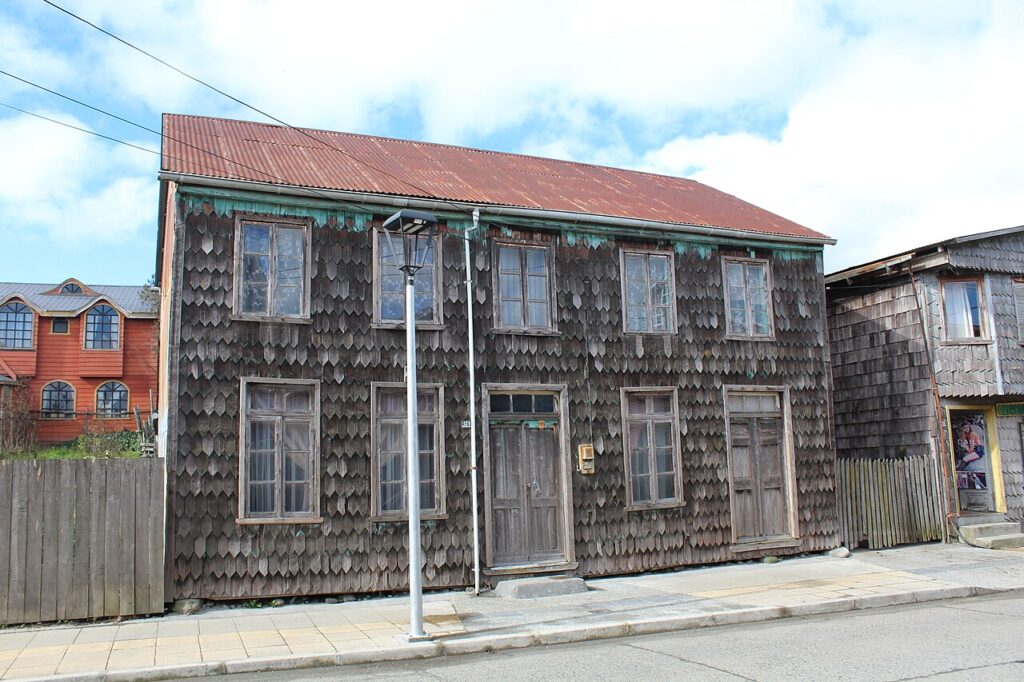
Arquitectura en Chonchi, Chile
Day 2: Church-Hopping, Market Bounty & Farewell to the Island
Travelers often discover that Chonchi is the perfect base for exploring the island’s wooden churches, a UNESCO cluster. Day two is about going deeper into Chiloé’s spiritual and culinary soul—without rushing. You’ll trade the sea breeze for the scent of incense and fresh *manjar* (dulce de leche).
- Morning (8–10:30am): Skip the hotel breakfast—instead, walk to Panadería San Juan, a bakery on Avenida Libertad that’s been baking since 1924. Grab two *empanadas de mariscos* (2,000 CLP each) and a *café con leche* (1,500 CLP). Then drive 20 minutes south to the village of Chiloé’s most famous church: Iglesia de Nuestra Señora de los Dolores de Dalcahue (built 1906). The church’s three-tiered tower is a marvel of carpentry—no nails, just wooden pegs. Enter through the side door to avoid the 10 a.m. tour groups. Free.
- Midday (11am–1pm): Backtrack to the Dalcahue market (Mercado Artesanal) along the waterfront. Here, vendors sell hand-woven *tocuyo* wool scarves (15,000 CLP) and jars of smoked *picoroco* (a barnacle spread, 8,000 CLP). Insider tip: head to the back stalls where the older *artesanas* sit—they’ll haggle 10–15% off if you buy three items. Avoid the front stalls aimed at cruise passengers.
- Afternoon (1–4pm): Lunch in Dalcahue at Puerto Cuatro, a no-frills shed overlooking the ferry dock. The *congrio frito* (fried eel, 9,500 CLP) is served with *papa rellena* and a salad of *chape* (a local seaweed). After lunch, drive north 15 minutes to the village of Tenaún, home to a church that resembles a golden ship (Iglesia de Nuestra Señora del Patrocinio, 1900). Most tourists overlook Tenaún, so you’ll have the wooden nave to yourself. The caretaker, don Pedro, might open the bell tower if you offer 2,000 CLP.
- Final Evening (6:30pm onwards): Return to Chonchi for your farewell dinner at Restaurante El Castillo, housed in an old wooden mansion on the hill. Order *cazuela de vacuno* (beef stew, 8,500 CLP) and a bottle of *Chiloé Artesanal Beer* (5,000 CLP). The dining room has a fireplace and windows that catch the last apricot light over the bay. As you eat, listen for the distant *campanario* (bell tower) of San Carlos church ringing at 8 p.m.—a signal for the nightly closure of the pier gates. End the evening on the boardwalk, watching fishermen haul their *lanchas* onto the shore by lamplight. You’ll leave with the taste of salt and woodsmoke on your lips.

A wooden walkway to a body of water, Chonchi, Chile
The Food You Can’t Miss
Chiloé’s cuisine is built from the sea and the potato. The signature dish you’ve already encountered—*curanto*—is a community affair. Travelers often find it best in Chonchi at weekend ferias (street markets) where families gather to dig the pit. On Saturday afternoons, look for a crowd around the pier; they’re likely pulling *nau* and *picoroco* from a steaming mound of *nalca* leaves. A plate from these pop-up vendors costs 8,000–12,000 CLP and includes everything—just bring wet wipes, because your fingers will be greasy.
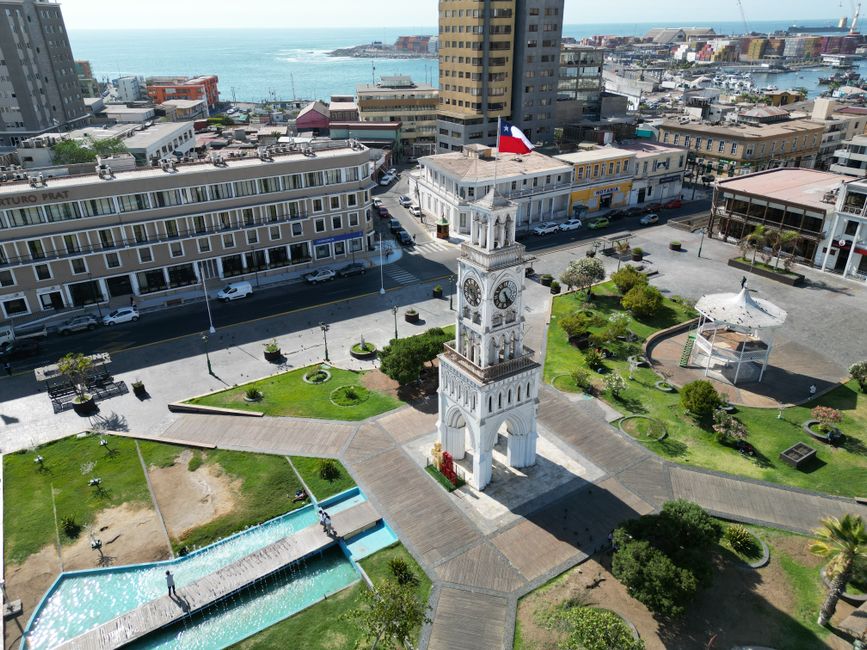
A stunning aerial view of the Clock Tower in Plaza Prat, Chonchi, Chile
Beyond curanto, seek out *empanadas de mariscos* (shelfish pastries) at the small kiosk on Plaza de Armas, run by doña Luisa. She fries them to order in a cast-iron pan; the filling is a secret mix of *choritos* (mussels), *jaiba* (crab), and *merquén* (smoked chili). One empanada costs 2,500 CLP—you’ll want two. For a sit-down seafood meal, El Checo (mentioned earlier) is the most consistent, but also try La Picada de la Abuela on Calle Eleuterio Ramírez for *caldillo de pescado* (fish stew, 7,500 CLP). Locals recommend finishing with *leche asada* (a caramelized custard) or *miel de ulmo* (honey from the ulmo tree, sold at every roadside stall for 3,000 CLP a jar).
Where to Stay for the Weekend
Chonchi offers a handful of character-rich lodgings. For an authentic palafito experience, book a room at Palafito Hostel Boutique on Avenida Playa—each room has a private balcony over the water. Doubles from 65,000 CLP per night. They include a simple breakfast of bread and jam, but the sunrise view is priceless. If you prefer a quieter stay, Cabañas Chonchi on the hill (Calle San Carlos) offers wooden cabins with kitchens and garden hammocks. Prices from 50,000 CLP; perfect for families. For comfort and history, Hotel El Castillo (same building as the restaurant) is a restored 1920s mansion with creaky floors and a bay view. Doubles from 80,000 CLP. Book ahead—rooms sell out during February’s Chiloé Cultural Festival. Check availability on Booking.com or Airbnb.
Before You Go: Practical Tips
- Getting Around: A rental car is the best bet (prices from 40,000 CLP/day from Castro agencies like Hertz). Buses from Chonchi to Dalcahue cost 700 CLP one-way but run only every 2 hours. Colectivos (shared taxis) are frequent but cost 2,500 CLP per person within 10 km.
- What to Pack: (1) A windproof jacket—Chiloé is famous for sudden gusts. (2) Waterproof shoes for cobblestones and muddy trails. (3) A headlamp for walking the unlit waterfront at night. (4) A refillable water bottle—tap water is safe and tastes of the forest.
- Common Tourist Mistakes: (1) Trying to see all 16 UNESCO churches in one weekend—you’ll spend more time driving than experiencing. Focus on three: Chonchi, Dalcahue, and Tenaún. (2) Ignoring the tides. Palafito walkways flood at high tide; check a tide table before strolling the southern pier.
- Money-Saving Tip: Eat lunch at the *feria* on weekends rather than restaurants. A full bowl of curanto at the feria costs 10,000 CLP, compared to 35,000 CLP at a sit-down restaurant. Also, skip the bus to Castro—you can walk the 3-km coastal path to the village of Huicha for free, and it’s far more scenic.

