
Bojonegoro, Indonesia Weekend: River Cruises, Teak Forests & the Best Pecel in East Java (2026)
Your weekend begins with the sharp, earthy scent of clove cigarettes mixing with the sizzle of tempeh frying on a street-side cart. The clatter of becak pedals and the distant call to prayer from Masjid Agung Bojonegoro weave into the morning air. You’ll step out onto Jalan Panglima Sudirman just as the market vendors begin their chorus—a scene that feels both chaotic and impossibly calm, as if time itself has settled into the rhythm of the Bengawan Solo river that snakes through town.
Quick Facts Before You Go
- Best Months: April to October (dry season) – pleasant days and clear skies for river trips and forest walks. Avoid December–February for frequent afternoon downpours.
- Currency: Indonesian Rupiah (IDR). At last check, 1 USD ≈ 15,500 IDR. Most places are cash-only; bring small denominations.
- Language: Javanese and Indonesian are spoken daily. English is understood only in a few hotels and tourist spots. A phrasebook or translation app is your best friend.
- Budget: 500,000–1,000,000 IDR (US$32–$64) per day per person – comfortable midrange covering meals, transport, and one attraction. Backpackers can do 300,000 IDR.
- Getting There: Fly into Juanda International Airport (SUB) in Surabaya, then take a 2.5-hour drive or a 2-hour train from Surabaya Gubeng station to Bojonegoro station (economy class ~70,000 IDR). Book flights at Skyscanner.
Day 1: Riverbank Mornings & Market Adventures
Sunrise in Bojonegoro belongs to the Bengawan Solo river, Indonesia’s longest stream. You start the morning at Pasar Wisata, the city’s main market, where the air is thick with frying tempeh, fresh clove, and the sweet perfume of pisang goreng. Locals greet you with nods and a casual “Monggo” – a Javanese invitation to join. The weekend energy here is infectious; you’ll see women carrying baskets of chili peppers, men unloading teak logs, and children darting through narrow aisles. Your plan today is to let the river and the market guide you.
- Morning (8–11am): Start at Pasar Wisata Bojonegoro (Jl. Panglima Sudirman, open dawn to noon). Wander the stalls: buy a kilo of fresh rambutan for 15,000 IDR, watch a man sharpen knives, and taste a cup of kopi joss – coffee with a glowing charcoal piece dropped in (5,000 IDR). Don’t leave without a small bag of kacang mete (cashews) roasted in garlic – 20,000 IDR.
- Lunch: Head to Warung Makan Bu Sri (Jl. Teuku Umar No. 17, open 10am–8pm). Order the pecel Bojonegoro – steamed vegetables with a rich peanut sauce, topped with a generous crunch of fried tempeh and emping (melinjo chips). One portion is 20,000 IDR. Locals recommend adding a side of suwar-suwir (shredded chicken) for an extra 10,000 IDR.
- Afternoon (1–5pm): After lunch, a 15-minute becak ride (20,000 IDR) takes you to the riverbank near Jembatan Ketandan. Join a private perahu getek (wooden boat) for a 2-hour cruise on the Bengawan Solo (150,000 IDR per boat, fits up to 4 people). The boatman will point out the dense teak forests that line the shore – Bojonegoro is the largest teak producer in East Java. Most tourists miss this; seasoned travelers know the best view is from the water, especially during the late afternoon when the light turns the river gold. Alternatively, visit Hutan Jati (Teak Forest) near Desa Ngunut, a 30-minute ojek ride (50,000 IDR one way). Entry is free, but hire a local guide (100,000 IDR) to show you ancient Javanese carving sites hidden among the trees.
- Evening: Dinner at Sate Kambing Pak Haji (Jl. Letkol Sugiono No. 45, open 5–10pm). This is the spot locals rave about: tender goat satay grilled over charcoal, served with lontong rice cakes and a sweet soy–chili dip. One skewer is 5,000 IDR – order a dozen. Follow it with es campur (shaved ice with condensed milk, coconut, and jackfruit) from a nearby cart (10,000 IDR). After sunset, stroll along Alun-Alun Bojonegoro, the town square, where families gather and street musicians occasionally perform. The cool river breeze makes it the perfect end to your first day.

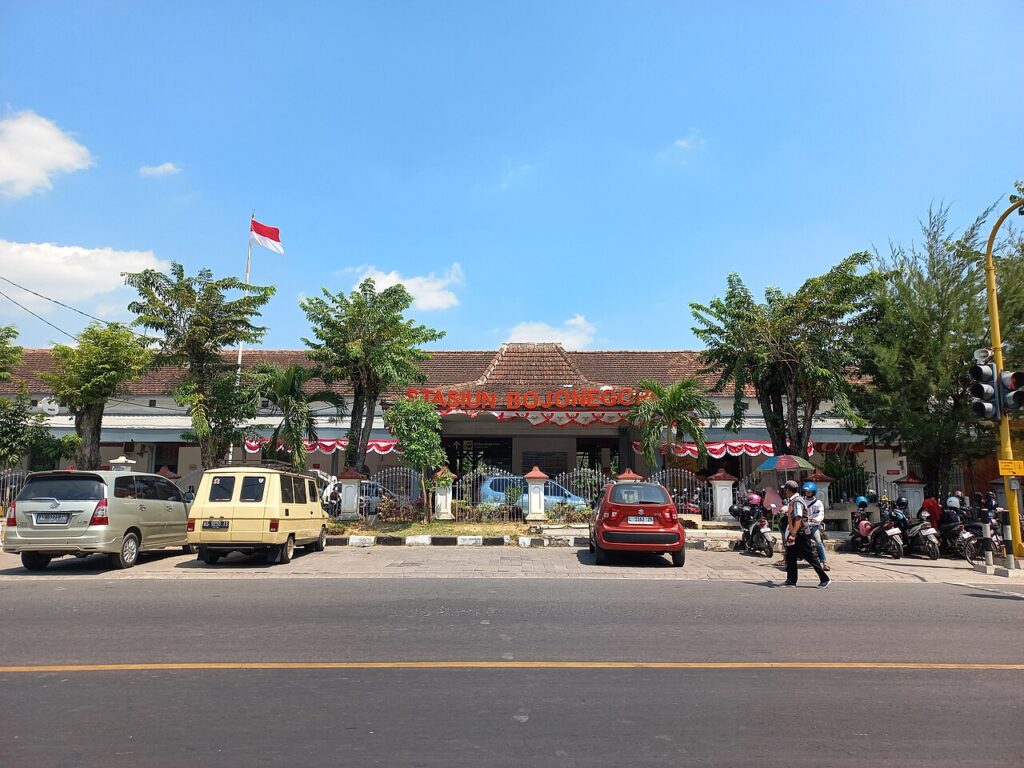
Suasana kota Bojonegoro, Bojonegoro, Indonesia
Day 2: Cultural Heritage & Culinary Farewell
Your second morning feels more intimate – the city wakes slower on a Sunday. You notice the quiet hum of motorbikes and the laughter of children practicing traditional Javanese dance in the square. Travelers often discover that Bojonegoro’s true soul lies not in its few sights but in its everyday rituals: a grandmother weaving a bamboo basket, a man playing the gamelan in his front yard. You’ll spend today chasing those small, unplanned moments.
- Morning: Start at Warung Nasi Pecel Mbah Sate (Jl. Ahmad Yani No. 10, open 6–10am). A bowl of bubur ayam (chicken porridge) with a soft-boiled egg and crispy fried shallots goes for 15,000 IDR. Pair it with a glass of wedang jahe (ginger tea) – 5,000 IDR. You’ll notice the locals dip their spoon in dabu-dabu, a raw sambal made of crushed bird’s eye chili, tomato, and lime. Be brave – it’s scorching but unforgettable.
- Midday: Visit Museum Bojonegoro (Jl. Veteran No. 8, open 8am–3pm, closed Monday, entry 5,000 IDR). This small but well-curated museum houses Javanese antiquities: a 14th-century Majapahit clay jar, antique keris daggers, and displays on the region’s oil and teak industries. Insider tip: come right at opening – the crowds are zero, and the elderly curator, Pak Kartono, loves to share stories in Indonesian (a translation app helps). He may show you the secret carving on a stone replica of a temple said to date from 1293.
- Afternoon: Wander the kampung (neighborhood) along Jalan Teuku Umar for a mile-long stretch of art and craft. Stop at Batik Bojonegoro Shop (Jl. Teuku Umar No. 52) – a family-run atelier where you can watch artisans hand-stamp batik cloth with patterns of teak leaves and river tides. A scarf costs 75,000–150,000 IDR. Savvy visitors buy a set of batik cloth for around 200,000 IDR to bring home. Next, walk into Gang Setra, a narrow alley where three generations of women weave bamboo baskets (anywhere from 20,000–50,000 IDR). Most tourists rush past this street; you’ll want to linger.
- Final Evening: For your farewell dinner, book a table at Pondok Ndeso (Jl. Kaliandra No. 12, open 4–10pm, reservations recommended on Sundays). Set in a traditional Javanese house with open bamboo walls, the garden is strung with fairy lights. Order ayam penyet – a free-range chicken deep-fried then smashed and served with sambal terasi (shrimp paste chili), raw cucumber, and hot rice (40,000 IDR). The portion is generous, the spice level negotiable. End with a bowl of klepon – chewy rice flour balls filled with palm sugar and rolled in grated coconut (15,000 IDR). The meal, with a large bottle of mineral water and tea, totals about 70,000 IDR per person. Afterwards, share a chilled bottle of local beer on the veranda while the gamelan soundtrack plays softly. It’s the kind of evening that makes you want to cancel your flight.

Low angle photography of post, Bojonegoro, Indonesia
The Food You Can’t Miss
Bojonegoro’s cuisine is an earthy, spirited affair built on the region’s abundance of teak-farmed goat, river fish, and market vegetables. The star dish is pecel Bojonegoro – not the sedate Javanese salad you find elsewhere. Here, locals steam kangkung (water spinach), bean sprouts, and cassava leaves, then smother them in a peanut paste thickened with kencur (aromatic ginger). At Warung Makan Bu Sri (Jl. Teuku Umar No. 17), the version is legendary: the sauce is coarser, spicier, and served with fresh crackling emping. One plate costs 25,000 IDR, and you’ll see office workers queueing at noon.
For street food, you can’t skip sate kambing Pak Haji – goat satay that’s grilled over a brazier of glowing coconut husks, giving the meat a faint smokiness that’s addictive. A skewer runs 5,000 IDR, and the owner, now in his 60s, has been selling since 1985. If you’re feeling adventurous, try the es podeng from a cart near Alun-Alun – a rainbow of shaved ice, jelly, sweet corn, condensed milk, and a blob of pink syrup. It’s 10,000 IDR and pure childhood nostalgia.
For a sit-down dinner, Pondok Ndeso is the locals’ pick for modern Javanese comfort: their bebek goreng (fried duck) is marinated for eight hours in turmeric and coriander, then deep-fried until the bones crunch. Order it with extra sambal matah (a Bali-style chopped chili and lemongrass relish) and two portions of rice – 60,000 IDR total. Vegetarian travelers will find joy in the mixed urap (steamed vegetables with grated coconut) and tahu telur (tofu omelet with sweet soy sauce), both available at Warung Makan Bu Sri.

White round ball on black table, Bojonegoro, Indonesia
Where to Stay for the Weekend
Midrange River View: Hotel Dyan Inn (Jl. Raya Bojonegoro – Kalitidu KM 5, 15 minutes from town center, ☎ +62 353 881234). Rates start at 350,000 IDR per night for a double room with air conditioning and a balcony overlooking the Bengawan Solo. The on-site restaurant serves solid pecel and nasi goreng, and staff can arrange river boat tours. Book via Booking.com.
Budget but Central: Airy Bojonegoro Jl. Teuku Umar (Jl. Teuku Umar No. 35, near the batik shops). Clean, basic rooms with shared bathroom from 150,000 IDR per night. Perfect for solo travelers or couples who plan to be out all day. Look for it on Airbnb – sometimes hosts offer discounts for two-night stays.
Cultural Homestay: Pondok Desa (Desa Ngunut, a 20-minute ojek ride from town – ask for Pak Suwandi at the teak forest entrance). A traditional wooden house with three guest rooms, shared meals, and a chance to join the family in making tempeh or harvesting cassava. Very simple – no AC, but mosquito nets provided. Rates are 120,000 IDR per person including breakfast and dinner. Email booking only; your hotel front desk can call ahead. For other options, browse Booking.com or Airbnb with the filters “Bojonegoro” and “homestay”.
Before You Go: Practical Tips
- Getting Around: Within town, becak (pedicab) cost 20,000–30,000 IDR for a short hop. For longer distances (e.g., to the teak forest or river port), use ojek (motorcycle taxi) – negotiate 40,000–60,000 IDR per ride. No ride-hailing apps operate reliably; flag one down on the street. If you’re renting a scooter (80,000–100,000 IDR per day from rental stalls near the train station), wear a helmet and download offline maps – Google Maps works, but roads off the main drag are poorly marked.
- What to Pack: Lightweight cotton clothes (preferably modest – cover shoulders and knees when entering mosques or homes). A good power bank (outlets can be scarce in markets). Insect repellent with DEET (dengue is possible year-round). A rain poncho or small umbrella even in dry season – showers can surprise you in May or October. Finally, a copy of your passport (hotels require it, and you don’t want to carry the original on market days).
- Common Tourist Mistakes: Many visitors assume everyone speaks English. Learn a few phrases: “Matur suwun” (thank you) and “Pinten?” (how much?). Also, don’t haggle aggressively in the market – a smile and a polite “minta diskon” (

