
Bilene, Mozambique (2026)
The first thing that hits you is the salt-laced breeze carrying the faint, sweet perfume of cashew blossoms from the inland groves. You step out of your car after the two-hour drive from Maputo, and the world slows to the gentle lap of the Lagoa dos Bilene against the sandy shore. It’s Friday evening, and you’ve just traded the city’s honking minibuses for the low hum of a distant fishing dhow. This is Bilene—a place where your weekend starts with a deep, unhurried breath.
Quick Facts Before You Go
- Best Months: May to October — the dry season brings clear skies, lower humidity, and perfect temperatures (24–28°C). Avoid the rainy months of December to February when roads can turn to mud and mosquitoes are thick.
- Currency: Mozambican Metical (MZN); roughly 1 USD = 62 MZN. Carry cash—ATMs are unreliable in town, and most smaller stalls and restaurants don’t accept cards.
- Language: Portuguese is the official language. English is spoken at resorts and some restaurants near the lagoon, but travelers find that a few phrases in Portuguese — *bom dia*, *obrigado* — open doors and smiles.
- Budget: Expect to spend 2,500–4,000 MZN ($40–65 USD) per day for meals, activities, and transport. Accommodation is separate and varies widely by season.
- Getting There: Fly into Maputo International Airport (MPM) — a 1.5-hour flight from Johannesburg or direct from Lisbon. You’ll then drive 2.5 hours north on the EN1 highway. Book flights early at Skyscanner for the best rates from your hub.
Day 1: Arrival, the Lagoon, and a Dhow at Sunset
You start the afternoon pulling into Bilene town — a dusty ribbon of pastel-colored shops and swaying coconut palms along the lagoon’s edge. The sun is high, and the water is the color of polished jade. You park, drop your bag at your guesthouse, and immediately feel the tension of the week dissolve. There’s no itinerary here, only the quiet invitation of the lagoon. Locals nod as you pass, and a fisherman mending his net on the shore offers a lazy wave. You’re exactly where you need to be.
- Afternoon (1:00–5:00pm): Head straight to Praia do Bilene, the public beach at the lagoon’s south end. Rent a kayak from Bilene Adventures (250 MZN per hour, about $4 USD) and paddle out across the glassy water. The lagoon is protected from ocean currents, so even novice paddlers feel safe. Savvy visitors hug the eastern shore where egrets wade and the water is shallow enough to see the sandy bottom. Pack a waterproof bag for your phone—you’ll want photos of the mangrove-lined channels.
- Lunch (late, 2:00pm): Stop at Restaurante Dona Mariquinhas, a family-run spot on the lagoon’s edge with wooden decking and striped umbrellas. Order the grelhada de camarão (grilled prawns, 450 MZN, about $7 USD), served with rice, matapa (a creamy cassava leaf and coconut stew), and a wedge of lemon. The prawns are pulled from local waters that morning—you can taste the brine. Wash it down with a fresh coconut water (50 MZN) while you watch the dhows drift past.
- Evening (4:30–7:00pm): This is the magic hour. Book a sunset dhow cruise with Mozambique Dhow Safaris (approx. 1,500 MZN per person, about $24 USD, for 2.5 hours). Your captain, a soft-spoken local named João who has been sailing these waters for 30 years, will guide you out to the mouth of the lagoon where the Indian Ocean meets the lake. The dhow glides silently except for the creak of the mast and the splash of the hull. Travelers often discover that this is when the water shifts from jade to amber to deep violet as the sun sinks. João will point out the distant outline of flamingos on a sandbar. Bring a light jacket—the breeze picks up once you’re on open water.
- Dinner (7:30pm): At Bilene Sunset Lounge, perched on a low cliff overlooking the lagoon’s northern shore, order the peixe à Bilene (local fish in coconut sauce, 550 MZN, about $9 USD). The restaurant is open-air with fairy lights strung through the rafters, and you’ll hear the gentle thrum of marrabenta music from a small speaker. Stick around for a glass of vinho de caju (cashew wine, 80 MZN per glass), a sweet, nutty local specialty that most tourists overlook. The owner, Senhor Alberto, often joins guests for a chat about the town’s history.

Beach of Praia de Bilene, Mozambique
Day 2: Ocean Beach, Local Markets, and a Farewell Feast
Morning comes in shades of rose gold over the lagoon, and you wake to the sound of roosters and the clatter of a boat being prepared for the day’s catch. Today you cross the narrow spit of land to the Indian Ocean side, where the beach is wilder and the waves crash in long, rolling sets. It feels like discovering a secret world that only the locals and a few seasoned travelers know about.
- Morning (7:00–10:30am): Drive or take a moto-taxi (100 MZN, about $1.60 USD) the 15 minutes across the peninsula to Praia do Bilene Oceano, the ocean beach. Bring your own water and snacks—there are no vendors here, only endless sand and the roar of the Atlantic. You’ll likely have the beach almost to yourself. Walk north toward the fishing village of Praia da Manhenha (a 30-minute walk), where you can watch fishermen hauling in their catch from dugout canoes. The local children will likely wave and ask your name—it’s a simple, unforced welcome that travelers remember for years.
- Midday (11:00am–1:00pm): Return to the lagoon side and visit Mercado Municipal de Bilene on Avenida Principal. The market is small but vibrant, with stalls of dried fish, coconut oil, and fresh produce. Buy a bag of mangoes (30 MZN for three, about $0.50 USD) and a small basket of piri-piri chili (20 MZN), which you can bring back as a souvenir. Locals recommend chatting with Dona Tereza at stall #12, who sells homemade cashew paste—rich, creamy, and nothing like the processed versions you find abroad.
- Lunch (1:00pm): Head to O Sabor do Mar, a no-frills restaurant hidden behind a row of cashew trees near the lagoon’s northern edge. The specialty here is caldo de peixe (fish soup, 320 MZN, about $5 USD)—a fiery, fragrant broth loaded with chunks of rock cod, cassava, and coriander. It’s the kind of meal that restores your soul after a morning in the sun. Pair it with a cold Laurentina lager (60 MZN), the preferred local beer.
- Afternoon (2:00–5:00pm): Explore the neighborhood of Bairro da Lagoa, the oldest part of Bilene, where narrow sandy lanes wind between traditional reed-and-thatch houses. Stop at the small Igreja de São Sebastião (St. Sebastian’s Church), built in 1948 by Portuguese colonizers—a simple whitewashed structure with a red-tiled roof. The interior is cool and quiet, with hand-carved wooden pews and a faded mural of the lagoon. If you’re lucky, the caretaker, Senhor Carlos, will show you the old parish records, some dating back to the 1920s.
- Final Evening (6:00pm onward): Your farewell dinner deserves something special. Book a table at Restaurante Lagoa Azul, the most established restaurant in Bilene, run by the same family since 1982. The setting is elegant but relaxed—tables under a thatched roof on a wooden deck that extends over the water. Order the lagosta grelhada com manteiga de alho (grilled lobster with garlic butter, 1,200 MZN, about $19 USD)—it’s the standout dish, and the lobster is caught that morning from the nearby reefs. For dessert, try the pudim de caju (cashew pudding, 150 MZN), a silky, caramel-topped custard that locals swear is the best in the province. Pair it with a small glass of brandy de caju (80 MZN). As you eat, the lagoon reflects the last light, and you’ll hear the distant rhythm of a drum circle starting up at a beach bar down the shore. It’s the perfect note to end on.
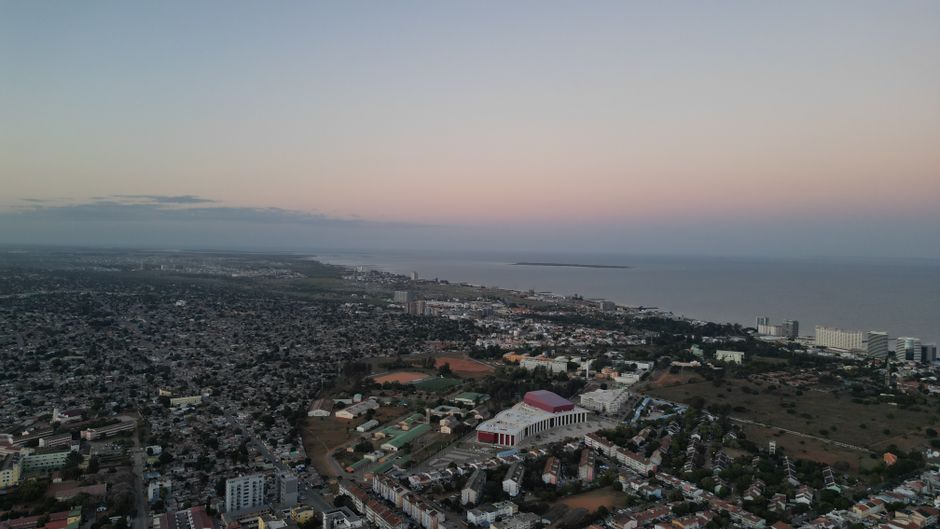
Stunning aerial view of Maputo, Bilene, Mozambique
The Food You Can’t Miss
Bilene’s culinary identity is rooted in the lagoon and the sea. The local prawns—large, sweet, and succulent—are the star of nearly every menu. Travelers soon learn that the word *camarão* will appear constantly, and you’ll never tire of it. But the real hidden gem is matapa, a creamy stew made from cassava leaves simmered in coconut milk with garlic and chilis. It’s a dish with origins in the Makua and Shangaan traditions, slow-cooked for hours until the leaves break down into a silky, emerald-green sauce. You’ll find it served alongside grilled fish or prawns at almost every restaurant in town.
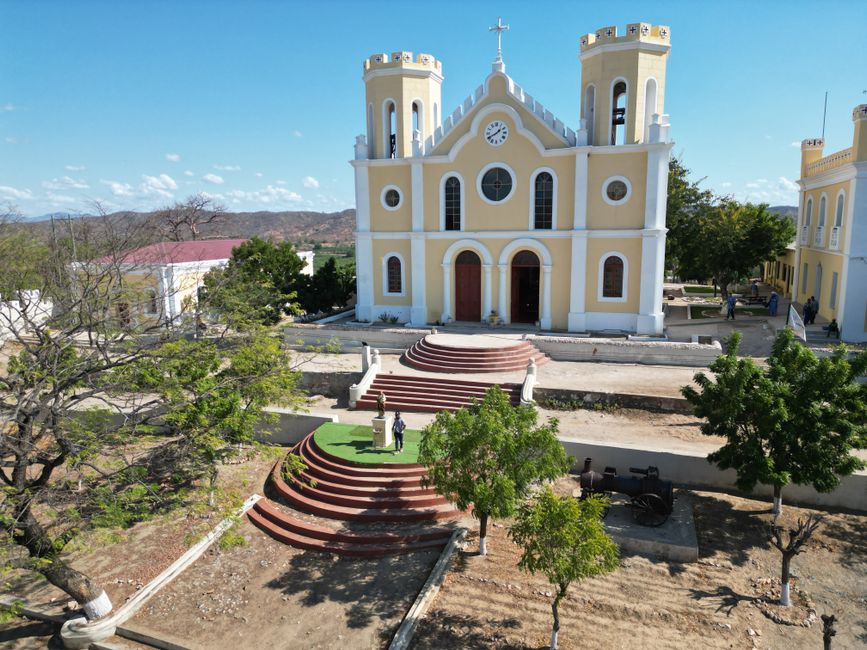
Aerial view of a historic church in Deghe, Bilene, Mozambique
For a street-food adventure, visit the evening stalls near the Praça da Independência every Saturday from 5:00pm. Here, vendors grill espetos de frango (chicken skewers marinated in piri-piri, 40 MZN each) over open coals. The smoke mingles with the smell of frying mandioca frita (fried cassava, 25 MZN per bag). Grab a skewer and a bag of cassava, find a plastic stool under a string of fairy lights, and eat while watching the town’s slow evening life unfold. It’s rustic, loud, and utterly authentic.
For a sit-down meal, Restaurante Dona Mariquinhas offers the most consistent traditional Mozambican food in town. Their frango à zambeziana (chicken cooked in coconut and lemon, 350 MZN) is a must-try, and the owners, the Guimarães family, have been serving it since opening in 1998. The restaurant is open daily from 11:00am to 9:00pm, but arrive early for lunch — the best tables on the deck go fast.
Where to Stay for the Weekend
Your best bet is to stay on the lagoon side — the views and the breeze are unmatched. Bairro da Lagoa offers the most authentic experience, with guesthouses tucked among local homes and a five-minute walk to the water. Try Casa da Lagoa Bilene (doubles from 1,800 MZN per night, about $29 USD) — a simple, clean guesthouse run by a friendly Mozambican family. The rooms have mosquito nets, ceiling fans, and a small veranda overlooking the garden. You’ll sleep to the sound of frogs and the occasional splash of a fish in the lagoon.
Praia do Bilene has more resort-style options. Bilene Resort & Spa (doubles from 4,500 MZN per night, about $72 USD) offers air-conditioned rooms, a pool, and a restaurant with a full bar. It’s on the lagoon’s edge and you can walk straight into the water from the hotel’s deck. The downside? It feels more insulated from local life.
For budget travelers, Bairro Central has a handful of backpacker-friendly options like Hostel Bilene Backpackers (dorm beds from 600 MZN per night, about $10 USD). It’s basic but sociable, with a shared kitchen and a common area where you can swap stories with other travelers. Book accommodations in advance during the June–August high season — rooms fill up fast.
Search for your stay at Booking.com or find local guesthouses on Airbnb.
Before You Go: Practical Tips
- Getting Around: The best way to explore Bilene is by moto-taxi — motorbikes that zip along the sandy roads. They cost 50–100 MZN (about $0.80–1.60 USD) per ride within town. Agree on a price before you get on. For the ocean beach, rent a bicycle from Bilene Bike Rentals (200 MZN per day) — the 15-minute ride across the peninsula is flat and scenic.
- What to Pack: (1) A light rain jacket or windbreaker for evening dhow cruises — the breeze on the lagoon can be cool even in summer. (2) Mosquito repellent with DEET — Bilene is in a low-lying coastal area, and mosquitoes appear at dusk. (3) A reusable water bottle — you can fill it at your accommodation, as bottled water is available but adds plastic waste. (4) A Portuguese phrasebook or translation app on your phone — English is limited outside tourist venues, and locals appreciate the effort.
- Common Tourist Mistakes: (1) Many visitors skip the ocean beach, assuming the lagoon is all there is. Don’t make that mistake — the ocean side is wild, empty, and unforgettable. (2) Some travelers expect card payments everywhere. Bilene is still a cash economy — always carry enough meticais for

