
Beyond the Red Roofs: Why Suchitoto, El Salvador (2026)
In November 1989, as civil war raged across El Salvador, the colonial town of Suchitoto sat eerily silent, its cobblestone streets empty save for the ghosts of a vibrant past. The FMLN guerrillas had taken the town, and government forces bombarded it from the air, leaving scars that would take decades to heal. Yet, from those ashes, a phoenix rose. Travelers today discover a town that has not only rebuilt but reimagined itself as the cultural soul of the nation—a place where red-tiled roofs, cobbled lanes, and a fierce artistic spirit tell a story of resilience that few places can match.
The Story Behind Suchitoto, El Salvador
Suchitoto’s history stretches back long before the war. The name itself comes from the Nahuatl language, meaning “place of the bird-flower,” a nod to the lush landscape that surrounds Lake Suchitlán. Founded as a Spanish colonial settlement in the early 16th century, it became a vital agricultural hub, producing indigo and later coffee that made the region wealthy. By the 18th century, you’ll find that the town’s central plaza was already the heart of local life, with the Iglesia de Santa Lucía—built in 1853—standing as its crown jewel. The church’s striking yellow facade and wooden altarpiece survived the war, a silent witness to the town’s endurance.
The turning point came during the Salvadoran Civil War (1979–1992), when Suchitoto found itself on the front lines. After the 1989 bombing, much of the town was abandoned, and residents fled to refugee camps in Honduras. But here’s the secret that savvy visitors appreciate: the rebuilding, led by the community and supported by international aid, became a model for cultural preservation. By the early 2000s, artists and artisans flocked back, drawn by the cheap rents and the promise of a blank canvas. Today, you’ll walk streets that feel frozen in time, but every mural, gallery, and café tells a story of rebirth. Locals recommend starting your journey at the Casa de la Cultura, where you can see photographs of the town’s destruction and reconstruction—a humbling contrast to the beauty you’ll now experience.
Neighborhood by Neighborhood
El Centro Histórico
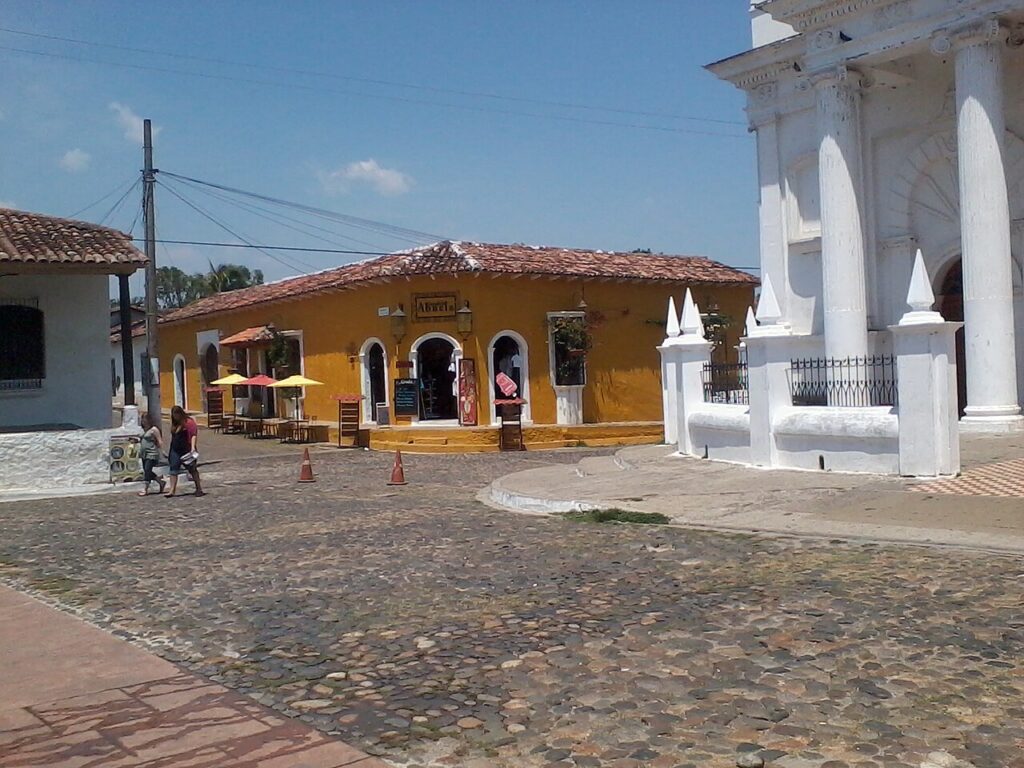
This is the heart of Suchitoto, and you’ll likely spend most of your time here. The central plaza, Parque Central, is your anchor—a leafy square dominated by the Iglesia de Santa Lucía. On weekends, the plaza buzzes with families, street vendors selling pupusas, and marimba bands playing traditional tunes. The architecture here is what stops travelers in their tracks: low-slung colonial buildings painted in ochre, terracotta, and sky blue, their red-tiled roofs contrasting with the deep green of the surrounding hills. Calle La Libertad, the main pedestrian street, is lined with art galleries like Galería de Arte Suchitoto, where you can buy hand-painted ceramics and textiles from local artisans. Don’t miss the Museo de la Revolución, a small but powerful museum housed in a former military post, which details the town’s war history through personal artifacts and photographs. Plan to spend at least two hours exploring these streets, stopping for a coffee at Café La Ventana, where the upstairs terrace offers a perfect view of the church dome.
Barrio San Antonio
Just a 10-minute walk east of the center, Barrio San Antonio feels like a different world—quieter, more residential, and steeped in working-class charm. The streets here are narrower, with some still paved in irregular cobblestones that date back to the 1800s. You’ll notice fewer tourists, which is exactly why locals recommend this neighborhood for an authentic glimpse of daily life. The main draw is the Mirador de Suchitoto, a viewpoint at the end of Calle 4 de Octubre that offers a stunning panorama of Lake Suchitlán and the surrounding hills. It’s especially magical at sunset, when the sky turns shades of orange and pink over the water. You’ll also find the Casa de la Abuela, a family-run restaurant that serves the best traditional Salvadoran breakfasts—try the *huevos rancheros* with handmade tortillas for just $3.50. The neighborhood’s small chapel, Capilla de San Antonio, is a peaceful spot for reflection, its whitewashed walls adorned with simple wooden crosses.
Barrio El Calvario
To the south of the center, Barrio El Calvario is named after the Calvary Church that anchors the area, built in 1892. This neighborhood has a grittier edge, but that’s part of its appeal. You’ll find fewer galleries and more hardware stores, bodegas, and homes with chickens scratching in the yards. The real treasure here is the Mercado Municipal, a covered market that operates every day from 6:00 a.m. to 2:00 p.m. It’s chaotic, loud, and absolutely essential for understanding how locals eat. You’ll find piles of fresh mangoes, avocados, and *loroco* (a local flower bud used in pupusas), as well as stalls selling *atol de elote* (a sweet corn drink) for $0.50. The butchers’ section is a spectacle, with whole pigs hanging from hooks and vendors shouting their prices. Savvy visitors know to arrive early, around 7:00 a.m., to see the market at its most vibrant. Afterward, walk to the nearby Parque de la Familia, a small green space where children play soccer and old men play checkers under a ceiba tree.
The Local Table: What Locals Actually Eat
Food in Suchitoto is a love letter to corn, beans, and the bounty of Lake Suchitlán. You’ll quickly learn that *pupusas* are the national obsession—thick corn tortillas stuffed with cheese, beans, or *chicharrón* (fried pork), then griddled until crisp. But here’s what surprises most travelers: the best pupusas aren’t in restaurants but at street stalls. Head to the corner of Calle La Libertad and Avenida 2 de Noviembre, where Doña María sets up her cart every evening at 5:00 p.m. Her pupusas are made to order, and you’ll watch her pat the dough flat, fill it with *queso con loroco*, and slap it onto the hot comal. The cost is $0.75 each, and locals recommend ordering three—one cheese, one bean, one mixed—with a side of *curtido* (spicy pickled cabbage) and a bottle of *Kolachampan* (a Salvadoran soda).

Suchitoto, El Salvador
Beyond pupusas, the lake defines the local diet. Fresh tilapia is a staple, and you’ll find it fried, grilled, or in soup at family-run comedores like El Patio de Mi Abuela, just off the central plaza. Their *sopa de pescado* (fish soup) is a revelation—a rich broth with tomatoes, cilantro, and chunks of tilapia, served with rice and a side of lime. For breakfast, you can’t miss *plátanos fritos* (fried sweet plantains) with cream and beans at Café La Ventana, where the owner, Rosa, will tell you about the town’s history while you eat. The cost for a full breakfast is around $4.00, and you’ll leave feeling like part of the family. One dish you must seek out is *yuca frita*—deep-fried cassava served with *chicharrón* and a tangy tomato sauce—available at the Mercado Municipal for $2.00. It’s the kind of meal that fuels your afternoon exploring.
Art, Music & Nightlife
Suchitoto has become a magnet for artists, and you’ll see their influence everywhere. The town hosts the Festival de la Palabra (Festival of the Word) every February, drawing poets and writers from across Latin America for readings and workshops in the central plaza. But the art scene isn’t just for special events—it’s woven into daily life. Galleries like Galería de la Luna, on Calle La Libertad, sell contemporary paintings and sculptures by local artists, with prices ranging from $20 to $500. You can also visit the studio of renowned muralist Fernando Llort, whose colorful, geometric designs—inspired by indigenous Pipil patterns—adorn buildings throughout town. The Centro de Artes de Suchitoto, a community space near the church, offers workshops in pottery and weaving, where you can try your hand at traditional techniques for $10 per session.
Nightlife here is low-key but charming. The main evening activity is strolling the plaza, where musicians often set up with guitars and marimbas, playing everything from traditional rancheras to modern Latin pop. For a drink, head to Bar La Terraza on the second floor of a colonial building on Calle La Libertad. The rooftop terrace overlooks the church, and you can sip a *cubana* (rum with Coke and lime) for $3.00 while watching the sunset. If you’re lucky, you’ll catch a performance of *folkloric dance* at the Casa de la Cultura on Friday nights—local troupes in colorful costumes perform dances that tell stories of farming and courtship. The shows start at 7:00 p.m. and are free, though donations are appreciated. For a more contemporary vibe, the occasional live rock or reggae show happens at El Punto, a bar on the edge of town, but check their Facebook page for schedules.
Practical Guide
- Getting There: Fly into San Salvador International Airport (SAL) from major US hubs like Houston and Los Angeles. From the airport, it’s a 1.5-hour drive north on the Pan-American Highway. Book flights at Skyscanner
- Getting Around: Suchitoto is walkable—you can cover the center in 20 minutes. For Barrio San Antonio or El Calvario, it’s a 10-minute walk. Taxis cost $2.00 within town; a tuk-tuk from the bus station to the center is $0.50. Buses to nearby villages like Cinquera cost $0.75.
- Where to Stay: Stay in El Centro for convenience—try Hotel La Posada de Suchitlán (doubles from $50/night) or the budget-friendly Hostal La Casa de los Abuelos ($20/night). For lake views, choose the Hotel Los Almendros in Barrio San Antonio ($60/night). Check Booking.com
- Best Time: Visit from November to April, the dry season, when skies are clear and temperatures hover around 75°F (24°C). The Festival de la Palabra in February is a highlight, but book early as hotels fill up.
- Budget: You’ll spend about $35–$50 per day: $15 on accommodation, $10 on meals, $5 on transport, and $10–$20 on activities like gallery visits or market shopping.

Empty street, Suchitoto, El Salvador
What Surprises First-Time Visitors
The first surprise is the silence. After the chaos of San Salvador, Suchitoto feels like a different planet. The streets are quiet, the air is clean, and the loudest sound is often the chirping of birds or the distant hum of a boat on the lake. Travelers often remark on how safe they feel—women walk alone at night, children play in the plaza until dark, and strangers greet you with a nod. This contrasts sharply with the war-torn image many carry of El Salvador. The second surprise is the authenticity. Unlike tourist towns that feel curated for Instagram, Suchitoto is lived-in. You’ll see laundry drying on balconies, hear the clatter of pots from open kitchen windows, and watch kids chase a soccer ball down cobblestone alleys. It’s not a museum; it’s a home.
The third surprise is the lake itself. Lake Suchitlán is massive—about 135 square kilometers—and it was created in the 1970s by a hydroelectric dam that flooded several villages. You can take a boat tour from the town’s small dock for $10 per hour, and you’ll see the tops of submerged church spires poking out of the water, a haunting reminder of what lies beneath. Locals recommend the sunset tour, when the lake turns glassy and the sky explodes in color. You might also spot herons, kingfishers, and even caimans sunning on the banks. It’s a side of Suchitoto that few guidebooks mention, but it’s one you’ll remember long after you leave.
Your Suchitoto, El Salvador Questions
Is Suchitoto safe for solo travelers? Absolutely. You’ll find that the town is one of the safest in El Salvador, with a strong community police presence and a low crime rate. Solo female travelers often report feeling comfortable walking alone during the day and even in the evening, as the central plaza is well-lit and full of families until around 9:00 p.m. That said, you should still take standard precautions—don’t flash valuables, stick to main streets at night, and keep your hotel door locked. The locals are incredibly welcoming, and you’ll likely be invited to join a conversation or a game of cards at a café.

A brick wall with a window and a wagon wheel, Suchitoto, El Salvador
How much time should I spend in Suchitoto? Plan for at least two full days. One day to explore the center and its galleries, a second to visit the lake and the surrounding villages like Cinquera, which has a beautiful waterfall and a reforestation project. If you’re interested in history, add a third day to take a guided tour of the war-era sites, including the former guerrilla camps in the hills. Many travelers find themselves extending their stay—the town has a way of making you want to slow down.
Can I visit Lake Suchitlán without a tour? Yes, and you should. The public dock at the end of Calle La Libertad offers boat rides for $10 per hour, and you can negotiate with the boatmen directly. They’ll take you to the submerged church ruins, the bird sanctuary at Isla de los Pájaros, or just for a peaceful cruise. You don’t need a guide, but it helps to know basic Spanish—most boatmen don’t speak English. Bring sunscreen, a hat, and water, as the sun on the lake can be intense. The best time to go is early morning, around 7:00 a.m., when the water is calm and the birds are most active.
Explore More Destinations
- Jozani, Tanzania on a Budget: an Ancient Forest for $35/Day (2026)
- Nsumbu, Zambia on a Budget: Wild Africa for $40/Day (2026)
- Semporna, Malaysia on a Budget: Paradise for $35/Day (2026)
- Khuzestan, Iran on a Budget: Ancient Empires for $30/Day (2026)
- Ngerulmud, Palau on a Budget: Island Majesty for $45/Day (2026)
Ready to Visit Beyond the Red Roofs: Why Suchitoto?
Start planning your trip today. Compare hotels, find the best tours, and get insider tips.
Your adventure in Beyond the Red Roofs: Why Suchitoto starts here →
Related Guides
Explore more destinations similar to Beyond the Red Roofs: Why Suchitoto:
- Alter do Chão, Brazil: Hidden Freshwater Seas, Forest Trails & Riverside Culture (2026)
- Anaklia, Georgia: Ultimate Seaside Serenity, Ancient History & Modern Ambition (2026)
- Epi Island, Vanuatu’s Hidden Kava, Coral Reefs & Unwritten History (2026)
- Uzhhorod, Ukraine’s Ultimate Castles, Wine & Tranquil European Charm (2025)
{“@context”: “https://schema.org”, “@type”: “FAQPage”, “mainEntity”: [{“@type”: “Question”, “name”: “What is the best time to visit Beyond the Red Roofs: Why Suchitoto?”, “acceptedAnswer”: {“@type”: “Answer”, “text”: “The best time to visit Beyond the Red Roofs: Why Suchitoto depends on your preferences. Generally, the dry season offers the most pleasant weather for sightseeing and outdoor activities.”}}, {“@type”: “Question”, “name”: “How many days do I need in Beyond the Red Roofs: Why Suchitoto?”, “acceptedAnswer”: {“@type”: “Answer”, “text”: “Most travelers spend 3-5 days in Beyond the Red Roofs: Why Suchitoto to see the main attractions. A week allows for a more relaxed pace and day trips.”}}, {“@type”: “Question”, “name”: “Is Beyond the Red Roofs: Why Suchitoto expensive to visit?”, “acceptedAnswer”: {“@type”: “Answer”, “text”: “Beyond the Red Roofs: Why Suchitoto can be visited on various budgets. Accommodation ranges from hostels to luxury hotels, and local restaurants offer affordable dining.”}}]}

