
Beyond the Rapids: Why the Pacuare River Beckons Every Adventurer Who Seeks the Soul of Costa Rica (2026)
In 1982, a young Costa Rican conservationist named Rafael Bolaños stood on the banks of the Pacuare River and watched a massive fig tree crash into the churning water after a night of relentless tropical rain. “The river doesn’t just flow,” he later wrote in his journal. “It breathes. And if you listen closely, it tells you the stories of every stone, every bird, every spirit that has called this gorge home for millennia.” That moment—a fallen tree, a rising sun, and the thunder of Class IV rapids—became the catalyst for the first organized conservation effort along the Pacuare, a river that would later earn a spot among National Geographic’s top five rafting rivers in the world.
The Story Behind the Pacuare River
Long before rafters and eco-lodges arrived, the Pacuare River served as a sacred highway for the Cabécar people, one of Costa Rica’s most isolated indigenous groups. The Cabécar have inhabited the Talamanca mountain range for over 3,000 years, and the Pacuare—which they call Bukir in their native language—was both a lifeline and a spiritual boundary. Oral traditions speak of shamans who would descend the river in hollowed-out logs during full moons to collect medicinal plants that grew only in the mist-shrouded canyons. By the early 20th century, only about 2,000 Cabécar remained, their territory shrinking as banana plantations expanded from the Caribbean coast. In 1939, the Costa Rican government established the Pacuare River Basin as a protected forest reserve, though enforcement was minimal for decades.
The turning point came in the late 1970s when American river guides, drawn by rumors of a legendary jungle river, began exploring the Pacuare. One of them, a Californian named Jim Slade, ran the river’s first commercial rafting trip in 1981 with eight paying guests and a single cooler of gallo pinto. “We had no radios, no satellite phones, and only a vague idea of what was around the next bend,” Slade recalled in a 2015 interview. “But when we emerged from the gorge into that valley of waterfalls—the one they now call the Cathedral—every single person was crying.” Today, the Pacuare is protected under the Pacuare River Reserve, established in 1997, which safeguards over 15,000 acres of primary rainforest. The Cabécar still maintain communities upstream, though visitors rarely see them—a deliberate distance that locals recommend you respect.
What makes the Pacuare historically unique is that it never became a site of conquest or colonization in the way that Costa Rica’s coasts did. The sheer ferocity of the river—dropping 900 meters in just 45 kilometers—kept Spanish colonists at bay. No missions were built along its banks. No plantations. The river remained a wild artery, and that wildness became its defining character. Travelers often discover that the Pacuare’s history is not written in monuments or museums but in the absence of them—in the silence of a gorge where the only sound is water hitting stone.
Neighborhood by Neighborhood
Turrialba: The Gateway
You’ll begin your Pacuare journey in Turrialba, a mountain town of about 35,000 people perched on the western edge of the river’s watershed. This is not a polished tourist hub—locals recommend you leave your expectations of boutique galleries and espresso bars at the bus station. Instead, Turrialba is a working town where the smell of roasting coffee from the Coopedota cooperative drifts through the central plaza every morning. The streets are a grid of modest concrete buildings painted in faded pastels, and the real action happens at the feria del agricultor on Saturday mornings, where farmers sell fresh yucca, hearts of palm, and the town’s famous queso palmito—a stringy, salty cheese that you’ll crave long after you leave. Your best bet for a pre-rafting meal is Soda La Amistad on Avenida 2, where a plate of casado with grilled chicken, rice, beans, and fried plantains costs about 3,500 colones (roughly $7). The town’s architecture is functional rather than beautiful, but savvy visitors know that Turrialba’s charm lies in its authenticity—you’ll find no chain restaurants here, only family-run sodas and a single bar that opens its doors when the first rafters roll into town.
Siquirres: The Caribbean Lowlands
Where Turrialba is the mountain gateway, Siquirres is the lowland anchor, sitting about 30 kilometers northeast of the river’s most famous rafting put-in point. This small town of 15,000 feels distinctly Caribbean—you’ll notice it in the reggaeton pulsing from corner stores, the brightly painted wooden houses on stilts, and the scent of coconut oil and jerk seasoning that hangs in the humid air. Siquirres is where many river trips end, and travelers often discover that the town’s main drag, Calle Central, offers some of the best post-rafting meals you’ll find anywhere in Costa Rica. Seek out Doña Olga’s stall at the central market, where she serves rondón—a coconut-milk stew of fish, yam, and plantain—for 2,500 colones ($5) every day except Sunday. The architecture here tells a story of Afro-Caribbean migration: the wooden churches with their louvered windows, the zinc roofs designed to shed tropical heat, and the small plazas where domino games stretch late into the night.
The Canyon Corridor: Where No One Lives
Strictly speaking, the canyon itself is not a neighborhood but a 32-kilometer stretch of river gorge that’s home to exactly zero permanent residents. Yet you’ll hear guides refer to it as “the neighborhood” with a knowing smile, because this is where the river’s soul truly lives. The canyon walls rise up to 300 meters in places, draped in primary rainforest where howler monkeys announce your passage and toucans flash like neon signs in the canopy. There are no roads, no buildings, no electricity—just the river and the pulse of the jungle. At the canyon’s heart lies the section guides call the Cathedral, a narrow slot where the walls close in and the water drops into a series of cascading pools. Travelers often describe feeling a kind of primal silence here, broken only by the roar of the river. The Cabécar believe this is where the spirits of their ancestors rest, and locals recommend you pause your raft here—not just to take photos, but to sit quietly for a moment and feel the weight of the place.
The Local Table: What the Cabécar and River Guides Actually Eat
Along the Pacuare, food is not about dining; it’s about fuel and tradition. The river guides—many of whom have been running these rapids for 20 years or more—eat like athletes who also happen to live in the jungle. Their standard breakfast before a day on the water is gallo pinto (rice and beans fried with Lizano salsa) served with scrambled eggs, fresh tortillas, and a slice of that queso palmito you’ll find in Turrialba. Lunch on the river is usually prepared by the guides themselves: grilled chicken or fish wrapped in banana leaves, served with cold pasta salad and fresh watermelon. The secret is that they cook it on the rocks using the river’s own stones as hot plates—a technique passed down from the Cabécar.

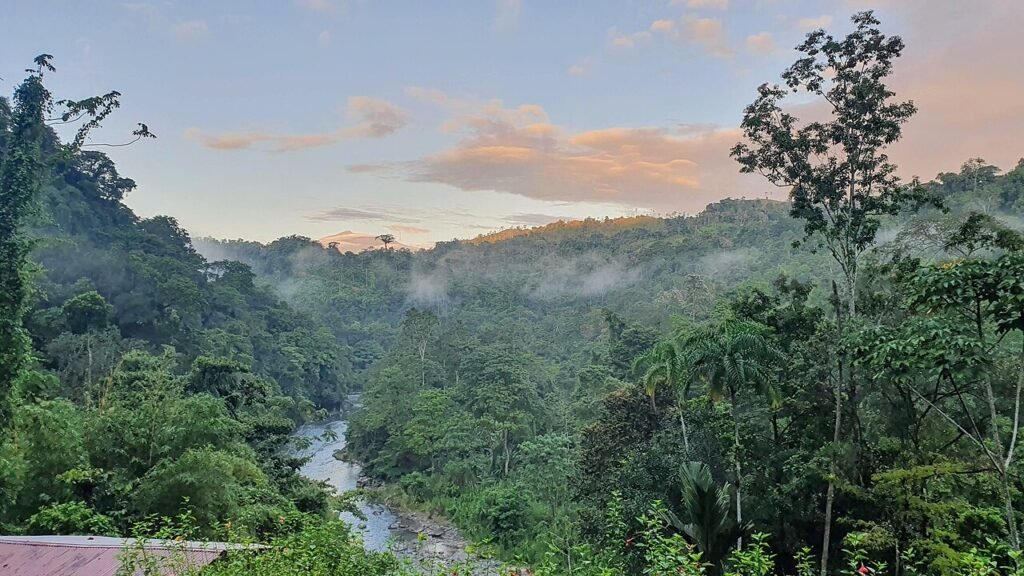
Le Rio Pacuare, au Costa Rica, Pacuare River, Costa Rica
But the dish you absolutely must seek out is patí con arroz, a Cabécar specialty that you will not find on any restaurant menu in Costa Rica. This is a stew of freshwater turtle (now made with chicken, as turtle is protected) cooked in coconut milk with culantro, chilies, and green plantains, then served over rice. To taste it, you’ll need to visit the community of Paso Marcos during the annual Fiesta del Río, held the first weekend of February. The Cabécar women set up makeshift kitchens along the riverbank, and for 5,000 colones ($10) you’ll get a bowl of patí con arroz, a handful of fresh star fruit from the trees above, and a lesson in patience—the stew takes six hours to cook. Locals recommend you arrive hungry and early, as only about 200 bowls are made each day.
The food culture along the Pacuare is defined by what’s available in the immediate surroundings. You’ll find no imported cheeses or wines here. Instead, meals revolve around the three pillars of Costa Rican mountain cooking: rice, beans, and whatever fruit or protein is in season. In March, it’s mango season, and you’ll see guides carrying bags of yellow mangos on their raft frames, eating them with salt and lime between rapids. In December, the pejibaye palm fruit comes into season—you’ll find it boiled and sold on street corners in Turrialba, served with a dollop of mayonnaise, a combination that sounds strange but tastes like a savory chestnut.
Art, Music & Nightlife
The nightlife along the Pacuare is not about clubs or DJs; it’s about the firelight conversations that happen after dark. In Turrialba, the closest thing to a nightlife scene centers around El Rancho on Calle 3, a rustic bar where river guides gather on Friday nights to trade stories over Imperial beer. The walls are covered in faded photographs of rafting expeditions from the 1980s, along with paddle blades signed by guides who have run the river. Travelers often discover that the real music here is the calypso that drifts up from the Caribbean lowlands—on any given weekend, you’ll find a trio of guitarists playing pasillo and bolero in the plaza, songs that echo the melancholy and joy of Costa Rica’s mountain communities.
The creative scene along the Pacuare is subtle but profound. In the town of Pacayitas, about 15 kilometers from the river, the Cabécar women’s cooperative produces handwoven baskets from the fibers of the chonta palm. You can visit their workshop—ask for Doña Maribel at the community center—and watch them dye the fibers using annatto seeds for red and indigo for blue. Each basket takes three days to complete and costs about 35,000 colones ($70). In Turrialba, the Galería del Río on Avenida 1 features the acrylic paintings of local artist Carlos Méndez, whose landscapes capture the river’s light at different hours of the day. He opens his studio by appointment only; you can call him at +506 8723-4512. The annual Festival del Río, held the last weekend of February in Siquirres, features live cimarrona music—a brass-band tradition that blends indigenous rhythms with Spanish brass instruments—and draws about 3,000 people to the riverbank for a day of dancing and eating.
Practical Guide
- Getting There: Fly into San José’s Juan Santamaría International Airport (SJO) via major carriers like American, United, or Delta. From San José, you’ll take a 2-hour shuttle to Turrialba (around $25 per person) or rent a 4×4 for the mountain roads. Book flights at Skyscanner
- Getting Around: Local buses connect Turrialba and Siquirres for about 1,500 colones ($3) each way; they run hourly between 5am and 6pm. For the river put-in points, you’ll need a tour company’s transport—most include this in their rafting package (typically $110–140 per person for a full day). Taxis in Turrialba cost about 2,000 colones ($4) for any trip within town.
- Where to Stay: In Turrialba, the best value is Hotel Wagelia on Calle 4 (doubles from $45/night, including breakfast). For a splurge, consider the Pacuare Lodge, accessible only by raft, where riverside bungalows start at $350 per person per night, including all meals and a guided nature walk. Check availability at Booking.com
- Best Time: The Pacuare runs year-round, but the sweet spot is December through April (the dry season), when water levels are moderate and the rapids are Class III-IV. May through November brings higher water and more challenging Class IV-V rapids, but also more rain and possible trip cancellations. February and March offer the clearest days.
- Budget: Plan to spend about $80 per day for a mid-range trip: $45 for lodging, $15 for meals, $20 for guides and incidentals. A full-day rafting trip with lunch and transport runs $110–$140. Bring extra for the Cabécar baskets and that bowl of patí con arroz.
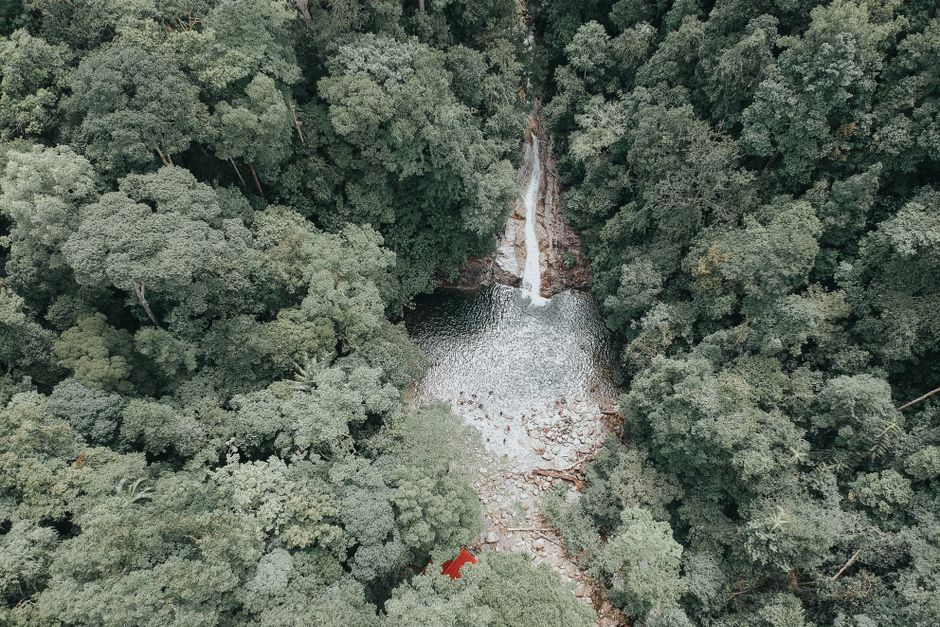
A stunning aerial shot of a waterfall surrounded by dense forest, Pacuare River, Costa Rica
What Surprises First-Time Visitors
The most common revelation travelers experience on the Pacuare is the sheer, almost unreasonable biodiversity within sight of the river. You expect to see monkeys and toucans—every guidebook promises them—but you don’t expect to see a troop of white-faced capuchins crossing the river on a fallen log bridge, or a massive iguana sunning itself on a boulder while you’re paddling through a Class IV rapid. One traveler I met, a retired teacher from Ohio, told me she spotted a jaguarundi—a rare wild cat—loping along the bank during her third rapid of the day. “I didn’t believe it until the guide pointed and said, ‘That’s a jaguarundi. You’re one of maybe a hundred people who have seen one here this decade.'” Locals recommend you keep your eyes not on the rapids but on the jungle edge; the river will guide itself, but the glimpses of wildlife are fleeting.
Another surprise for many visitors is the profound quiet that descends after dark. The Pacuare canyon has no ambient light, no streetlights, no neon signs. At the Pacuare Lodge, they hand you a flashlight at check-in and warn you that the path to your cabin is unlit by design. The soundscape shifts: during the day it’s the roar of rapids and the chatter of birds, but at night it becomes the chirp of tree frogs, the rustle of leaf-cutter ants, and occasionally the distant cough of a jaguar—though you will almost certainly never see one. Travelers often describe this darkness as unsettling at first, then liberating. By the second night, you’ll find yourself sitting on your cabin’s porch without a light, staring at a sky so thick with stars that you can see the Milky Way like a river of milk across the black.
Perhaps the biggest surprise is how little the Pacuare has changed. In an era of Instagram-famous destinations and drone photography, the river remains remarkably uncommercialized. You will not find zip lines strung across the gorge, or gift shops at the put-in point, or a photographer selling prints at the take-out. The Cabécar have resisted offers from developers who wanted to build a gondola system into the canyon. The result is a place that feels genuinely untouched—not in the performative way of a managed ecotourism site, but in the real, unapologetic way of a river that has simply been allowed to be itself. That’s the Pacuare’s gift to you: the rare chance to experience something that hasn’t been optimized for your consumption.
Your Pacuare River Questions
Do I need prior rafting experience to run the Pacuare?
You do not need experience for the standard Class III-IV tours that most companies offer, and local guides will give you a thorough safety briefing before you launch. The Pacuare’s reputation as one of the world’s great rafting rivers is earned, but it’s also accessible—about 80% of first-time rafters are complete beginners. That said, you should be comfortable swimming and have no fear of being tossed into churning water. The guides are exceptionally skilled; many have been running the river for 15 years or more, and they know every eddy, strainer, and undercut rock. Your best bet is to book with a reputable outfitter like Exploradores Outdoors or Ríos Tropicales, both of which have been operating since the 1980s and employ guides certified by the International Rafting Federation.
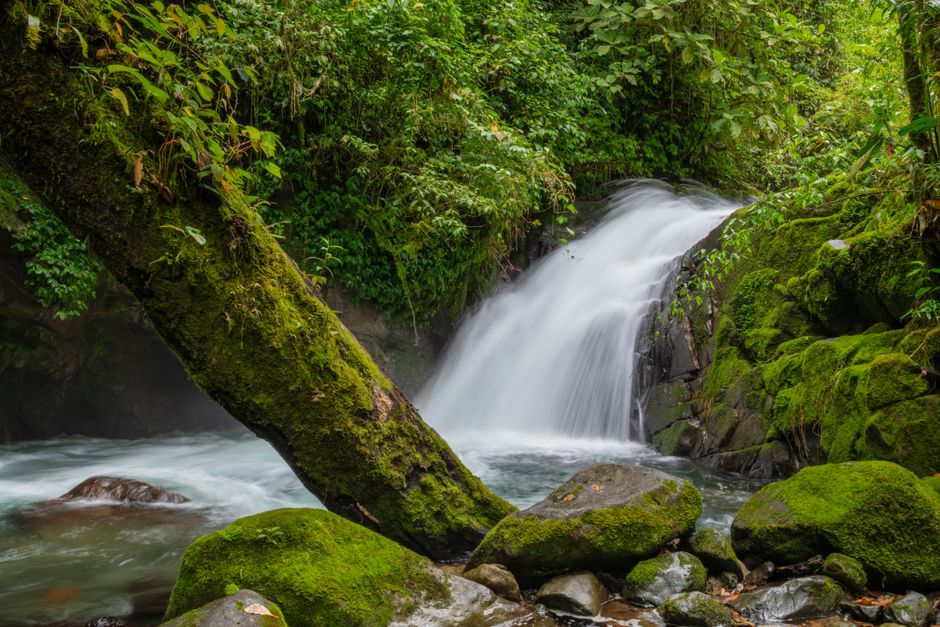
Vibrant rainforest waterfall with moss-covered rocks in Costa Rica’s lush l…, Pacuare River, Costa Rica

