
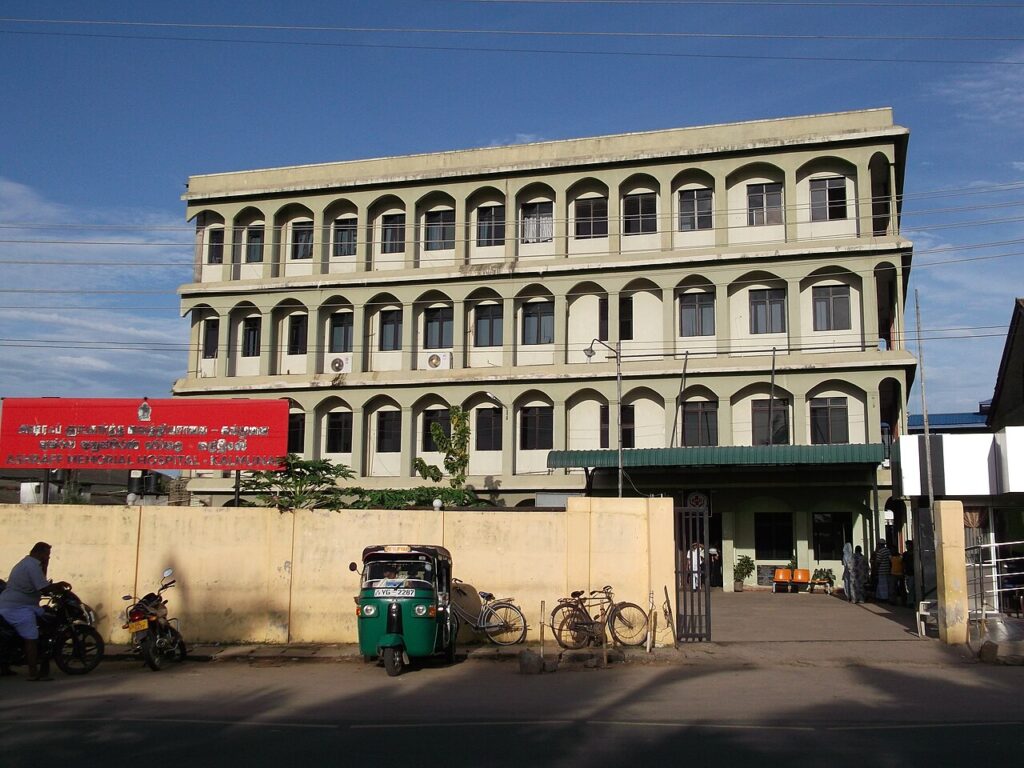
Beyond the Minarets: Where the Kalmunai Coast Whispers Stories of Spice and Survival (2026)
In 1795, as the British East India Company wrested control of the coastal settlements from the Dutch, a little-known trading post named Kallumunai—derived from the Tamil words for “stone” and “eroding bank”—saw its first European flag raised over a modest fort. The Dutch had already mapped its cinnamon groves and pearl banks, but it was a local fisherman’s son, so the story goes, who led the English surveyors to a hidden freshwater spring beneath the coral cliffs, ensuring the settlement’s survival through the long dry season. That spring still flows today, a quiet testament to a place where empires have come and gone, but the pulse of the coast has never wavered.
The Story Behind Kalmunai, Sri Lanka
Kalmunai’s history is not written in grand palaces or battlefields, but in the ebb and flow of the Indian Ocean and the resilience of its people. The region was part of the ancient Jaffna Kingdom, a Tamil stronghold that flourished from the 13th to the 17th centuries, trading in elephants, pearls, and textiles with kingdoms as far as Southeast Asia. When the Portuguese arrived in the early 1600s, they found a string of fishing villages, each with its own temple and its own fierce independence. They built a small chapel in what is now the heart of Kalmunai Town, but the local population, predominantly Tamil and Muslim, resisted conversion with quiet, stubborn grace.
The Dutch, who ousted the Portuguese in 1658, were more pragmatic. They saw Kalmunai not as a religious prize but as a logistical hub for their cinnamon monopoly. You’ll still find remnants of their canal system, the Dutch-built “Munnai” (meaning “first” in Tamil), a narrow waterway that once ferried spices from the interior to waiting ships. When the British took over in 1796, they expanded the port and introduced coconut plantations, transforming the landscape into the lush, swaying palm groves you see today. The most transformative moment, however, came in 1840, when the British constructed the Kalmunai Bridge over the Ullackalie Lagoon, linking the coastal villages to the main road to Colombo. Travelers often discover that this single bridge—rebuilt after the 2004 tsunami—is still the lifeblood of the region, a daily bottleneck where vendors, cyclists, and tuk-tuks converge in a vibrant chaos that feels unchanged for centuries.
The 20th century brought its own trials. During the Sri Lankan Civil War (1983–2009), Kalmunai sat on a volatile frontier between government-controlled areas and LTTE-held territory. The town was bombed in 1990 and again in 1995. But what surprises first-time visitors is how little of that trauma shows on the surface. Locals recommend walking through the rebuilt market district, where the laughter of children and the scent of frying *vadai* (lentil fritters) fill the air. The war left scars, yes, but the spirit of Kalmunai is one of defiant joy—a place where every new building seems to rise with a prayer and a smile.
Neighborhood by Neighborhood
Kalmunai Town (The Core)
This is where you’ll feel the pulse of daily life. The main artery, Main Street (also called A15 Highway), is a sensory overload of honking tuk-tuks, colorful fabric shops, and the aroma of cardamom and cloves wafting from spice stalls. Your best bet is to start at the Kalmunai Clock Tower, a colonial-era landmark painted a cheerful sky blue. From here, wander into the winding lanes of the Old Bazaar, where you’ll find the 150-year-old Jumma Mosque, its white minarets rising above the tin-roofed shops. On Friday mornings, the street outside transforms into a carpet of prayer mats, and the call to prayer echoes off the lagoon. Savvy visitors know to arrive by 7:00 AM to see the fish auction at the nearby Kalmunai Fisheries Harbour, where silver tuna and spotted grouper are haggled over in rapid Tamil before the sun gets too hot.
Maruthamunai (The Muslim Quarter)
Just a ten-minute tuk-tuk ride south, Maruthamunai feels like a different world. This is the heart of the region’s Muslim community, and the architecture reflects it: homes with intricate wooden verandas, mosques with green-tiled domes, and narrow streets shaded by mango trees. Travelers often discover that the real magic here is in the evening, when the *iftar* markets spring up during Ramadan. Locals recommend the *kottu roti* stall run by Uncle Nazeer on Beach Road—he’s been chopping flatbread on the same iron griddle since 1989. The neighborhood is also famous for its goldsmiths; you’ll see tiny workshops where artisans hammer 22-karat gold into delicate wedding necklaces. Don’t be shy about peeking in—most are happy to show you their craft.
Kallady (The Beach & Lagoon Edge)
Kallady is where Kalmunai meets the sea, and it’s where you’ll find the most dramatic scenery. The neighborhood stretches along the narrow spit between the Indian Ocean and the Ullackalie Lagoon. Your best bet for sunset is the Kallady Beach, a stretch of golden sand dotted with fishing catamarans painted in bright blues and reds. The 2004 tsunami devastated this area, but the community rebuilt with a focus on eco-tourism. You’ll now find small guesthouses like the Kallady Beach Inn, where the owner, a former fisherman named Ravi, will take you out on his boat at 5:30 AM to see the sunrise over the lagoon. The real highlight, however, is the Kallady Bridge, a modern concrete structure that replaced the old Dutch one. From here, you can watch the fishermen cast their nets at dusk, their silhouettes framed by the setting sun—a scene that hasn’t changed for generations.
The Local Table: What Denizens Actually Eat
Forget the tourist buffets—Kalmunai’s food is a story of the sea and the spice trade. The defining ingredient is the coconut, which grows in abundance along the coast. Locals use it in everything: grated raw in *sambol* (a fiery chili-coconut relish), squeezed for milk in curries, and even fermented into *toddy*, a mildly alcoholic palm wine you’ll find sold from clay pots at roadside stalls. But the dish you absolutely must seek out is *Kool*, a thick seafood broth that is the soul of the eastern coast. It’s a fisherman’s stew, made with crab, prawns, fish, and vegetables, all simmered in a tamarind and coconut base until it reaches a porridge-like consistency. The secret is the *pandanus* leaf, which adds a floral, almost vanilla-like note.

The west and the green side of Kalmunai, Kalmunai, Sri Lanka
Your best bet is to head to the Kalmunai Fish Market (open 6:00 AM to 9:00 AM daily) and find the stall of Aunty Sellamma. She’s been serving *Kool* from the same steel pot for 22 years, and her version is legendary. For 250 LKR (about $0.80), you get a generous bowl, served with a wedge of lime and a spoonful of chili paste. Travelers often discover that the best way to eat it is with your hands, using a piece of *idiyappam* (string hoppers) to scoop up the broth. Locals recommend pairing it with a glass of *king coconut* water, sold from a cart just outside the market. For a sweet finish, try *kiri bath* (milk rice) with *jaggery*—a palm sugar that tastes like caramel with a hint of smoke.
The evenings belong to the *thattu kade* (street food stalls) that pop up along Main Street around 6:00 PM. The star here is *vadai*—savory lentil donuts fried in coconut oil and served with a mint-chili dip. The stall run by the brothers at “Siva’s Vadai” on Mosque Road has been in business since 1975, and they still use the same recipe: black gram lentils, green chilies, and curry leaves. For 20 LKR each, you can eat your fill while watching the town come alive with evening prayers and the glow of fluorescent lights.
Art, Music & Nightlife
Kalmunai’s creative scene is rooted in its religious and cultural festivals. The most spectacular is the *Kallady Beach Festival*, held every August during the full moon, when the beach is transformed into a stage for *Karagam*—a traditional Tamil folk dance where performers balance decorated pots on their heads while dancing to the beat of the *thappu* drum. You’ll also hear *Baila* music, a Portuguese-influenced genre with a lively, syncopated rhythm, played at weddings and community gatherings. The best place to experience it is at the “Lion’s Den” bar on Beach Road, a no-frills spot where locals gather on Friday nights to dance until 2:00 AM. Don’t expect a cover charge—just buy a bottle of Lion Lager (250 LKR) and join the circle.
For visual art, visit the “Kalamandapam” community center in Maruthamunai, a restored colonial bungalow that hosts rotating exhibitions of local painters and sculptors. The highlight is the work of R. S. Tharmalingam, a 78-year-old artist who paints scenes of pre-war Kalmunai on palm leaves. The center also runs pottery workshops (500 LKR per person, 2 hours) where you can learn to throw pots on a traditional kick wheel. Most tourists overlook this place, but savvy visitors know it’s the best way to understand the region’s artistic heritage.
Practical Guide
- Getting There: Fly into Bandaranaike International Airport (CMB) in Colombo. From there, take a domestic flight to Batticaloa (60 minutes, from $50 one-way with Cinnamon Air) or a 6-hour bus ride on the A15 highway (AC bus, 1,200 LKR). Book flights at Skyscanner
- Getting Around: Tuk-tuks are king. Short rides within town cost 150-250 LKR; a trip to Maruthamunai or Kallady is 300-400 LKR. For longer distances, hire a driver for the day (3,000-4,000 LKR). Local buses (30-50 LKR) run along Main Street but are crowded.
- Where to Stay: For budget, try “Kallady Beach Inn” (1,500 LKR per night, shared bathroom). Mid-range: “Hotel Blue Lagoon” in Kalmunai Town (4,000 LKR, with AC and breakfast). For a unique stay, book “Ravi’s Homestay” in Kallady (2,500 LKR, includes dinner). Check Booking.com
- Best Time: Visit between June and September for the driest weather and the Kallady Beach Festival in August. Avoid November-December, when monsoon rains flood the low-lying areas.
- Budget: A budget traveler can get by on 3,000 LKR ($10) per day, including street food, a basic room, and local transport. Mid-range travelers should budget 8,000-10,000 LKR ($25-35) for a nicer hotel and sit-down meals.

Buddhist temple with giant Buddha statue in Unawatuna, Kalmunai, Sri Lanka
What Surprises First-Time Visitors
The first surprise is the silence. Despite being a bustling town, you’ll find pockets of profound quiet—especially at dawn along the Kallady Beach, where the only sounds are the lapping waves and the distant call to prayer. Travelers often expect a chaotic, noisy Sri Lankan town, but Kalmunai has a meditative rhythm. The second surprise is the warmth of the people. You’ll be greeted with a genuine “Vanakkam” (hello) and a smile wherever you go. Locals are curious about visitors, and it’s not uncommon for a stranger to invite you for tea or to watch a cricket match at their home.
The third surprise is the lack of tourist infrastructure. You won’t find souvenir shops, English-language menus, or guided tours. This can be disorienting if you’re used to packaged travel, but it’s also the town’s greatest charm. You’ll need to rely on your instincts and the kindness of strangers—and you’ll be rewarded with an authentic experience that few travelers ever have. Savvy visitors know to learn a few Tamil phrases (“Nandri” for thank you, “Evalavu?” for how much?) and to carry small bills, as credit cards are rarely accepted.
Finally, the tsunami memorials are everywhere, but they’re not somber. The “Kallady Tsunami Memorial” on Beach Road is a simple white arch with the names of the 2,000 locals who died. But instead of being a place of mourning, it’s often used as a meeting point for children playing cricket and families having picnics. It’s a powerful reminder that life, in Kalmunai, always finds a way to go on.
Your Kalmunai, Sri Lanka Questions
Is Kalmunai safe for solo female travelers? Yes, with common sense. The town is conservative, so you should dress modestly—cover your shoulders and knees, especially in Maruthamunai. Stick to Main Street after dark, and take a tuk-tuk rather than walking alone. That said, locals are protective of visitors, and you’ll likely be offered help if you look lost. You’ll find that the biggest challenge is not safety, but the lack of English signage—download an offline Tamil translation app before you arrive.
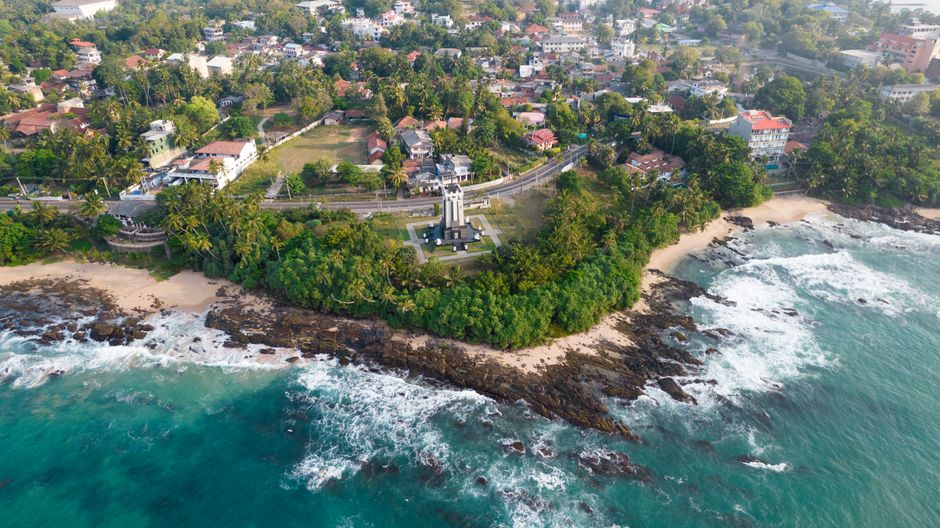
Stunning aerial view of Tangalle’s coastline with lush greenery and clear o…, Kalmunai, Sri Lanka
What’s the best way to see the lagoon? Rent a canoe from Ravi at the Kallady Beach Inn for 500 LKR per hour. You’ll paddle through the mangroves, where you can spot kingfishers, herons, and even monitor lizards sunning on the banks. The best time is early morning (6:30 AM), when the water is glassy and the light is golden. Do not attempt to swim in the lagoon—the currents are strong, and crocodiles are known to inhabit the deeper channels.
Can I visit the temples? Absolutely, but with respect. The main Hindu temple, the “Sri Muthumariamman Temple” on Temple Road, is open from 6:00 AM to 12:00 PM and 4:00 PM to 8:00 PM. You’ll need to remove your shoes and cover your head (scarves are provided at the entrance). Photography is allowed in the courtyard but not inside the inner sanctum. The highlight is the *gopuram* (tower), covered in hundreds of brightly painted deities. For a small donation (100 LKR), the priest will give you a *vibhuti* (ash) blessing—a simple but moving ritual that connects you to the town’s ancient faith.

