
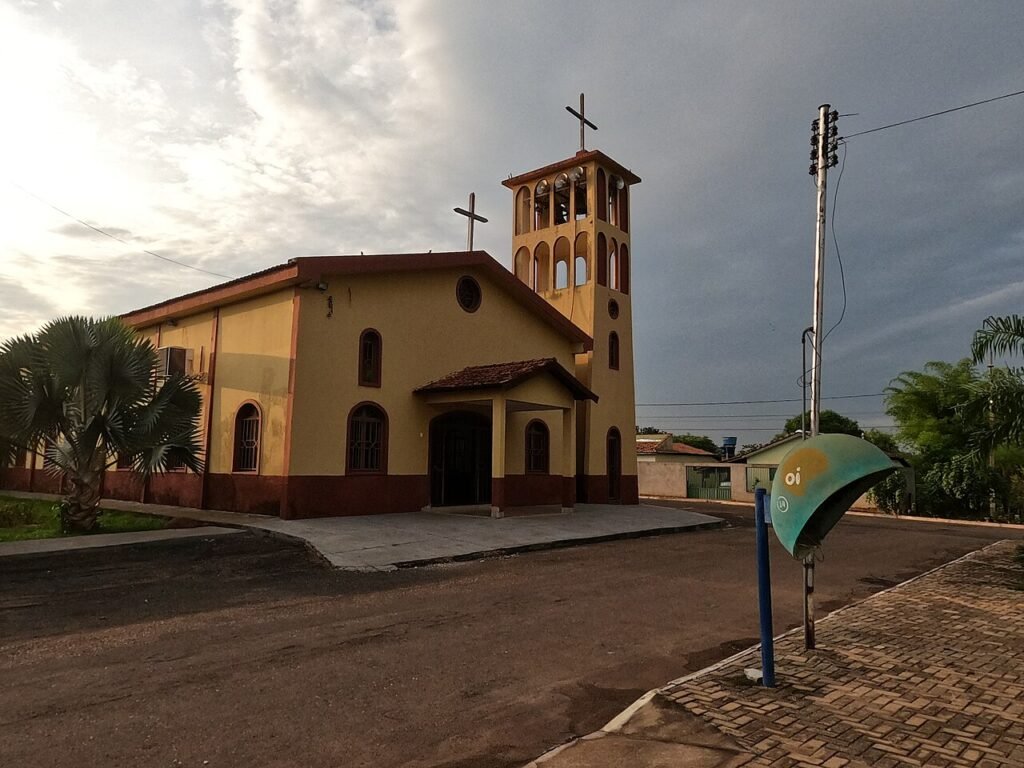
Beyond the Hill of Stone: Faith, River Floods (2026)
In 1691, a Portuguese nobleman named Francisco da Silva, exiled after killing a man in a quarrel over honor, found himself drifting down the São Francisco River in a leaky canoe. When he spotted a towering limestone cliff on the western bank — its face scarred with dark openings — he crawled inside one of the caves, planted a rough wooden cross, and vowed to dedicate his life to God and the sick. He had no idea that trapped birds had been leaving droppings in that grotto for centuries, or that his ragged shrine would one day draw a million believers a year. Today, that same red-hued morro remains the sacred heart of one of Brazil’s most extraordinary cities: Bom Jesus da Lapa.
The Story Behind Bom Jesus da Lapa, Brazil
Francisco da Silva is the city’s true founder, though he would hardly recognize the paved streets and neon signs that now circle his cliff. After settling in the caves, the former nobleman began treating the sick and wounded who sailed upriver; word spread that the praying Portuguese hermit channeled miracles. By 1701, the region’s Franciscan Order had built a chapel against the rock face, and the first formal pilgrimage arrived to celebrate the Feast of the Good Jesus, a devotion imported from the Azores and southern Portugal. The shrine grew organically from the crevices: one cave became the sanctuary proper, another housed the sacristy, and a third, lit only by a narrow crack in the stone, became the confessional grotto where devotees still whisper their sins.
The nineteenth century transformed the site from a regional curiosity into a national destination. In 1846, Dom Pedro II’s imperial government passed legislation officially granting the sanctuary the right to hold municipal fairs during feast weeks, and sugar brokers, tobacco merchants, and cattle drivers began mixing with pilgrims on the riverbank. The river steamer boom after 1860 made the trip from Salvador tolerable — still a three-week slog, but suddenly comfortable — and waves of middle-class worshippers arrived to marvel at a church carved into rock. The final turning point came in 1942, when the bishopric of Barra declared Bom Jesus da Lapa a principal shrine of Bahia, and in 1948, the sacred complex was elevated to the rank of Minor Basilica. By the 1970s, when the federal road BR-030 finally reached the town, the pilgrimage had become a year-round economy, and the cliff had become Brazilian pop culture: mention Bom Jesus da Lapa anywhere in the Northeast, and people will nod, cross themselves, and tell you about the time the river rose to the top of the cave.
Neighborhood by Neighborhood

Ponto de táxi do Terminal Rodoviário de Bom Jesus da Lapa, Bom Jesus da Lapa, Brazil
Centro — The Rock, the River, and the Rows of Pilgrim Hotels
Everything in Bom Jesus da Lapa orbits the Sanctuary complex, and you will quickly feel that orbital pull as you arrive in the Centro. The heart of this district is the Praça Landulfo Alves, a triangular plaza shaded by tamboril trees, where the faithful queue by the hundreds to enter the Santuário’s main door. To your right, the cliff rises a dizzying 40 meters; to your left, the São Francisco River glints between the stalls of jewelry vendors selling little silver ex-votos shaped like arms and legs — symbolic thanks for healed limbs. The streets immediately around the plaza, particularly Rua Coronel Mercês, are narrow, uneven, and perpetually damp with heat and spilled ice water. You will see old colonial storefronts whose cracked blue paint dates to the 1930s, stacked alongside the brutally utilitarian ramps and arcades built for the 1948 pilgrim boom. Locals recommend arriving at breakfast time, when the bakeries at MiraLapa Grocery fill with women in long skirts eating paçoca de carne de sol and drinking fresh tambaqui broth. The Centro is not elegant, and visitors who want curbside cafés will be disappointed; what it offers instead is velocity — an apocalyptic sense of sacred purpose that pulls you upward and inward to the dark grotto at the base of the cliff.
Alto do Cristo — Where the City Watches the Faithful
If the Centro is the pulsing artery of worship, the modest neighborhood of Alto do Cristo is the city’s standstill viewpoint. This hilly residential district climbs the far side of the morro, away from the river, and was named after a stark white Christ statue erected in 1986 on the upper plateau. Take the winding Rua Santa Cruz on foot from the Centro, and you will leave the pilgrimage cacophony behind within ten minutes, trading it for the soundtrack of chickens, old radios playing forró, and the slap of dominos in small front-yard bars. The architecture here is typical of interior Bahia: single-story houses with open porches, grapevines strung over patios, and walls painted in pastel pinks and institutional greens. There are no luxury hotels — you will find only family pensions like the Pousada Santa Rita, where the rooms are clean but the plumbing is proud — yet the altitude rewards you at dusk. At sunset, the canyon of the São Francisco turns liquid brass, and you can watch the pilgrim buses, a chain of ant-like headlights, filing across the bridge toward the illuminated sanctuary. Travelers often discover that the neighborhood’s true gem is the small community pantry run by the parish of São Francisco de Assis; volunteers there will gladly serve you a cup of coarsely ground coffee while explaining, with great affection, the protocol of the August feast days. It is a breath of ordinary life in a city that otherwise revolves entirely around the sacred.
Ribeira — The Port District Where the River Still Rules
Before the road arrived, everything in Bom Jesus da Lapa came by water, and the riverside neighborhood called Ribeira preserves that memory like a pressed flower. Walking along Avenida Beira Rio, you will notice the old brick quay, now used for pleasure boats and the daily fishermen’s auction that starts at dawn. The neighborhood’s character is defined by the rhythm of the river: at 6 a.m., the air is thick with the smell of raw catfish and petrol from the outboard motors; by noon, the heat forces shopkeepers to close their corrugated shutters and sleep in hammocks strung across their storefronts; late afternoon brings the return of children swimming and women washing, which for most visitors proves the most charming spectacle in the city. The port’s architecture is a humble, sun-bleached collection of warehouses with hand-painted signs advertising fish, ice, and gasoline. The highlight of Ribeira is the floating dock restaurant Balsa da Dona Zilda, a converted river barge literally moored against the quay, where locals recommend you order the surubim escalado — a grilled Amazon catfish smothered in butter, lime, and grated coalho cheese. From Ribeira, you can also arrange a three-hour boat trip south along the river for about 90 reais per person with Captain Severino; he will point out the spot where Francisco da Silva’s canoe supposedly sank, a legend you can take or leave, but the sight of the entire red cliff rising from the water is worth the price of the boat all by itself.
The Local Table: What Lapeiros Actually Eat

Christ Redeemer statue, Brazil, Bom Jesus da Lapa, Brazil
Because Bom Jesus da Lapa lives on the edge of the dry caatinga and the fertile São Francisco floodplain, its cuisine is an ingenious blend of fish, goat, and grain. The protagonist is surubim, the great whiskered catfish of the river, which locals prepare in endless manners: fried in crispy chunks with lime, simmered in the rich coconut broth of a peixada, or chopped into a dense stew called moqueca de surubim that you will smell from a block away. The other pillar of the diet is bode guisado, a slow-braised goat with onions, bell peppers, and annatto oil, which appears on Sunday lunch tables across the city. On the side, you will always find pirão — a thick, golden porridge made by boiling the fish’s head with cassava flour — alongside the essential trio of rice, beans, and the crunchy sliced salad of penca de tucumã.
To taste the city’s soul, travelers should visit the Mercado Municipal de Bom Jesus da Lapa, which spills out of a 1963 concrete building onto the adjacent praça every morning from 5 a.m. to noon. The market is a glorious savagery of stalls selling sacks of roasted ground-peanut candy, caroá fiber filters, and the sharp, fermented smell of rapadura sugarcane blocks. But your best bet is the little counter operated by Seu João Cabeção at the market’s northeast corner, where for about 12 reais you get a cone of fried pajé (a tiny, sweet river fish) plus a crusty bread roll and a roasted caju fruit. Locals recommend washing it down with cola de galo — a homemade juice of sliced green mango, lime, and sugarcane syrup served over crushed ice. For a sit-down version of the feast, family-run Restaurante Luar do Sertão on Rua São Francisco serves an exceptional peixada completa on Fridays, and the proprietress, Dona Marinalva, will walk you through the naming of every bone in the fish before you finish your second bowl. Eating at these places is not just dining; it is participating in a rhythm that has not fundamentally changed since the pilgrims came by steamboat.
Art, Music & Nightlife

Silhouette of cross during sunset, Bom Jesus da Lapa, Brazil
On the surface, Bom Jesus da Lapa seems far too devout for a party scene, but the city’s creative pulse is real and gloriously unpretentious. The cultural anchor is the Casa de Cultura Zuleica B. Coutinho on Rua XV de Novembro, a restored 1920s mansion that functions as gallery, workshop space, and rehearsal hall for the local group of samba-de-roda, the Afro-Brazilian dance tradition recognized as national heritage. The group performs most Saturdays at 6 p.m. in the courtyard, and travelers are playfully pulled into the circle of dancers tapping their feet in the dust-filled afternoon light. The city also hosts its biggest artistic event every August, during the Festa de Bom Jesus, when the riverbanks fill with open-air stages where local bands blend the rhythmic accordion of forró with the ragged drums of

