
Beyond the Golden Rock: How Statia’s Forgotten Glory Echoes in Every Stone (2026)
On a sultry morning in November 1776, a young American brig, the *Andrew Doria*, sailed into the harbor of Sint Eustatius flying the new Continental Navy flag. Governor Johannes de Graaff, in a gesture of unprecedented boldness, ordered a cannon salute from Fort Oranje in reply — the first official recognition of the United States by a foreign power. The booming of those guns echoed across the Atlantic, earned this tiny Dutch island the nickname “The Golden Rock,” and set the stage for a history so colorful that travelers still find its fingerprints everywhere today.
The Story Behind Statia, Netherlands
To understand Statia, as locals call it, you must first imagine the Caribbean’s busiest intersection in the eighteenth century. Dutch settlers arrived in 1636 and quickly transformed the island into a free port — no taxes, no tariffs, no questions asked. By the 1750s, over 3,000 ships a year packed the roadstead off Lower Town, their masts swaying like a forest in the wind. You’ll find it hard to picture now, looking at the quiet turquoise bay, but this was once the wealthiest trading hub in the Americas, where merchants exchanged sugar, coffee, cotton, arms, and gold from every corner of the world. The soil itself seemed to turn to profit, which is why sailors scribbled “Statia” on their charts and called it the Golden Rock.
Then came the revolution. The 1776 salute to the *Andrew Doria* outraged the British, who retaliated years later with a devastating assault. In 1781, Admiral Rodney captured the island, plundered an estimated £3 million worth of goods (a fortune beyond imagination), and tore down fortifications with vengeful glee. After repeated changes of hands — French, British, Dutch, and back again — the island finally returned to Dutch rule in 1816, but the glory was gone. The economy crumbled, warehouses rotted, and the population dwindled. The ruin that followed is your modern advantage: Statia is now an archaeological dream. Savvy visitors walk along plantation trails past walls swallowed by vines, and divers explore shipwrecks in waters still littered with centuries-old cargo. Since 2010, the island has been a special municipality of the Netherlands, with a population under 3,200, and it embraces its sleepy, authentic character. Travelers often discover that this forgotten chapter is exactly what makes Statia feel so profound — history is not preserved in museums here; it simply remains, woven into daily life.
Neighborhood by Neighborhood

Collectie / Archief : Fotocollectie Van de Poll
Reportage / Serie : Reis na…, Statia, Netherlands
Upper Town Oranjestad
Your journey begins in Upper Town, the historic heart perched on the clifftop. Here, you’ll wander along Kerkweg and Prinses Margrietstraat, where eighteenth-century brickwork meets post-hurricane pastels. The streets hum with a low-key rhythm — a rooster strutting past a church, a shopkeeper watering scarlet hibiscus outside her cast-iron balcony. Start at Fort Oranje, the island’s crown jewel, and you’ll stand on the very cannon platforms where the famous salute was fired. Climb the two-story yellow-and-white guardhouse, built in 1700, and scan the horizon just as watchmen once did. Just below the fort, the Honen Dalim Synagogue, one of the oldest in the Western Hemisphere, stands half in ruins and half beautifully restored — you can visit the mikvah and cemetery, and feel the ghostly presence of the island’s once-thriving Jewish merchant community. The streets of Upper Town reward slow strolling: look for the restored Orangotai House on Kerke Straat, now a heritage museum with a breezy courtyard, and stop at the local bakery for a salt-sweet Johnny cake right off the griddle. Plan to spend a full morning here, because every tilted doorway and coral-stone lintel tells a tale, and you’ll want to linger in the village square as church bells blend with the chatter of schoolchildren.
Lower Town Oranjestad
Walk down the ancient cobbled lane that plunges from the fort toward the sea, and you’ll land in Lower Town — a haunting waterfront strip that was once the industrial engine of the island. Today, the road runs along the waterfront, but in the eighteenth century, warehouses lined it cheek by jowl, storing gunpowder and barrels of molasses in cavernous brick cellars. Many of these cellars remain, half-buried beneath collapsed roofs, now home to dive shops and a Dutch inn. You’ll be struck by the surreal sight of silent, moss-covered walls standing amid waves of oleander. This is your base camp for the underwater world. The legendary *Charles Brown* wreck, a Portuguese ship that sank in 1981, lies just a few metres from shore, and divers regularly drift through its intact hull alongside schools of glass minnows. Travelers often discover that Lower Town’s magic is its slow-burn: in the morning, local fishermen mend nets on the stones; by dusk, the sunset turns the ruined facades molten orange. Don’t rush through — pack your snorkel and a sense of wonder.
The Quill Villages
A short drive south from Oranjestad brings you to the island’s soul at the foot of the Quill — a dormant volcano whose perfectly conical silhouette defines Statia’s skyline. The villages here, like Concordia, Golden Rock, and the tidy hamlet of White Wall, offer a lesson in Caribbean village life. You’ll drive past chivita goats wandering along hedgerows, modest wooden houses with wraparound porches, and communal stands selling tamarind balls and roasted cashews. Locals recommend spending a morning at the Quill National Park, where the trailhead starts at the edge of a quiet street in Golden Rock and ascends through tropical dry forest before plunging into the misty crater — a lush, forty-metre-deep jungle primeval where strangler figs and wild bananas hide hummingbirds and the occasional land crab. In these villages, you’ll experience the true pace of Statia: neighbors chat across fences, a farm truck sells fresh melons, and the evening air carries the smell of woodsmoke and goat curry simmering on stoves. Consider renting a bike or a scooter in town and exploring the southern coast road; you’ll find deserted, black-sand beaches like Kay Bay, ringed by towering cacti, where the only sound is the surf hitching a ride on the trade winds.
The Local Table: What Statians Actually Eat
When you eat on Statia, you’re plugged into a cuisine born of scarcity and exchange. The traditional table is built around provisions — sweet potato, dasheen, yam and breadfruit — cooked down into a heavy bowl of “oil down” with salted mackerel and okra, or served alongside a rich chicken or goat stew. Locals will tell you their mother’s oil down is the only one worth eating, but visitors agree that the best casual version is found at *Eric’s Food Palace* in Upper Town, a beloved takeway on the main road that dishes fluffy rice and peas, stewed chicken, and a seriously peppery coleslaw every day from 11 a.m. to sunset. The cost is absurdly reasonable — a loaded plate will set you back around $8 US (the island uses the US dollar). What you must not skip is the island’s legendary Johnny cake. This golden, lightly fried bread is so essential to life here that the community hosts an annual “Johnny Cake Day” every April during the Statia Food Festival, and the recipe varies from kitchen to kitchen — some add a hint of nutmeg, others keep it simple. Your best bet for an authentic experience is to visit on a Saturday morning when the farmers market springs up behind the fort, where you can buy fresh coconut pudding, saltfish patties, and a slice of “duku” (a sweet dough boiled in banana leaf).
For a full restaurant experience, you should book a table at *The Old Gin House*, the island’s most atmospheric dining room, set in a restored 19th-century warehouse right on Lower Town’s shoreline. Dine beneath exposed wooden beams and old hurricane lamps, and order the grilled red snapper draped in a banana-leaf butter or the house-special goat stew served with pearly white rice. The menu changes with the fisherman’s catch, and owner Evert Meijer loves nothing more than explaining the island’s culinary history between courses. If you’re thirsty, wash it down with a cold Tiger beer (Dutch branding, Caribbean soul) or, if you’re feeling adventurous, sample the locally bottled “Blue Ocean” rum — a coconut and spice infusion that tastes like a vacation in a glass. The casual end of the spectrum is also a joy: head up the hill to *Smoke Alley*, a shack-style barbecue stand open Thursday to Sunday after 5 p.m., where ribs marinated for twenty-four hours get charred over open coals and served on a paper plate with a sticky hot sauce that has earned a cult following. Travelers often find themselves planning their entire day around a return visit to Smoke Alley.
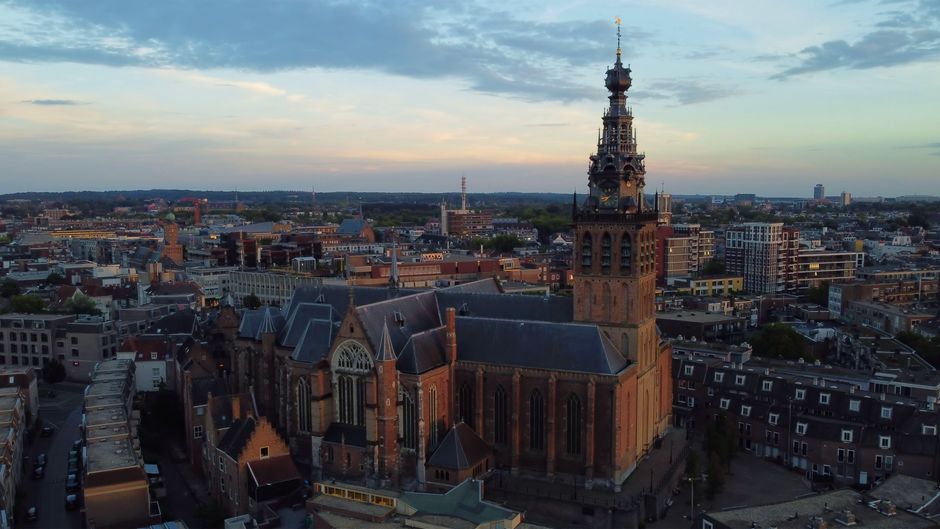
Aerial view of Saint Stephen’s Church in Nijmegen at sunset., Statia, Netherlands
Art, Music & Nightlife
You might expect a tiny island of six thousand people to sleep after dark, but Statia has a surprisingly tangled creative scene. The music that pumps through this island is a mix of soca, reggae, bouyon, and the traditional “Statian music” — a folk genre played on accordion, fife, and drum, often with lyrics that tease and gossip at village feasts. To hear it live, you should time your visit for the annual Accordion Festival every November, when players from across the Dutch Caribbean converge on Oranjestad’s baseball eld converted into a stage. The centre of island creativity, though, is the *Statia Art Walk*, held on the last Friday of each month, when Upper Town’s historic building open their doors to painters, ceramists, and craft vendors. You’ll stroll between coffee-table studios, listening to steel pan rehearsals from the adjacent courtyard, and you’re very likely to buy a genuinely original piece — local artist Roseloe Francis’s vibrant canvases of island life hang at the tourism office, and her prints make perfect gifts. The nightlife is low-key but friendly: the *Blue Bead* bar on the waterfront hosts weekend karaoke that draws a hilarious mix of transplanted Dutch expats and local fishermen, while *The Quiet Seafarer* on Prinses Margrietstraat pours a properly mixed rum punch and plays a vinyl selection of classic calypso until midnight. Just remember, this is not St. Tropez — seasoned travelers prefer Statia’s vibe precisely because the loudest thing is the tree frogs singing after a downpour.
The island’s true artistry, however, lies beneath the surface. The statia National Marine Park protects a coral reef that pulses with life, and the yearly “Statia Dive Festival” in June invites visitors to join underwater clean-ups and guided wreck tours. Above ground, the rural roads are dotted with reminders of a more utilitarian craft life — old lime kilns, slave huts, and plantation ruins. Locals recommend the “Museum Walk” that starts at the statia Historical Museum; it leads you past nine sites including the ruins of the only synagogue in the Caribbean beyond Curacao. It’s this layering of history over a living community that gives Statia its texture. For a single, unforgettable evening, try to attend the monthly “Ruins Under the Stars” event at the synagogue, when the site is lit by lanterns and a small choir sings spirituals and Dutch psalms. The raw acoustics against the old stone walls are spine-tingling.

A scenic view of a traditional windmill in Hattem, Gelderland on a sunny day., Statia, Netherlands
Practical Guide
- Getting There: You’ll fly into Franklin Delano Roosevelt Airport (EUX), served primarily by Winair (from Sint Maarten, 20 minutes, around $180 round-trip) and Divi Divi Air. Alternatively, you can take the private fast ferry from St. Kitts’ Basseterre (25-min crossing) or from Sint Maarten’s Philipsburg (1.5 hours) on the MV Statia, which lands at Lower Town’s pier. For the best flight connections, book a search at Skyscanner
- Getting Around: The island is only ten kilometres across, so a rental car is your best bet. Local agencies like Statia Rental and the friendly desk at the airport office start at $40/day; you need a valid driver’s license and your hometown license is accepted. Taxis are plentiful but not cheap — a hop from airport to Upper Town runs $15. Savvy travelers also rent e-bikes and mountain bikes for $25/day to explore the Quill’s lower trails. Gas is sold at one station near the airport, at about $1.20 per litre.
- Where to Stay: For history, choose the *Old Gin House* in Lower Town (from $120/night) — you’ll fall asleep to the sound of surf against the historic warehouse walls. For sea views and gracious modern comforts, the *Statia Lodge* (from $150/night) sits high on a cliff overlooking the bay. For budget travelers, the *Heritage Inn* in Upper Town offers clean, simple rooms from $70/night, with the advantage of being steps from the fort restaurants. Check the best deals and peer reviews at <a href=”https://www.booking.com” target=”_blank” rel=”noop

