
Beyond the Glow Sticks: Finding Your Quiet Sanctuary in Koh Phangan’s Thong Nai Pan (2026)
In 1987, a German backpacker named Klaus Weiss pitched a tent on the soft sand of Thong Nai Pan Noi, the first foreigner to sleep there in decades. The only sounds were the rustle of casuarinas and the distant chug of a longtail boat. Locals from the inland village, who had used the bay for seasonal fishing, assumed he would leave after a few days. Instead, he stayed, built a bamboo bungalow, and wrote postcards home that would, over the next three decades, quietly lure travelers seeking solitude, not parties. That solitary tent was the seed of what you now find: a place where development came slowly, respectfully, and always in the shadow of the forest-clad hills.
The Story Behind Thong Nai Pan, Thailand
Koh Phangan’s history is one of fruitful obscurity. The island’s name derives from the Thai word ngan (meaning sandbar), referencing the shifting sands that appear and vanish between its shores. For centuries, sea gypsies—the Chao Leh—anchored here during monsoon season, trading fish for coconut sugar and betel nut. By the 19th century, Chinese traders from Hainan settled along the western coast, establishing rubber and coconut plantations. Thong Nai Pan, however, remained nearly untouched. Its twin bays—Thong Nai Pan Noi (smaller, rockier) and Thong Nai Pan Yai (wider, shallower)—were too remote for the steamships that called at Thong Sala. Even the Full Moon Party, which began in the late 1980s at Haad Rin, bypassed these coves. Travelers who made the dusty taxi ride across the island found only a handful of wooden huts and a small fishing kampong.
The turning point came in 1994, when the Thai government paved the final stretch of Route 4041 from Thong Sala to the northeast coast. That road opened Thong Nai Pan to a trickle of independent travelers. Locals like the Jaisamut family, who had farmed coconut and rambutan for generations, began converting beachfront land into simple resorts. Development remained low-rise and low-key, partly because of zoning restrictions that limited building height to the treeline. Today, you will find no towering hotels or neon signs. Instead, the bay has become a case study in sustainable island tourism—a place where the thick forest still meets soft sand, and where the roar of a longtail’s engine is the loudest sound after midnight.
Neighborhood by Neighborhood
Thong Nai Pan Noi (The Quiet Bay)
This smaller northern cove is where Klaus Weiss pitched his tent, and its character remains hushed and exclusive. The beach curves gently for about 400 meters, backed by a wall of twisting fig trees and boulders covered in moss. The only concrete path runs behind the shoreline, linking a handful of boutique resorts: Anantara Rasananda at the southern tip, where travelers lounge on daybeds under frangipani trees; and the more intimate Buri Rasa, with its library hammocks. Architecture is low-slung and Thai-modern—teak, terrazzo, and stone—with open-air lobbies that blur the line between indoors and outdoors. Most tourists overlook Noi in favor of its larger sibling, which is exactly why you should spend at least two evenings here. At sunset, head to the small wat (temple) shrine tucked behind the restaurant at Anantara; locals leave offerings of jasmine garlands and an old family recipe of sticky rice—a practice you will not find mentioned in any guidebook.
Thong Nai Pan Yai (The Family Bay)
Walk five minutes south, and the atmosphere shifts. Yai is wider, shallower, and more communal. The beach stretches nearly 800 meters at low tide, when you can wade out 50 meters and still have the water at your waist. This is the social heart of the area: a string of simple wooden restaurants—Sunset Beach Bar, Mama’s Seafood Hut, and the ever-popular Longtail Beach Resort—with barefoot travelers sharing grilled snapper and Chang beer at plastic tables. Unlike Noi, Yai has a tangible village feel. Locals live behind the main road, in the small community of Ban Thong Nai Pan, where you will find a convenience store, a motorbike rental shop, and the weathered Shrine of the Seven Sisters. Seasoned travelers prefer Yai for its laid-back energy and because it’s where the best local food is found: the papaya salad at Sri Thong Nai Pan (a concrete shack behind the 7-Eleven) is so fiery that Thai fishermen come from other bays to eat it.
Ban Thong Nai Pan (The Inland Village)
Most visitors never leave the sand, and that’s a mistake. Inland, about 500 meters from the beach, lies the original settlement—a quiet grid of dirt lanes lined with coconut palms, corrugated roofs, and the occasional Buddhist shrine. The village market runs every morning from 6:00 to 9:00 a.m. in a covered pavilion next to the primary school. Here, you can buy freshly grated coconut, bundles of morning glory, and glass jars of dark, salty fish sauce made by the women of Ban Khok. The real draw, though, is the Temple of the Emerald Buddha (Wat Thong Nai Pan Noi), a modest 60-year-old wat with a golden chedi and a huge banyan tree that locals believe houses a protective spirit. If you walk behind the temple around 4:00 p.m., you might see the resident monk, Phra Ajahn Thongchai, sprinkling holy water on passing motorbikes—a blessing for safe travel that travelers often discover only by accident.
The Local Table: What Denizens Actually Eat
Koh Phangan’s cuisine is not the same as what you find in Bangkok. Here, the sea and the garden come together in ways that reflect the island’s boat-based culture. Locals eat with their hands when it comes to sticky rice, dipping grilled fish into nam jim seafood (a fiery lime-chili-garlic sauce) or scooping up som tam speckled with fermented crab and dried shrimp. The defining dish of Thong Nai Pan is yam pla dik pek—a tangy, spicy salad of baby octopus caught just offshore, tossed with shallots, lemongrass, and a dressing of lime, fish sauce, and palm sugar. You must seek it at the kitchen of Baan Cha Bungalows, a family-run spot on Yai’s northern end. The mother, Auntie Daeng, has been making it for 30 years, and she will ask you how spicy you want it. Do not say “very” on the first try.

วัดท้องนายปาน หมู่ที่ 5 ตำบลบ้านใต้ อำเภอเกาะพะงัน / Wat Thong Nai Pan, Koh Phangan (Thong Nai Pan), Thailand
The real food culture here is less about restaurants and more about shared meals. On full moon nights (yes, even away from the party), many local families hold small gatherings on the beach—grills set up on the sand, children roasting corn, and visitors invited to sit on woven mats. Travelers often discover these events by walking toward the music, usually a tinny speaker playing Isan folk. Bring your own bottle of rum or a fresh coconut, and don’t be surprised if you’re handed a spoon and told to dig into a communal pot of tom kha gai. This is how the denizens of Thong Nai Pan truly eat: in a circle, barefoot, the salt wind carrying laughter across the bay.
Art, Music & Nightlife
Nightlife in Thong Nai Pan is a whisper compared to Haad Rin’s roar, and that’s the point. After sundown, the entertainment shifts to fire shows that start around 8:30 p.m. at the beachfront restaurants—especially at The Beach Bar on Yai, where a wiry Thai performer named Lek spins flaming staffs while the waves hiss behind him. The music is reggae, deep house, or acoustic covers, played at a volume that lets you hold a conversation. For something more unusual, check the schedule at the Phangan Wellness Studio on the road between the two bays; they host a weekly “Moonlight Cinema” every Saturday in high season (December–March), projecting classic Thai films on a white sheet strung between two coconut trees. Admission is free, but you’ll want to bring a sarong to sit on and buy a bag of hot, salted khao pod (grilled corn) from the vendor outside.
Art here is woven into daily life. The local community art collective, Phangan Art Space, runs a tiny gallery inside the village school where children and foreign residents paint murals inspired by the island’s churning monsoons. In February, during the annual Thong Nai Pan Village Fair, the beach becomes a canvas for sand sculpture competitions, and you can watch elderly women in bandanas weave palm fronds into intricate baskets—a craft that has been passed down through centuries. Savvy visitors know to buy one directly from the weaver; they cost around 200 baht, a fraction of the price in Koh Samui.
Practical Guide
- Getting There: Fly to Koh Samui Airport (USM) via Bangkok Airways or Thai Smile. Then take a Lomprayah catamaran from Samui’s Big Buddha Pier to Thong Sala Pier (250 baht, 30 minutes). From Thong Sala, hire a private taxi (800 baht, 30 minutes) or rent a scooter (300 baht/day) and drive yourself along the winding road. Book flights at Skyscanner
- Getting Around: A scooter is your best bet—roads are paved but hilly, and you’ll want the freedom to explore. Rentals are available at most beachfront shops (300–400 baht/day). Songthaews (shared pickups) run from Thong Sala to the beachhead twice daily (100 baht). For airport transfers, book via 12Go Asia.
- Where to Stay: For quiet luxury, choose Thong Nai Pan Noi—the Anantara Rasananda (from 6,000 baht/night) or the smaller Buri Rasa (from 4,500 baht/night). For family-friendly, book at Longtail Beach Resort on Yai (from 1,800 baht/night) or Baan Cha Bungalows (500 baht/night). Compare options on Booking.com
- Best Time: December to April is dry and calm; March is ideal with clear skies and light winds. May–October is monsoon season—rains often come in short afternoon bursts but June and July can still be excellent with fewer crowds. Avoid November (peak rain) and September (choppy seas).
- Budget: Expect to spend 2,500–4,000 baht per day for a mid-range trip (1,800 baht accommodation, 600 baht food, 400 baht transport, 200 baht incidentals). Budget travelers can halve that by staying in fan bungalows and eating street food.
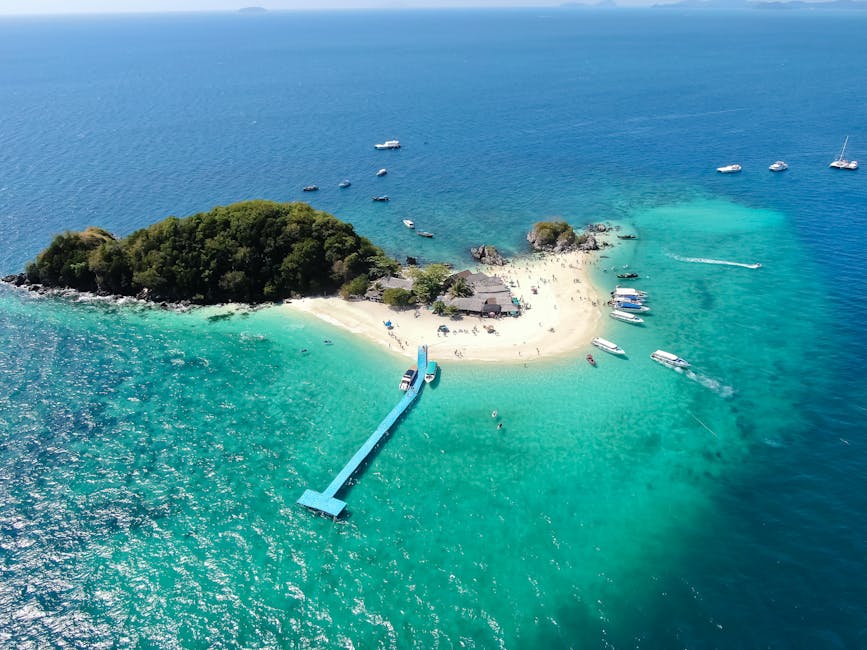
Idyllic aerial view of Koh Khai Nai Island’s turquoise waters and sandy bea…, Koh Phangan (Thong Nai Pan), Thailand
What Surprises First-Time Visitors
You will arrive expecting the full moon’s echo—glow sticks, thumping bass, and rowdy crowds. Instead, you find a bay where the loudest nightly gathering is a fire show watched by 20 people. The first surprise is the quiet trust. At the 7-Eleven, locals leave their motorbike keys in the ignition; at the beach restaurants, they settle bills by writing what you owe on a napkin and handing you a pen. It’s a trust that feels almost anachronistic, and it makes you slow down. Travelers often discover that after three days here, they stop checking their phones.
The second surprise is the low tide. Around midday, the sea retreats up to 100 meters, exposing a wide, wet sand flat that becomes a playground for children and sandpipers. You can walk to the headland’s rock pools, where you’ll find small crabs and sea cucumbers. But what catches most off guard is the smell: a briny, green scent of exposed sand mixed with drying seaweed. It’s not a resort smell, it’s a working sea smell. And if you’re here during the evening low tide, you might see local men digging for hoi (clams) with handmade rakes, a sight that has been repeated for generations.
Your Thong Nai Pan Questions
Is Thong Nai Pan too quiet for a weeklong stay? Not if you embrace its pace. The bay rewards the traveler who can read a book on a hammock for three hours, then snorkel in the clear water off the southern rocks of Noi. If you need more activity, you can rent a kayak to paddle to nearby Bottle Beach (20 minutes across the headland) or hike up to the Khao Ra viewpoint at
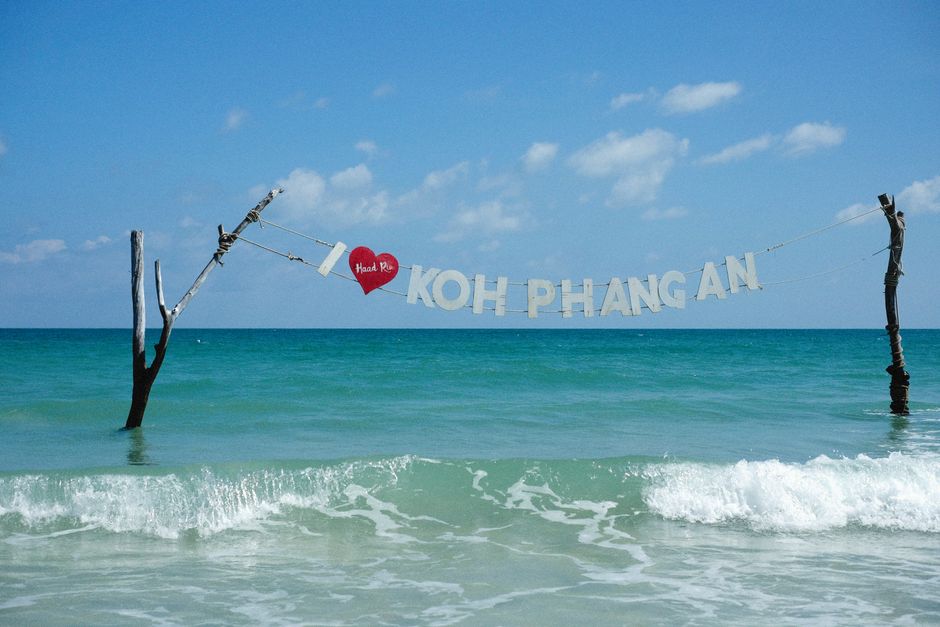
Beautiful seascape of Koh Phangan with ocean waves and a welcoming sign, Koh Phangan (Thong Nai Pan), Thailand

