
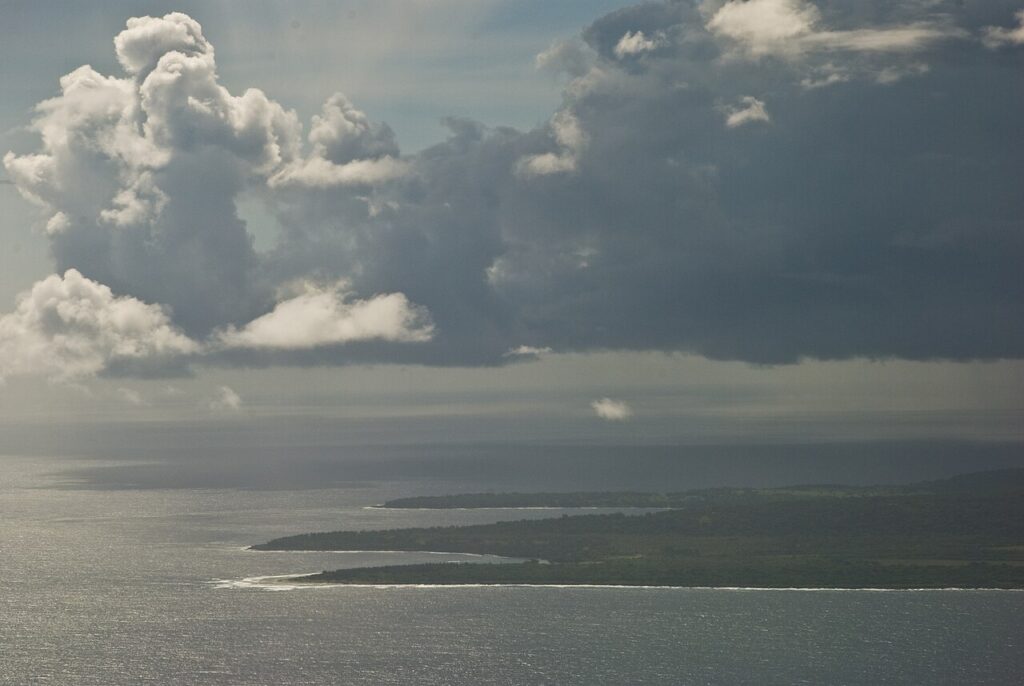
Beyond the Blue Holes: Why Efate Steals the Hearts of Those Who Wander (2026)
In 1774, Captain James Cook anchored off the coast of what he called “Sandwich Island” – today’s Efate – and noted in his journal a “gentle people” who paddled out in outrigger canoes, offering coconuts and yams. He never set foot on the main island, but his cartographer, William Hodges, sketched the volcanic peaks and turquoise lagoons that would, two centuries later, draw travelers from across the globe. When you arrive at Bauerfield International Airport, you’ll feel what Cook glimpsed from the sea: an island where time slows, where the Pacific pulse beats in every village dance and every tide pool.
The Story Behind Efate, Vanuatu
Efate’s history is etched in fire and colonialism. The island emerged from volcanic upheaval millennia ago, its fertile soils shaped by eruptions that still rumble beneath nearby Mount Yasur. The original Ni-Vanuatu people – the indigenous inhabitants – arrived in outrigger canoes around 1000 BC, establishing villages along the coast and on the offshore islets of Erakor and Moso. They built a culture of wantok (literally “one talk” – a deep kinship system) that persists today. When European sandalwood traders and “blackbirders” arrived in the 1800s, they disrupted these tight-knit communities, kidnapping men for plantation labor in Fiji and Queensland. You’ll still hear elders in Mele village tell stories of ancestors stolen, a trauma that galvanised the push for independence.
The colonial era tangled Efate in a French-British condominium, a bizarre dual-rule system from 1906 where each power had its own police, currency, and even driving side – a “pandemonium of two administrations,” as one British resident called it. Port Vila, the capital, became a dusty frontier town of tin roofs and coconut plantations. Travelers discover that this peculiar heritage left visible marks: the French gendarmerie building on Rue Bougainville, the British Residency with its cricket pitch, and the remnants of the American military base on the island’s north coast, where 50,000 US troops staged for the Guadalcanal campaign in 1942. Locals still remember the “Yankee years” with fondness – the GIs brought jeeps, tinned ham, and baseball, and left behind the deep-water wharf and a runway that became today’s airport. These layers of history sit lightly on Efate, never overwhelming but adding depth to every village you pass.
Neighborhood by Neighborhood
Port Vila – The Creole Waterfront
Your first steps in Efate will likely be on the cracked sidewalks of Port Vila’s main strip, Rue Bougainville. This is the island’s only real city, home to about 45,000 people, and its character is a humid jumble of French patisseries, Chinese trade stores, and kava bars glowing with neon lights. You’ll wander between the produce market – a vast iron-roofed shed where women in flower-print dresses sell papayas, coconuts, and fresh tuna – and the central taxi rank, where drivers lean on dented minibuses and shout “Tuk-tuk!” A block inland, Rue Pasteur leads to the atmospheric French Quarter, where colonial-era wooden villas with verandas house art galleries and the excellent Au Péché Mignon bakery. Don’t miss the tiny handicraft market on the lagoon edge, where master carvers from Ambae sell intricate tamarind-wood masks. Come dusk, the waterfront comes alive: travelers sip Tusker beer at the Yacht Club, watching the sun sink behind Iririki Island.
Mele Village & the Bush Path
A fifteen-minute drive north of Vila, Mele feels a world away. You’ll pass through a canopy of banyan and breadfruit trees before emerging at a village of neatly swept dirt paths and thatched nakamal (meeting houses). This is the heartland of the Mele people, whose ancestors have lived here for centuries. Locals recommend you visit the Mele Vanua Cultural Village, a living museum where chiefs in woven mats narrate creation myths around a fire pit. You’ll learn about the ancient grade-taking ceremonies – a system of social advancement through pig-killing and yam-exchange – and watch women weave pandanus mats that take months to finish. The secret here is to come on a Saturday, when the village hosts a market with lap lap (a baked root-coconut cake) and nangkal (a peppery fruit drink). Most tourists speed past to the Blue Holes, but savvy visitors spend an hour listening to a chief tell stories of the twin volcanoes that created the island.
Erakor Island – The Resort Enclave
Just a five-minute boat ride from Vila’s main wharf, Erakor Island is a sand-fringed coral islet that feels like a private fiefdom. You’ll find two luxury resorts – the Erakor Island Resort & Spa and the more exclusive Paradise Cove – but the island also harbors a real village of about 200 residents. The contrast is jolting: you can sip a $10 cocktail at the resort’s swim-up bar while twenty meters away a woman fries fish for her family on a wood fire. Travelers often discover that the best moment here is early morning, before the boatloads of day-trippers arrive. Walk the coastal path north, past the old copra plantation ruins, to a hidden rocky point where sea turtles surface. The resort offers kayaks for rent ($20 per hour), and you can paddle across the lagoon to a tiny sand cay where you’ll have the place entirely to yourself for an hour or two. A warning: avoid the resort’s “lobster night” ($45 per person) – the village family-run eatery on the east side serves a far superior grilled parrotfish for $8.
The Local Table: What Ni-Vanuatu Actually Eat
Food in Efate is a story of fire, root vegetables, and the reef. The staple is taro – a starchy, purple-hued tuber that Ni-Vanuatu have cultivated for over a thousand years. You’ll find it boiled, fried, or baked into lap lap, the national dish made by grating taro, coconut milk, and chicken or fish, then wrapping the mixture in banana leaves and cooking it for three hours in a pit oven called an “umbe.” The result is dense, fragrant, and faintly smoky – a taste of the island’s soul. Locals recommend you seek out lap lap at the Port Vila Market’s hot-food section (open 6 a.m. to noon daily), where Mama Agnes sells generous slices for 300 vatu (about $2.50). She’s been at the same stall for twenty years, her fire-blackened pots simmering from dawn.
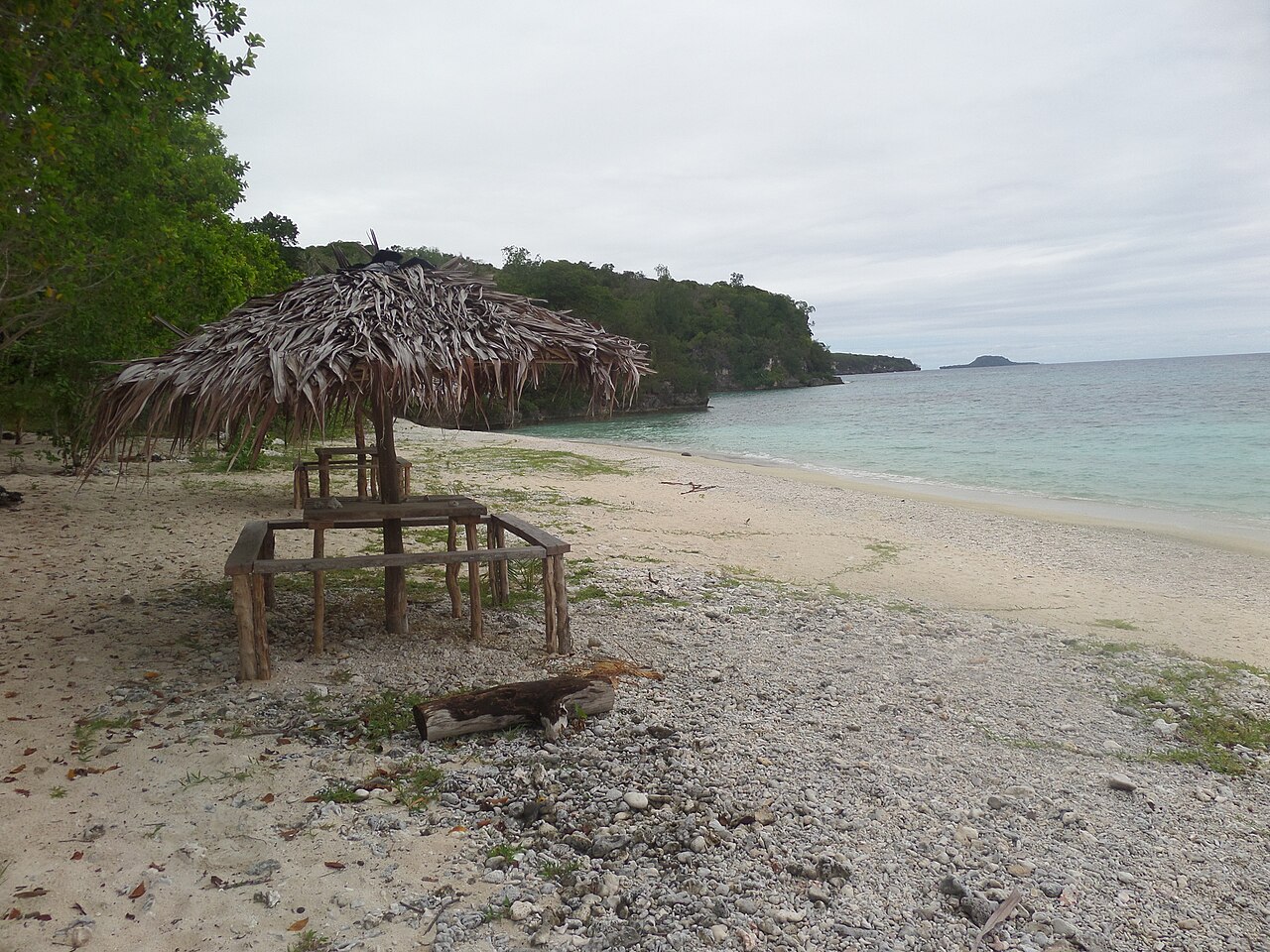
Beach on one of Vanuatu’s beaches, Efate, Vanuatu
Beyond lap lap, visitors discover the reef bounty. Tuluk is a street-side specialty – grated cassava mixed with coconut cream, then stuffed with minced beef or flying fish and steamed in a palm leaf packet. You’ll find the best tuluk at the roadside stands on the road to Mele Village, especially at the one run by Joseph and his wife every Friday from 11 a.m. until it sells out (usually by 2 p.m.). For a sit-down dinner, head to The Stonehouse at Erakor Lagoon, where chef Gilles (a French expat who’s lived in Efate for 15 years) serves a three-course tasting menu of Vanuatu ingredients – reef fish ceviche with mango, wild boar stew with turmeric, and soursop sorbet – for 3,500 vatu ($30). The locals themselves rarely eat out, preferring home-cooked feasts of yam, fish, and pumpkin leaves in coconut milk, served on banana leaves on the floor. If you’re invited to a village “nasara” (feast), accept – it’s the truest taste of Efate.
Art, Music & Nightlife
Efate’s creative pulse beats in its carvings and its string bands. The island is famous for the intricate tamarind-wood slit drums – tall, human-like figures called “tamtams” – that line the nakamal. You’ll find master carver Jonas Tari at his workshop near the Port Vila market, where he’ll show you how he uses a single chisel to carve the lips, eyes, and mouth that make each tamtam unique. His pieces start at 5,000 vatu ($43) and are sold at the Alliance Française gallery (open Tuesdays and Thursdays, 10 a.m.–3 p.m.). The gallery also hosts monthly exhibitions (first Friday of each month, 6 p.m.–8 p.m., free entry) featuring contemporary Ni-Vanuatu painters like Jean-Marie Tari, whose vibrant canvases depict kastom stories.
Music is everywhere. In the villages, you’ll hear string-band performances – acoustic guitars, ukeleles, and bush drums – playing the soft harmonies of Vanuatu’s national music. The best place to experience it live is at the Nakamal Kava Bar on the Port Vila waterfront (open nightly from 5 p.m. to 11 p.m., free entry). Here, local bands like the Mele Musicians serenade a crowd of kava-sipping locals and travelers. Serious kava drinkers head to the unmarked kava bars in the backstreets of Vila – ask a taxi driver for “the strong one near the hospital” and you’ll find a dim room where men sit on buckets, slurping the muddy, numbing root drink from a coconut shell. The effect is a gentle, conversational high that loosens your tongue. For a livelier night, head to The Reef Bar in Vila (open Thursday–Saturday, 9 p.m. to 1 a.m.), where a DJ spins reggaeton and island pop, and the dance floor fills with expats and young locals. Every July, the Fest’Napuan music festival (usually last weekend) brings together string bands from across the archipelago for three days of free performances at the Chief Roi Mata Cultural Centre.
Practical Guide
- Getting There: Bauerfield International Airport (VLI) receives direct flights from Brisbane (Virgin, 3.5 hours), Sydney (Air Vanuatu, 4 hours), and Nouméa (Air Calédonie, 1 hour). Seasonal connections from Auckland and Nadi. Book at Skyscanner.
- Getting Around: Shared minibuses (“buses”) run fixed routes within Port Vila for 150 vatu ($1.30) per ride. For day trips, hire a taxi for 3,000 vatu ($26) for a half-day. Car rental from Avis or local Thrifty costs about 6,000 vatu ($50) per day; fuel is expensive (250 vatu/liter). Bicycle hire at Vila Bike Rentals (1,500 vatu/day) is your best bet for exploring the coastal road to Mele.
- Where to Stay: In Port Vila, the Mangoes Resort (from $120/night) offers five thatched bungalows on a quiet lagoon. For mid-range, the Sea View Hotel on Rue Bougainville (from $80/night) puts you steps from the market. Budget travelers love the Nasama Resort Apartments (from $55/night) near Erakor. Check Booking.com.
- Best Time: April to October – the “dry” season – offers clear skies, comfortable temperatures (22–28°C), and minimal rain. Cyclone season runs January–March; avoid unless you want adventure. July’s Fest’Napuan and August’s Independence Day (July 30) are cultural highlights.
- Budget: Daily costs run 5,000–8,000 vatu ($43–$69) per person – covering a basic guesthouse, market meals, and one sit-down dinner. Add 3,000 vatu for a taxi day-trip. Higher-end resorts can push it to $200/day.
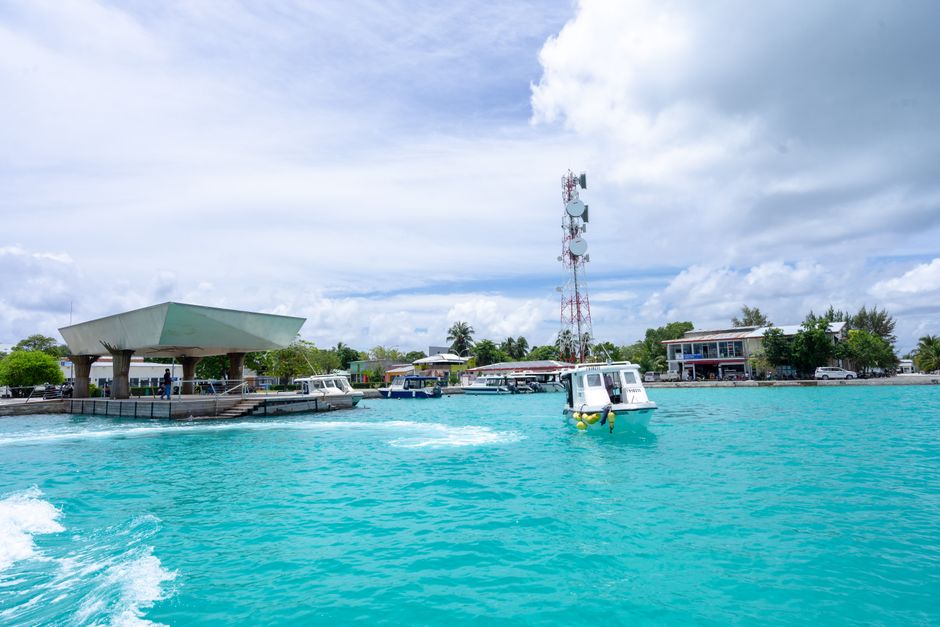
A tranquil tropical island scene featuring a dock, Efate, Vanuatu
What Surprises First-Time Visitors
You’ll land expecting a sleepy Polynesian paradise, but Efate’s hidden density will shock you. The island is only 40 kilometers wide, yet you’ll discover over 50 distinct villages, each with its own nakamal, its own kava recipe, and its own version of history. The population is deeply Christian (Presbyterian, Catholic, Seventh-day Adventist) – Sunday morning in Port Vila means empty streets and the sound of hymns echoing from tin-roof churches. What surprises many visitors is how the old kastom beliefs live alongside church: a healer might bless your coconut with a prayer before treating your headache, and the slit drums are still used to call spirits before a ceremony. You’ll also be amazed by the birdlife – the rare Vanuatu kingfisher and the rainbow lorikeets that swoop through the market, stealing banana slices from your hand.
Another shock is the water. Efate is riddled with “blue holes” – freshwater springs that bubble up through limestone, forming deep, clear pools. The most famous, Nguna Blue Hole, is a 10-meter-deep sinkhole the color of cobalt, surrounded by ferns and vines. Locals recommend arriving before 9 a.m. to have it to yourself (entry 500 vatu). But the bigger surprise is how empty the island feels. Despite its proximity to Australia, tourism is still low-key – you’ll often be the only foreigner on a bus or at a village festival. This intimacy means you’re never a spectator; you’re invited into homes, offered kava, and asked about your family. The wantok system extends to you. By the third day, you’ll recognize faces on the street, and by the fifth, you’ll be “nating” (a cousin) to a dozen Ni-Vanuatu.
Your Efate, Vanuatu Questions
Is Efate safe for solo travelers, especially women? Yes, with common sense. Violent crime is rare; the biggest annoyances are persistent touts near the market and occasional pickpocketing in the crowded taxi ranks. You’ll feel safe walking along the main roads in Port Vila even after dark, but stick to well-lit routes. Ni-Vanuatu are famously warm and helpful – if you look lost, someone will approach and walk you to your destination. Solo female travelers consistently report feeling respected and secure, though it’s wise to avoid the isolated kava bars late at night. A good rule: follow local women’s habits – don’t walk alone on empty beaches after sunset.

Scenic church with unique black and white tile facade amidst lush palms, Efate, Vanuatu
What should I know about kava culture before I try it? Kava is not a casual drink – it’s a social ritual. When you enter a nakamal (often just a dark room with benches), you’ll be served a half-coconut shell of cloudy liquid. The etiquette: sip slowly, hold your nose to mask the earthy taste, and swallow. It’s impolite to refuse a shell, but you can ask for a “small one.” The effect is a numbing of the mouth and a gentle, relaxed drowsiness that lasts about an hour. Don’t drink on an empty stomach, and don’t mix with alcohol – you’ll regret it. Locals will respect you more if you learn the custom: clap once before and after drinking, say “bula” (good health), and never ask for “one more” – that’s considered greedy.
Can I visit outer islands from Efate for a day trip? Yes, but plan carefully. The most accessible are Moso and Nguna islands, both a 30-minute boat ride from Havannah Harbour ($20 per person with a local fisherman, negotiable). Several operators run day trips to Tanna Island (to see Mount Yasur volcano) via a 40-minute flight ($180 round-trip from Bauerfield) – book with Air Vanuatu at least a week ahead. For a shorter excursion, the sheer cliffs of Lelepa Island (a 15-minute ride from the mainland near Mele) offer snorkeling over WWII shipwrecks. Your best strategy is to hire a local guide from Mele Village (ask for Chief Daniel, contactable at the Mele Vanua Cultural Centre) who will arrange boat transfers and a picnic of fresh grilled fish. Expect to pay about 8,000 vatu ($70) for a full-day island-hopping trip including lunch.

