
Beyond the Ancient Walls: Why Sozopol’s Timeless Charm Steals Every Traveler’s Heart (2026)
In 610 BC, Greek colonists from Miletus stepped ashore on a rocky Thracian islet and founded Apollonia Pontica, naming it for the sun god Apollo. They erected a towering 13-meter bronze statue of the god at the harbor entrance—a beacon that would later be carted off by the Romans, leaving only legends and a deep, sun‑baked sense of history. Today, you walk those same cobbled lanes, and the whisper of oars and the scent of sea salt still hang in the air.
The Story Behind Sozopol, Bulgaria
Your journey through Sozopol begins nearly 2,000 years before the Romans arrived. The Greek colony of Apollonia thrived as a trading hub, minting its own silver coins and building temples that rivaled Delphi. By the 1st century BC, the Romans plundered the famous statue of Apollo, but the town—re‑founded as Sozopolis during the Byzantine era—remained a strategic port. You’ll notice the layers as you walk: fragments of Greek pottery turned up in medieval churches, and the old city walls you see today are a patchwork of Hellenistic, Roman, and Ottoman stonework.
The town’s fortunes shifted under Ottoman rule (from the late 14th century), when Sozopol became a quiet fishing village. Locals kept their Christian faith and their wooden houses built in the distinctive Black Sea style—narrow, with projecting upper floors and shuttered windows. Travelers often discover that the 19th‑century revival of shipbuilding and sea trade brought prosperity, leaving behind the handsome Revival‑era churches and merchant mansions that now line the streets. The most dramatic turn came in the 20th century: the Communist period saw Sozopol turned into a summer retreat for factory workers, and after 1989, private tourism surged. Today, you’ll find a delightful collision of ancient ruins, post‑Communist beach bars, and a UNESCO‑level Old Town that feels frozen in time.
Neighborhood by Neighborhood
The Old Town (Stari Grad – Peninsula)
You’ll step into Sozopol’s heart by crossing the narrow isthmus onto the old peninsula. The air changes—less car noise, more salt breeze. Cobbled streets like ul. “Kiril i Metodiy” and ul. “Apollonia” wind past 18th‑century timber houses with overhanging bay windows, painted in ochre and white. Their foundations are Greek stone, their upper floors Bulgarian Revival woodwork. Every corner reveals a tiny church: Church of Sveta Bogoroditsa (The Holy Mother of God), built in the 15th century over an ancient Thracian sanctuary, has an iconostasis so intricate you’ll want to peer for twenty minutes. Most travelers spend a morning wandering the Milet Peninsula loop, where you’ll find the Apollonia Museum of Fine Arts (entry 5 BGN, open 9am–6pm) housed in a restored merchant’s home—its courtyard is perfect for a quiet coffee. The harbor edge, called Morska Gradina, is lined with fish restaurants where you can watch fishermen mend nets. Come sunset, the whole peninsula glows amber.
New Town (Novi Grad – Mainland)
Cross the bridge back to the mainland, and you enter Sozopol’s bustling, practical half. Ul. “Republika” is the main drag, lined with shops, bakeries, and a lively market square. Here you’ll find the Archaeological Museum (10 BGN), which houses Greek and Roman artifacts, including a haunting 4th‑century BC tombstone and the so‑called “Apollonia treasure” of gold coins. Locals recommend visiting on Saturday morning, when the Central Market (Tsentralen Pazar) hums with vendors selling dried figs, honey, and local lavender—you can snag a jar of rose jam for 4 BGN. The New Town is also where you’ll find the bus station, the post office, and the main beaches: Central Beach (Tsentralen Plazh) is a wide strip of coarse sand with cheap sunbeds (10 BGN per day), while Harmanite Beach (a 15‑minute walk south) is quieter and favoured by families. The contrast between the ancient quiet of the Old Town and the everyday hum of the New Town is what gives Sozopol its character.
The Fishing Quarter (Ribarska Mahala)
Tucked along the southern edge of the peninsula, the Fishing Quarter feels like a secret even locals treasure. Most tourists stick to the main Old Town lanes, but you’ll wander down to ul. “Ribarska” and discover a cluster of small boats bobbing in a natural cove, nets drying on stone walls, and the smell of grilling sprat. This is where the daily catch comes in before 7 am—arrive early and you’ll see men unloading red mullet, sea bream, and tiny tsatsa (anchovies). Two tiny tavernas, Mehana “Pri Moreto” and Fisherman’s House, serve grilled fish with a side of lutenitsa (roasted pepper spread) for around 12–15 BGN. The quarter’s narrow alleyways are lined with bright blue trim and flower pots, and you’ll hear the sound of dominoes being slapped on wooden tables. It’s a living museum of a way of life that’s been unchanged for centuries.
The Local Table: What Sozopol Denizens Actually Eat

8130 Sozopol, Bulgaria
You haven’t truly tasted Sozopol until you’ve sat at a plastic table on the harbour, eating ribena chorba (fish soup) with crusty bread. The cuisine here is a mirror of the sea and the land. Mussels from the Black Sea are the star—plump, sweet, and often grilled with garlic and white wine. Locals don’t go for fancy gastro‑pubs; they head to the Central Fish Market (open daily 8am–2pm) to buy the catch of the day, then take it to a family restaurant that will cook it for you for a small fee (around 5 BGN per kilo). The secret dish you must seek out is patatnik—a hearty potato and cheese bake, sometimes with leeks, that originated in the Rhodope Mountains but has found a second home here. The best version is at Mehana “Kotva” on ul. “Fiotovskiy Prohod” (about 9 BGN), a cozy tavern with checkered tablecloths where the owner, a retired fisherman named Ivan, will tell you the story of each wine from his own cellar. Another gem: Pastry Shop “Lakomnik” on ul. “Republika” sells banitsa with cheese and pumpkin—perfect for breakfast, at just 1.50 BGN a slice.
Savour the food culture as an experience, not a checklist. You’ll notice that locals eat late: lunch is around 2–3 pm, dinner at 8 pm or later, especially in summer. They drink rakiya (grape brandy) with meals, often homemade. And they love to linger—a two‑hour lunch is normal. Travelers often underestimate the importance of wine: the region of Burgas, just north, produces excellent whites from the Misket grape, crisp and citrusy. A bottle at a restaurant costs 15–20 BGN; at the winery, half that.
Art, Music & Nightlife
Sozopol’s cultural scene blooms in September during the Apollonia Festival of Arts (held annually since 1984, first week of September). You’ll find open‑air concerts of classical and jazz in the Old Town squares, modern dance on the Harbor Stage, and film screenings under the stars. The Art Gallery “Apollonia” (ul. “Apollonia” 5) shows works by contemporary Bulgarian painters and ceramicists, with free entry and a small shop. During summer, the streets are alive with watercolor stands and live acoustic sets—grab a seat at Bar “Lazur” on the Morska Gradina side to hear a local guitarist play folk tunes while the sun dips below the Blagoevgrad Peninsula.
Nightlife is low‑key compared to Sunny Beach, 15 km north, and that’s exactly why savvy visitors love it. After 10 pm, a handful of beach bars spin chill house or retro pop: Club “Harmanite” (next to the beach of the same name) is a wooden deck on the sand with cocktails from 8 BGN. If you want dancing till dawn, the main strip in New Town has two clubs—Groove and Seven—but the scene is more about lingering over wine than raging. Locals recommend ending the night at Chiflika, a rustic tavern in the Fishing Quarter where the old men sing traditional bulgarian horo songs, and you’ll be invited to join the circle dance. It starts around 11 pm, and the wine flows until the last note.
Practical Guide
- Getting There: Fly into Burgas Airport (BOJ), 35 km north, served by Wizz Air, Ryanair, and Bulgaria Air from major European cities. From the airport, take bus #15 to Burgas bus station (3 BGN), then a direct bus to Sozopol (8 BGN, every hour). You can also pre‑book a transfer for 40 BGN. Browse flights at Skyscanner
- Getting Around: Sozopol is walkable—the entire Old Town is car‑free. Buses are the only public transit: a single fare within town is 1 BGN. Taxis from the New Town to the Old Town cost 5–7 BGN. Bikes can be rented from Bike Point (ul. “Republika” 12) for 15 BGN/day.
- Where to Stay: For romance and atmosphere, stay in the Old Town—Hotel Selena (ul. “Kiril i Metodiy” 27) has sea‑view rooms from 120 BGN/night. For budget, the New Town offers hostels like Sozopol Hostel (dorm from 30 BGN). Check Booking.com
- Best Time: June and September are ideal—warm sea (20–24 °C), fewer crowds, lower prices. July–August is peak: hot (30 °C+), busy, but festivals run. May and October are peaceful but cooler (15–20 °C), with some restaurants closed.
- Budget: Expect to spend about 70–90 BGN (€35–45) per day: 40 BGN for a mid‑range room, 20 BGN for meals, 5–10 BGN for attractions, and 10 BGN for transport/entertainment.

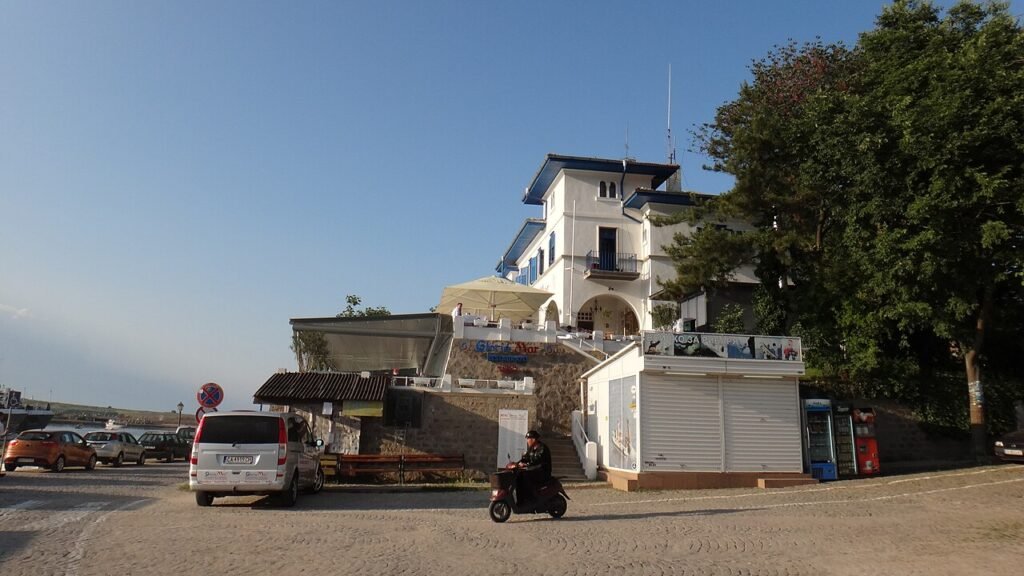
Houses near body of water during daytime, Sozopol, Bulgaria
What Surprises First-Time Visitors
Most travelers arrive expecting another generic Black Sea resort, but Sozopol confounds that assumption from the moment you step into the Old Town. The silence is the first surprise: once you leave the main harbourside, the narrow lanes are so quiet you can hear your own footsteps. Dogs nap in doorways, cats sprawl on sun‑warmed stones, and life moves at a pre‑tourism pace. You’ll also be struck by how seamlessly ancient ruins are woven into modern life—a 5th‑century BC wall holds up a café awning, and kids play soccer in a square that was a Sophocles‑era agora.
Another surprise is the quality of the local wine. Travelers often think of Bulgarian wine as cheap and forgettable, but the region around Sozopol produces small‑batch, dry whites that rival Greek Assyrtiko. Seek out Villa Melnik or Bratanov Winery labels—a tasting flight at Wine Bar “Vino” in the New Town costs 12 BGN and includes five wines with local cheese. Finally, the changeable weather catches many off guard: even in July, a sudden thunderstorm can roll in from the Strandzha Mountains, drenching the town for an hour before the sun reappears. Locals carry a light jacket and a waterproof layer, and so should you.
Your Sozopol, Bulgaria Questions

Round white steel container on red surface, Sozopol, Bulgaria
Is Sozopol safe for solo travelers? Absolutely. You’ll find Sozopol one of the safest small towns in the Balkans. Violent crime is almost non‑existent; the biggest risk is pickpocketing on crowded summer beaches (keep your bag zipped). Solo women travelers report feeling comfortable walking alone at night, especially in the well‑lit New Town. The only hazard is the cobblestones—wear flat shoes. Locals are friendly and will often offer help if you look lost. For added safety, stick to the main alleys after midnight, but you’ll find the atmosphere genuinely relaxed.
How much time should I spend in Sozopol? A weekend (three days) is ideal: day one for the Old Town and Archaeology Museum, day two for the Fishing Quarter and a boat trip to St. Ivan Island (where a 4th‑century monastery and wild peacocks await; 20 BGN round trip from the harbor), and day three for a lazy beach day at Harmanite. If you have five days, you can also explore the nearby Strandzha Nature Park, known for its ancient oak forests and mystical waterfalls. But do not try to do Sozopol in a day—you’ll miss the evening magic when the day‑trippers leave and the town becomes itself again.
What should I buy as a souvenir? Forget the mass‑produced “Sozopol” trinkets. Instead, look for locally‑crafted ceramic bowls painted with traditional Bulgarian patterns (the Pottery Workshop on ul. “Apollonia” 8 sells them from 15 BGN), a jar of homemade lutenitsa from the Central Market (5 BGN), or a bottle of rakiya from a small distillery—the apricot version is divine. For something unique, buy a hand‑carved wooden icon from the icon‑painter at Atelier “Petar” near the Church of Sveta Bogoroditsa; he’ll sign it for you. And don’t leave without a bag of dried sea salt from the Black Sea—sold in small cloth bags at the Fishing Quarter—it tastes nothing like table salt. Each of these carries a story, and when you get home, you’ll remember the sound of the waves against the ancient walls.

