
Before the Dawn of Time: Why Omo National Park Rewrites Your Understanding of Humanity (2026)
In 1967, a team led by Richard Leakey camped along the Kibish Formation near the Omo River and unearthed the Omo I skeleton—a set of bones that would be radiometrically dated to 196,000 years ago. This single discovery pushed back the known age of Homo sapiens by nearly 100,000 years, establishing the Lower Omo Valley as the cradle of all modern humans. As you stand on the same dusty banks today, you’re not just visiting a national park—you’re stepping into a living museum of our species’ infancy.
The Story Behind Omo National Park, Ethiopia
Long before it became a protected area in 1967 (the same year as Leakey’s find), the Omo River basin was a crossroads of migration, trade, and conflict. The park itself covers roughly 4,068 square kilometres, stretching from the highlands of the Ethiopian escarpment down to the shimmering shores of Lake Turkana. But its significance transcends borders: the entire Lower Omo Valley is a UNESCO Biosphere Reserve, recognized for both its staggering biodiversity and the tenacious indigenous cultures that have inhabited these lands for millennia.
In the 1890s, the Ethiopian emperor Menelik II extended his empire southward, absorbing many of the Omo’s peoples into a feudal system. But the valley remained largely uncharted by Europeans until the 1930s, when explorers like the Hungarian Count Sámuel Teleki and the British naturalist Wilfred Thesiger ventured into its depths. Thesiger, writing in 1934, described the Omo people as “fiercely independent, painted with ochre and adorned with feathers, living in a world untouched by the twentieth century.” That description still holds remarkably true: many of the tribes—Mursi, Hamar, Karo, Nyangatom—continue to practice body painting, scarification, and cattle herding as their ancestors did.
A pivotal historical turning point came in 2006 with the announcement of the Gibe III Dam, constructed upstream on the Omo River. The dam, completed in 2016, dramatically altered the annual flood cycles that had sustained the riverine agriculture and fisheries for centuries. Locals will tell you, with a mixture of pragmatism and sadness, that the river no longer rises as it used to. You’ll hear this in the hushed conversations of elders in Turmi’s marketplace—a quiet reminder that even the most ancient rhythms can be disrupted by a concrete wall.
Neighborhood by Neighborhood
The Mursi Territory
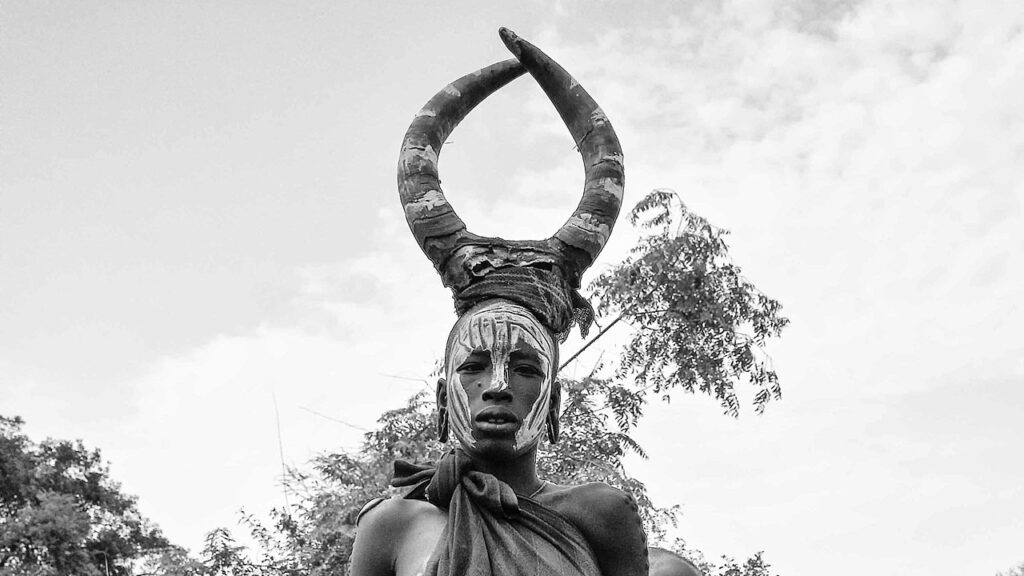
In the northwestern quadrant of the park, near the village of Mago, you’ll find the Mursi people, perhaps the park’s most photographed residents. The Mursi are famous (or notorious, depending on your perspective) for the clay lip plates worn by women—a tradition that first astounded European visitors in the 1960s. Walking through their homesteads, which are clusters of low, domed huts made from branches and cow dung, you’ll notice the air thick with smoke from cooking fires and the sharp scent of sour milk. Children rush to greet you with outstretched hands, their faces daubed with white chalk. Your best bet for a respectful encounter is to hire a local guide from the nearby Duba town (about 2,000 birr per day, roughly $35) and to ask permission before taking any photograph. Most tourists overlook the fact that the Mursi are exceptionally hospitable—they will invite you into their homes to share a gourd of fermented milk if you approach with humility.
The Karo Riverside
Southeast of the Mursi, along the eastern bank of the Omo River, the Karo occupy a series of steep terraces that offer sweeping views over the water. The Karo are renowned for their elaborate body painting—designs of dots, swirls, and animal motifs applied with natural pigments of white chalk, yellow ochre, and black charcoal. As you walk through the village of Kolcho, the first thing you’ll notice is the silence: the Karo speak in soft, melodic tones, and the only sounds are the wind rustling through acacia thorns and the distant murmur of the river. The architecture here is distinct from the Mursi: huts are rectangular, with walls plastered in mud and topped with thatched roofs. Seasoned travelers recommend spending a full afternoon simply sitting on the bluff overlooking the river, watching the crocs bask on sandbars and the women wade in to fetch water at dusk. The light at 4:30 PM is impossibly golden—plan to have your camera ready.
The Hamar Highlands
Further east, at the park’s boundary near the town of Turmi, the Hamar people inhabit the hills that roll away toward the lowland plains. The Hamar are perhaps most famous for the bull-jumping ceremony (ukuli bula), a rite of passage performed between March and June when the rains have ended. In this ritual, a young man must leap over a line of up to twenty cattle—a test of courage and strength that will allow him to marry. As a visitor, you can witness this ceremony if you happen upon it, though locals recommend contacting the Turmi Cultural Office a week in advance to check if any are scheduled. The Hamar are also known for their singing and dancing, particularly the evangadi dance performed by women at celebrations. Walking through the Hamar villages in the late afternoon, you’ll hear the rhythmic clap and call of songs drifting from family compounds; the women’s bangles and necklaces jangle in counterpoint. Be prepared for intense heat—temperatures routinely exceed 38°C (100°F) from October through May.
The Local Table: What the Denizens Actually Eat
The Omo valley’s cuisine is as elemental as its landscape—built on a trinity of sorghum, milk, and blood. In the villages, you’ll rarely encounter the injera and wat of the Ethiopian highlands. Instead, the Mursi and Karo subsist on koche, a stiff bread made from fermented sorghum that is eaten with a dollop of spiced butter from cows. The Hamar consume a porridge called genfo, made from maize or sorghum, often sweetened with wild honey collected from baobab trees. But the most iconic dish you must seek out is kurt—raw, spiced beef that is served on feast days. You’ll find it prepared in the village of Turmi at a small, nameless restaurant run by a Hamar woman named Kule. She serves kurt with a generous pile of shiro (chickpea stew) and a side of kocho bread made from ensete. The cost is about 120 birr ($2). Locals recommend washing it down with tella, a home-brewed sorghum beer that is sour, slightly effervescent, and alarmingly potent.

The woman washes in the river of OMO, Omo National Park, Ethiopia
If you crave fresh fruit, the Saturday morning market in Turmi (starting at 6 AM sharp) is where you’ll find papayas, mangoes, and the region’s excellent avocados—all sold by women with elaborately braided hair and beaded necklaces. Savvy visitors buy a half-dozen avocados for 30 birr and eat them with a sprinkle of salt and lime as a breakfast. For a more substantial meal, the Omo Riverside Lodge in Jinka (a two-hour drive north of the park) serves an excellent dinner buffet of Ethiopian stews, including a fragrant doro wat (spiced chicken), for 500 birr. But the real secret is to accept any invitation you receive from a village elder to share a meal—you’ll be served a bowl of warm milk and fresh koche that tastes of earth and tradition.
Art, Music & Nightlife
Art in the Omo Valley is not confined to galleries—it is painted onto skin. Each tribe has its own visual language: the Karo’s delicate dots and lines, the Hamar’s horizontal bands of red ochre, the Mursi’s stark white symbols. The best place to see living art is during the three-day Hamar harvest festival, Dassanech, which typically occurs in late December. During this event, you’ll witness the evangadi dance where women form a circle, swaying and stamping in rhythm, their bodies glistening with butter and ochre. The music is purely vocal—no instruments—with a polyphonic call-and-response that can continue for hours after sunset. For a more curated experience, the Jinka Museum (open daily, entrance 200 birr) houses a collection of ritual objects, including lip plates, headrests, and wooden stools carved by Nyangatom craftsmen.
Nightlife in the conventional sense does not exist in Omo National Park. There are no bars, no clubs, no stage shows. But if you camp near the river—as travelers often do at the park’s two rest camps, the Omo River Camp and the Mui River Camp (both rudimentary, costing about 500 birr per person per night)—you’ll find your own entertainment. As darkness falls, the park’s guides and cooks gather around a campfire and begin to sing. The songs are slow, haunting, and sung in the Hamar language. A man named Daba, a cook at Omo River Camp, taught me a phrase that means “the river carries our names.” By the embers of the fire, with the Milky Way thick overhead, you’ll understand that the Omo’s music is the wind, the water, and the voices of people who have known this land for two hundred thousand years.
Practical Guide
- Getting There: Fly from Addis Ababa to Jinka (Ethiopian Airlines, daily, ~$200 round trip), or to Arba Minch (~$150) and continue by 4×4 to the park (6 hours from Jinka, 4 hours from Arba Minch). Book at Skyscanner.
- Getting Around: A private 4×4 with driver-guide is essential. Expect to pay 3,500–5,000 birr per day ($60–85). Fuel is extra. Shared minibuses run from Jinka to Turmi (200 birr, 3 hours) but are unreliable. Your best bet is to book through a tour operator in Jinka.
- Where to Stay: Inside the park, the Omo River Camp (basic huts, shared toilets) costs 500 birr per night. In Turmi, the Turmi Lodge offers decent rooms with fans for 1,200 birr. For more comfort, stay in Jinka at the Omo Riverside Lodge (2,500 birr, hot showers, pool). Check Booking.com.
- Best Time: June to August and December to February—the driest months, when roads are passable and ceremonies are most frequent. Avoid April–May (heavy rains, flooding, impassable tracks).
- Budget: Expect to spend $80–120 per day including transport, accommodation, food, and park fees (park entrance is 1,000 birr for foreigners, about $18).

Colorful portrait of Ethiopian children in traditional attire in Turmi, Omo National Park, Ethiopia
What Surprises First-Time Visitors
The first shock is the heat. You’ve read about it, you’ve packed light cotton clothes, but nothing prepares you for the 42°C (108°F) afternoon sun that seems to suck the breath from your lungs. Travelers often discover that the best strategy is to mimic the locals: rest during the peak hours (11 AM to 3 PM) in the shade of a acacia tree or inside a hut, and do your exploring in the cool early mornings and late afternoons. That quiet pause becomes a chance to watch village life unfold—a woman grinding sorghum, a child herding goats, an elder sharpening a spear.
Another surprise is the genuine warmth of the people. Many visitors arrive expecting hostility or suspicion, given the long history of exploitation by photographers. But the tribespeople are remarkably open, especially if you take the time to learn a few words of their language. Saying “dula” (thank you in Hamar) or “ome” (hello in Mursi) elicits eager smiles. Seasoned travelers recommend carrying small gifts—salt, sugar, or a simple ballpoint pen—as tokens of appreciation after a visit. The most beautiful surprise, however, is the silence of the park at dawn. As you stand on a bluff overlooking the Omo River, with the light just starting to paint the cliffs in rose and gold, you’ll hear only the murmur of water and the distant cry of a fish eagle. In that moment, you’ll feel the depth of ages stretching back to those tooth fragments Leakey held in his hand.
Your Omo National Park, Ethiopia Questions
Is it safe to visit Omo National Park? Yes, but you must travel with a licensed guide and register with the Ethiopian Tourism Organization in Jinka. The region is remote, and some areas near the South Sudanese border have experienced banditry. Avoid traveling alone or after dark. Locals recommend hiring a guide who speaks both Hamar and Mursi—you can arrange
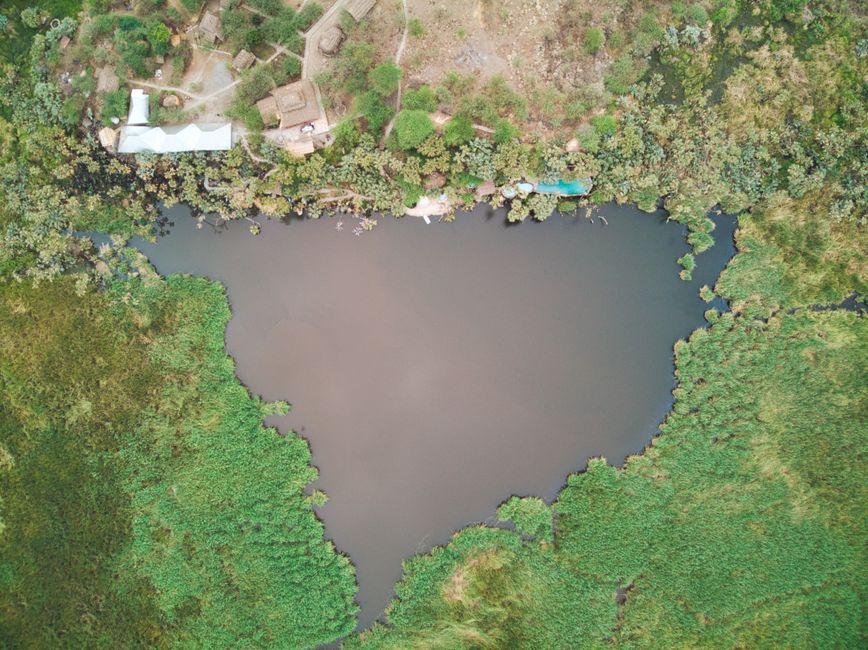
Aerial drone shot of a tranquil lake surrounded by greenery in Afar, Ethiopia., Omo National Park, Ethiopia

