
Among the Canopy: Why Bukit Lawang’s Wild Heart Beats for Travelers Who Listen (2026)
In 1973, a young Dutch primatologist named Herman Rijksen stood on the banks of the swift Bohorok River, watching a traumatised young orangutan named Mina cling to a cage. Rijksen had spent months securing permission from the Indonesian government to establish the first orangutan rehabilitation centre in Sumatra. Mina was his first patient—a victim of the illegal pet trade, her mother killed for timber. As she tentatively reached for a wild fruit he offered, Rijksen later wrote, “That moment, I knew the real work was not saving one orangutan, but convincing a nation that the jungle itself must be saved.” That single encounter planted the seed for what would become the Bohorok Orangutan Centre, the soul of modern Bukit Lawang.
The Story Behind Bukit Lawang
Long before the tourists arrived, Bukit Lawang was a quiet Karo village nestled in the foothills of the Leuser Mountains. The Karo people, one of Sumatra’s oldest ethnic groups, lived alongside the forest, harvesting durian, rattan, and medicinal plants, and keeping the jungle as a sacred boundary. The name “Bukit Lawang” itself means “Hill of Opening” in the Karo language, referring to a low pass through the mountains that connected their villages to the coast. Travelers who visit today still feel that sense of threshold—you cross the river and the modern world recedes, replaced by the hum of cicadas and the rustle of leaves.
Everything changed after the 1973 arrival of the Sumatran Orangutan Conservation Programme, which established the Bukit Lawang Rehabilitation and Release Station. By the 1980s, word of orangutan trekking reached backpackers on the Banana Pancake Trail. Locals recall the first guesthouses being built in 1986—simple bamboo huts along the riverbank that cost one dollar a night. The 2003 flood was a devastating turning point: a flash flood raged through the valley, washing away over 200 houses and killing dozens. The village rebuilt from the wreckage, this time with concrete foundations and stricter building rules. Today, that spirit of resilience pervades everything—you will find local guides who remember the flood and speak of it as the moment the community decided to protect the forest more fiercely than ever.
Neighborhood by Neighborhood
The River Strip (Jalan Orangutan)
The spine of Bukit Lawang is a single, dusty road that runs parallel to the Bohorok River—locals call it Jalan Orangutan, though you won’t find a sign. This is where the action happens: a chaotic, vibrant artery lined with wooden guesthouses, open-air warungs, and souvenir stalls selling T-shirts with grinning orangutans. The air is a mix of sizzling peanut oil from Ibu Ros’s pop-up gado-gado stand, the earthy scent of clove cigarettes, and the occasional blast of dangdut music from a motorbike speaker. You’ll weave past tour agencies offering “jungle treks” for 350,000 IDR (about $23), and you’ll quickly learn that the price is always negotiable. The street ends at the concrete bridge—the heart of the village—where motorbikes, goats, and laughing schoolchildren compete for space. Most tourists stick to this strip, but savvy visitors know that the best view of the river comes from the second-floor balcony of the Jungle Inn, where you can sip a bottle of Bintang and watch the sunset turn the water to liquid copper.
The Old Village (Kampung Lama)
Cross the main bridge over the Bohorok River, and you step into a different world. Kampung Lama is the original Karo settlement, and it feels like a time capsule. Mud paths twist between houses raised on stilts, their walls woven from bamboo panels, roofs of rusted corrugated iron. Chickens scratch in the yards, and old women sit on front porches peeling cassava. This is where you’ll find Warung Pak Yusuf, a family-run eatery that has been serving sate padang every Thursday since 1989—the meat is so tender locals from across the valley stop by just for the peanut sauce. The neighborhood has no tourist signage, no Wi-Fi, and only one flickering street lamp. Travelers often discover that the children here will wave shyly and then run away, giggling. The secret to Bukit Lawang’s authenticity lies in Kampung Lama: you can hire a local guide named Mangat for a 45-minute walk through his family’s rubber and durian groves, where he’ll point out wild ginger and tell you which leaves cure a fever. Cost: 50,000 IDR ($3.50), which you pay in fresh rambutan if you prefer.
The Jungle Lodges (Upriver)
Follow the path north from the bridge for about ten minutes, hugging the riverbank, and you reach the jungle lodges—a strip of eco-lodges that feels more like a treehouse commune than a hotel district. Places like Sam’s Jungle Lodge and Green Lodge are built into the hillside, with open-sided common rooms suspended above the water. You’ll hear the river as a constant white noise, and at night the canopy comes alive with the calls of Thomas leaf monkeys and the sudden screech of a rhinoceros hornbill. There are no roads here—only footpaths and a series of bamboo suspension bridges that sway alarmingly when you cross. The lodges operate on generator power from 6 PM to 10 PM, so you learn to eat dinner by candlelight. This is where seasoned trekkers base themselves, because the guides live nearby and you can organise a 7:00 AM jungle departure without walking through the village. The upriver lodges also have the best swimming holes—deep, emerald pools where you can float on your back and stare up at a canopy that seems to go on forever.
The Local Table: What Denizens Actually Eat
You cannot understand Bukit Lawang without understanding its relationship with rice, chillies, and the river. The Karo people eat with their hands—specifically the right hand—and you will be offered a plate of nasi goreng at almost every meal, but that’s tourist food. Locals eat ikan baka: whole river fish caught that morning from the Bohorok, stuffed with lemongrass and turmeric, and grilled over coconut husks until the skin is crisp. You find the best version at the Sunday market (Pasar Minggu), which sets up in the dusty field near the football pitch starting at 5:30 AM. Look for Ibu Lilis’s stall—the one with the blue tarp—and order “ikan baka besar” (large fish) for 25,000 IDR ($1.70). She serves it with a sambal so fiery you’ll sweat through your shirt, a wedge of lime, and a mountain of steamed rice wrapped in banana leaf.

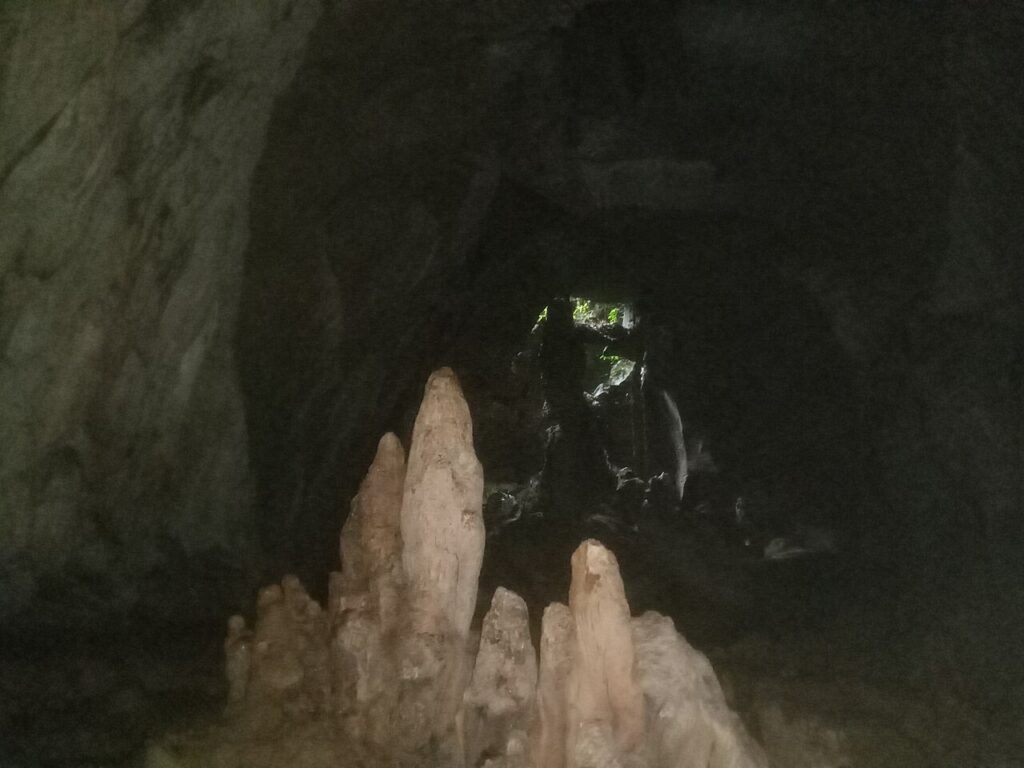
Gua Kelelawar Bukit Lawang, Sumatera Utara, Indonesia, Bukit Lawang, Indonesia
The other essential dish is sayur asam, a sour tamarind vegetable soup that Karo families prepare on rainy afternoons. It’s not on any tourist menu, but if you befriend a local, they might invite you to their home for dinner—which happens more often than you’d think. The key ingredient is melinjo leaves, which grow wild along the forest edge and give the broth a slightly bitter, earthy complexity. For the best bowl in town, head to Warung Eme at noon (closed Sundays)—a tiny zinc-roofed shack on the main road where a woman named Eme cooks from her grandmother’s recipes. The price is 15,000 IDR ($1), and she will serve you out of a stainless steel pot while her youngest daughter draws pictures of monkeys on your napkin. Travelers often remark that this humble meal, eaten on a plastic stool while motorbikes rattle past, tastes more like home than anything they’ve had in weeks.
Street snacks are a ritual of their own. Around 4 PM, you’ll hear the high-pitched whistle of the pisang goreng cart—a man who pedals a bicycle with a glass case of fried bananas, each one golden and crisp, drizzled with palm sugar and grated coconut. He stops at the football pitch every day except Friday. Buy two sticks for 5,000 IDR, and watch the local boys play a game that somehow manages to be both soccer and volleyball at once.
Art, Music & Nightlife
Bukit Lawang’s musical heartbeat is the bamboo guitar—a traditional Karo instrument called a kulcapi, strung with steel wires and played with a haunting, sliding tone. You never hear it in the guesthouses, but if you wander into Kampung Lama after dusk, you might catch an old man named Tarigan playing on his front porch, his grandchildren dancing in the dirt yard. The only proper bar in town is Café Ayu, a riverside terrace where a DJ spins house music until 11 PM on weekends. Don’t expect Ibiza—expect eight tourists and three locals playing pool under a string of fairy lights, while a troop of macaques watches from the roof.
The real artistic energy happens during the annual Bukit Lawang Festival, held each August since 2015 (though it was cancelled in 2020-2021). The highlight is the Batak drum circle, where percussionists from across North Sumatra gather at the village square and play until dawn. You can join in: locals will hand you a small ketipung drum and show you the basic rhythm. Also during the festival, the river becomes a stage for traditional perahu racing—long wooden canoes paddled by teams of ten, their faces painted with charcoal. Most travelers miss this event because it’s poorly advertised outside Sumatra, but if you plan your trip for the third week of August, you’ll see a side of Bukit Lawang that guidebooks never mention.
Practical Guide
- Getting There: The nearest airport is Kualanamu International Airport (KNO) in Medan, about 3.5 hours by car. You can book flights on Skyscanner. From Medan, take a shared minibus (Sar bas company, departing at 9 AM and 2 PM) for 100,000 IDR ($6.70). Private taxis cost around 450,000 IDR ($30) and are worth it if you prefer comfort—ask your guesthouse to arrange one.
- Getting Around: The village is walkable, but rental motorbikes cost 100,000 IDR ($6.70) per day. Negotiate fuel separately. For treks, your guide will provide transport. Most long-distance travel is via shared minibus—book at least a day in advance through your guesthouse.
- Where to Stay: For budget travelers, the River Strip offers dorms from 50,000 IDR ($3.30) at Green Lodge. For midrange, Jungle Inn has private rooms from 200,000 IDR ($13) with river views. For eco-luxury, Sam’s Jungle Lodge (upriver) has treehouse bungalows starting at 350,000 IDR ($23). Check Booking.com for deals.
- Best Time: Visit between May and September for dry trails and good orangutan spotting. October to December sees heavy rain and leeches. February and March are pleasant but crowds thin out. Avoid the August festival only if you dislike crowds; otherwise it’s a vibrant time.
- Budget: A daily backpacker budget of 400,000 IDR ($27) covers dorm, three warung meals, and one trek. Midrange travelers spend about 700,000 IDR ($47) including a private room and two treks. You can easily survive on $20-35 per day if you skip the private taxi.

Aerial view of a lush, Bukit Lawang, Indonesia
What Surprises First-Time Visitors
You arrive expecting a sleepy jungle village, but what hits you first is the noise: the constant buzz of motorbikes, the clatter of cooking, the screech of lorikeets, and the distant rumble of the river. It’s not quiet. Yet by your second day, that noise becomes a rhythm you move to, and the jungle feels quieter than anywhere you’ve ever been. Travelers often comment that the monkeys are the real bosses—resident macaques will steal your fruit if you leave it unguarded for two seconds. Locals just laugh and point: “That one is Aris, he’s been stealing bananas since 2008.” You learn to zip your bag immediately, but it’s impossible to be annoyed when a baby macaque stares at you with such innocent mischief.
The other big surprise is the absence of ATMs. There is one machine in the entire village, belonging to Bank Mandiri, and it runs out of cash most weekends. You must bring enough Indonesian rupiah from Medan—plan for at least 1,000,000 IDR ($67) for a three-day stay if you plan to do treks and eat well. Savvy visitors also discover that the locals have an uncanny ability to appear exactly when you need help: get lost on a trail, and a farmer will materialise from the bushes, gesture, and disappear without expecting a tip. This is not hospitality as you know it; it’s a quiet, unquestioned code of the jungle. You will leave Bukit Lawang feeling like you were not just a tourist, but a temporary neighbor.
Your Bukit Lawang Questions
Is it safe to go trekking alone in the jungle without a guide? No, and locals will tell you bluntly why: the jungle is thick, trails are unmarked, and you can get lost within 100 metres. More importantly, the orangutans are semi-wild and habituated to humans; a lone hiker can startle them, and a protective mother can be dangerous. Licensed guides cost about 350,000 IDR ($23) per person for a half-day trek, and they know the locations of the feeding platforms and the safest routes. You are risking your safety—and the environment—by going alone. Your best bet is to book through your guesthouse the night before; they’ll pair you with a guide who grew up in the forest.

A mesmerizing view of Mount Merbabu in Central Java, Bukit Lawang, Indonesia
What is the best way to see orangutans? Two approaches work best. The classic option is the half-day jungle trek (6 AM to noon), which costs 300,000-400,000 IDR ($20-$27). You walk about two hours into the Gunung Leuser National Park, then stop at a feeding platform where the rangers put out bananas and milk at 9 AM. Some visitors feel this is too controlled, but you’re guaranteed an encounter. The more adventurous option is a multi-day trek (two or three days, 1,500,000 IDR / $100 per person, all-inclusive). This takes you deeper into the forest, where you sleep in hammocks and may see orangutans building nests or feeding in the wild—no platforms. Locals recommend the multi-day trek if you have the stamina, because you also see Thomas leaf monkeys, gibbons, and maybe even the elusive Sumatran elephant. Either way, bring leech socks and waterproof bags for your electronics.
How does the local community benefit from tourism? Tourism is the economic lifeblood of Bukit Lawang—about 80% of families are directly involved. Guides, homestay owners, drivers,

