
Afar Region, Ethiopia on a Budget: the Danakil Depression for $50/Day (2026)
While Death Valley National Park charges $30 just for entry plus $200+ per night for basic lodging, the Afar Region of Ethiopia offers a far more dramatic volcanic landscape—complete with lava lakes, sulfur springs, and salt flats—for a fraction of the cost. Travelers often discover that $45 daily covers accommodation, local food, and shared transport, letting you explore one of Earth’s most extreme environments without breaking the bank. The secret is knowing where the value lies.
7 Free Things to Do in Afar Region, Ethiopia
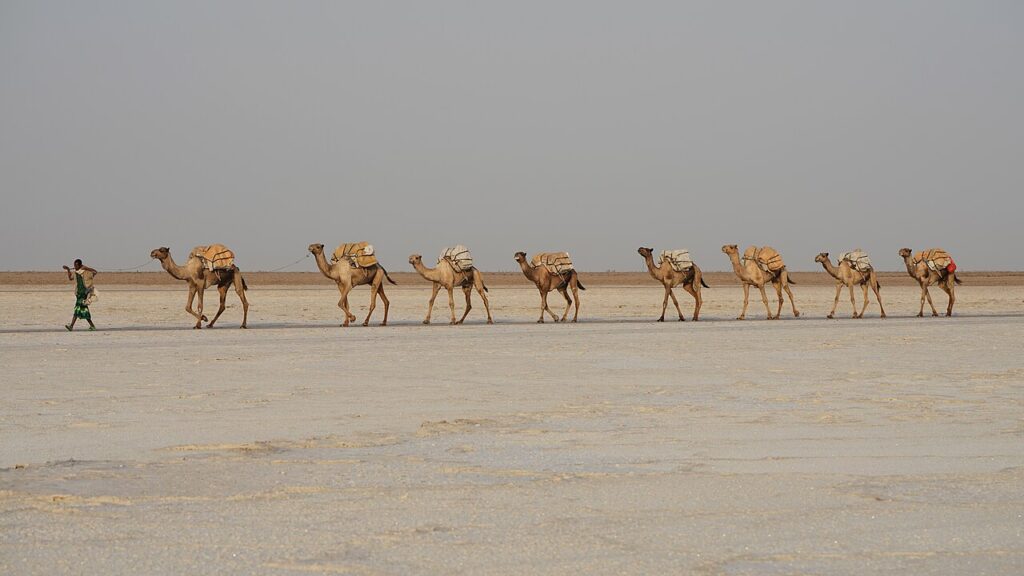
- Witness the Salt Flats at Dawn: Head to the salt pans near Lake Afrera at sunrise. Travelers often describe the moment the light hits the white crust—stretching for miles—as life-changing. The camels arrive around 7 a.m. carrying massive slabs of salt, and there is no entry fee. The nearby village of Kariyu lets you watch the whole process free of charge.
- Explore Semera Market (Tuesday Mornings): Semera’s livestock market buzzes every Tuesday from 6 a.m. to noon. You’ll see Afar traders in vibrant wraps, negotiating sheep, goats, and camels. Photographers love the raw energy, and locals are friendly if you ask permission. Your best bet is to arrive by 7 a.m. for the most activity. Entry is free; a small purchase of dried dates or coffee costs under $1.
- Hike Around Yellow Lake (Lake Afrera Area): About 3 miles south of the main salt flats, you’ll find Yellow Lake—a shallow, sulfurous body of water ringed by crystallized salt formations. No guide is required if you walk from the road (ask a local for directions). The colors shift from pale yellow to deep gold depending on the time of day. Savvy visitors go in late afternoon for the best light.
- Visit an Afar Village: The pastoral villages along the road between Logiya and Semera cost nothing to enter. Travelers often discover that a simple greeting in the Afar language (“Kedi”) opens doors. Locals may invite you for coffee or show you how they weave mats. Bring a small gift—a bag of sugar or some toothbrushes—but no payment is expected.
- See the Camel Caravans Near Kariyu: Starting around 3 p.m., caravans of up to 50 camels return from the salt flats, laden with blocks of salt bound for markets across Ethiopia. You can walk alongside them for free. The sound of their bells and the dust in the afternoon light is one of those moments you’ll remember forever.
- Sunset over the Danakil Depression (Roadside Views): You don’t need a tour to appreciate the vastness of the Danakil Depression. Drive or walk to any viewpoint along the main road between Logiya and the salt flats just before sunset. The colors shift from orange to purple across the expanse. Most tourists pay $100+ for this experience; savvy visitors know the roadside is free.
- Paddle in Lake Afrera (Salty Float): Lake Afrera is one of the saltiest bodies of water on Earth—so dense you float effortlessly. The locals often bath here, and there is no official entry fee. Carry fresh water to rinse off afterward. Access is via a dirt track from Kariyu; a 20-minute walk from the village takes you to the shore.
Cheap Eats: Where Locals Actually Eat
Your best bet for affordable food in the Afar Region is to eat where the truck drivers stop. In Logiya, the main market town, you’ll find a cluster of tin-roof cafes along the main road. Tadesse’s Cafe (near the bus station) serves a hearty plate of shiro wat with three injera for just 35 birr (about $0.70). The queue of locals at 11 a.m. tells you everything. For breakfast, Semera’s Corner House (west side of the roundabout) offers fresh ful medames (fava bean stew) with bread for 25 birr ($0.50). Travelers often discover that the Awash River Hotel Restaurant in Awash town does a decent tibs (spiced meat stir-fry) with rice for 120 birr ($2.50)—more than street food but still a steal by any standard. For something quick, the Semera Fruit Market (open daily until dusk) sells mangoes, papayas, and bananas for 10-20 birr each. You’ll get a filling snack for under $0.30. Bottled water costs 15-20 birr everywhere, so bring a reusable bottle and fill up at guesthouses.

Lava lake on Erta Ale volcano, Afar Region, Ethiopia
Getting There Without Going Broke
- Cheapest Route: The most budget-friendly way to reach the Afar Region is by bus from Addis Ababa via Awash. Ethio-Bus runs daily from Addis’ Meskel Square terminal to Awash town (departure 6:30 a.m., 5 hours, 180 birr/$3.50). From Awash, minibuses to Logiya (2 hours, 100 birr/$2) and then to Semera (3 hours, 150 birr/$3) connect regularly until early afternoon. Total cost: about $8.50.
- Pro Tip: Book your bus to Awash at least one day in advance during peak season (December-February) as seats fill quickly. Travelers often discover that the 6:30 a.m. departure avoids the worst heat and arrives in Awash by lunchtime, leaving plenty of time to connect to Logiya.
- From the Airport: Semera’s Assab International Airport (the main airport in the region) receives flights from Addis on Ethiopian Airlines. A taxi from the airport to Semera town center costs about 200 birr ($4), but locals recommend walking 15 minutes to the main road and flagging a minibus for just 20 birr ($0.40). The walk is flat and safe during daylight hours.
Compare flights at Skyscanner
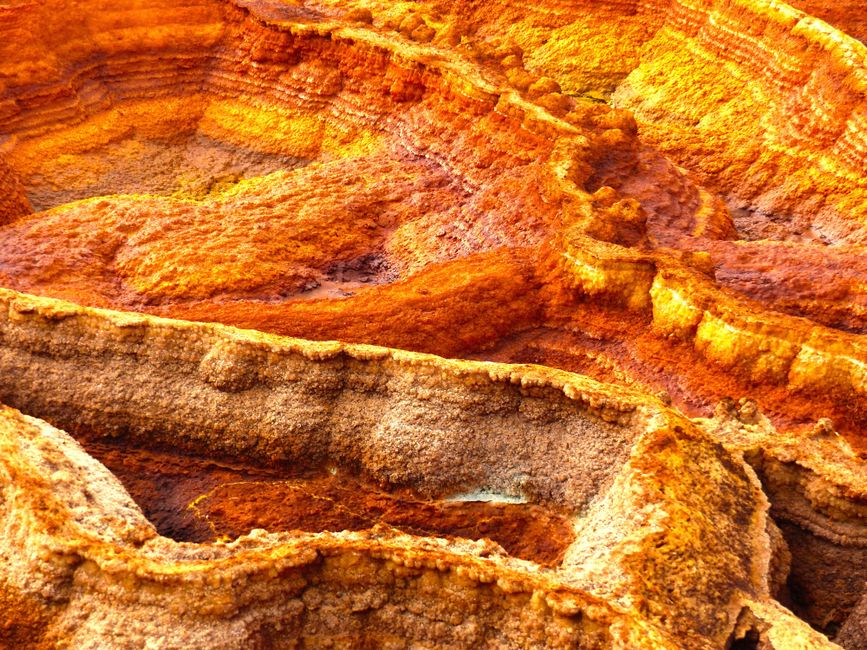
Vivid and textured geothermal rock formations in Afar, Afar Region, Ethiopia
Budget Accommodation Guide
In Semera, your cheapest option is the Afar Guesthouse (near the main market), where a basic room with shared bathroom costs $10-12 per night. The rooms are clean, the owners are friendly, and you can rent a mattress on the roof for $5 if you’re really pinching pennies. For a private room with cold shower and fan, Logiya Lodge (on the main road) charges $18-22 per night and includes breakfast. In Awash town, the Awash River Hotel offers clean double rooms with hot water (rare in the region) for $30 per night—a splurge but worth it for the reliable electricity and restaurant. The cheapest area overall is Logiya, where guesthouses cluster near the bus station and rooms go for as low as $8-10. Safety note: women travelers report feeling comfortable in these guesthouses after dark, but stick to well-lit streets and avoid walking alone after 9 p.m. Book through Booking.com for Semera and Awash options, or check Airbnb for occasional rooms listed by local hosts (though availability is limited in this remote region).
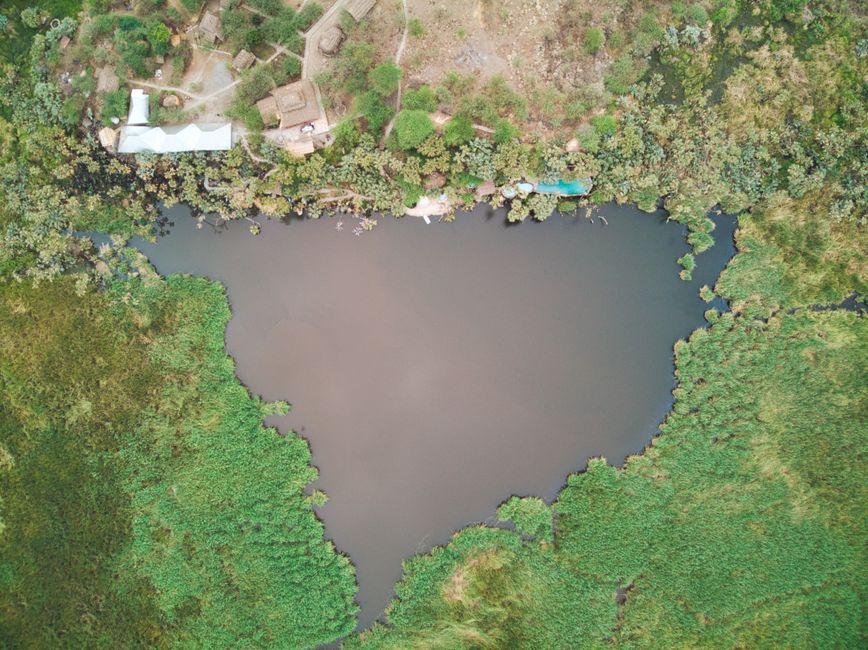
Aerial drone shot of a tranquil lake surrounded by greenery in Afar, Ethiopia., Afar Region, Ethiopia
Money-Saving Tips Specific to Afar Region, Ethiopia
- Join a Group Tour for Erta Ale and Danakil: The single biggest expense in the Afar Region is a guided tour to the Erta Ale volcano and Danakil Depression. Solo tours cost $400-600 per person for 3 days. But if you join a group from Mekele (the gateway city), you can pay as little as $200-250 per person by sharing a 4×4 with other travelers. Ask at the Mekele bus station or on travelers’ forums. The secret is to arrive in Mekele on a Thursday, when most tours depart for the weekend.
- Buy Bottled Water in Addis Before You Go: In Semera and Logiya, bottled water costs 20-25 birr ($0.40-0.50) per 1.5-liter bottle—three times the price in Addis Ababa. You’ll save $5-10 just by carrying a 10-liter jerry can from Addis. Fill up at your guesthouse for free after that.
- Use Local Buses, Not Minibuses: Minibuses between towns charge 50-100% more than public buses. The public buses from Awash to Logiya run every morning at 8 a.m. and cost 100 birr ($2) compared to 200 birr for a minibus. They’re slower (4 hours vs 2.5 hours) but you’ll save $2-3 per trip.
- Negotiate Everything—Except Camel Rentals: Locals expect haggling on everything from market prices to accommodation. Start at 60% of the asking price and meet around 75-80%. The exception is camel rental for the salt flats: the price is fixed at 500 birr ($10) per day, and locals say you shouldn’t bargain as it supports the community fairly.
- Bring a Water Filter or Purification Tablets: Buying bottled water in the Danakil region is expensive due to transport costs. A LifeStraw or chlorine tablets save you $10-15 over a week. You can fill up from any tap in guesthouses or at the Afar Health Center in Semera, where the water is chlorinated.
- Eat at the “Truck Stop” in Logiya: The bus station area in Logiya has a dozen food stalls catering to long-distance truck drivers. The shiro and misr wat (red lentil stew) here are the cheapest in the region—around 20 birr ($0.40) per plate. Drivers know where the good food is, so follow them.
Is Afar Region, Ethiopia Worth It on a Budget?
Honestly? The Afar Region is one of the most extreme and rewarding destinations in Africa, even on a budget. What you miss by going cheap is mainly the guided 4×4 tours to the most iconic spots—the Erta Ale lava lake and the Danakil Depression’s colorful sulphur springs. Those require a multi-day guided tour that costs $200-500, which is non-negotiable if you want to go deep. But what you still get is extraordinary: the salt flats, camel caravans, Afar hospitality, and the sheer raw wilderness of one of Earth’s most hostile landscapes. Travelers often discover that the best experiences—watching sunrise over the salt flats, sharing coffee with a camel herder, floating in Lake Afrera—are free. If you’re on a $45/day budget, you’ll see a side of the region that most tourists rushing through in air-conditioned 4x4s never touch. Compare this to a similar trip to the Danakil Depression via a standard tour: you’d pay $300-500 for 3 days without seeing the everyday life. On a budget, you stretch $135 over three days and get the real Afar—dusty, beautiful, and unforgettable. Your best bet is to commit to one splurge day for a group tour to Erta Ale, then spend the rest of your time exploring

