
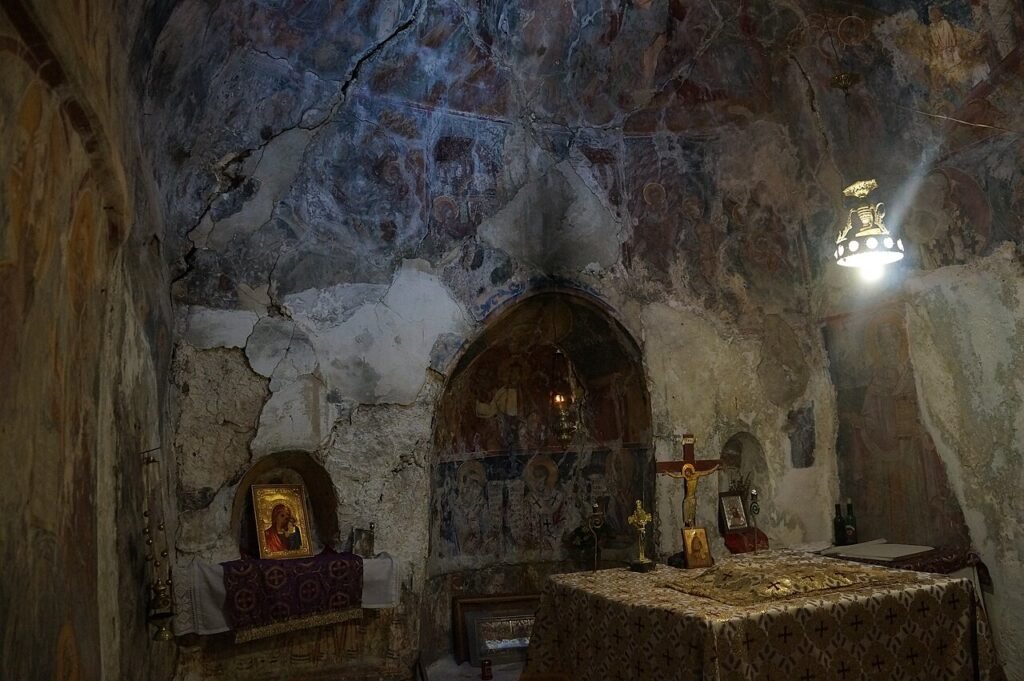
Dhermi, Albania (2026)
On November 18, 1912, the men of Dhermi descended from their stone labyrinth of cobbled lanes toward the coastal plain of Himara, carrying rifles and lanterns, ready to declare their independence from the Ottoman Empire. It was a proud, risky act of defiance. You can still feel that pull between the old mountain village and the glittering Ionian Sea below, as if every traveler who arrives is likewise drawn down that ancient path, caught between history’s weight and the water’s whisper.

St, Dhermi, Albania
The Story Behind Dhermi, Albania
Dhermi (or Dhërmi, from the Greek for “cold water”) has been inhabited for millennia, with evidence of Illyrian settlers and Greek colonies long before Rome ever dreamed of the Via Egnatia. By the 13th century, the village belonged to the Despotate of Epirus, then shifted between Byzantine, Venetian, and Ottoman control. When the Ottomans solidified their rule in the 1400s, Dhermi became an autonomous Christian enclave within a Muslim empire, paying tribute yet preserving Orthodox faith, Greek language, and a fiercely independent streak that locals still brag about over evening raki.
That independence sharpened in the 19th century. Dhermi became a cradle of the Albanian National Awakening, with the village’s school, its churches, and its hidden printing presses fueling a spirit of rebellion. In 1910, Ottoman troops raided the village in retaliation for local resistance, but your visit today reveals no scars—only the whitewashed walls of houses built to face the sea, the wind, and the future. The struggle culminated in that gathering of November 1912, making Dhermi one of the first territories of an independent Albania, a fact you’ll hear repeated by at least three locals during your first afternoon.
Neighborhood by Neighborhood
The Old Village (The Upper Hamlet)
Your fingers will find their way along rough limestone walls as you climb the narrow streets of the old village, where the air smells of jasmine, oregano, and wood smoke from a neighbor’s fireplace. This is the heart of Dhermi’s history: stone houses with red terracotta roofs, arched doorways, and balconies that overlook the endless blue between hills. You’ll want to start at the main square, shaded by a gnarled plane tree, where old men play dominoes and argue about football. Don’t miss the Church of St. Stephen (Shën Shtjefni), built in the 18th century with a magnificent carved iconostasis; its courtyard offers a panoramic view that on clear days lets you see all the way to the island of Corfu. Pause at the village school—rebuilt after the Ottoman raid of 1910—and imagine the fervor of young nationalists learning their alphabet. The atmosphere is sleepy, almost suspended in time, yet you’ll notice a handful of renovated guesthouses and cafés, like the cozy “Kafen e Dhermiut,” where the local brew costs a modest 100 lekë (about one euro), and the owner will happily tell you which of his cousins is best to guide you through the olive terraces above.
The Beach Front (Pllazhi)
Down at the shore, Dhermi Beach is a completely different organism, and you’ll feel the shift in energy as you descend the winding road. In summer, this strip buzzes with the sun-baked chatter of swimmers, the hiss of grills, and the thump of house music drifting from stylish beach bars. Your best bet for an early swim is the main stretch: a wide shore of smooth white and gray pebbles, lapped by water so clear you’ll think you’ve poured a bowl of cornflower-blue glass. Anchored by the iconic “Icy Bar” at the northern end, which sets out minimalist cabanas and plays ambient tunes until sunset, the beach becomes a dance floor by night, especially in August. Travelers often discover that the best dining spot is the family-run “Taverna Amaranta,” just steps from the pebbles, where you’ll eat grilled octopus (around 1,200 lekë) while watching fishing boats bob in the shallows. If you want quieter water, locals recommend walking south toward the tiny cove of “Vurba,” a hidden pebble beach tucked under the cliffs, reachable after a 15-minute scramble—bring your own water, as there’s no kiosk there, just silence and a view that could make you weep.
The Olive Terraces and the Path to the Monastery
Few visitors venture beyond the village and the beach, but you should. Above the old village, ancient olive trees spread their silver-limbed canopy over terraced hillsides, some of them easily 500 years old. The secret is to follow the dirt path signed “Manastiri Shën Thodhori” (St. Theodore’s Monastery, built in the 14th century, partially ruined, yet still housing a tiny chapel). This 45-minute hike, starting from the upper church, climbs through groves where shepherds still graze goats, and the only sounds are the wind, bells, and your own heartbeat. At the monastery, you’ll find a shaded courtyard; locals recommend picnicking under the remaining arches, then scrambling to the ridge for a view of the entire bay, a sight you’ll remember long after you’ve left. Seasoned travelers prefer this route in the early morning, before the heat sets in, and you’ll likely have the whole landscape to yourself except for a few curious tortoises.
The Local Table: What Dhermiotes Actually Eat
You’ll quickly notice that food here isn’t a business—it’s a liturgy. Lunch stretches past 3 p.m., and bread is baked in wood-fired ovens each morning. The people of Dhermi, whose families intermarried between Greek and Albanian traditions, center their table on the sea and the hills. You should plan your evening around the catch of the day, which you’ll see displayed on ice at tavernas like “Amaranta” or the more rustic “Vila Verde” near the old village center. They’ll grill the fish whole with olive oil, lemon, and wild oregano, then serve it with a slab of rustic bread for around 1,500 lekë. But the dish that defines this stretch of coastline is pispili—a slow-cooked pie of leeks, salted cottage cheese, and a touch of kacheka, a traditional village cheese, all baked in a round tin. Locals recommend eating it at “Taverna Tradita” in nearby Vuno, a 10-minute drive south, where the waitress will proudly explain that her grandmother baked this exact pie every Easter.
Your mornings belong to the olive. Dhermi’s lower slopes are thick with Koroneiki olives, pressed into a peppery green oil that you’ll find in every taverna bowl. For a true taste, visit the “Dhermi Organic Farm” on the hill road, where you can taste the cold-pressed oil straight from the ceramic jug and buy a bottle (700 lekë) for your kitchen back home. And for a market experience, drive 20 minutes south to Himara’s small morning market (open daily from 7 to 10 a.m.), where farmers arrive with figs, sour cherries, tiny wild strawberries, and a thick honey made from thyme that’s almost too aromatic for toast. You’ll be expected to haggle a little, but never hard—this is about exchange, not transaction.
Art, Music & Nightlife
Dhermi’s creative pulse quickens every July when the Dhermi International Festival casts its spell. Since 2017, this classical music festival has transformed the old village’s courtyards and the monastery steps into temporary concert halls, with visiting musicians from Albania, Italy, and Greece performing at dusk against a backdrop of the silver sea. You’ll want to book tickets in advance, as the Festival’s long weekend (usually the second week of July) draws a savvy crowd of locals and expats. The rest of the summer, the beachfront bars dominate: “Bordo” near the southern end of the pebbles skews indie-rock with sunset DJ sets, while “Wet” bar punches up the tempo after midnight with house and tech-house that spills onto the sand. But the real, timeless music is the village’s own singing: at weddings, especially in August, you’ll hear men sing in Greek and Albanian dialect, their voices weaving a drone beneath the electric violin, a tradition that UNESCO has been trying to document. Follow the sound if you hear it—you’ll be the only tourist among a hundred dancing dancers.
Practical Guide
- Getting There: Your most convenient gateway is Tirana International Airport (TIA), served by Wizz Air and Ryanair from many European cities. From Tirana, you’ll rent a car or take a bus south; the drive takes about 4 hours, including the dramatic Llogara Pass (hanging a thousand meters above the sea). Alternatively, fly to Corfu (CFU) by Aegean Airlines, take a 30-minute ferry to Saranda, and then a local minibus to Dhermi (2 hours, scenic). Book your flights at Skyscanner.
- Getting Around: A rental car is your best bet—expect to pay €40–50 per day for a small hatchback, and book ahead for August. The old village is pedestrian-only; you’ll park on the edge. Minibuses (furgons) run from Himara to Dhermi for about 200 lekë, but they are less frequent after 6 p.m. A local taxi from the beach up to the old village costs about €5 (500 lekë), and your accommodation will call one for you.
People on beach during daytime, Dhermi, Albania
People on beach during daytime, Dhermi, Albania



