
Atafu Weekend: Lagoon Secrets, Falekaupule Feasts & The Most Remote Post Office on Earth (2026)
You step off the small motorboat onto the white coral sand, and the first thing that hits you is the scent: a warm, sweet mix of copra drying in the sun and the faint, salty bite of the lagoon. A breeze rustles the fronds of the coconut palms above, and from the village, you hear the rhythmic thud of a wooden tā (Tokelauan drum) calling the community to the falekaupule. Welcome to Atafu, where time slows to the pace of the tide and the only traffic is the occasional bicycle. Travelers who make the journey here discover a place where the word “remote” takes on new meaning – and where the warmth of the people makes every effort worthwhile.
Quick Facts Before You Go
- Best Months: April to October (the dry season, with calmer seas and less rain). Avoid November to March when cyclone season makes boat crossings treacherous.
- Currency: New Zealand Dollar (NZD). As of 2025, 1 USD equals roughly 1.60 NZD. Bring enough cash from Apia – there are no ATMs on Atafu.
- Language: Tokelauan is the daily tongue, but English is widely spoken by all ages – you’ll have no trouble communicating.
- Budget: $100–$150 NZD per day for a homestay, meals, and small souvenirs. Tours and fishing trips are often “pay what you feel” via donation.
- Getting There: No airport on Atafu. Fly from Auckland or Fiji to Apia, Samoa (book on Skyscanner), then take the MV Tokelau passenger/cargo ship – a 27-hour voyage across the open Pacific. Sails monthly; check with Tokelau’s Office in Apia for exact dates. Alternatively, charter a boat from Fakaofo Atoll, but that’s expensive and weather dependent.
Day 1: Arrival by Sea – Welcomed by the Community
You start the morning not with an alarm, but with the sound of the village bell – a hollow ring that echoes across the lagoon at 6am. After a brief sleep on the MV Tokelau‘s deck, you’ve docked at the small wharf. The entire village seems to be there to greet you, not as a staged tourist welcome, but as the natural Tokelauan way of treating visitors. You feel like a long-lost relative, not a stranger. What follows is a day that immerses you in the rhythm of atoll life, where the past and present flow together like the incoming tide.
- Morning (8–11am): After a simple breakfast of fresh papaya and black tea with your homestay family, walk to the Falekaupule (the village meeting house). This low, open-sided structure of woven palm fronds is the heart of Atafu. Locals suggest you sit on the mats and listen to the council’s morning talks – you’ll hear stories of the atoll’s history, including the 1765 visit by Captain William Bligh. It’s free, but leaving a small koha (donation) of $10 NZD is appreciated.
- Lunch: Your homestay hosts prepare a Fiafia-style spread – a shared meal of ika mata (raw fish marinated in coconut milk and lime), boiled taro, and grilled reef fish ($5 NZD as part of your homestay). You eat with your hands from a woven basket, sitting cross-legged on a pandanus mat, and the chatter of the extended family fills the air.
- Afternoon (1–5pm): Borrow a pair of snorkel gear from your host and wade into the lagoon just south of the village. The water is a bathtub-warm 28°C, and within minutes you’re floating over a world of parrotfish, giant clams with iridescent mantles, and the occasional hawksbill turtle. By 3pm, join a local fisherman named Tafaga as he paddles his outrigger canoe to the outer reef to set a net – he’ll gladly show you the ancient Tokelauan method of weaving palm-frond fish traps. No charge, but a pack of cigarettes or a bottle of cooking oil is a gracious thank-you.
- Evening: As the sun drops behind the palm line, head to St. Joseph’s Church (the white coral-stone building at the centre of the village). Even if you’re not religious, attend the evening service – the a cappella hymns in Tokelauan, sung with stunning harmony, are unforgettable (free, but modest dress is required – trousers/tunic to the knee). Afterwards, your homestay serves a dinner of pulaka (swamp taro) and palusami (taro leaves cooked in coconut cream wrapped in banana leaves) – a flavour combination that will linger on your palate. The cost? Included in your homestay fee.

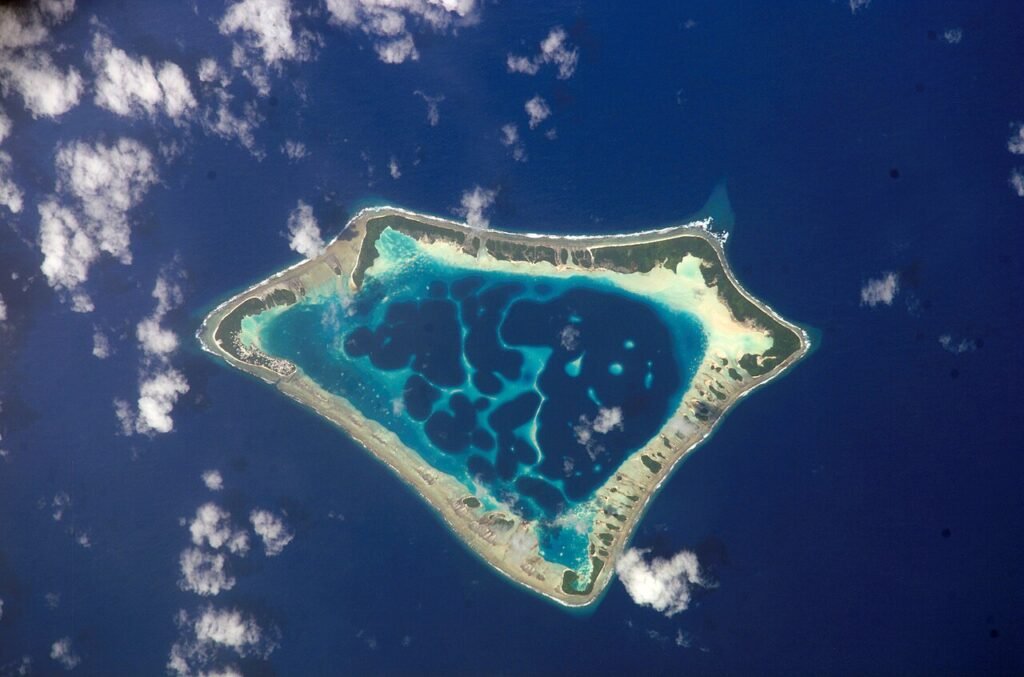
View of Tokelau taken during ISS Expedition 14., Atafu, Tokelau
Day 2: Island Rhythm – Walking the Ring
You wake to the sound of children’s laughter and the smell of breadfruit roasting over an open fire. Today is about exploring the atoll’s geography – a slender ring of coral no more than 2 kilometres wide at its broadest point. Locals recommend starting early, before the heat of the tropic sun becomes intense. Travelers soon discover that every step on this island tells a story: the rusting wreck of a Japanese fishing boat from the 1970s, the ancient burial mounds of the Tui Tokelau chiefs, and the tiny post office that proudly claims to be one of the world’s most remote.
- Morning (7–10am): Join your host family for a simple breakfast of tafolo (breadfruit boiled and mashed with coconut cream) at the homestay ($5 NZD). Then hike the Atafu Ring Trail – a 6‑kilometre path that loops the entire atoll through coconut groves and along the ocean side of the motu. You’ll pass the Old Cemetery dating back to the 1860s, where the grave of a Scottish sailor turned trader named William Diaper is marked by a simple coral slab. Allow 2.5 hours at a leisurely pace.
- Midday (10am–12pm): Visit the Atafu Post Office, a bright yellow wooden shack next to the village store. Savvy visitors know to arrive before 11am when the postmistress, an energetic woman named Sina, processes mail for the monthly ship departure. You can buy a set of Tokelau postage stamps featuring reef fish and send a postcard to yourself – it’ll take several weeks to arrive, but the white lie of “I’m sending this from paradise” becomes delightfully true. Stamp sets start at $10 NZD.
- Afternoon (1–4pm): Head to the inner lagoon near the wharf for a classic Tokelauan pastime: reef walking at low tide. Locals will show you how to step carefully among the coral rubble to find sea cucumbers, tiny hermit crabs, and spiny lobsters hiding under ledges. At 2pm, a group of women often gather in the shallows to hunt for tolone (coral clams) – they’ll teach you the knack of spotting their siphon holes in the sand. This is free, but a small donation of $5–10 NZD to the women’s collective is a thoughtful gesture.
- Final Evening: Your farewell dinner is hosted at the home of Tafaga & Enosa, a couple who live on the western side of the village. The meal is a feast: roasted coconut crab (a seasonal delicacy, depending on lunar cycles), freshly caught yellowfin tuna sashimi, and sweet kumara cooked in coconut milk. You’ll be invited to join in a round of hura (Tokelauan dance) after dinner – don’t be shy, the locals will laugh and clap as you stumble through the steps. Cost: $25 NZD per person, payable directly to the family. As you walk home under a canopy of stars so thick you can see the Milky Way spilling across the sky, you realize you’ve experienced something rare: a weekend where the world feels both vast and intimate.

Exterior view of the historic railway museum with tower in Joinville, Atafu, Tokelau
The Food You Can’t Miss
Tokelauan cuisine is a celebration of the sea and the land – but mostly the sea. The cornerstone is ika mata: raw fish (usually tuna or wahoo) marinated in lime juice and coconut milk, with a kick of chilli if you fancy it. You’ll find this at every meal, but the best version is at the community feast held every Saturday evening at the Falekaupule. There, the village families bring their own bowls, and you get to taste three or four different recipes passed down through generations. Cost: a donation of $10–15 NZD to the church fund.
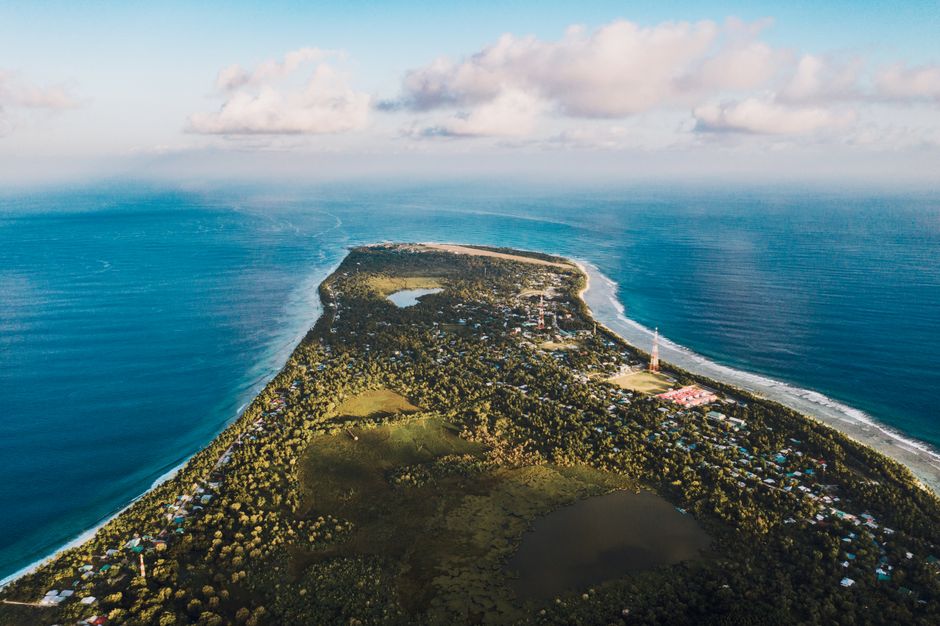
Stunning aerial view of Fuvahmulah Island, Atafu, Tokelau
Don’t miss palusami – taro leaves stuffed with coconut cream, baked in banana leaves until tender. It’s the Tokelauan equivalent of comfort food. For street food (the only kind Atafu has in the loosest sense), look for the small stall near the wharf where Mahea sells grilled reef fish skewers on Saturday mornings – $3 NZD each, served with a wedge of lime and a handful of roasted breadfruit chips. It’s simple, but the freshness is unmatched.
If you’re lucky enough to be on Atafu during a coconut crab (called ugauga in Tokelauan) season – generally the full moons of October and November – do not pass up the chance to taste it. The meat is dense and slightly sweet, often cooked in its own shell with coconut cream. Your homestay host will happily prepare it if you help catch one. Approximate cost: $15 NZD per serving at the family table.
Where to Stay for the Weekend
There are no hotels, no resorts, no Airbnb listings on Atafu – which is precisely the point. Homestays are the only option, and they are arranged through the Taupulega (Village Council) before you arrive. You’ll stay with a local family in their fale – a simple house with woven mats on the floor and a shared outdoor bathroom. The experience is intimate: you’ll eat with the family, help with chores, and be truly integrated into daily life. Expect to pay around $50–70 NZD per night, with all meals included. Ask the Tokelau Office in Apia to set this up, or you can try contacting the Atafu representative directly via the Tokelau Government’s tourism liaison.
If you need a backup plan for transit stops: while in Apia before your boat, book a room at the Booking.com or Airbnb for a night or two – search for “Apia, Samoa” and you’ll find comfortable options like the Tanoa Tusitala Hotel (from $120 NZD per night). But for the Atafu weekend itself, it’s homestay or nothing.
No specific neighborhoods – the entire population lives in one village, so your host’s home is within a five-minute walk of the lagoon and the falekaupule. The best tip: request a family that lives near the eastern side of the lagoon, where the sunset views are spectacular.
Before You Go: Practical Tips
- Getting Around: There are no cars or taxis. You walk everywhere – the village is less than 2 km end to end. A bicycle may be lent to you by your host, but don’t count on it. The main transport is your own two feet, or paopao (outrigger canoe) for lagoon trips. Paddling lessons are free from friendly locals.
- What to Pack: Reef shoes (coral cuts are common), a headlamp or torch (electricity is intermittent), biodegradable sunscreen and reef-safe insect repellent (coconut oil based is best), and a sarong or light scarf for covering your shoulders and knees inside the falekaupule and church. Don’t forget a handful of small New Zealand banknotes – no coins are accepted.
- Common Tourist Mistakes: Assuming you can buy everything on the island. There is one small village store, but its stock is limited and irregular. Bring your own snacks if you have dietary restrictions. Also, dressing in swimwear off the beach is considered disrespectful – cover up with a lavalava (wrap) when not in the water. Travelers often forget this.
- Money-Saving Tip: The single biggest expense is the boat journey from Samoa (about $400 NZD round-trip). Once you’re on Atafu, your homestay covers all meals. The only extras are souvenir stamps and donations. To save, book the MV Tokelau at least three months in advance through the Tokelau Apia Office – the fare is fixed but slots fill up quickly. You’ll save by not needing a hotel in Apia on the night before departure as the ship often departs at midnight.
Final thought: A weekend on Atafu is not a typical vacation – it’s a

