
Beyond the Castle Walls: Why San Vicente de la Sonsierra Captivates Every Traveler Who Visits (2026)
In the spring of 1419, as the last of the winter frost melted from the vineyards of the Sonsierra region, the townspeople of San Vicente gathered in the shadow of their hilltop castle to witness something they had never seen before: the public reading of a royal decree from King Juan II of Castile, granting their village the right to hold a weekly market. For centuries, this small, walled settlement on the banks of the Ebro River had been a strategic frontier stronghold, a place where the kingdoms of Castile and Navarre had clashed again and again. But on that day, a new era began—one that would transform a fortress into a thriving community, and, eventually, into one of the most hauntingly beautiful medieval villages in all of La Rioja.
The Story Behind San Vicente de la Sonsierra, Spain
Your first impression of San Vicente de la Sonsierra is of stone and silence. Perched on a hill overlooking the Ebro River, this village of barely a thousand souls has been a witness to eight centuries of Spanish history. The town’s origins date back to the 12th century, when the Kingdom of Castile, under King Alfonso VIII, built a formidable castle here in 1172 to guard the border with Navarre. For over three hundred years, this castle was the fulcrum of power in the region, changing hands between noble families as often as the seasons changed. By the 15th century, the town had grown prosperous from its position on the trade routes between Logroño and Haro, and from the golden wine that flowed from its surrounding vineyards.
Travelers often discover that the defining moment in San Vicente’s modern history came not from a battle, but from a ritual of faith. In the 16th century, a brotherhood of penitents began a practice that continues to this day: the Paso del Pico, or “Pass of the Spike.” During Holy Week, members of the Cofradía de la Santa Vera Cruz process through the narrow streets, hooded and barefoot, carrying heavy wooden crosses and, in a ritual of extreme devotion, flagellating themselves with spiked balls on ropes. It is a sight that has drawn visitors from around the world, but the locals will tell you it is not a tourist performance—it is a living, breathing expression of faith that has been passed down through generations, unbroken, for over five hundred years.
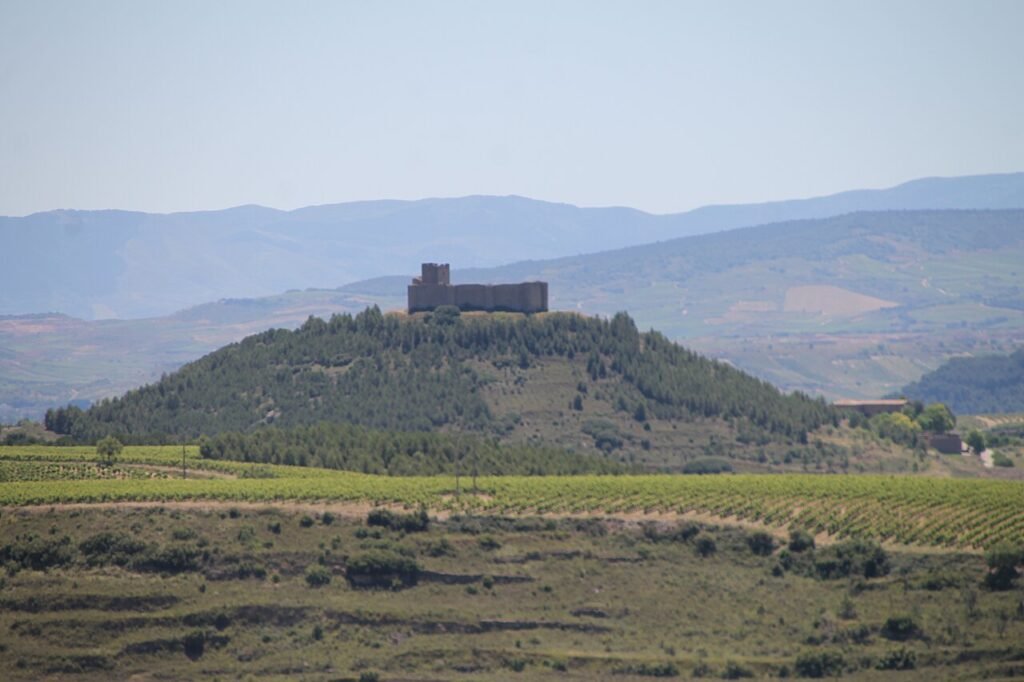
Savvy visitors know that the real story of San Vicente is written in its architecture and its landscape. The town sits at the heart of the Rioja Alta wine region, and the cobbled streets, stone houses, and Romanesque church of Santa María la Mayor (built in the 12th century and expanded in the 16th) are testaments to a community that has always lived in close relationship with the land. The castle was partially dismantled in the 18th century, but its keep and walls still command the skyline, a constant reminder that this was once a place where kingdoms were won and lost. Today, you will find a village that has learned to balance its medieval soul with a quiet, dignified hospitality.
Neighborhood by Neighborhood
El Casco Antiguo: The Walled Old Town
You will want to begin your exploration in the Casco Antiguo, the fortified heart of San Vicente. Enter through the Puerta de la Villa, a restored gate that once controlled all access to the town, and you will find yourself on Calle Mayor, the main artery of medieval life. Here, the stone facades of 16th and 17th-century houses rise three stories high, their wooden balconies leaning out over the cobblestones as if listening to the centuries of gossip below. The air smells of woodsmoke and damp stone, and, depending on the season, of the sweet perfume of jasmine from a courtyard window. Your best bet is to pause at the Plaza de la Iglesia, where the church of Santa María la Mayor dominates the space. Its Romanesque apse is a masterpiece of sober, muscular stonework, and inside, you will find a magnificent 16th-century altarpiece by the sculptor Arnao de Bruselas. Don’t leave without walking up the narrow, winding Calle del Castillo to the castle ruins themselves—the view from the keep, overlooking the Ebro valley and the patchwork of vineyards stretching to the horizon, is worth every step.
El Barrio de la Estación: The Railway Quarter
A ten-minute walk downhill from the old town, you will discover a completely different San Vicente. El Barrio de la Estación grew up around the train station that arrived in the 19th century, connecting the village to Logroño and the wider world. This neighborhood is less about medieval grandeur and more about the hum of daily life. Locals recommend starting your morning at the Café Bar Estación (Calle de la Estación, 12), where retired vintners gather to debate politics and the quality of the last harvest over small cups of black coffee and anisette. The architecture here is simpler—two-story houses with tiled roofs and small gardens—but the atmosphere is rich with the rhythm of a working community. On Saturdays, the small market in the square behind the station sells local cheeses, honey, and, of course, wine from the surrounding bodegas. Travelers often discover that this is the best place to observe the real social fabric of San Vicente, away from the tourist trail.
La Senda de los Vinos: The Vineyard Fringe
For those who want to feel the pulse of the land itself, the third neighborhood of San Vicente is not a collection of streets, but a landscape. La Senda de los Vinos, the network of paths and lanes that fan out from the village into the surrounding vineyards, is where you will find the soul of Rioja Alta. Here, the landscape is a quilt of tempranillo, garnacha, and graciano vines, interspersed with small family bodegas that have been making wine for generations. The most accessible of these is Bodegas Sonsierra (Carretera de Logroño, s/n), a cooperative founded in 1957 that produces some of the region’s finest crianzas and reservas. You can walk or cycle along the marked trails between the vines—the Camino de la Senda is a favorite—and you will be rewarded with views that seem to have changed little since the 12th century. In autumn, the leaves turn a brilliant crimson, and the air fills with the sweet, earthy smell of the harvest. Most tourists overlook this area, spending only a few hours in the village before moving on, but savvy visitors know that the vineyard paths are where San Vicente reveals its deepest secrets.
The Local Table: What Denizens Actually Eat

Ayuntamiento de San Vicente de la Sonsierra, La Rioja, España., San Vicente de la Sonsierra, Spain
In San Vicente, eating is not a matter of convenience—it is a ritual as old as the castle walls. The cuisine of the Sonsierra region is defined by three things: the wine, the meat, and the vegetable. The vineyards that surround the village produce not only the famous Rioja reds, but also a distinct local cuisine that has evolved over centuries. You will find that locals eat late—lunch is at 2:00 PM, dinner at 9:00 PM—and they eat slowly, often over two or three hours, with glasses of wine that seem to refill themselves. The defining ingredient of the region is the pimiento del piquillo, a small, sweet red pepper that is roasted, peeled, and stuffed with everything from cod to beef. But the dish you must seek out is patatas a la riojana: a humble, soul-warming stew of potatoes, chorizo, and paprika that tastes of the earth and the sun.
For the definitive experience, you must go to Restaurante La Taberna de San Vicente (Plaza de la Iglesia, 3), a family-run establishment that has been feeding the village since 1972. Here, the menu changes with the seasons, but you can always count on a plate of patatas a la riojana made with chorizo from a local butcher and paprika from the family’s own garden. The owner, a third-generation vintner named Javier, will pour you a glass of his own 2017 reserva and tell you stories of the village that stretch back to his grandfather’s time. Plan to spend at least two hours here, and do not leave without trying the chuletillas al sarmiento—lamb chops grilled over the pruned branches of the vine, a technique that imparts a smoky, floral flavor you will not find anywhere else. On weekends, the locals gather at the Bar de la Plaza for a vermut before lunch—a glass of vermouth and a small plate of olives or anchovies—and you should join them. It is the most authentic taste of San Vicente you can have.
Your best bet for wine, of course, is to visit the bodega itself. Bodegas Sonsierra offers tastings and tours for €15 per person, which includes a guided walk through the cellars and a tasting of three wines. You will learn that the winemaking tradition here is all about balance—the tempranillo grapes from the hillside vineyards yield a wine that is fruity, smooth, and never overpowering. The locals will tell you that the secret is the soil, a mix of limestone and clay that imparts a mineral character you can taste in every sip. Take a bottle home with you—it is a gift that captures the essence of this place.
Art, Music & Nightlife
San Vicente de la Sonsierra is not a place for late-night clubs or avant-garde galleries, but its creative life is richer than you might expect. The village’s cultural heart is the Centro Cultural San Vicente (Calle Mayor, 15), a beautifully restored 17th-century palace that hosts rotating exhibitions of contemporary art, photography, and local history. The most significant event of the year is the Semana Santa de San Vicente, the Holy Week celebrations that take place in late March or early April. On Maundy Thursday, the Paso del Pico procession begins at midnight and lasts for three hours, as hooded penitents walk through the candlelit streets in complete silence, accompanied only by the sound of a single drum and the low chanting of the brotherhood. It is a haunting, deeply moving experience that draws thousands of visitors from all over Spain. Many travelers who witness it say it changes the way they understand faith and tradition.
For music, the village comes alive on the first weekend of August for the Fiesta de San Vicente, the patron saint’s festival. For three days, the Plaza de la Iglesia is filled with the sounds of traditional Riojan folk music—the jota and the rondalla—and the streets are crowded with dancers in regional costume. The nightlife is gentle and convivial: you will find the locals gathering at Bar La Viña (Calle de la Fuente, 2) for a glass of Rioja and a game of cards, or at the terraza of El Mirador (Calle del Castillo, 1), where the view of the floodlit Ebro valley is reason enough to linger until midnight. Seasonal travelers will find that the best time for art and culture is in September, when the village hosts the Jornadas de la Vendimia, a harvest festival with open bodegas, live music, and a market of local crafts. The light in September is gold and soft, and the vines are heavy with fruit—it is, for many, the perfect moment to visit.
Practical Guide

A castle on a hill, San Vicente de la Sonsierra, Spain
- Getting There: The nearest major airport is Logroño-Agoncillo Airport (RJL), which is about 25 minutes away by car. Seasonal flights from Madrid and Barcelona connect here. For broader options, fly into Bilbao Airport (BIO), two hours north, or Madrid-Barajas (MAD), three hours east. Book your flight at Skyscanner for the best deals on connections.
- Getting Around: San Vicente is compact enough to explore entirely on foot within the old town, but to reach the surrounding vineyards and bodegas, you will want a car or bicycle. Rent a car in Logroño or Haro for about €35-45 per day. Alternatively, take the train from Logroño to the San Vicente station (€2.50 one way, 20 minutes), and then walk or take a local taxi (€5-8) to the center. Cycling is a joy here—rent a bike at Rioja Bike Tours (Calle Mayor, 8) for €20/day.
- Where to Stay: For atmosphere, stay within the Casco Antiguo. The Hotel Rural San Vicente (Calle de la Fuente, 10, €80-120/night) is a converted 17th-century mansion with stone walls, wooden beams, and a rooftop terrace overlooking the castle. For a more modern feel, the Posada de la Sonsierra (Carretera de Logroño, 8, €60-90/night) offers clean, comfortable rooms near the station. Check availability at Booking.com.
- Best Time: The months of May, June, and September are ideal. In May, the vineyards are in bloom and the weather is warm without being hot. September brings the harvest season, perfect temperatures (20-25°C), and the Jornadas de la Vendimia festival. July and August can be crowded and hot (often above 35°C), while the winter months (November to February) are quiet and chilly, with some restaurants closed.
- Budget: Plan on €80-120 per day for a comfortable visit, including accommodation (€60-120/night for a double room), three meals (€25-45 total), and a wine tasting (€15-25). Budget travelers can manage on €50-60/day with a hostel room and meals from the market.
What Surprises First-Time Visitors
The first surprise that greets you in San Vicente de la Sonsierra is the silence. After the bustle of Logroño or Haro, the village feels almost unnervingly still. The narrow streets, the thick stone walls, the absence of traffic—all of it creates a hush that seems to absorb sound. Travelers often describe it as a “sound vacuum,” a place where you can hear your own footsteps echoing off the centuries-old cobbles. It takes a day or two to adjust, but soon you will come to treasure this quietness, to understand that it is not emptiness but a kind of presence—a deep, meditative calm that seeps into your bones.
The second surprise is the warmth of the welcome. San Vicente is not a tourism machine; it is a living village where people know each other’s names and take genuine pleasure in meeting strangers. You might be invited into a local’s kitchen to taste a homemade wine, or find yourself in a three-hour conversation with a retired vintner in a bar, discussing everything from the 2014 vintage to the state of Spanish politics. Locals are proud of their heritage and eager to share it, but they are never pushy or commercial. Your best bet is to embrace this hospitality: accept the glass of wine, ask questions, listen to the stories. This is where the real magic of San Vicente lives.
The third surprise is the sheer depth of history that is visible in every corner. You will walk past a stone wall that dates from 1172, step into a church with a 12th-century apse, and look out from a castle keep that was besieged in 1366 by the armies of Pedro the Cruel. The village is not a museum of preserved artifacts; it is a living document of eight centuries of Spanish history, written in stone, wood, and vine. For first-time visitors, this density of time can be overwhelming. You will want to slow down, to give yourself permission to simply sit in the Plaza de la Iglesia for an hour and watch the light move across the Romanesque apse. That, more than any sight or activity, is the true experience of San Vicente de la Sonsierra.
Your San Vicente de la Sonsierra, Spain Questions

A landscape with trees and mountains in the background, San Vicente de la Sonsierra, Spain
Is it worth visiting during Holy

