
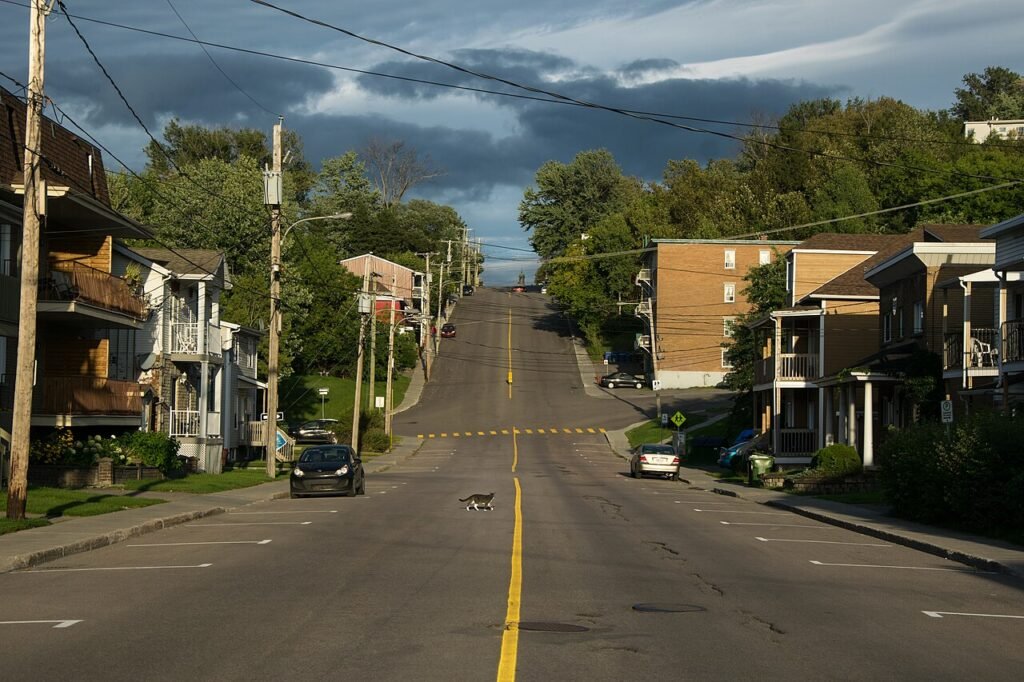
Where the Saguenay Bends: Chicoutimi’s Unconquered Soul (2026)
In the spring of 1842, a Mi’kmaq woman named Marie-Josèphe watched from the rocky shore as a Scottish trader named Peter McLeod floated his first timber raft down the Saguenay River. The air smelled of thawing earth and pine resin. She knew, even then, that the roar of the sawmill would soon drown out the sound of the falls. That year marks the unofficial birth of Chicoutimi—a place where industry and wilderness have wrestled for the soul of a people ever since.
The Story Behind Chicoutimi, Canada
Long before the saws, the Innu people called this place *Chicoutimi*—roughly “the end of the deep water.” It was a natural meeting point where the Chicoutimi River plunges into the Saguenay, a fjord that cuts like a knife through the Canadian Shield. French missionaries arrived in the 1670s, but it wasn’t until 1676 that the first permanent European settlement took root. For the next century, it remained a minor fur-trading post, a pinprick of French civilization in an ocean of boreal forest. Then the timber trade arrived, and everything changed.
The real transformation came in the 19th century, with the arrival of British entrepreneurs who saw the region’s vast forests not as a sacred landscape, but as raw capital. By 1896, the Pulp and Paper industry had arrived, and Chicoutimi became a company town in the truest sense. You’ll still see the ghosts of that era in the red-brick mills that line the riverbanks. But the city’s character was forged in a crucible of fire and faith. On July 11, 1912, a catastrophic blaze destroyed much of the town center, leveling wooden buildings and leaving 8,000 people homeless. Travelers often discover that the city’s fierce pride and its fiercely Catholic heritage—visible in the monumental Saint-François-Xavier Cathedral—were born in the ashes of that disaster. By the 1920s, Chicoutimi had rebuilt itself in stone and cement, a testament to the stubbornness of its people.
The mid-20th century brought another shift: the Quiet Revolution. In the 1960s and 1970s, Quebecois nationalism surged, and Chicoutimi became a cultural heartland for the *Saguenay–Lac-Saint-Jean* region. The pulp mills began to close, but the city reinvented itself as a university town and a hub for outdoor tourism. Today, the city—now part of the larger Ville de Saguenay—is a place where you can hear French spoken with a distinctive, rolling accent that locals call *joual saguenéen*, and where the landscape still dictates the rhythm of daily life.
Neighborhood by Neighborhood
Le Bassin: The Old Soul
You’ll want to start your exploration in Le Bassin, the oldest neighborhood, nestled at the confluence of the two rivers. The streets here are narrow, sloping down toward the water, and lined with well-preserved 19th-century houses in pastel shades of blue, yellow, and green. Your best bet is to begin at the Carrefour du Bassin, a pedestrian-friendly square where the weekly farmer’s market sets up on Saturday mornings from May through October. You’ll find the old stone *Pulperie de Chicoutimi*—the original pulp mill turned museum—dominating the riverbank. The smell of damp stone and wood smoke is almost constant, and the sound of the river is a low, steady hum. Locals recommend winding your way up Rue Racine, the main drag, to see the Art Deco facade of the former Palace Theatre, now a cinema and performance space. Don’t miss the tiny *Café du Clocher*, tucked beside the cathedral—it’s the kind of spot where locals argue about hockey and local politics over espresso.
Centre-Ville: The Beating Heart
Climbing uphill from Le Bassin, you enter Centre-Ville, the modern commercial core. This is where you’ll find the brutalist concrete of the 1970s municipal buildings, the glassy storefront chains, and the manicured Place du Centenaire square. It’s less charming than its older neighbor, but it’s where the city lives. The main artery is Boulevard Talbot, a six-lane thoroughfare that feels like an American suburb, but tucked behind it are pedestrian-friendly side streets like Rue Saint-Jean-Baptiste. On a summer evening, you’ll find the square filled with families, the air thick with the smell of poutine and the sound of a local folk band covering a traditional *chanson à répondre*. The *Musée du Fjord* is here, a small aquarium and natural history museum that surprises visitors with its excellent exhibit on the beluga whales that inhabit the Saguenay Fjord. Plan to spend an hour inside, then grab a smoked-meat sandwich at *Chez Georges*, a diner that’s been serving locals since 1954.
Rivière-du-Moulin: The River Hamlet
For a taste of the more rural, blue-collar Chicoutimi, head east to Rivière-du-Moulin. This neighborhood spreads along the Chicoutimi River, past the former paper mills and into a patchwork of modest cottages and forests. The architecture is a mix of 1950s bungalows and older farmhouses, with the occasional industrial ruin peeking through the trees. The main attraction here is the *Sentier des Berges*, a waterfront trail that runs for 12 kilometers along the river. Travelers who venture here are rewarded with a view of the *Chute de la Rivière-du-Moulin*, a 25-meter waterfall that is surprisingly powerful. You’ll find no tourist shops here—just a small convenience store and a handful of locals fishing for brook trout from the rocks. It’s the place to go if you want to understand what Chicoutimi felt like before the pulp mills came: a river community, deeply tied to the forest.
The Local Table: What the Saguenéens Actually Eat

Bibliothèque de Chicoutimi, au Saguenay (Québec)., Chicoutimi, Canada
You’ll quickly discover that food in Chicoutimi is not about trends; it’s about survival. The winters are long and brutal, so the cuisine leans hard on preserved, hearty ingredients. The star is the *tourtière*, but not the ground-pork pie you might know from Montreal. Here, it’s the *tourtière du Lac-Saint-Jean*, a massive, deep-dish pie filled with cubed potatoes, ground pork, and wild game like moose or partridge, spiced with cloves and cinnamon. Locals will tell you that the secret is in the *bouillon de rôti*—the roasting juices—which are poured into the pie before baking. You’ll find the definitive version at *La Tourtière Chez Jeannot*, a family-run bistro on Rue Bossé that has been serving it since 1985.
Another essential is *soupe aux gourganes*, a fava bean soup that smells like the forest floor and tastes like a warm blanket. It’s almost impossible to find it on a menu, but locals will invite you to their homes if you ask nicely. For a quick lunch, your best bet is the *Marché du Vieux-Chicoutimi*, a small indoor market on Rue Price Ouest. Look for the cheeses from the *Fromagerie Boivin*, the smoked fish from the *Fumoir du Fjord*, and the *bleuets sauvages* (wild blueberries) that grow on the rocky hillsides of the region. The must-try dish for travelers is the *poutine gauloise*—a regional version of poutine topped with ground beef and a thick, brown gravy. You’ll find it at *Chez Simon*, a greasy spoon on Rue Racine that fills up at noon with construction workers and university students alike.
Art, Music & Nightlife
Chicoutimi’s creative scene is fiercely independent, a direct legacy of the Quebecois cultural nationalism of the 1970s. The epicenter is the *Salle François-Brassard*, a 1,000-seat venue attached to the Cégep, which hosts everything from classical concerts to experimental theatre. Every July, the *Festival des Musiques de Création* transforms the city with free outdoor concerts of contemporary music, ranging from electro-acoustic experiments to improvisational jazz. For visual art, you’ll want to head to *Galerie L’Œuvre de l’Autre*, a cooperative space on Rue Racine, where you can see bold, figurative works by local artists that often grapple with themes of landscape, industry, and identity.
The nightlife here is surprising for a city of this size. On a Friday night, the bars along Rue Racine and Rue Saint-Jean-Baptiste come alive with a mix of students from the Université du Québec à Chicoutimi and local tradespeople. The key spot is *Le Bunker*, a dive bar with a legendary jukebox that leans heavy on classic rock and Quebecois folk. You’ll find *Tête de Cochon*, a beer hall that serves local microbrews from the *Microbrasserie de l’Île*, whose tart *Saguenay IPA* is a perfect match for the local cheese. If you’re here in late August, don’t miss the *Festival des Cinémas Parallèles de Chicoutimi*, a four-day event that screens avant-garde films in an old church—a perfect encapsulation of this city’s ability to blend tradition with rebellion.
Practical Guide

Gray concrete bridge with no vehicle viewing sea and mountain, Chicoutimi, Canada
- Getting There: Fly into Saguenay-Bagotville Airport (YBG), 15 minutes east of Chicoutimi, served by daily flights from Montreal (Pascan Aviation) and seasonal connections from Quebec City. Book at Skyscanner
- Getting Around: The local bus network (STCS) runs hourly routes connecting major neighborhoods for $3.50 CAD per ride. Your best bet is to rent a car from the airport; a compact car from Budget costs about $45 CAD/day and is essential for exploring the fjord. A taxi from the airport to Centre-Ville is roughly $25 CAD.
- Where to Stay: For atmosphere, book a room at the *Hôtel Le Montagnais* (a local landmark with an attached spa) in Le Bassin for about $140 CAD/night. Budget travelers prefer the *Auberge de la Rivière* in Rivière-du-Moulin for $90 CAD/night. Check Booking.com
- Best Time: Late June to mid-September, when temperatures hover at 20-25°C and you can enjoy the fjord, hiking, and the outdoor festivals. The *Festival de la Chanson de Chicoutimi* takes place in late July, and the autumn colors peak in late September.
- Budget: Expect to spend about $150-$200 CAD per day for a mid-range traveler, including meals, transportation, and a decent hotel room. If you cook your own meals and camp, you can do it for $60 CAD/day.
What Surprises First-Time Visitors
Travelers are often stunned by the sheer scale of the landscape. The Saguenay Fjord is not just a river; it’s a deep, ancient cleft in the earth, with cliffs rising 300 meters from the water. You’ll find yourself constantly stopping to stare, even if you’ve lived in Canada your whole life. The blue of the water, punctuated by the dark green of the boreal forest, feels like a painting. The second surprise is the friendliness of the people. When you say you’re from out of town, strangers will start conversations on the street, offer directions, and sometimes—if the evening is right—invite you to a cabin in the woods for a *feu de camp* and a glass of *caribou*, a local drink of red wine and vodka.
But the biggest surprise is the silence. Chicoutimi is small, but it’s surrounded by a vast, empty wilderness. You’ll walk a few blocks from the center and suddenly find yourself on a trail that leads into the forest, and within minutes, the only sound is the wind in the pines and the distant churn of a waterfall. Misconceptions persist that Chicoutimi is a grim, industrial ghost town—it’s anything but. The mills are largely gone, and the city has an energy that is both contemporary and deeply rooted in its natural surroundings. It’s a place where you can watch a beluga whale surface in the fjord at sunset and then eat a world-class *tourtière* in a tiny bistro—all in the same evening.
Your Chicoutimi, Canada Questions

Vibrant waterfall cascading through rocky terrain surrounded by green fores…, Chicoutimi, Canada
You might be wondering if there’s more to do than eat and hike. Yes, surprisingly, Chicoutimi has a thriving theatre scene. The *Théâtre du Faux-Pas* on Rue du Portage stages experimental productions in French from October to May. Check their calendar—they often have English surtitles. Also, the *Pulperie de Chicoutimi* offers guided tours of the old mill ruins, and the site itself is a beautiful park overlooking the river. It’s a wonderful way to spend a quiet afternoon.
Another question travelers ask is about safety. Chicoutimi is an exceptionally safe city by any standard. You can walk alone at night through Centre-Ville and Le Bassin without concern. The biggest danger is probably the black bears that occasionally wander into the outskirts in late summer; keep your distance and store food properly if you’re camping. The local police are friendly, and the university district is well-lit and patrolled.
Finally, you might be curious about language. French is the dominant language, and while many younger people and tourism workers speak English, you’ll have a much richer experience if you learn a few phrases. *Bonjour*, *merci*, and *parlez-vous anglais?* will take you far. Locals appreciate the effort deeply, and you might even get an invitation to a private dinner party. The accent is thick—locals often drop final consonants and roll their ‘r’s—but the warmth is universal.

