
Beyond the Red Ruins: Why Humaitá, Paraguay Beckons the Thoughtful Traveler (2026)
In the summer of 1868, as the guns of the Triple Alliance tightened their grip, a young Paraguayan soldier scrawled a letter to his mother on a scrap of paper, using blood from his own wound as ink. “The red walls still stand,” he wrote, “and so do we.” He was speaking of the iconic Iglesia San Carlos Borromeo, whose rust-red brick and silent bell tower would survive the siege that reduced a nation to ashes. Today, that same church greets you not as a monument to defeat, but as a quiet witness to a story most travelers have never heard.
The Story Behind Humaitá, Paraguay
To understand Humaitá, you must first understand the War of the Triple Alliance (1864–1870), the deadliest conflict in Latin American history. Paraguay, under the iron-willed Francisco Solano López, faced off against Argentina, Brazil, and Uruguay. Humaitá, sitting on a strategic bend of the Paraguay River, became the nation’s fortress—a ring of trenches, redoubts, and artillery batteries that López himself called the “Gibraltar of South America.” For nearly three years, from 1866 to 1868, this tiny riverside village held the allied advance at bay. Travelers today often walk the same grassy ramparts where soldiers once stood, marveling that such a sleepy place could have been the epicenter of a continental war.
When the fortress finally fell in August 1868, after a brutal siege that included one of the first uses of observation balloons in warfare, the allies found little left. López had ordered a scorched-earth retreat, torching the town as he fled north. What remained—the church, a few warehouses, the bones of the defenders—was slowly reclaimed by the jungle. For decades, Humaitá was a ghost town, a place of pilgrimage for widows and veterans. It wasn’t until the 1950s that families began returning, rebuilding homes from the same red clay that had given the church its color. The resilience you see today is not ancient; it is living memory.
The town’s modern identity is shaped by that history, but not consumed by it. Locals will tell you that the padre of San Carlos Borromeo still rings the bell at dusk, a habit unbroken since 1860. They’ll point you to the river, where fishermen cast lines just as their great-grandfathers did before the war. The secret to Humaitá is that it does not dwell in its past—it lives alongside it. You will find no gaudy memorials or reenactments, just a quiet coexistence with a story that still feels close enough to touch.
Neighborhood by Neighborhood
El Centro Histórico: The Red Heart
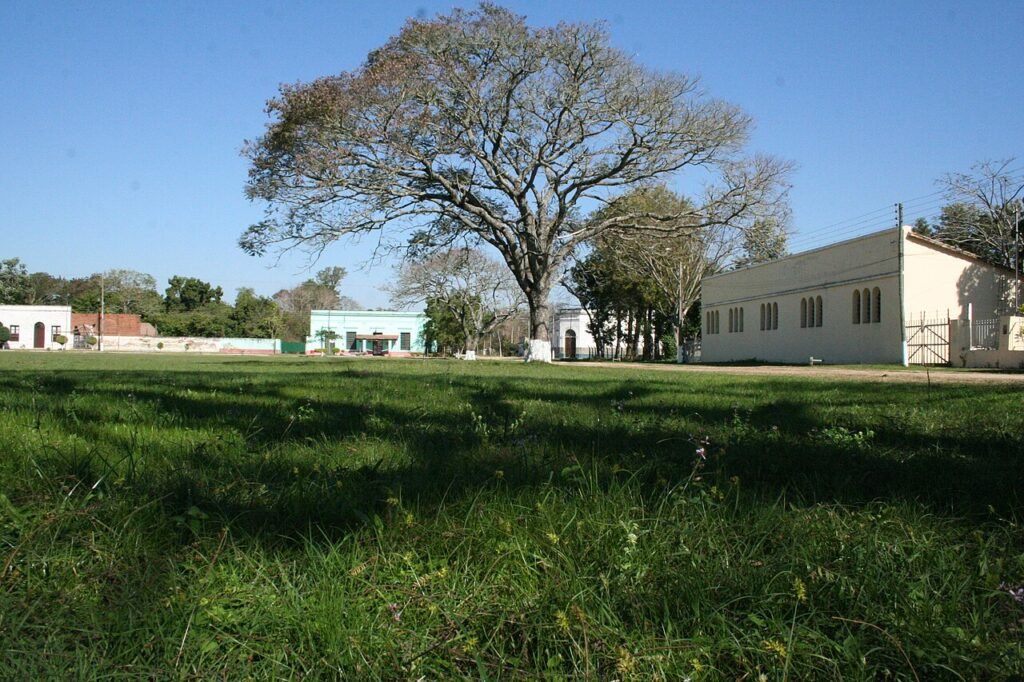
Everything in Humaitá radiates from the Plaza de la Iglesia, a dusty square anchored by the Iglesia San Carlos Borromeo. Built in 1840 with bricks fired from local clay, its walls are the color of dried blood and terracotta—a hue that shifts from deep orange at dawn to almost purple at sunset. The interior is spare: a wooden altar, a single oil lamp, and a small museum in the sacristy where you can see the original letter from López to the church’s architect, demanding the tower be tall enough to spot enemy ships from the river. Locals recommend visiting just before 6 p.m. when the evening mass draws the town’s elderly women in their black lace mantillas. Across the plaza, the Casa de la Cultura occupies a restored colonial warehouse and hosts a rotating exhibition of war-era artifacts—buttons, bayonets, and the hauntingly small uniforms of child soldiers. Calle 14 de Mayo, the main street, is cobbled with stones brought as ballast in Brazilian ships; you’ll hear your footsteps echo differently depending on whether you’re walking on granite (Brazilian) or sandstone (Paraguayan).
Puerto Viejo: Where the River Speaks
Five blocks downhill from the plaza, you’ll hit Puerto Viejo, the old port district. This is where the ferry from Asunción once docked, and where the allied fleet shelled the town day and night for eighteen months. Today, the riverfront is a promenade of jacaranda trees and weathered benches, where old men play truco (a Spanish card game) on upturned crates. Unlike the plaza, which feels curated and quiet, Puerto Viejo has a lived-in honesty. The market here—really just half a dozen stalls under corrugated tin—sells the day’s catch: golden dorado and silvery surubí, still wet from the river. Your best bet is to arrive by 7 a.m., when the fishermen bring in their boats and the scent of fried pastelitos (corn and cheese pastries) drifts from a stall run by a woman named Doña Lidia. She’s been here since 1982 and will insist you try her version with a drizzle of homemade honey. The real treat, though, is the view: from the jetty, you can see the exact bend in the river where the Brazilian fleet anchored during the siege. Savvy visitors bring a pair of binoculars and a copy of “The Paraguay War” by Thomas Whigham—reading the battle accounts at the very spot they happened is an experience no museum can match.
Punta Carapa: The Hill and the Cross
A twenty-minute walk (or a short mototaxi ride for about 5,000 guaraníes) south of town brings you to Punta Carapa, the hill where López’s command post stood. Today, the summit is crowned by the Cruce de los Héroes, a stark white cross visible from miles away. The climb is steep but short, winding through cacti and acacia trees where toucans sometimes perch. At the top, you’ll find a bronze plaque listing the names of the 1,300 soldiers who died in the final assault—most of them teenagers. The view is breathtaking: the river spreads out like a silver ribbon, and you can see the distant smoke of cookfires from villages in Argentina across the water. Locals come here for Easter sunrise services and on August 30, the feast day of Santa Rosa, when a candlelight procession winds up the hill. But the best time to visit is late afternoon, when the light turns the river gold and the cross casts a long shadow toward the church below. You’ll understand, standing there, why the soldier’s letter spoke of red walls and standing firm. The hill doesn’t feel haunted; it feels consecrated.
The Local Table: What Denizens Actually Eat

The ruins of the church of San Carlos Borromeo, Humaita, Paraguay
In Humaitá, the river is the larder. You will eat what the fishermen catch, and you will eat it simply: grilled over charcoal, seasoned with salt and the juice of sour oranges. The defining dish of the region is surubí a la parrilla—a catfish steak, firm and white, cooked on a grate over smoldering quebracho wood. Locals will tell you that the wood is as important as the fish; quebracho burns hot and imparts a subtle, smoky sweetness that ordinary charcoal cannot match. Your best bet for tasting it is at the Costanera Grill, a no-fuss restaurant on the river road with plastic chairs and a thatched roof. A full plate of surubí with mandioca (cassava) and a simple tomato-onion salad costs about 35,000 guaraníes (roughly $5 USD). Open Tuesday through Sunday, 11 a.m. to 3 p.m., but arrive before 1 p.m. or the surubí runs out.
Breakfast in Humaitá is a different affair. At the Mercado Municipal, off Calle 14 de Mayo, you’ll find a stall run by the Rojas family since 1975. Doña Irma makes chipa—a dense, cheesy bread made from cassava starch and Paraguayan cheese—in a wood-fired oven she built with her father. The chipa comes out hot at 6:30 a.m. sharp, and travelers often discover that one piece is never enough. Dip it in a cup of tereré, the local cold-brewed yerba mate tea that Paraguayans drink all day, and you’ll understand why the morning rush is a social ritual as much as a meal. Most tourists overlook the market, heading instead to the plaza cafés, but the real taste of Humaitá is on those worn wooden benches, with chipa crumbs on your shirt and the gossip of the town flowing around you.
The desert, if you still have room, is dulce de batata—a sweet potato preserve served with queso fresco (fresh cheese). It sounds odd, the combination of sweet and salty, but locals swear by it, and you’ll find it at the Costanera Grill or at the home of any family you befriend. Food in Humaitá is not about complexity; it’s about integrity—the taste of one good thing done well.
Art, Music & Nightlife
Humaitá is not a party town, and you will not find nightclubs or thumping bass. What you will find is music woven into the fabric of everyday life. The Paraguayan harp—a delicate, diatonic instrument with a sound like running water—is the soul of local music. On Saturday evenings, the Casa de la Cultura hosts a free polka performance starting around 8 p.m., where local musicians play the traditional polka paraguaya, a dance that is slower and sweeter than its European cousin. The room fills with couples young and old, and you’ll be pulled onto the floor whether you know the steps or not. Travelers often discover that the best way to learn is to let an abuela (grandmother) lead; she will guide your hands and feet with patient humor. If you want a drink, you’ll bring your own—the Casa doesn’t sell alcohol, so locals bring a bottle of caña (cane liquor) or a thermos of mate to share.
For visual art, the Iglesia San Carlos Borromeo itself is the canvas. A local painter named Martín Benítez, now in his seventies, has spent the last three decades restoring the church’s interior frescoes, uncovering layers of limewash to reveal original 19th-century designs of flowers and geometric patterns. He works in the mornings and will happily show you his process if you stop by. In September, the town holds the Feria del Río, a weekend festival of crafts, music, and riverboat races. Artisans sell leather goods, lace, and carved animal figures from the quebracho wood that defines the region. The festival is small—maybe 500 people—and wonderfully authentic. You won’t see it on any tourist board website. Locals recommend booking a room in advance if you plan to attend the third weekend of September, as visitors from across the department (state) swell the town’s limited accommodations.
Practical Guide

Ruins of a Jesuit mission in Paraguay showcasing ancient architecture and h…, Humaita, Paraguay
- Getting There: The nearest major airport is Silvio Pettirossi International Airport in Asunción (ASU), about 300 km northwest. Airlines include LATAM, Paranair, and GOL. From Asunción, you can take a bus from the Terminal de Ómnibus de Asunción to Pilar (3.5 hours, about $8 USD), then a local bus to Humaitá (1 hour, about $3 USD). Buses run daily from 6 a.m. to 6 p.m. Book flights at Skyscanner
- Getting Around: Humaitá is walkable—the entire town fits in a 1.5-kilometer radius. For Punta Carapa or the nearby ruins of the Fortín (the fortress remains), negotiate a mototaxi for about 10,000–15,000 guaraníes ($1.50–$2.00 USD) per ride. There is no rideshare app; just flag one down on the plaza or ask at your hotel.
- Where to Stay: The Hotel Humaitá (on Calle 14 de Mayo) offers simple but clean rooms with fan and private bath for about $25 USD/night. For a more atmospheric stay, the Posada del Río in Puerto Viejo has four rooms overlooking the river and is run by the granddaughter of a war veteran; doubles start at $35 USD/night. Check Booking.com for options, though availability is limited—book two weeks ahead during local holidays.
- Best Time: April through September. These months are dry and mild, with daytime temperatures between 20°C and 28°C (68°F–82°F). Avoid December through February, when heat and humidity can hit 40°C (104°F) and the mosquitoes are relentless. The flower season (October–November) is beautiful but hot.
- Budget: Plan for about $30–$40 USD per day, including a budget hotel, three meals, transport, and a beer or two. Humaitá is one of the most affordable destinations in Paraguay, and your money goes far.
What Surprises First-Time Visitors
The first surprise is how small Humaitá is. You’ve read about the siege, the fortress, the thousands of soldiers, and you expect something grand—a battlefield, a museum complex, a national park. What you get is a village of 5,000 souls, with one paved road and more cows than cars. The scale is intimate, almost domestic. The trenches are now overgrown with wildflowers. The massive chain that the Paraguayans stretched across the river to block the Brazilian fleet? It hangs on a wall in the church sacristy, rattling softly when the river wind blows through the door. Travelers often say they feel disoriented at first, struggling to reconcile the enormity of the history with the gentleness of the place.
The second surprise is the warmth of the people. Paraguayans in the countryside are famously hospitable, but Humaitá takes it further. Expect to be invited into homes, offered mate, and shown family photo albums that include pictures of great-grandparents in military uniforms. The war is not a distant textbook event here; it is woven into family stories, into the way people talk about the red church or the hill of the cross. You will hear phrases like “when the Brazilians came” as though it happened last year. The secret is to listen, not to speak. Locals will share more if you are silent and present.
The third surprise is the silence. At night, Humaitá is so quiet you can hear the river lapping against the jetty, the distant bark of a dog, the rustle of parakeets settling into the palm trees on the plaza. There is no traffic, no neon, no hum of air conditioners. For travelers accustomed to the constant buzz of cities, this stillness can feel disorienting—and then, after a day or two, deeply restorative. You will sleep better than you have in months.
Your Humaitá, Paraguay Questions
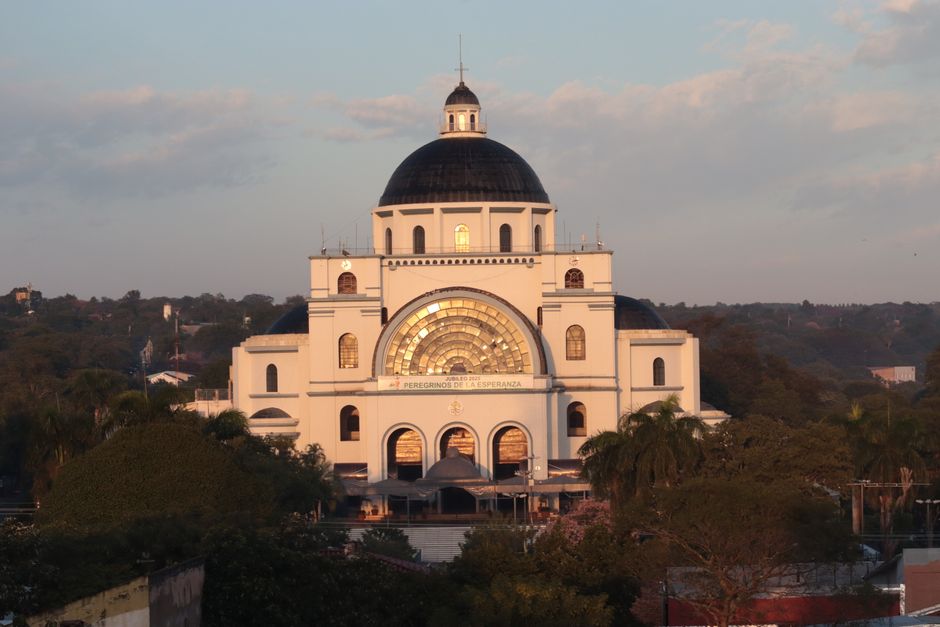
Stunning view of the Basilica of Our Lady in Caacupé during a golden sunset., Humaita, Paraguay
Is Humaitá safe for solo travelers, especially women? Yes, it is one of the safest places in Paraguay for solo travel. Violent crime is virtually non-existent, and the greatest risk you’ll face is the heat or an occasional stray dog. That said, the village is small and everyone knows everyone. If you are a woman traveling alone, you will attract some curious attention—not threatening, but persistent. The best response is to be polite but firm. Locals will respect a clear “no, thank you,” but may persist if you smile or hesitate. The hotel owners and shopkeepers will keep an eye on you, and you will likely be invited to dinner by a family before your second day. Bring a good book, a hat, and a willingness to be sociable, and you’ll find Humaitá a wonderfully safe base for exploration.
How many days should I spend in Humaitá? Two full days and one night is the sweet spot. Day one: arrive, settle in, visit the church and the museum, and walk the riverfront. Day two: hike to Punta Carapa in the morning (bring water and a hat), then take a guided tour of the Fortín ruins (ask at the Casa de la Cultura for a local guide; it’s not marked or commercialized, and you need someone who knows the paths). A third day allows for a boat

