
Beyond the Clay Walls: How Sarakhs Whispers the Secrets of the Silk Road (2026)
In 1220, the Mongol horde of Genghis Khan swept through the oasis city of Sarakhs, leaving little but dust and ashes. Yet one structure stubbornly refused to fall: the ancient minaret of the Friday Mosque, a 38-meter cylinder of baked brick that still pierces the sky today. When you stand beneath it at dusk, with the wind carrying the scent of tamarisk and dried apricots, you’ll understand why locals say the tower holds the city’s soul—and why every traveler who lingers here feels the same pull.
The Story Behind Sarakhs, Iran
Sarakhs has always been a place of thresholds. Perched on the edge of the Karakum Desert, it served as a vital caravanserai on the Silk Road for more than a thousand years. By the 6th century, Sasanian kings fortified it against nomadic raids; Arab chroniclers in the 9th century described its bustling markets of silk, spices, and horses. The medieval Persian poet Ferdowsi mentioned Sarakhs in his epic Shahnameh as a land of brave warriors. But the city’s real golden age came under the Samanid dynasty (819–999 AD), when scholars from across Khorasan gathered in its madrasas. Travelers often discover that the modern town still carries that scholarly echo—the local library, though small, holds a manuscript from 1317, a quiet relic of the era when Sarakhs was a crossroads of ideas.
The Mongol invasion in 1220 turned much of the city to rubble, but the minaret survived—and so did the people. Over the following centuries, Sarakhs was rebuilt piecemeal under the Timurids, the Safavids, and finally the Qajars. The defining moment for its modern shape came in 1881, when the Treaty of Akhal forever fixed the border between Persia (now Iran) and the Russian Empire. Sarakhs became a frontier town overnight. You’ll notice that frontier mentality still: the streets are lined with low, sturdy houses, built to withstand both the desert wind and the occasional political gust. Locals recommend visiting the small Qajar-era caravanserai near the bazaar, where merchants once traded samovars for Persian rugs—a transaction that feels very alive in the dusty air.
Neighborhood by Neighborhood
Old Sarakhs (Shahr-e Qadim)
This is where you’ll step into the city’s bones. Clustered around the still-standing minaret—locals call it Menār-e Sarakhs—the old quarter is a tangle of narrow alleys and mud-brick walls painted in shades of ochre and white. You’ll hear the thud of a carpet loom from a courtyard, and the smell of naan-e sangak (stone-baked flatbread) drifts from a communal oven. The main artery, Kucheh-e Bazaar, leads to the ruins of the medieval bazaar, now a quiet market of dried goods and hardware. Stop at the teahouse beside the minaret, where elderly men gather to play backgammon and recite poetry. The secret is to arrive just before sunset; the minaret catches the last light and glows like a candle, and you’ll have the place almost entirely to yourself.
Sarakhs-e Now (New Town)
About two kilometers east, the modern center of Sarakhs is a grid of wide avenues and modest two-story buildings. This is where you’ll find the Imam Reza Street, the main commercial spine, lined with shops selling everything from cheap Chinese electronics to local pistachios and saffron. The municipal park—Bāgh-e Ferdowsī—is a surprising patch of green in the desert, with plane trees and a small pond where families picnic on Friday afternoons. Savvy visitors use the park as a base to explore the vibrant morning fruit market on Rah-e Abrisham Street, where you can buy fresh pomegranates and melons for a fraction of the price in Mashhad. The pace here is slower; don’t be surprised if shopkeepers invite you for tea. They’re genuinely curious about the rare foreign face.
The Border District (Sarakhs-e Pish)
This area hugs the Turkmenistan border, just three kilometers north of the city center. It feels raw and provisional—cinderblock houses, dusty lots, and the constant rumble of trucks heading to the Sarakhs border crossing. Here you’ll find the Sarakhs Railway Station, a modest building that marks the terminus of the Iran–Turkmenistan rail line. Locals recommend a late afternoon walk along the old caravan road that runs parallel to the border fence; you can see the Turkmen city of Serakhs (the same name, different country) shimmering a few kilometers away. It’s a strange, poignant view—two halves of the same historical city, divided by a line on a map. The best time to visit is when the sun sinks behind the Karakum, painting the desert a deep rose. Bring water: there are no shops here.
The Local Table: What Locals Actually Eat
Sarakhs sits in a region where Persian and Turkmen culinary traditions braid together. You’ll find classic Iranian kebabs and stews, but the real soul of the table comes from the desert pantry: dried fruits, yogurt, and coarse bulgur. The signature dish here is āsh-e doogh, a thick, tangy soup made from yogurt, chickpeas, spinach, and dried mint, served with crispy fried bread. Travelers often discover that the best version comes from Khan-e Zaman, a family-run eatery on Imam Reza Street that has been open since 1985. You sit on wooden benches, and the owner, Behrouz, will ladle the soup into a clay bowl and top it with golden fried onions. For 150,000 Iranian tomans (about $1.50), you get a steaming bowl and a story about how his grandmother learned the recipe from a Turkmen caravan cook in the 1930s.
For a quick lunch, locals point you to Nanvā-ye Sangak-e Bahar, a small bakery on Kucheh-e Bazaar that bakes sangak fresh every morning. They also sell qottab—deep-fried pastries stuffed with walnuts and cardamom—for just 20,000 tomans each. Don’t leave Sarakhs without trying kashk-e bademjan (eggplant dip with whey) at the Darvish-e Ghamar restaurant, a no-frills spot near the bus station that serves it with hot flatbread and fresh herbs. The market on Rah-e Abrisham is also essential: buy a kilo of dried khormalou (Turkmen dates) and a bag of pistachios that cost a third of what they would in Tehran. You’ll be snacking on them for days.

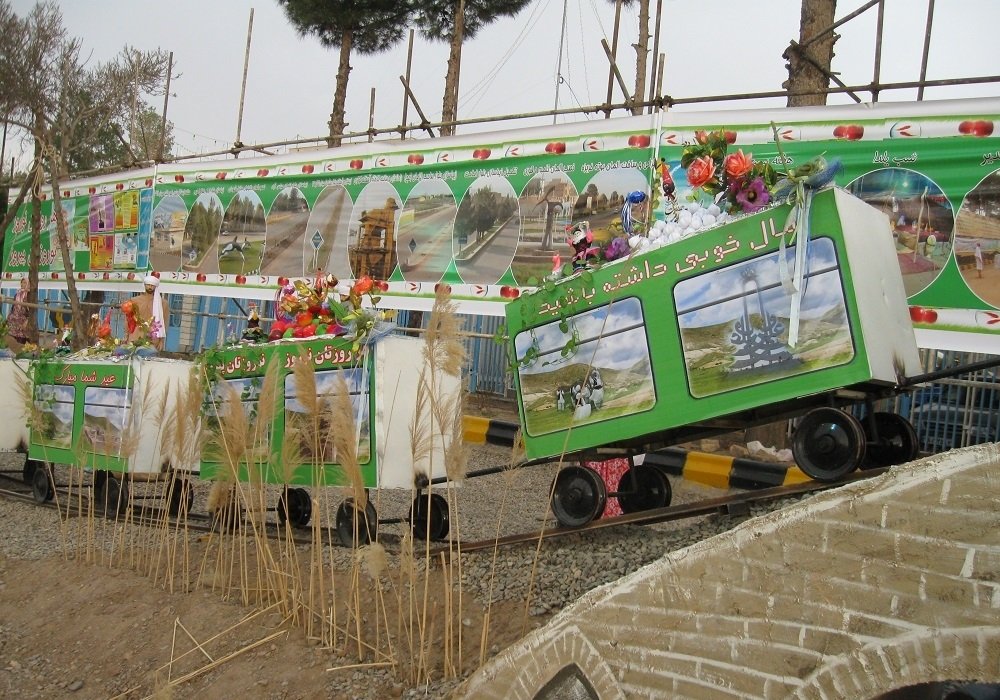
Nowruz 1392 2013 – Sarakhs, Sarakhs, Iran
Art, Music & Nightlife
Nightlife in Sarakhs is a quiet affair—there are no clubs or bars—but the creative scene hums during daylight hours. The music here is rooted in Turkmen traditions: the dutar, a long-necked two-stringed lute, and the gheychak, a spiked fiddle, play in pentatonic scales that sound hauntingly familiar yet foreign. Every spring, during the Turan Festival (usually the last week of March), local musicians gather at the caravanserai for three days of improvisation. You’ll hear songs that tell stories of camel caravans and lost oases, often accompanied by the deep, rhythmic clapping of the audience. The festival is free, and visitors are welcomed like old friends. Locals recommend arriving early to get a spot on the carpets laid out in the courtyard.
Visual arts have a subtler presence. The only dedicated gallery is Negārkhāneh-ye Sūzani, a tiny space on Imam Reza Street run by a retired teacher named Farideh. She displays embroidered suzani textiles from local Turkmen artists—bright red and black patterns stitched on felt. You can buy a small piece for 500,000 tomans ($5). For a taste of contemporary creativity, visit the Jāme‘eh-ye Sarakhs cultural center in the park, which hosts poetry readings on Thursday evenings. Expect Persian and Turkmen verse recited over tea and dried mulberries. It’s not a scene that makes headlines, but it’s exactly the kind of authentic exchange that seasoned travelers cherish.
Practical Guide
- Getting There: Fly into Mashhad International Airport (MHD) from Tehran, Istanbul, or Dubai. Then take a shared taxi (savāri) from Mashhad’s Terminal 3 to Sarakhs—departures every hour between 6:00 AM and 8:00 PM, cost 300,000 tomans per person ($3). The 180-kilometer drive takes about 2.5 hours. Book flights at Skyscanner.
- Getting Around: Sarakhs is walkable, but distances between the three neighborhoods add up. Local taxis (shared) cost 50,000 tomans per trip within town. Rent a bicycle from the shop next to the minaret for 200,000 tomans per day.
- Where to Stay: The best option is Khān-e Sarakhs, a guesthouse in the new town with clean rooms and a courtyard (500,000 tomans/night). For a more atmospheric stay, try the restored caravanserai near the old bazaar—basic but unforgettable. Check Booking.com for availability (listings under “Sarakhs Guesthouse”).
- Best Time: Spring (mid-March to mid-May) and autumn (mid-September to mid-November). Summers are scorching (40°C+), winters are cold and dusty. The Turan Festival in late March is a highlight.
- Budget: Expect to spend around $20–$30 per day including meals, transport, and a single room. Sarakhs is very cheap—your wallet will thank you.

Iconic Azadi Tower in Tehran, Sarakhs, Iran
What Surprises First-Time Visitors
The first surprise is the silence. After the noise of Mashhad or Tehran, Sarakhs feels like a held breath. At night, the only sounds are the wind in the tamarisk trees and the occasional truck horn from the border. You’ll find yourself listening to the quiet as if it were a new language. The second surprise is the intense warmth of the people. Strangers will stop you on the street to offer a sweet, a cup of tea, or directions that turn into a guided tour. Travelers often feel like celebrities—in a small town that sees perhaps a dozen foreign visitors per year, your presence is a genuine novelty. Learn two phrases: “Salam” (hello) and “Merci” (thank you, used in Iranian Persian), and you’ll unlock a cascade of kindness.
The third surprise is the green. Sarakhs sits in a river valley fed by the Harirud River, and the irrigation creates a ribbon of orchards and wheat fields that contrasts sharply with the barren desert around it. You’ll see poplar windbreaks, pomegranate groves, and even a small lake just outside town. Many tourists who speed through on the way to Turkmenistan miss this entirely—they see only dust and checkpoints. But if you take the time to walk the dirt lanes near the river at dawn, when the mist rises off the water and the birds start singing, you’ll understand why people have been living here for two thousand years.
Your Sarakhs, Iran Questions
Is it safe to travel to Sarakhs? Absolutely. Sarakhs is a quiet, law-abiding town with very low crime. The biggest risk is simply getting sunburned or dehydrated. The border zone is not dangerous—Iranian border guards are professional and friendly—but you will need a special permit to approach the actual crossing point. Your guesthouse owner can arrange this for free. Always carry a copy of your passport and Iranian visa. The only thing to avoid is stray dogs after dark; they roam the outskirts but are rarely aggressive.
Can you cross into Turkmenistan from Sarakhs? Yes, but only with a valid Turkmen visa, which is notoriously difficult to obtain. Citizens of most Western countries need a letter of invitation and must apply months in advance. The land crossing at Sarakhs (called the “Sarakhs–Serakhs border”) is open daily from 8:00 AM to 5:00 PM for those with proper documentation. For a day trip, you can theoretically walk across, but be prepared for a thorough customs search. Most travelers use this crossing as part of a longer Central Asian itinerary. Check current requirements before arriving—they change often.
What language should I speak? Persian (Farsi) is the official language, spoken by everyone. But about half the population is Turkmen, and you’ll hear Turkmen (a Turkic language) in the markets and among older generations. English is very rare—even in hotels, the staff may only know a few words. Download a Persian phrasebook app before you go. Writing down addresses in Persian script (available from your hotel) is essential for taxi drivers. A smile and a few words of Farsi will go a long way; locals will applaud any effort you make, even if you mangle the pronunciation.
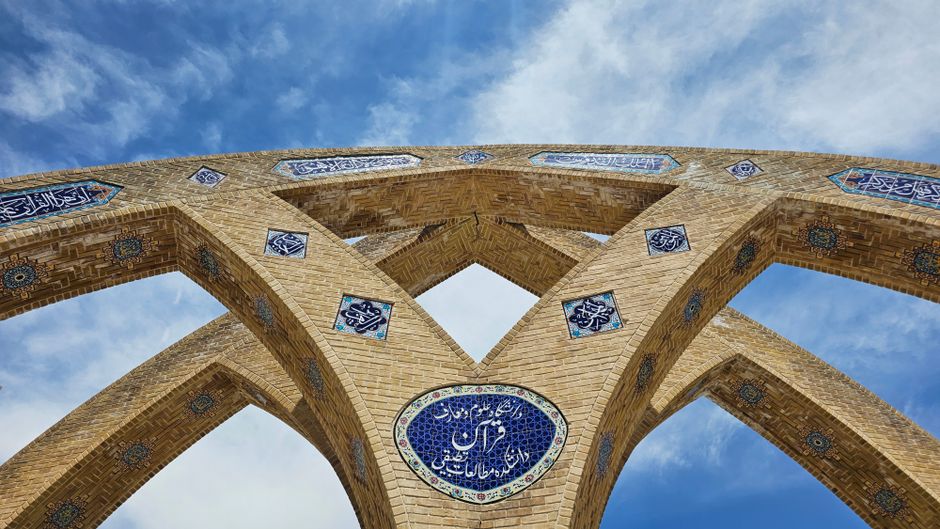
Beautiful Islamic architectural structure with ornate tile work against a c…, Sarakhs, Iran

