
Bolaven Plateau, Laos Weekend: Coffee (2026)
You step off the tuk-tuk at dawn on the Bolaven Plateau, and the first thing that hits you is the chill – a crisp mountain air that smells of damp earth and roasting coffee beans. From somewhere deep in the jungle, the thunderous roar of Tad Fane Falls rumbles like a distant drum, while a faint whiff of wood smoke drifts from a nearby Laven village. This is not the sticky, lowland Laos you know from the Mekong; this is a cool, green highlands world waiting to be explored in a single weekend.
Quick Facts Before You Go
- Best Months: November to February – the dry, cool season when waterfalls are full and skies are clear. March to May is hotter, June to October brings heavy rain but lush green landscapes.
- Currency: Lao Kip (LAK). $1 USD ≈ 20,000 LAK, though Thai baht and US dollars are widely accepted in tourist areas.
- Language: Lao. English is spoken in most guesthouses and tour operations, but only basic phrases in villages. A smile and a few words of Lao go a long way.
- Budget: $30–50 per day for budget travelers (local guesthouse, street food, scooter rental); $70–120 for mid-range comfort (nice bungalow, restaurant meals, guided tours).
- Getting There: Fly into Pakse International Airport (PKZ) from Bangkok (1 hour 30 minutes) or Luang Prabang (1 hour 15 minutes). Book flights at Skyscanner. From Pakse, it’s a 45-minute drive up to the plateau – your guesthouse can arrange a shared minivan ($5) or you can rent a scooter.
Day 1: The Waterfall Trail & Coffee Culture
Your weekend begins with a jolt of caffeine and a splash of mist. You wake early in your hillside bungalow near Tad Lo village, where the sound of water is your morning alarm. After a quick breakfast of sticky rice and a cup of locally grown arabica, you hop onto a rented scooter – the only way to truly absorb the plateau’s rhythm. The roads wind through rubber plantations and coffee groves, and every corner reveals a new cascade. Travelers often discover that the Bolaven Plateau’s waterfalls are not just scenic stops; they are the heart of the local ecosystem, each one powering a small community of coffee farmers and ethnic villagers.
- Morning (8–11am): Start at Tad Fane, the most dramatic twin waterfall plunging 120 meters into a deep gorge. Entrance fee is 15,000 LAK ($0.75). Arrive by 8:30 a.m. to beat the tour buses. You can walk to the viewpoint for free; the suspension bridge (extra 5,000 LAK) gives you vertiginous views of the falls and the nearby forest canopy. Insider tip: bring a light jacket – the mist is relentless.
- Lunch: Head to Sinouk Coffee Resort & Restaurant (about 10 minutes from Tad Fane). Order the Larp Gai (minced chicken salad with herbs, 50,000 LAK) and a strong iced coffee made from the plantation’s own beans. The terrace overlooks the coffee fields – a perfect midday pause.
- Afternoon (1–5pm): Drive 15 minutes south to Tad Yuang (entrance 12,000 LAK). This wide, curtain-like fall is less crowded than Tad Fane, and you can swim in the plunge pool below. Locals recommend arriving after 2 p.m. when the sun filters through the canopy, casting rainbows in the spray. Next, continue to Tad Champee (free entry) – a smaller, more secluded cascade where you can park your scooter and walk right to the base. If you have energy, hike the short trail behind the falls; travelers often spot wild orchids and monitor lizards.
- Evening: Dinner at Bolaven Plateau Lodge Restaurant in Ban Houay Loun village. The menu focuses on local ingredients: grilled river fish with lemongrass (55,000 LAK), and a wild mushroom soup infused with galangal. The air cools to a perfect 20°C, and you sit on the open deck listening to the gentle hum of the forest. After dinner, a short walk to the nearby Tad Lavee waterfall for stargazing – light pollution is virtually zero.

Parc du châlet des plantations de café sur le Plateau des Bolovens Laos., Bolaven Plateau, Laos
Day 2: Coffee Plantations & Tribal Villages
Your second day is slower, more cultural. You’ll trade the roar of waterfalls for the quiet hum of village life and the earthy aroma of freshly roasted coffee. The Bolaven Plateau is famous for its arabica beans, grown by Laven, Alak, and Katu communities. Seasoned travelers prefer to spend the morning visiting a small-scale plantation rather than the tourist-oriented cooperatives. You feel the altitude in your lungs – 1,300 meters up – and the landscape shifts to cooler temperatures and richer greens.
- Morning (7:30–11am): Join a coffee tour at Dao Coffee in Ban Nong Louang village. The 2-hour tour (50,000 LAK per person) walks you through the entire process – from picking ripe cherries to roasting over a wood fire. Your guide, a local Laven farmer, explains how the plateau’s volcanic soil and misty mornings create a smooth, low-acid brew. The best part: you taste four different roasts straight from the roastery. Pair it with a breakfast of khao tom (sticky rice cooked in banana leaf) and fresh fruit from the village market (20,000 LAK).
- Midday (11:30am–1pm): Drive to Katu Village near Tad Lo – an authentic ethnic community not yet overrun by tourism. Park your scooter at the village entrance (free) and walk through the bamboo stilt houses. Locals invite you to watch weavers at work, and you can buy handwoven scarves (from 60,000 LAK). Insider tip: do not take photos without asking – a small donation of 5,000 LAK or purchase from the village store is appreciated.
- Afternoon (1:30–5pm): Head back toward the plateau’s edge and explore the small town of Paksong, the unofficial capital of the Bolaven. Visit the morning market (though by afternoon it’s winding down, you’ll still find dried mushrooms, wild honey, and coffee beans sold in bulk). Stroll along the main street lined with fruit stalls – try a fresh durian if you dare, or stick to the safe bet of rambutan. Most tourists overlook Paksong, but savvy travelers know its bakeries sell excellent khao nom (Lao steamed cakes) for 5,000 LAK each.
- Final Evening: Your last dinner deserves something special. Drive down to Pakse town and dine at Dalouan Restaurant on the banks of the Sedone River. Order the Mok Pa – fish steamed in banana leaves with dill and lemongrass (70,000 LAK). As dusk settles, the lights of the Wat Phou Temple (a UNESCO site visible across the river) flicker on. It’s a serene farewell to your highland weekend.

Explore the ancient ruins of Wat Phou, a UNESCO World Heritage site in Laos., Bolaven Plateau, Laos
The Food You Can’t Miss
The Bolaven Plateau is not just about coffee – it’s a culinary crossroads of ethnic Lao, Vietnamese, and tribal traditions. You’ll discover that every meal is an opportunity to taste the plateau’s altitude. Start your mornings with a kopi (Lao coffee) at a roadside stall – a small glass of strong brew topped with sweetened condensed milk will cost you just 8,000 LAK. The vendors roast beans in woks over charcoal, and the aroma is intoxicating. For a true street-food adventure, head to the Paksong Night Market (open from 5 p.m.). Look for the cart selling sai oua – spicy Lao sausages stuffed with lemongrass and chili (10,000 LAK for two skewers). Locals recommend dipping them in jeow bong, a sweet-spicy chili paste made from river algae.
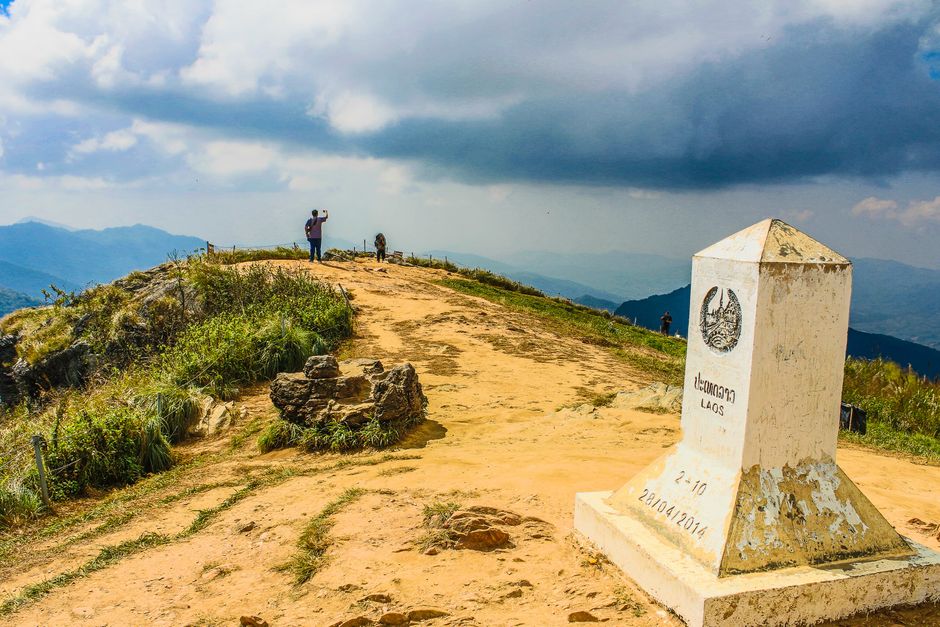
Idyllic landscape at the Laos border with tourists and a rugged mountain vi…, Bolaven Plateau, Laos
At lunch, you can’t leave the plateau without trying tam mak hoong – the Lao papaya salad. Unlike the Thai version, it uses fermented fish sauce (padek) that gives it an earthy punch. Find it at Mom’s Kitchen in Ban Nakam: a tiny bamboo shack where the owner, Auntie Boun, serves a salad so fiery you’ll sweat through your shirt (20,000 LAK). For a more refined dinner, Sinouk Coffee Resort offers a Lao set menu including buffalo-cured beef and a coffee-rubbed pork chop (120,000 LAK). But the true hidden gem is the khao soi – a Lao curry noodle soup sold from a cart near the Tad Lo waterfall entrance (15,000 LAK). It’s a bowl of egg noodles in a coconut-based broth, topped with fried noodles and fresh vegetables. Travelers often eat two bowls.
Where to Stay for the Weekend
Your base dictates your experience. For convenience and a central location, stay in Pakse (the gateway town at the foot of the plateau). The Champasak Grand Hotel offers comfortable air-conditioned rooms from $35/night and is a short walk to markets and restaurants. Book via Booking.com. For a more immersive stay, sleep on the plateau itself. Bolaven Plateau Lodge (Ban Houay Loun) has bungalows overlooking the Tad Lavee waterfall – basic but atmospheric, from $25/night. Reserve through Airbnb. A third option: Sinouk Coffee Resort – mid-range ($60–80/night) with a coffee plantation right on the grounds, an infinity pool, and on-site spa. This is your splurge choice, perfect for couples or solo travelers who want a bit of pampering after a day of hiking. All three options provide scooter rental or can arrange transfers.
Before You Go: Practical Tips
- Getting Around: The best way to explore the Bolaven Plateau is by scooter. Rent a semi-automatic bike in Pakse for 100,000–150,000 LAK per day ($5–8). Roads are paved on the main loop (Route 23) but can be potholed in the rainy season. Bring your own helmet (quality is variable). Alternatively, hire a private driver for the day – about 500,000 LAK ($25) including fuel.
- What to Pack: A light rain jacket (even in dry season, waterfalls drench you); sturdy sandals or hiking shoes for slippery paths; a fleece or sweater for cool evenings (temperature drops to 15°C at night); and a reusable water bottle – you can refill at guesthouses for 2,000 LAK.
- Common Tourist Mistakes: Many visitors underestimate the altitude – it’s only 1,300 meters, but the winding roads can cause motion sickness. Also, don’t assume all waterfalls are safe to swim in; tadpoles and hidden currents exist. Respect local customs: remove shoes before entering homes or temples, and ask permission before photographing villagers.
- Money-Saving Tip: Bring cash in Lao Kip – ATMs exist in Pakse and Paksong but often charge high fees (40,000 LAK per withdrawal). You can save $10–15 per day by eating at street stalls and buying coffee directly from farms. Skip the tourist coffee blends from souvenir shops and buy raw beans from the Laven farmers – 30,000 LAK for a kilo, versus 80,000 in Pakse.

