
Haa Valley’s Lhakhang Karpo, Bhutan Weekend: White Temple Blessings, Hidden Trails & the Valley That Time Forgot (2026)
The first thing you notice is the silence—a deep, almost sacred quiet broken only by the flutter of prayer flags in the wind and the distant chime of a copper bell from Lhakhang Karpo’s courtyard. You step onto the worn stone path as the morning mist lifts, revealing the valley floor carpeted in wheat fields so green they feel almost impossible. The air smells of juniper incense and damp earth, and for a moment, you forget that the 21st century exists at all. This is Haa Valley, Bhutan’s best-kept secret, and you’ve just arrived for the weekend.
Quick Facts Before You Go
- Best Months: March to May (spring rhododendrons bloom) and September to November (crisp skies, clear mountain views, the annual Haa Summer Festival in July is also spectacular)
- Currency: Bhutanese Ngultrum (BTN) – pegged 1:1 to the Indian Rupee. Indian rupees are widely accepted. Carry cash; cards are rarely used.
- Language: Dzongkha is the national language, but English is widely spoken in hotels, shops, and by guides. You’ll have no problem communicating.
- Budget: Bhutan’s Sustainable Development Fee (SDF) is currently 100 USD per person per night (plus a mandatory tour operator fee). Actual daily costs for food, extras, and small souvenirs run about 1,500–3,000 BTN (roughly 18–36 USD).
- Getting There: Fly into Paro International Airport (PBH) from Bangkok, Delhi, Kathmandu, or Singapore. The flight from Bangkok is about 3 hours. From Paro, it’s a breathtaking 2-hour drive west through mountain passes to Haa Valley. Book flights at Skyscanner.
Day 1: Arrival, the White Temple & the Blessing of Silence
You land at Paro airport—one of the world’s most thrilling descents, with the pilot threading the plane between pine-covered ridges—and by 11am, your guide is waiting. The drive to Haa Valley takes you over the 3,800-metre Chele La Pass, where prayer flags snap like living things against a sky so blue it hurts. You stop for a moment, and travelers often discover that this pass offers the first glimpse of Haa Valley: a perfect, hidden bowl of terraced fields and clustered farmhouses. By 1pm, you’re descending into the valley itself, and the temperature rises by a full 5 degrees as you drop into the sheltered basin.
- Morning (10am–12:30pm): Arrival at Paro International Airport. Your pre-arranged tour operator (mandatory for all visitors) will meet you. Transfer to Haa Valley via Chele La Pass. The drive costs roughly 4,500 BTN (54 USD) for a private vehicle with a guide—this is typically included in your tour package. Your guide will point out the prayer flag–covered stupa at the pass; locals recommend offering a small prayer here for safe travels.
- Lunch (1pm): Stop at Wangchhu Lodge, a family-run farmhouse on the outskirts of Haa town. You must order the ema datshi (chili and cheese stew, 350 BTN/4 USD)—it’s the national dish, and here they make it with local cow cheese that has a grassy, tangy depth you won’t find in Paro. The butter tea (suja) is included and will warm you from the inside out after the pass.
- Afternoon (2–5pm): Visit Lhakhang Karpo (White Temple). The temple dates to the 8th century, built by Guru Rinpoche after he subdued a demoness—legend says he constructed 108 temples across the Himalayas in a single night. Lhakhang Karpo is one of the two original temples (the other, Lhakhang Nakpo, the Black Temple, sits just 15 minutes’ walk away). Entry is free, though a small donation of 100 BTN (1.20 USD) is appreciated. You will remove your shoes and walk silently through the inner sanctum, where 1,000-year-old murals of the Buddha and protective deities cover the walls in faded ochre and indigo. Savvy visitors know to spend time in the courtyard at 4pm, when the monks begin evening prayers (puja)—the drone of their chanting, punctuated by the clash of cymbals, is a sensory experience you’ll carry home. Afterward, walk the kora (circumambulation path) around the temple; it takes 20 minutes and offers views of the entire valley.
- Evening (7pm onwards): Dinner at Damchen Lodging & Restaurant in Haa town centre. Order the phaksha paa (pork belly cooked with dried red chilies and radish, 450 BTN/5.50 USD) and a plate of red rice. The atmosphere is simple—wood-panelled walls, a wood-burning stove, and local families eating quietly at nearby tables. After dinner, step outside: the valley at night is so dark that the Milky Way spills across the sky like a river of light. Most tourists overlook this, but locals recommend walking 200 metres past the last streetlight for the best view.

Exterior of Taktsang Lakhang monastery located on stony mountain near green…, Haa Valley’s Lhakhang Karpo, Bhutan
Day 2: The Black Temple, the Haa Summer Trail & a Farewell Feast
You wake to the sound of roosters and the smell of woodsmoke. Your second day in Haa Valley unfolds at a slower pace—because that’s the point. Today is about walking, tasting, and letting the valley’s quiet rhythm settle into your bones. The morning light hits the eastern slopes first, and by 8am, the rice paddies glitter like a thousand tiny mirrors.
- Morning (7:30–11am): Breakfast at your hotel or at Satsam Chorten Resort‘s small dining room—try the zow shungo (a hearty porridge of roasted rice and dried cheese, 250 BTN/3 USD), the local breakfast staple that fuels Himalayan treks. After breakfast, walk 15 minutes from Lhakhang Karpo to Lhakhang Nakpo (Black Temple). While the White Temple is serene, the Black Temple feels older, darker, more mysterious. Its name comes from the black stone originally used in its construction, and the interior holds a massive statue of Guru Rinpoche in his wrathful form. Visitors often feel a palpable stillness here; you will understand why the valley’s elders say the temple is the heart of Haa’s protective energy. Entry is free; a donation of 100 BTN is customary.
- Midday (11am–1pm): The Haa Summer Trail is a 3-kilometre loop that starts behind Lhakhang Karpo and winds through fields, past traditional Bhutanese farmhouses with their painted wooden eaves, and up to a small ridge with a meditation hut. Your best bet is to go early—the trail is peaceful and almost empty before noon. Allow 1.5 hours at a leisurely pace. Insider tip: the trail is marked with white stones, but you’ll likely have it to yourself. The only sounds are the wind in the pines and the distant clanking of cowbells. At the ridge, you’ll find a small stone cairn where locals tie prayer flags; savvy visitors leave a small offering—a coin, a piece of fruit, or a written wish.
- Afternoon (1:30–4pm): Explore the main street of Haa town. It’s tiny—just one road lined with a few shops selling traditional Bhutanese textiles, handwoven baskets, and dried yak cheese. Stop at Druk Yul Handicrafts (open 9am–5pm, closed Sunday) for authentic handwoven kira (women’s traditional dress, from 2,500 BTN/30 USD) or a gho (men’s robe, from 3,500 BTN/42 USD). The owner, Dechen, is a former weaver who will patiently explain the significance of each pattern—the tsendhu pattern represents longevity, and the phurpa design is said to ward off evil spirits. For a snack, buy a bag of khabzey (deep-fried sweet pastries shaped like ears, 100 BTN per 200g) from the bakery across the street.
- Final Evening (6–9pm): The perfect farewell dinner is at Taktsang Homestay, a family-run farmhouse 10 minutes’ drive from Haa town. You must order the hoentoe—a buckwheat dumpling stuffed with turnip greens, cheese, and ginger (350 BTN for 6 pieces). It’s a Haa Valley specialty you won’t find anywhere else in Bhutan. The family will likely invite you to sit by the fire in their kitchen while they cook; accept the invitation. As you eat, the grandmother might share stories of the valley’s history—how the temples were almost destroyed in the 1960s and how the community rebuilt them stone by stone. End with a glass of ara (traditional rice wine, 150 BTN/1.80 USD per glass), which the family distils in their backyard. You will leave with the warm glow of hospitality that Bhutan is famous for.

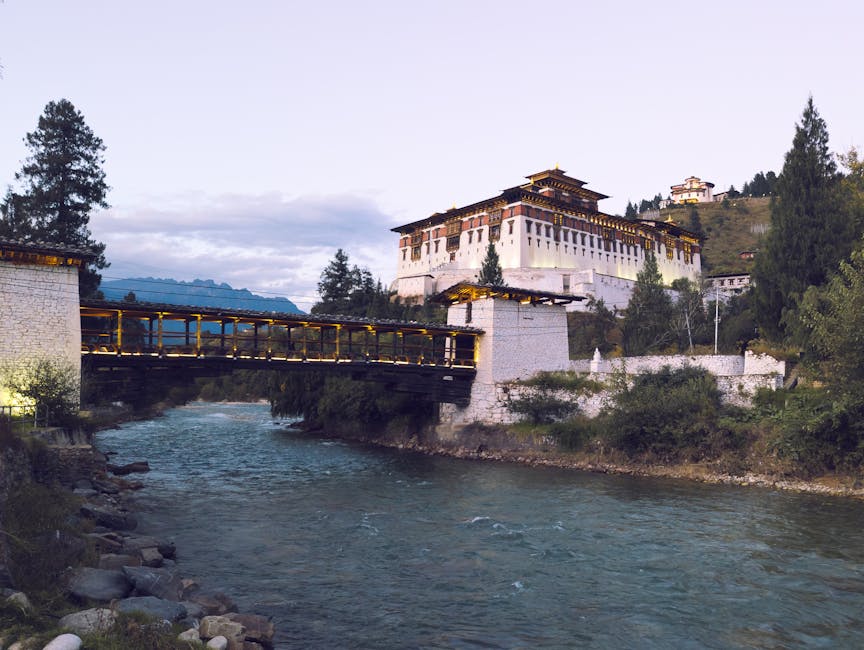
Scenic view of Paro Valley with Rinpung Dzong, Haa Valley’s Lhakhang Karpo, Bhutan
The Food You Can’t Miss
Haa Valley’s food is a world away from the tourist-oriented menus of Paro and Thimphu. Here, you eat what the farmers eat, and that means hearty, simple, deeply satisfying dishes built on red rice, chili, cheese, and the occasional pork. The star is ema datshi, but you’ll find it made differently here—the cheese is softer, less salty, and the chilies are often the smaller, fiercer naga jolokia variety from the lower valleys. You’ll find the best version at Wangchhu Lodge for lunch (350 BTN/4 USD), but locals recommend the version at Damchen Lodging for dinner—they add a handful of fresh coriander that lifts the whole dish.
For street food, you can’t skip the momos sold from a small cart outside Lhakhang Karpo on weekends (50 BTN/0.60 USD for 6 pieces). The filling is minced yak meat mixed with onion and chili, and the vendor—a woman named Chimi—has been making them for 22 years. She starts steaming at 9am and is usually sold out by 1pm, so go early. The secret is in the dipping sauce: a thin, fiery red chili paste with a hint of Sichuan pepper that makes your lips tingle.
One dish you absolutely must seek out is jasha maru, a chicken stew with ginger and garlic that’s traditionally eaten on special occasions. Taktsang Homestay makes it for dinner by advance order (500 BTN/6 USD per person, order at least 3 hours ahead). It’s served with a basket of puta (buckwheat noodles) that you dip into the broth. The combination is so good that travelers often discover themselves ordering a second helping before finishing the first.
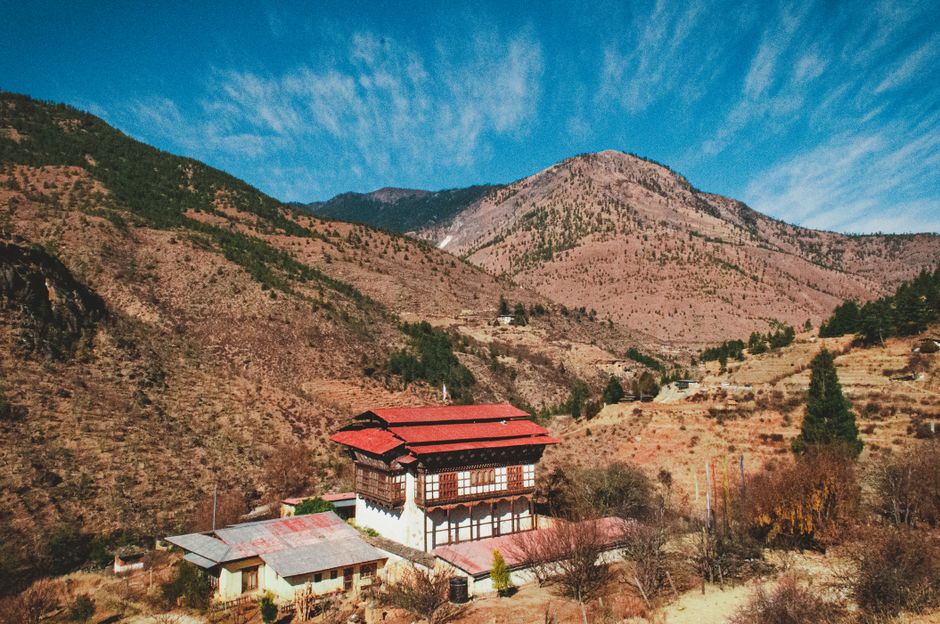
Idyllic traditional house nestled in a scenic mountain valley during summer…, Haa Valley’s Lhakhang Karpo, Bhutan
Where to Stay for the Weekend
Haa Valley has limited accommodation compared to Paro or Thimphu, but that’s part of its charm: the options are intimate, family-run, and deeply authentic. For a weekend, you have three distinct choices:
Taktsang Homestay is your best bet for immersion into local life. The rooms are simple—wooden floors, warm blankets, shared bathroom (hot water available) in the main house, and you eat all meals with the family. The price is 1,500 BTN (18 USD) per person per night, including breakfast and dinner. It’s not luxury, but the experience of sitting around the fire with the family is worth more than any five-star hotel. The hosts are the Namgay family—grandmother Kinley is the cook, and she will teach you how to shape hoentoe if you ask nicely. Book via Airbnb (search “Haa Valley Homestay”).
Satsam Chorten Resort is the valley’s only proper hotel, set on a hill with panoramic views of the valley and the temple. Rooms are comfortable if not flashy—heated floors, en-suite bathrooms, a small balcony—and the restaurant serves good Bhutanese food. A double room costs 4,500 BTN (54 USD) per night including breakfast. The real draw is the location: you’re a 10-minute walk from Lhakhang Karpo, and the morning view of the mist rolling over the rice terraces is extraordinary. Book via Booking.com.
Wangchhu Lodge offers a middle ground: private rooms in a farmhouse setting with en-suite bathrooms and a beautiful garden where you can sit and read. The owner, Tshewang, also runs a small organic farm, and your breakfast will include eggs from his chickens and honey from his hives. Rooms are 2,800 BTN (34 USD) per night including breakfast. The downside is that it’s a 15-minute walk from town, but in Haa Valley, that walk through the fields is a pleasure, not a chore.
Before You Go: Practical Tips
- Getting Around: Your tour operator will provide a driver and guide for the entire stay—this is mandatory for all visitors, so don’t worry about public transport. For solo exploration within the valley, walking is your best option; distances are short and the paths are safe. A bicycle is available for rent at Satsam Chorten Resort for 500 BTN (6 USD) per day, but the roads are unpaved and bumpy, so only experienced riders should try.
- What to Pack: (1) A windproof jacket—the valley can be cold even in summer, especially at dawn and dusk, and the wind funnels through the passes. (2) Comfortable walking shoes with good grip—the trails can be muddy and the stone paths uneven. (3) A headlamp or small torch—power outages happen regularly, and the valley is pitch-black at night. (4) A reusable water bottle with a built-in filter—tap water is not safe, but filtered water is available at most hotels; locals recommend refilling at your accommodation rather than buying plastic bottles, as recycling is limited.
- Common Tourist Mistakes: (1) Arriving without a pre-arranged tour operator. All tourists to Bhutan must book through a licensed operator—you cannot simply show up and find a guide on arrival. Book at least 4 weeks in advance. (2) Underestimating the altitude. Haa Valley sits at 2,700 metres (nearly 9,000 feet). Your first day, avoid alcohol and heavy meals; drink plenty of water and move slowly. The headache you might feel on arrival is altitude, not a cold. (3) Ignoring temple etiquette. Always walk clockwise around temples and stupas

