
Raleighvallen Nature Reserve, Suriname Weekend: Waterfalls (2026)
You step off the boat onto the sandy bank, and the low, guttural roar of howler monkeys shakes the canopy above. The air thick with wet earth and sweet heliconia, you inhale the ancient perfume of the Amazon. By the time you reach your lodge, the Coppename River is shimmering gold under a late afternoon sun. For the next 48 hours, you’ll trade the hum of city life for the pulse of the jungle—climbing a granite dome older than the Andes, spotting macaws at dawn, and falling asleep to the symphony of the rainforest.
Quick Facts Before You Go
- Best Months: February to August (dry season) – trails are firmer, wildlife gathers near water, and the Voltzberg climb is safer. Avoid November–January when heavy rains make river crossings tricky.
- Currency: Surinamese dollar (SRD). 1 USD ≈ 30 SRD. Bring small bills; ATMs are scarce beyond Paramaribo. Lodges accept euros and dollars, but exchange rates vary.
- Language: Dutch is official; English is widely spoken in tourism. Many guides speak English and Sranan Tongo. You’ll have no trouble communicating.
- Budget: $100–150 per day for a lodge, three meals, and guided excursions. If you book a package (like Kabalebo Nature Resort), expect $250–$350 per person per night including all activities.
- Getting There: Fly to Johan Adolf Pengel International Airport (PBM), Suriname, from major hubs like Amsterdam (AMS) or Miami (MIA) – about 8–9 hours. Then a 4-hour drive to the reserve, or a combination of vehicle and boat. Search flights at Skyscanner
Day 1: Arriving in the Ancient Forest – River, Falls & First Encounters
You wake early at your lodge – or rather, you’re woken by the tribal calls of howler monkeys at 5:30 a.m. The air is cool, heavy with moisture. After a breakfast of freshly fried Surinamese bara (spiced lentil fritters) and strong coffee, you meet your guide, a local Maroon elder who knows the trails like the back of his hand. Travelers often discover that the first few hours in Raleighvallen set the tone for the entire trip: unhurried, deeply connected, and full of surprises.
- Morning (8–11am): Guided boat trip to Raleighvallen (the Raleigh Falls). You chug up the Coppename River, scanning the banks for capybaras and giant river otters. The boat bumps softly over rapids. At the falls, you have 30 minutes to swim in the cool, churning pool beneath the cascade. Cost: included in most lodge packages; standalone tour about $40 per person.
- Lunch: Back at Kabalebo Nature Resort, you order moksi meti – a Creole stew of chicken, okra, and coconut milk. Served with fluffy white rice and pickled peppers. Price: around $12.
- Afternoon (1–5pm): Time for two activities. First, a short nature walk (1.5 hours) on the Sokosanti Trail, where your guide points out medicinal plants and the tracks of tapirs. Then, a 45-minute paddle in a dugout canoe through a swamp forest. Look for hoatzin birds and the elusive jaguar’s prints in the mud. Many visitors say this slow exploration feels like stepping into a documentary.
- Evening: Dinner at the lodge’s riverside deck – a three-course meal featuring grilled pirarucu (Amazonian fish) with cashew pesto. After dark, join the optional night walk (20 SRD per person). With a red-light headlamp, you spot a sleeping blue tanager and a nest of leafcutter ants crossing the path like a train of emeralds.

Aerial view of lush greenery and water bodies in a forest reserve, Raleighvallen Nature Reserve, Suriname
Day 2: Conquering the Granite Giant – Voltzberg & Farewell
You’ve trained your ears to the dawn chorus, but nothing prepares you for the view from the top of Voltzberg. This massive granite dome rises 240 meters above the forest canopy, worn smooth by millennia of rain. Today, you’ll climb it – a steep, often slippery trek that rewards you with a 360-degree panorama of the Amazon. Seasoned travelers prefer starting at 6 a.m. sharp to beat the heat and the afternoon storms.
- Morning (5:30am–12pm): Full-day guided hike to Voltzberg (7 miles round trip, moderate to strenuous). You leave with a packed lunch of roti and fruit. The trail climbs through lush rainforest, past buttress roots and bromeliads. The final ascent is a bare granite slope – you cling to ropes but the view is worth every step. Cost: $55 per person including guide and lunch. The experience is unforgettable: you sit on the sun-warmed dome, wind in your face, spotting harpy eagles circling below.
- Midday: Descend to the base camp by 1 p.m. Your guide prepares a refreshing splash in a natural pool at the foot of the falls. Insider tip: most tourists arrive at Voltzberg between 9–10 a.m., so you’ll have the summit to yourselves if you start early.
- Afternoon (2–4pm): Return to the lodge for a quick shower, then visit the nearby Maroon village of Kwamalasamutu (optional, extra $20). Travelers learn about the local way of life – intricate cassava grating, dugout canoe carving – and can buy handwoven baskets directly from the women. It’s an intimate cultural experience rarely mentioned in brochures.
- Final Evening: Back at the lodge, your farewell dinner is a Surinamese pom – a baked casserole of tayer root and chicken, fragrant with citrus and salted pork. Under a bone-white moon, you sit on the dock, watching a family of giant otters surfacing with silver fish. You realize this weekend has slowed time itself.
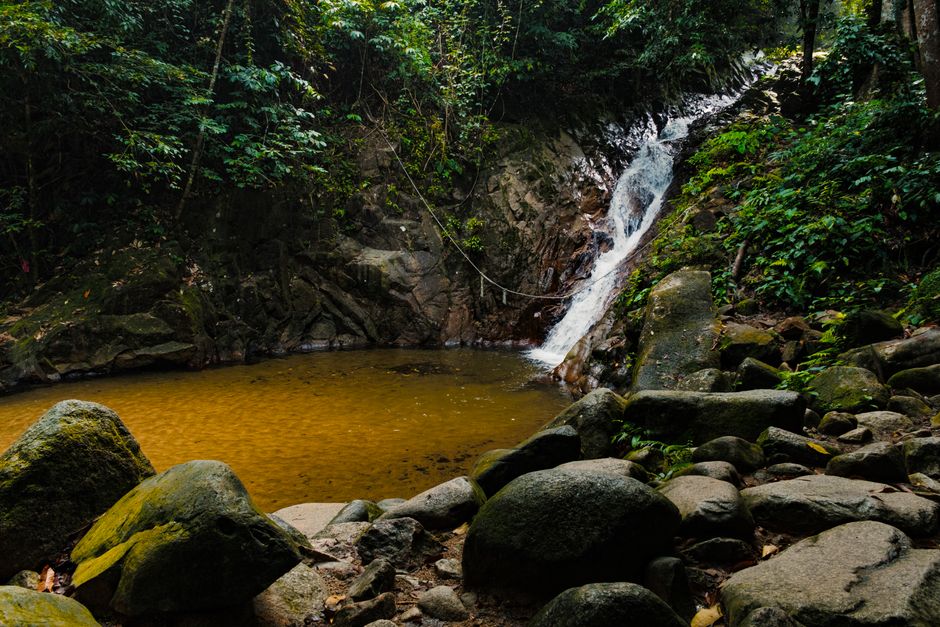
A serene waterfall cascading into a rocky pool in Labis Forest Reserve, Raleighvallen Nature Reserve, Suriname
The Food You Can’t Miss
Surinamese cuisine is a delicious collision of Creole, Javanese, Indian, and Chinese influences – and in the jungle, it becomes even more elemental. At Kabalebo Nature Resort, you’ll find a daily changing menu built around local ingredients. The breakfast spread always includes roti bara – soft flatbread with chickpea curry – and fresh passion-fruit juice. Lunch might feature teloh, a tangy catfish soup with okra, or saoto, a Javanese chicken soup with bean sprouts and fried onions. For a true taste of the Amazon, try casareep-marinated wild boar when available – the cassava extract gives it an earthy, faintly smoky flavor.
Street food is rare inside the reserve, but if you stop in the village of Apura on the way in, look for a woman selling bami pangsit – fried noodles with crisp wontons – for about 3 SRD. The best deal? A bowl of pom from a homestay kitchen near Carolina, often less than $5. Savvy visitors know to bring their own spices; local salt is coarse and the chilis are overwhelmingly hot.
One restaurant recommendation: the Kabalebo River Restaurant isn’t just a place to eat – it’s a social hub. The fish is caught daily, the roti is hand-pulled, and the manager, a former Paramaribo chef, tells stories about the jaguars that occasionally wander past the deck after dark. A full dinner here runs about $20–$25 per person, including a dessert of crème caramel with soursop.

Stunning aerial photograph capturing a grand waterfall within the dense Kon…, Raleighvallen Nature Reserve, Suriname
Where to Stay for the Weekend
Your choice of accommodation shapes your entire weekend. For immersion, Kabalebo Nature Resort is the only full-service lodge inside the reserve – a collection of thatched chalets on stilts overlooking the Coppename River. Rooms start at $120 per night per person, including three meals and a guided walk. You’ll fall asleep to the sound of capuchin monkeys rustling in the eaves. Book through Booking.com or contact the resort directly for package deals.
For a more budget-friendly option, Raleighvallen Guesthouse (in the nearby village of Carolina) offers simple rooms with mosquito nets for $40 per night. It’s less polished but more authentic – you’ll share a common kitchen with other travelers and swap tips over instant coffee. Locals recommend it for early risers who want to reach the Voltzberg trail before the heat, since the trailhead is just a 15-minute walk away.
Before You Go: Practical Tips
- Getting Around: Inside the reserve, all transport is by motorized dugout canoe or on foot. Most lodges arrange transfers from Paramaribo for $40–$60 per person one way (4 hours by car + 30 minutes by boat). Public minibuses go as far as Apura for about $8, but become unreliable in rain. Your best bet is to book a package that includes transfers.
- What to Pack: 1) A sturdy pair of hiking boots with ankle support – the Voltzberg trail can be slick. 2) A high-quality headlamp (night walks are magical). 3) Long-sleeved, light-colored clothing for mosquito protection – they come out in swarms at dusk. 4) A dry bag for electronics; sudden downpours are common even in dry season.
- Common Tourist Mistakes: Travelers often underestimate the humidity (90% year-round) and fail to hydrate enough. You can buy bottled water at the lodge, but bring reusable bottles. Another mistake is skipping the early morning – the best wildlife sightings are between 5:30 a.m. and 8 a.m. Sleep in and you’ll miss the howler monkeys’ dawn chorus and the chance to see jaguar tracks fresh on a trail.
- Money-Saving Tip: Book a multi-day package (3 days/2 nights) through the lodge – it’s about $600 per person all-inclusive, versus piecing together boat transfers, guides, and meals separately, which can run to $450 for the same activities. Also, avoid buying souvenirs at the lodge; the Maroon village women sell the same baskets for half the price – a large basket costs about $12 versus $25 at the resort.

