
Beyond the Red Walls: Why Qaqortoq Captivates Every Traveler Who Visits (2026)
In 1775, a Norwegian merchant named Anders Olsen stood on a rocky promontory overlooking a fjord so deep and blue it seemed to have been carved by the gods themselves. He built a trading post, and named it Julianehåb in honor of his queen. Today, you know it as Qaqortoq, and the same icy grandeur that stopped Olsen in his tracks still greets every traveler who steps off the boat.
The Story Behind Qaqortoq, Greenland
Qaqortoq’s story begins long before Olsen’s arrival. Archaeological work around the settlement has uncovered evidence of Norse farming from the 10th century—sheep, cattle, and small stone structures that hint at a hardy people who lived here when Erik the Red was still a recent memory. But after the Norse vanished in the 15th century, the land returned to its quiet, wind-scoured rhythm for nearly three centuries.
When Olsen returned in 1775 on behalf of the Royal Greenland Trading Company, he chose this spot for its natural harbor. Qaqortoq quickly became the commercial hub of southern Greenland. You can still feel that mercantile pulse when you wander past the town’s red, yellow, and blue wooden houses—colonial-era warehouses that have been painted in bright hues so they stand out against the grey stone and endless snow. By the 1850s, Qaqortoq was the largest town in South Greenland, a position it held until the mid-20th century. Today, with roughly 3,000 residents, it remains the region’s cultural and administrative heart.
In 1926, a devastating fire burned much of the town. But from the ashes, locals rebuilt with the same resilient spirit you’ll still see today. Many of the houses you’ll admire date from the 1930s and 1940s, built in the classic Greenlandic style: wood frames raised on stone foundations to protect against permafrost, with steep roofs to shed heavy snow. Walk these streets today, and you are walking through a history of adaptation, trade, and survival.
Neighborhood by Neighborhood
Old Town: The Colonial Core
Your best bet is to start at the harbor and walk uphill on the main street, Johan A. Brønlunds Vej. This is the oldest part of Qaqortoq, and you’ll immediately notice the concentration of 18th- and 19th-century buildings. The green-roofed Sydgrønlands Hotel sits at the top like a quiet sentinel. Look for the Savvy visitors who stop at the old stone fountain—it’s one of the few public fountains in Greenland and dates from the 1930s. The narrow streets here are lined with brightly painted wooden houses, many with tiny gardens where locals grow hardy flowers like lupines and Arctic poppies. In summer, you’ll hear the clatter of children’s bicycles and the low hum of boats unloading fresh cod at the pier. Travelers often discover that the best place to sit and absorb the atmosphere is the bench at the top of the main square, where you can watch the daily rhythm of deliveries, greetings, and the late-night twilight that never quite darkens.
Qaqortoq West: The Modern Quarter
Head west from the harbor, and you’ll enter a different Qaqortoq. The houses here are newer—mostly 1970s and 1980s era—built with concrete and larger windows to maximize the long daylight hours. This is where you’ll find the Qaqortoq Church (built 1929), a striking white wooden structure with a red roof that dominates the skyline. Locals recommend visiting the church not just for its architecture but for the panoramic view from its hill: you can see the entire town, the fjord, and the distant ice cap. The neighborhood also holds Qaqortoq Museum, a small but surprisingly rich collection of Norse artifacts, whaling tools, and photographs that show how dramatically the town has changed. Savvy visitors plan at least an hour here—the former chieftain’s house, Garðar, has a room reconstructed with 13th-century furniture that feels hauntingly alive.
Upernaviup Kangerlua: The Fisherman’s Quarter
No neighborhood better captures the soul of Qaqortoq than the cluster of houses along the fjord’s edge. This is where many of the town’s fishing families still live, and you’ll smell it before you see it: clean salt air, drying cod, and the metallic tang of boat engines. The houses here are smaller and more weathered, painted in red and yellow, their roofs dotted with antennas and satellite dishes. Travelers often discover that the real show happens at 5 a.m., when the small fishing boats—many of them hand-me-downs from the 1950s—putter out into the dark water. By late morning, you can walk down to the small market stands, where locals sell fresh Arctic char, cod, and, if you’re lucky, a piece of whale blubber known as mattak. It’s a tough, chewy delicacy that tastes of the sea and the sun. Seasoned travelers prefer to stay in one of the guesthouses in this quarter, because you can open your window and hear the water lapping against the hulls.
The Local Table: What Locals Actually Eat

The Town Qaqortoq/Julianehåb. The estuary., Qaqortoq, Greenland
If you think Greenlandic cuisine is just seal and whale, you’re in for a surprise. The food culture in Qaqortoq is a vibrant blend of traditional subsistence and modern creativity. Locals still rely heavily on the sea: cod, Arctic char, halibut, and crab are daily staples, caught fresh from the fjord and dried, smoked, or salted for winter. But you’ll also find reindeer and sheep from the nearby farms, and in the summer, the hillsides are covered with crowberries, blueberries, and Arctic herbs that locals pick by the bucketful.
The dish you absolutely must seek out is suaasat, a thick meat soup made with seal or reindeer, barley, potatoes, and onions. It’s not fancy—it’s a working person’s meal, a bowl of warmth and history. The best place to try it is the small cafeteria at Hotel Qaqortoq, where the cooks prepare it daily from a family recipe that includes a pinch of dried Angelica, a local herb that tastes of anise and celery. Plan to spend around 150 DKK (about $22 USD) for a generous bowl. For a real treat, travelers often discover that Matriarch’s Kitchen, a home-based food venture run by a local woman named Ane, serves an authentic suaasat with homemade flatbread—ask at the tourist office for her address, as she doesn’t have a sign.
Art, Music & Nightlife
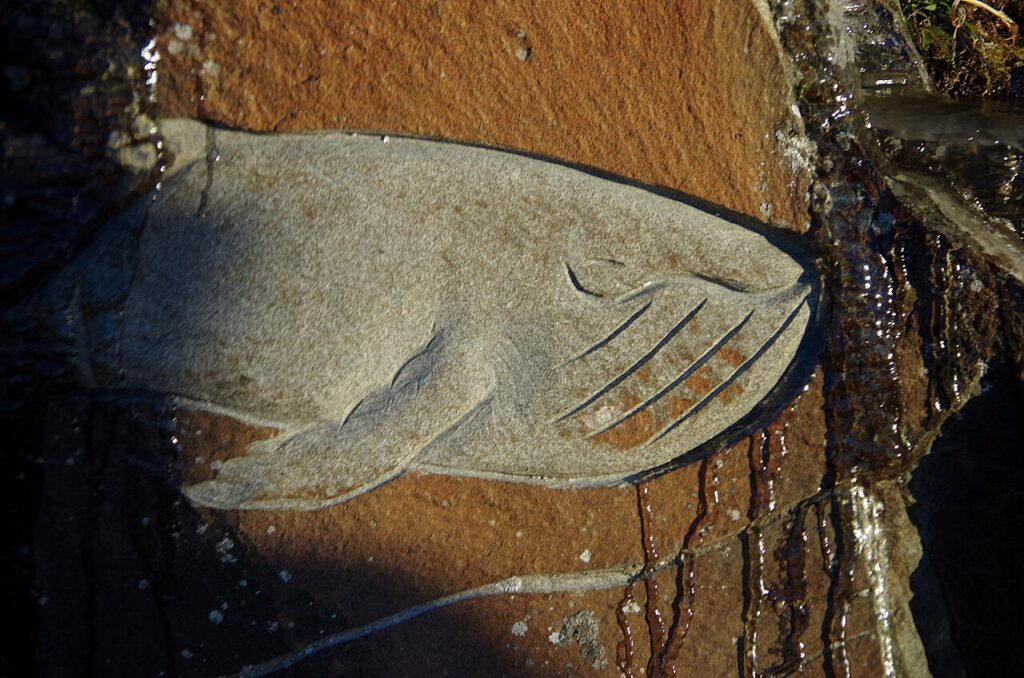
Qaqortoq has a quiet but thriving creative scene. The town is home to the annual Qaqortoq Art Festival, held every July, where you can see painters, sculptors, and musicians from across Greenland and Scandinavia. The highlight is usually the Ice Gallery, a temporary open-air exhibition of sculptures carved from blocks of Arctic ice that are displayed down by the harbor. It’s breathtaking, and it only lasts for the two weeks of the festival before the ice melts back into the fjord.
For nightlife, locals recommend the Qaqortoq Bar, a small, wood-paneled room behind the main hotel. It fills up around 10 p.m. with a mix of fishermen, teachers, and artists, all nursing a bottle of Greenlandic beer (the local brew is Grønlandspilsner, a crisp lager). Don’t expect a dance floor—this is a place for conversation and the occasional game of darts. Music comes from a portable speaker, and the vibe is warm and intimate. Most nights, someone will pull out a guitar and begin playing a traditional kataq song—a form of throat singing that mimics the wind and the ice. It’s hypnotic, and you’ll feel it in your bones.
Practical Guide

A black and white photo of boats in a harbor, Qaqortoq, Greenland
- Getting There: Fly into Narsarsuaq Airport (UAK) from Reykjavik or Copenhagen, then take a 45-minute helicopter transfer (around $300 USD one-way) or a 2-hour boat ride in summer. Book flights at Skyscanner
- Getting Around: Qaqortoq is small enough to walk everywhere. Taxis cost about 40 DKK ($6 USD) for a short ride within town. In summer, you can rent a kayak for 200 DKK/day ($30 USD) from the Qaqortoq Outdoor Center.
- Where to Stay: Stay in the Fisherman’s Quarter for atmosphere—Guesthouse Anorak offers cozy rooms from 600 DKK/night ($90 USD). For comfort, book Hotel Qaqortoq (from 1,200 DKK/night, $180 USD). Check Booking.com
- Best Time: June through August—daytime temperatures hover around 10-15°C (50-59°F), with 20 hours of daylight. September is best for Northern Lights, but temperatures drop to near freezing.
- Budget: Plan for 1,500-2,000 DKK/day ($225-$300 USD) including accommodation, meals, and one activity. Food is expensive because almost everything is imported.
What Surprises First-Time Visitors
The first thing that catches you off guard is the light. In June, the sun barely sets, and the sky holds a perpetual twilight that makes the colors of the houses glow. It’s disorienting at first—you might find yourself eating dinner at 10 p.m. because your body has lost all sense of time—but you’ll quickly adapt and come to love the endless, luminous days. Travelers often discover that this light makes photography difficult because the shadows are long and soft, but the results are stunning.
Another surprise: how quiet it is. Qaqortoq has no traffic noise, no sirens, no urban hum. What you hear instead is the wind, the cry of Arctic terns, and the distant thud of a boat engine. It’s a silence that feels alive, and you’ll find yourself listening more carefully than you ever do in a city. Locals say the only “loud” times are when the ice breaks up in spring—the cracking sounds like gunfire echoing across the fjord.
Finally, visitors are often struck by how open and trusting the community is. You’ll see doors left unlocked, children playing unattended, and people leaving gear on the dock without worry. The crime rate is near zero, and the social fabric is tight. If you lose your wallet, someone will find you to return it. It’s a reminder that in a place this remote and beautiful, everyone looks out for each other.
Your Qaqortoq, Greenland Questions

A picturesque view of Nuuk with colorful buildings against a mountainous ba…, Qaqortoq, Greenland
Can you see the Northern Lights in Qaqortoq? Yes, but only from September through March. The best months are October and February, when the nights are longest and the skies are often clear. Your best bet is to walk away from the town lights—head toward the church hill or the small headland east of the harbor—and wait. The aurora here is less technicolor than in northern Greenland, but it appears as a pale green curtain that ripples slowly across the southern sky. It’s subtle, magical, and worth every shiver.
Is English widely spoken? Absolutely. Almost everyone under 50 speaks excellent English, learned through school, television, and tourism. Your Greenlandic vocabulary can stay limited to a polite “Qujanaq” (thank you) and “Inniut” (please). Locals are patient and delighted that you’re taking the time to learn even a word of their language, but you’ll have no trouble getting by with English alone.
How long should you spend in Qaqortoq? Three days is ideal. You’ll spend day one exploring the town, day two on a boat trip to the nearby Uunartoq Hot Springs (a 30-minute boat ride, 300 DKK/person, with surreal thermal pools set against a glacier), and day three hiking to the Lake of the Gods (a 4-hour round trip through mossy tundra). Savvy travelers book their hot springs trip at least a week in advance—the boats fill up fast in July and August.

