
Where the Mekong Deepens: Discovering the Quiet Soul of Stung Treng, Cambodia (2026)
In 1904, when the French colonial cartographer Auguste Pavie first steamed up the Mekong into what is now Stung Treng, he described a settlement of 200 stilted Lao houses clustered around a crumbling pagoda, with elephants bathing in the brown river. That sleepy frontier outpost—once the last Khmer outpost before Laos—still beats with the same unhurried pulse. Today, travelers who make the long journey here find a place where the modern world feels like a distant rumor, and the Mekong itself still dictates the rhythm of daily life.
The Story Behind Stung Treng, Cambodia
Stung Treng’s layered history begins in the Angkorian era, when the vast Khmer Empire controlled the Mekong corridors as far north as present-day Laos. Inscriptions from the 10th century mention a garrison town called Saṃdāk—likely the forerunner of modern Stung Treng—strategically positioned to control riverine trade. After Angkor’s decline in the 15th century, the area gradually fell under Lao influence, and by the 18th century the region was a contested buffer zone between the Siamese kingdom, the Lao principality of Champasak, and the weakened Cambodian court in Oudong.
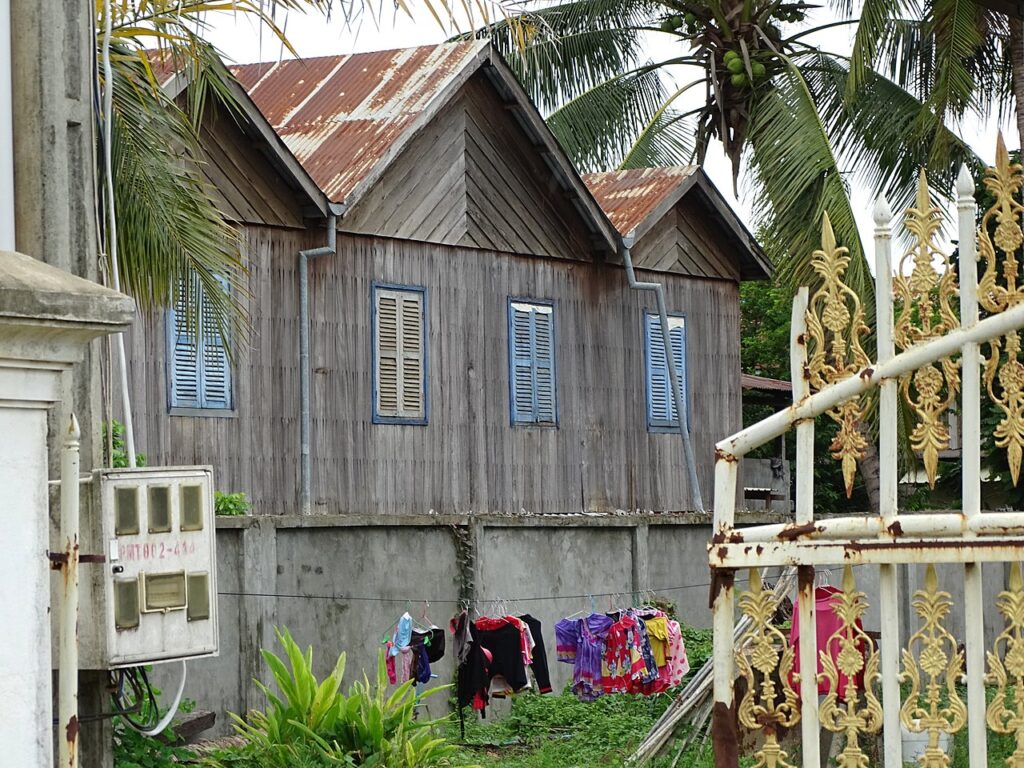
The French arrival in 1863 changed everything. In 1904, after a series of treaties with Siam, the Mekong’s east bank was officially ceded to French Indochina, and Stung Treng became a colonial outpost. You can still see traces of that era in the low-slung colonial villas with their faded ochre walls and louvered windows along the main street. During the French period, Stung Treng attracted Lao, Chinese, and Vietnamese merchants—a small polyglot community that traded in timber, rubber, and fish.
The darkest chapter came between 1975 and 1979. Under the Khmer Rouge, Stung Treng province was depopulated, with residents forced into labor camps in the remote northeastern forests. The town’s population was scattered; nearly half perished. Visitors today are struck by how few people talk about those years—not from denial, but from a quiet determination to move forward. After liberation, Stung Treng slowly rebuilt, and in the 1990s the first ecotourism initiatives began, focused on the dramatic Sopheakmit Waterfall and the rare Irrawaddy dolphins that still surface in the pools below Preah Rumkel.
Neighborhood by Neighborhood
The Old Market Quarter (Phsar Chas)
You’ll find Stung Treng’s heart in the tangle of streets south of the provincial hall, where the morning market spills out from a cavernous colonial-era shed onto the surrounding lanes. The air smells of sun-dried fish, lemongrass, and the faint petrol tang of the motorcycles that weave past piles of water spinach and chilies. Here, you can watch Lao-Tai women in indigo sarongs sell sticky-rice cakes wrapped in banana leaves, while a Chinese-Cambodian noodle vendor ladles out bowls of kuy teav from a steaming pot. The architecture is a jumble: corrugated-iron roofs, wooden shopfronts, and the occasional two-story brick house with grilled balconies—a leftover from the 1920s. Don’t miss Psar Chas Cafe, a hole-in-the-wall on Street 7 that serves excellent iced coffee for about 2,500 riel. By 9 a.m., the market is at its liveliest; by noon, it’s half-empty, so plan your visit early.
The Mekong Riverside Promenade
The riverside offers a complete change of pace. Starting near the old ferry pier at the southern end of town, a paved walkway runs north for about a kilometer, shaded by rain trees and offering sweeping views of the Mekong’s muddy swirl. Travelers often discover that this is where locals come to unwind in the late afternoon—couples sitting on concrete benches, kids flying kites over the water, and monks in saffron robes strolling with umbrellas. The big draw is the sunset: the river turns the color of burnt amber, and the distant sound of a boat engine adds to the reverie. At the north end of the promenade, you’ll find The River House Restaurant, where tables spill onto a wooden deck over the water. For 15,000 riel (about $3.75), you can get a plate of fried river fish with morning glory, watching long-tail boats putter by. Savvy visitors know that the best time to walk is between 5 p.m. and 6:30 p.m., just as the heat finally breaks. The promenade has a handful of small guesthouses and a tiny fishing pier.
The Village of O’Russey
Just a ten-minute tuk-tuk ride east of the town center—across the dusty road that becomes National Route 7—you’ll find O’Russey, a quiet residential village of stilted wooden houses surrounded by fruit orchards and cassava fields. This is where many of Stung Treng’s native Khmer residents live, away from the tourist guesthouses. The streets are unpaved and lined with flamboyant trees; you’ll see grandmothers weaving hammocks and children splashing in shallow irrigation canals. The village’s centerpiece is Wat O’Russey, a modern pagoda with a shimmering orange roof and a massive seated Buddha that locals come to pray to for good luck. If you visit on a weekend, you might catch a small trot dance performance—a traditional Khmer folk dance—organized by the village youth group. There are no restaurants or shops here; it’s a purely residential area, and travelers who wander through are greeted with genuine curiosity and smiles. Your best bet is to hire a tuk-tuk driver for a guided tour of the village (about $5 for a 1-hour loop) and ask them to stop at the small family-owned palm-sugar operation behind the temple—they sell bottles of thick, caramelized palm syrup for 7,000 riel.
The Local Table: What Natives Actually Eat

Buddhist Stupas outside Dwelling – Stung Treng – Cambodia, Stung Treng, Cambodia
In Stung Treng, food is seasonal, river-focused, and fiercely local. Locals start their day with a bowl of nom banh chok (rice noodles in a fish-based curry sauce) or khao piak sen (Lao-style chicken noodle soup) sold from steaming metal pots at roadside stalls near the market. Lunch is often a simple affair of grilled fish, sticky rice, and a dipping sauce of prahok (fermented fish paste) mixed with lime and chili. But the dish you must seek out—the one that captures Stung Treng’s culinary soul—is trái kæng (or trey chhae in Khmer), a giant Mekong river catfish braised in a clay pot with lemongrass, galangal, tamarind, and fresh dill. The fish is caught right here, its flesh dense and sweet, and the dish is served with a tangle of fresh herbs and a pile of sticky rice.
You’ll find the best version at Bopha Stung Treng Restaurant, a family-run spot tucked behind the old market on Street 10. The owner, Madame Sreymom, has been cooking this recipe for 22 years. For 18,000 riel ($4.50), you get a generous clay pot with enough fish for two, plus a side of wild water spinach collected from the riverbank. Go early—by 7:30 p.m., the place is packed with local government workers and truck drivers. On Wednesday mornings, the Stung Treng Morning Market is the place to buy fresh riverweed (râu trâu), which locals toast over coals and crumble into salads or eat as chips. It’s an acquired taste—earthy and salty—but you won’t find it anywhere else in Cambodia.
Art, Music & Nightlife
Stung Treng’s creative scene is small but genuine. At the Stung Treng Cultural Center (open Tuesday–Sunday, 8 a.m.–5 p.m., free), you can see a collection of woven fabrics and carved wooden masks from the local Kraeng and Tampuan hill tribes—some pieces dating back to the early French period. The center also hosts a monthly lakhon basak performance (a Khmer folk-opera tradition) on the first Saturday of the month at 6 p.m., though dates can shift, so ask at your guesthouse. For live music, head to The Floating Bar, a bamboo platform moored on the Mekong opposite the Stung Treng Hotel. It’s open from 4 p.m. to midnight, and on Thursday and Saturday nights a three-piece band plays a mix of Khmer pop and Lao mor lam (country blues). The drinks are cheap—a draft beer costs 3,000 riel—and the river breeze makes even the hottest evenings feel cool. Tourists seeking nightlife should adjust expectations: Stung Treng is not a party town. Even the Floating Bar winds down by 10 p.m. A better use of your evening is a slow boat ride at dusk (available from the public pier, $10 per person for a one-hour tour with a local boatman) to watch the bats rise from the island of Koh Daeng.
Practical Guide
- Getting There: Fly into Phnom Penh International Airport (PNH) or Siem Reap International Airport (REP), then take a 7-hour bus or 4-hour boat trip (seasonal) to Stung Treng. The Mekong Boat service from Phnom Penh runs from November to May, costs $30 per person, and departs daily at 7 a.m. Book your flights at Skyscanner.
- Getting Around: Stung Treng town is walkable—most attractions are within a 20-minute walk. For O’Russey or the waterfalls, hire a tuk-tuk: $3–5 for a short ride, $15–20 for a half-day trip to Sopheakmit. Motorbike rentals cost $10–12 per day; ask at your guesthouse.
- Where to Stay: For convenience, choose a guesthouse on the riverside, like the Mekong Homeland Guesthouse (doubles from $15). For more character, the Stung Treng Hotel (built in the 1960s) offers old-world charm with river views (doubles from $25). Check Booking.com.
- Best Time: November to February—dry, cool (25–30°C), and the Mekong is low enough to reveal sandbanks but still navigable for boats. Avoid April–May (extreme heat, 38°C+) and July–October (heavy monsoon).
- Budget: Budget travelers can manage on $25–35 per day (dorm bed, market meals, local transport). Mid-range runs $50–70 (private room, restaurant meals, guided tours). Cash is king—ATMs are scarce (only two in town, both near the market) and often don’t work.
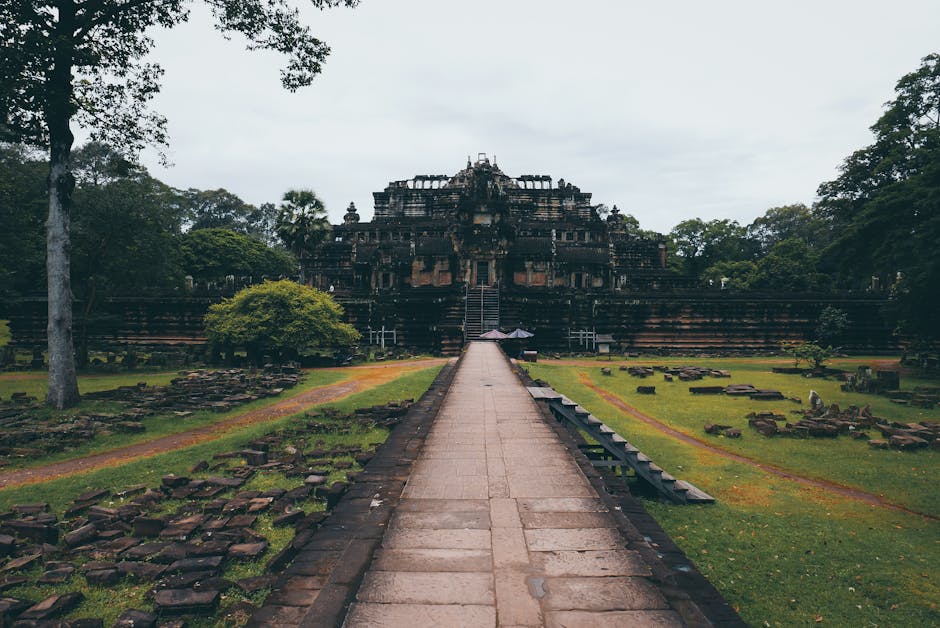
Historic Baphuon Temple at Angkor, Stung Treng, Cambodia
What Surprises First-Time Visitors
Most visitors arrive expecting a rough, ugly border town, but what they discover is a place of surprising beauty and gentle character. The thing that catches you off guard is the quiet—real, deep quiet. By 9 p.m., the entire town seems to fall asleep. There are no bars, no karaoke blearing from doorways, no street hawkers shouting. Instead, the soundtrack is the Mekong’s slow current, the chirp of geckos, and the occasional bark of a dog. It disorients at first, but soon you realize how rare such silence is in Southeast Asia.
Another surprise is the easy mingling of Cambodian and Lao cultures. You’ll hear two languages—Khmer and Lao—spoken interchangeably; the food at the market is a hybrid; and even the architecture shows Lao influences (steeper roofs, more open verandas). Locals treat both heritages with pride, and you’ll often see Lao Buddhist monks walking alongside Khmer ones. Travelers also discover that Stung Treng’s river is not just a scenic backdrop—it’s a working waterway. Every morning, boats arrive from Laos carrying produce, fuel, and passengers. Fishermen cast nets from tiny skiffs, and women wash clothes on the rocks near the ferry pier. The Mekong here is not a tourist attraction; it’s a lifeline, and that authenticity is what makes the town so compelling.
Your Stung Treng, Cambodia Questions

Stunning aerial shot of lush Cambodian farmland and river, Stung Treng, Cambodia
Is it safe to travel to Stung Treng, especially as a solo female traveler? Yes, overwhelmingly so. Stung Treng is one of Cambodia’s safest towns for women traveling alone. Locals are respectful and helpful, petty crime is virtually nonexistent, and streets are well-lit in the center after dark. However, take the usual precautions: avoid walking alone on unlit rural roads at night, and keep valuables out of sight when leaving your bike parked. Many solo travelers, especially women

