
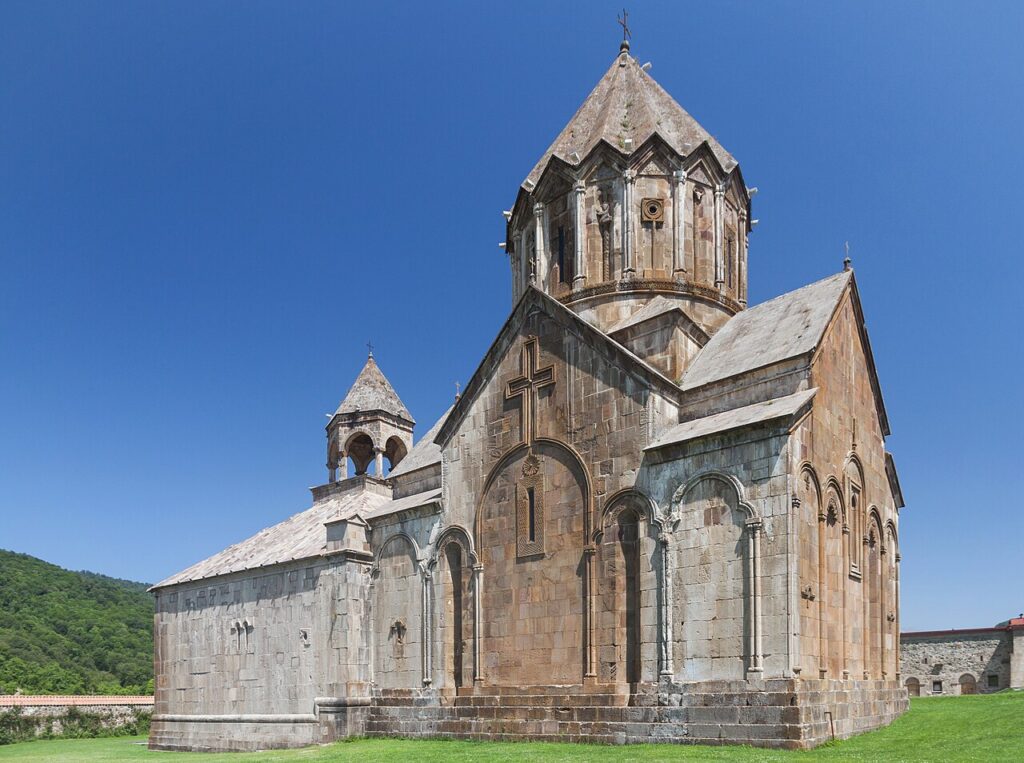
Stone and Memory: The Contours of Karabakh (2026)
In the spring of 1992, as the conflict over Nagorno-Karabakh intensified, the noted Azerbaijani poet Bakhtiyar Vahabzadeh wrote a poem titled “Garaghach.” It was not a poem of war, but of a tree—a specific, ancient plane tree in his native Shusha. He wrote of its roots, its enduring shade, and the memories it held. For many, that tree became a symbol of the land itself: deeply rooted, witness to centuries, and a silent keeper of stories waiting to be heard again.
The Story Behind Nagorno-Karabakh, Azerbaijan
To understand Karabakh is to listen to a complex symphony of history, where the melodies of empires, khanates, and cultures have layered upon one another for millennia. The very name “Karabakh” is a poetic fusion of Turkic and Persian, meaning “Black Garden,” a testament to its fertile soil and dense forests. For centuries, this was a crossroads on the Silk Road’s lesser branches, a principality under Persian suzerainty, and later, the seat of the Karabakh Khanate established by Panah Ali Khan in 1748. His fortress at Bayat and later the majestic stronghold of Shusha, perched on cliffs, declared this a land of strategic and cultural significance.
The 19th century brought a seismic shift as the Russian Empire expanded southward. Following the Russo-Persian wars, the Treaty of Gulistan in 1813 formally placed the Karabakh Khanate under Russian control. This began a new chapter of demographic and administrative change. The 20th century’s upheavals were even more profound. Following the collapse of the Russian Empire and a brief period of independence, the Soviet era saw Nagorno-Karabakh designated as an autonomous oblast within the Azerbaijan Soviet Socialist Republic in 1923—a decision that would echo for decades. As the Soviet Union weakened in the late 1980s, long-simmering tensions over the region’s status erupted, leading to a full-scale war from 1992 to 1994.
The post-war period saw the region administered by Armenian separatists, internationally recognized as part of Azerbaijan but beyond its control. This changed dramatically with the 44-Day War in 2020, which resulted in a significant return of Azerbaijani territory. In 2023, a subsequent military operation led to the dissolution of the separatist entity and the full re-establishment of Azerbaijani sovereignty. Today, the region is in an unprecedented phase of reconstruction, revival, and the challenging, hopeful work of rebuilding a shared future. Travelers here are not just visiting a place, but witnessing history in its most active, raw, and formative state.
Neighborhood by Neighborhood
Shusha: The Crown of Karabakh
Perched at an altitude of 1,400 meters, Shusha feels less like a town and more like a natural fortress, its crisp air filled with the scent of pine and the weight of history. You enter through the recently restored Ganja Gate, a powerful portal that immediately frames the city’s dramatic cliffside setting. The main Jidir Duzu plateau offers breathtaking, panoramic views that stretch for miles—this was once a famed horse-racing ground and gathering place. The soundscape is dominated not by traffic, but by the careful chisel of stone masons and the call of craftsmen in small workshops. You’ll find the iconic Yukhari Govhar Agha Mosque, its twin minarets meticulously restored, standing opposite the restored house of the legendary Azerbaijani singer Bulbul. Walking the cobbled lanes, you pass the walls of the once-grand caravanserais, their arches hinting at a bustling mercantile past. The soul of Shusha is one of resilient renaissance, where every restored stone is a paragraph in a new chapter.
Khankendi (Stepanakert): The Administrative Heart
In stark contrast to Shusha’s vertical drama, Khankendi (formerly known as Stepanakert) unfolds on a relatively flat plain, functioning as the region’s logistical and administrative center. The atmosphere here is palpably one of rapid transformation. Broad avenues like Heydar Aliyev Avenue are lined with new government buildings, cultural centers, and parks under construction. You’ll see a mix of Soviet-era apartment blocks and gleaming new infrastructure projects rising side-by-side. The central bustle revolves around new markets where vendors sell produce from the surrounding lowlands, and cafes serving strong Azerbaijani tea are filled with engineers, planners, and returning families. While it lacks the ancient texture of Shusha, Khankendi offers a front-row seat to the monumental task of rebuilding a region from the ground up. It’s a place of blueprints and bustling activity, where the future is being actively drafted.
Aghdam: The Ghost City Reawakening
A visit to Aghdam is a profoundly moving, almost surreal experience. For nearly 30 years after the first war, it stood as one of the world’s most haunting ghost towns, with only the skeleton of the 19th-century Juma Mosque rising above the ruins. Today, it is the epicenter of perhaps the most ambitious reconstruction project in the Caucasus. As you approach, the scale is staggering: a vast, planned city is emerging from the empty fields. The iconic mosque has been fully restored, its pale brickwork glowing in the sun, surrounded by the orderly grids of new streets, foundations, and the rising frames of residential blocks. The new “Aghdam” is being built a short distance from the preserved ruins of the old, which stand as a solemn memorial. Travelers here witness not just rebirth, but a deliberate act of reclamation and memory, a powerful testament to loss and the unwavering will to rebuild.
The Local Table: What Returnees and Builders Actually Eat
The cuisine of Karabakh is the hearty, mountain-and-garden fare of the Caucasus, shared and loved across the region, yet with its own distinct pride. This is food built for resilience, leveraging the bounty of orchards, highland pastures, and walnut groves. The defining ingredients are fresh herbs like cilantro, dill, and purple basil, rich dairy from sheep and buffalo, and the region’s famed sweet chestnuts and walnuts. Meals are communal and generous, often starting with a spread of fresh greens, pickles, and duzme—thick, creamy clotted cream.
One dish you must seek out is **Karabakh kebab**. Unlike other versions, it is often made with ground lamb or beef mixed with finely chopped tail fat, onions, and a secret blend of local herbs, then molded onto wide, flat swords and grilled over vine cuttings or hardwood coals. The result is impossibly juicy and fragrant. For an authentic taste, your best bet is to look for the simple, often family-run *mətbəx* (kitchens) springing up in Shusha or near construction sites in Khankendi. While specific restaurant names are changing rapidly as businesses establish, asking a local guide or driver for the best spot for “Karabakh kebab” will lead you to a memorable meal, where you’ll likely share a table with engineers and construction workers, all breaking bread together.

Detailed ethnic map of the Nagorno-Karabakh Autonomous Oblast (NKAO) of Aze…, Nagorno-Karabakh, Azerbaijan
Art, Music & Nightlife
The creative pulse of Karabakh is currently focused on revival and heritage. This is not a place for trendy nightclubs, but for profound cultural reconnection. Music is the region’s soul. Shusha is historically known as the “Conservatory of the Caucasus,” the birthplace of mugham—the complex, improvisational classical music that is the bedrock of Azerbaijani culture. The restoration of the Shusha State Music and Drama Theatre is a landmark event, and travelers with timing might catch a mugham performance there, where the haunting, poetic vocals and the strum of the tar (a long-necked lute) fill the hall. The annual “Kharibulbul” Music Festival, traditionally held in May in Shusha’s Jidir Duzu plain, is being revived, symbolizing the return of this cultural zenith.
Visual arts are deeply intertwined with craftsmanship. In Shusha’s workshops, you can watch masters practicing the ancient arts of carpet weaving (Karabakh carpets are a distinct school with bold geometric and floral “buta” patterns), kelaghayi silk scarf printing, and copper engraving. These are not souvenirs for tourists but vital acts of cultural preservation. The nightlife is subdued and intimate—consisting of gatherings in hotel common areas or family teahouses, where conversations over endless cups of tea stretch late into the night, accompanied by stories and perhaps, if you’re lucky, an impromptu folk song.
Practical Guide
- Getting There: All travel is currently organized through official channels. You must obtain a permit from the Azerbaijani government to visit the region. Most visitors fly into Baku’s Heydar Aliyev International Airport (GYD) on carriers like Azerbaijan Airlines, Turkish Airlines, or Qatar Airways. From Baku, you will join an officially sanctioned guided tour; independent travel is not permitted. Book flights at Skyscanner
- Getting Around: Transportation is exclusively via the vehicles provided by your licensed tour operator. There is no public transit for foreigners. The drives between cities are on newly built or repaired highways, offering stunning views of the dramatic landscape.
- Where to Stay: Accommodation is limited and basic, focused in Khankendi and Shusha. Options are often simple guesthouses or newly built, government-run hotels like the “Karabakh” in Shusha. Comfort levels are improving but remain modest. Check Booking.com for listings, but confirm all details directly with your tour operator.
- Best Time: **Late April to June** and **September to October**. Spring brings wildflowers and mild temperatures, while autumn offers golden landscapes and crisp air. Winters can be harsh with snow, and summers are hot.
- Budget: A daily budget is difficult to set as visits are all-inclusive tour packages. These can range from $150-$300+ per day, covering permits, transport, guide, accommodation, and most meals. Extra cash (in Azerbaijani Manat) is needed only for personal souvenirs or snacks.

People walking on road near building during daytime, Nagorno-Karabakh, Azerbaijan
What Surprises First-Time Visitors
The most immediate surprise is the sheer, breathtaking scale of the landscape. Many arrive expecting a small, dense conflict zone, but are met instead with vast, empty vistas of majestic mountains, deep river gorges, and rolling highland plains dotted with flocks of sheep. The silence in these open spaces, away from the construction sites, is profound and unexpectedly peaceful. It instantly contextualizes why this land has been so fiercely cherished for centuries.
Secondly, travelers are often struck by the dissonance between the media narratives of perpetual tension and the reality on the ground. While the presence of military checkpoints and the requirement for guided tours are reminders of the recent past, the prevailing mood in the areas open to visitors is one of focused, determined work. You are more likely to discuss architectural plans or agricultural projects than politics. The overwhelming narrative presented is one of rebuilding and looking forward, which can be both inspiring and, given the context, deeply complex.
Finally, the warmth extended to visitors is notable. As one of the first international travelers to witness this chapter, you are often met with genuine curiosity and a palpable desire to show the progress being made. Locals involved in the reconstruction, from guides to hotel staff, often share personal stories of return with a mix of solemnity and hope, making the experience intensely human rather than merely observational.
Your Nagorno-Karabakh, Azerbaijan Questions
Is it safe to travel to Nagorno-Karabakh? The areas included in official government-sanctioned tours are secure and heavily managed. Your safety is the top priority of the authorities and tour operators. However, it is critical to understand that this is a post-conflict region undergoing de-mining. You must strictly follow your guide’s instructions at all times, never wander off marked paths, and remain within the designated tourist areas. Your permit is your legal requirement to be there.
Can I visit independently, without a tour? No. Independent travel by foreigners is strictly prohibited. Access is controlled through a permit system that is only granted as part of an organized tour with a licensed Azerbaijani travel company. This is for your safety, logistical management, and to ensure visits are conducted appropriately. Attempting to visit on your own will result in being turned back at checkpoints.
What should I be mindful of culturally? This is a conservative, respectful society in a period of national significance. Dress modestly, especially when visiting religious sites like the mosques in Shusha and Aghdam. Always ask permission before taking photographs of people, particularly military personnel or construction workers. Be aware that the history is deeply personal and painful for many; listen more than you speak, and approach conversations with sensitivity. Your role is that of a witness, not a commentator.

A stone wall with a sign that says susa on it, Nagorno-Karabakh, Azerbaijan
Explore More Destinations
- Jozani, Tanzania on a Budget: an Ancient Forest for $35/Day (2026)
- Nsumbu, Zambia on a Budget: Wild Africa for $40/Day (2026)
- Semporna, Malaysia on a Budget: Paradise for $35/Day (2026)
- Khuzestan, Iran on a Budget: Ancient Empires for $30/Day (2026)
- Ngerulmud, Palau on a Budget: Island Majesty for $45/Day (2026)
Ready to Visit Stone and Memory?
Start planning your trip today. Compare hotels, find the best tours, and get insider tips.
Your adventure in Stone and Memory starts here →
Related Guides
Explore more destinations similar to Stone and Memory:
- Sinai Peninsula, Egypt’s Ultimate Diving, Deserts & Divine Sunrises (2026)
- Uttarakhand, India’s Ultimate Peaks, Pilgrimage & Himalayan Serenity (2026)
- Sichuan’s Panda Sanctuaries, China’s Ultimate Pandas, Peaks & Ancient Forests (2026)
- Bafoussam, Cameroon’s Best Highlands, Culture & Coffee Traditions (2025)
{“@context”: “https://schema.org”, “@type”: “FAQPage”, “mainEntity”: [{“@type”: “Question”, “name”: “What is the best time to visit Stone and Memory?”, “acceptedAnswer”: {“@type”: “Answer”, “text”: “The best time to visit Stone and Memory depends on your preferences. Generally, the dry season offers the most pleasant weather for sightseeing and outdoor activities.”}}, {“@type”: “Question”, “name”: “How many days do I need in Stone and Memory?”, “acceptedAnswer”: {“@type”: “Answer”, “text”: “Most travelers spend 3-5 days in Stone and Memory to see the main attractions. A week allows for a more relaxed pace and day trips.”}}, {“@type”: “Question”, “name”: “Is Stone and Memory expensive to visit?”, “acceptedAnswer”: {“@type”: “Answer”, “text”: “Stone and Memory can be visited on various budgets. Accommodation ranges from hostels to luxury hotels, and local restaurants offer affordable dining.”}}]}

