
Where the Spirit Dances: Journey into the Heart of the Huli Wigmen (2026)
In 1935, Australian prospector Jack Hides and his patrol officer, James O’Malley, became the first outsiders to document the Tari Basin. As they descended from the mist-shrouded mountains, they were met not by a hostile force, but by a procession of Huli men. Their faces were painted in brilliant ochre and white, their heads crowned with towering, elaborate wigs of human hair adorned with bird-of-paradise plumes and flowers. This moment of first contact wasn’t one of conquest, but of profound, awe-struck recognition of a complex culture that had thrived in isolation for millennia.
The Story Behind Tari’s Region
For over 10,000 years, the Huli people have cultivated the fertile valleys of what is now Tari, in Papua New Guinea’s Hela Province. Their history is not written in stone but sung in epic ballads, etched into ceremonial body paint, and woven into the very wigs that define their identity. This is a society built on intricate clan systems, ancestral worship, and a deep, spiritual connection to the land. The arrival of Hides and O’Malley in the 1930s was merely a footnote in a long, self-determined narrative. The real turning point came decades later with the discovery of vast natural gas reserves, which brought the modern world’s complexities—its wealth, its conflicts, its infrastructure—crashing into the highlands. Today, Tari exists in a dynamic, sometimes tense, dialogue between ancient tradition and a rapidly changing present.
You must understand that the concept of “Tari” as a single town is a colonial simplification. For the Huli, identity is rooted in your *hamigini* (homeland), a specific parcel of land passed down from your ancestors. This land is your history, your sustenance, and your spiritual responsibility. Conflicts, often mediated through elaborate compensation ceremonies called *”waria,”* have historically centered on land, pigs, and women. While the introduction of Christianity and central government has altered some practices, the underlying social structures remain resilient. Travelers discover that to know Tari is to listen to the stories of the land, stories told by men who can trace their lineage back 20 generations or more.
Neighborhood by Neighborhood
Tari Township: The Beating Heart of Commerce
This is the administrative and commercial center, a bustling strip of corrugated iron roofs, trade stores, and government buildings along the Highlands Highway. The air hums with the sound of PMVs (Public Motor Vehicles) loading up with people and produce, and the market is a sensory overload of color and sound. Here, you’ll find women from surrounding villages selling mounds of vibrant sweet potatoes, leafy *kumu* greens, and bundles of betel nut. The architecture is purely functional, but the life within it is pure Papua New Guinea. Your best bet for understanding daily life is to grab a stool at a simple *kai* bar, order a plate of rice and stew, and simply watch the world go by. The constant coming and going, the negotiations, the laughter—this is the modern Huli world in motion.
The Clan Lands and Homesteads: The Soul of Tradition
Venture just a few minutes’ walk from the township’s dust, and you step into an entirely different realm. This is not a neighborhood with street signs, but a living tapestry of scattered homesteads, sweet potato gardens (*manda*), and sacred spirit sites. Low, rounded huts with woven kunai grass roofs dot the landscape, often hidden within stands of casuarina trees. The character here is defined by quiet industry: women tending cooking fires, men crafting bows or mending fences, children playing near streams. The architecture is ancient and organic, designed for coolness and community. You’ll feel the profound connection to the earth underfoot, a connection that governs the rhythm of life far more than any clock. Locals recommend visiting a homestead only with a respected guide who can facilitate a proper introduction, transforming you from a spectator into a welcomed guest.
Koroba and Margarima: The Cultural Perimeter
While Tari is the hub, the true depth of Huli culture radiates out to neighboring districts like Koroba and Margarima. These areas are often less touched by the immediate influence of the gas project and maintain even stronger daily ties to tradition. The journey to these areas is an adventure in itself, along rugged roads that offer breathtaking views of the basin. Here, you’re more likely to see men in full traditional dress as part of everyday life, not just for shows. The feeling is more remote, more rooted. Travelers often discover that the most authentic cultural interactions happen in these outlying areas, where the *sing-sing* grounds are active centers of community life and the stories of the ancestors feel palpably close.
The Local Table: What the Huli Actually Eat
Forget complex sauces or imported ingredients. Huli cuisine is a celebration of the earth, built on the triumvirate of the sweet potato (*kaukau*), pork, and greens. The *mumu* is the cornerstone of feast cooking and a social event in itself. A pit is dug, stones heated, and layers of meat, *kaukau*, bananas, and pitpit (a local vegetable) are wrapped in banana leaves and steamed for hours. The result is incredibly succulent, smoky, and communal. For daily meals, you’ll find simple, hearty fare: roasted *kaukau*, boiled greens (*kumu* or *aibika*), and perhaps small river fish or chicken. Protein, especially pork, is treasured and often reserved for significant events.
Your must-seek-out experience is the Tari Market. Go in the early morning when it’s most vibrant. Look for the women selling bundles of cooked *kaukau* or corn, or visit a makeshift stall for a bowl of hearty broth with noodles and bits of chicken. For a more substantial meal, the **Tari Gap Lodge** or **Ambua Lodge** serve excellent interpretations of local and international food in a setting safe for visitors. But the real culinary adventure is accepting an invitation to share a family meal in a homestead, where you eat with your hands and taste food infused with generations of tradition.

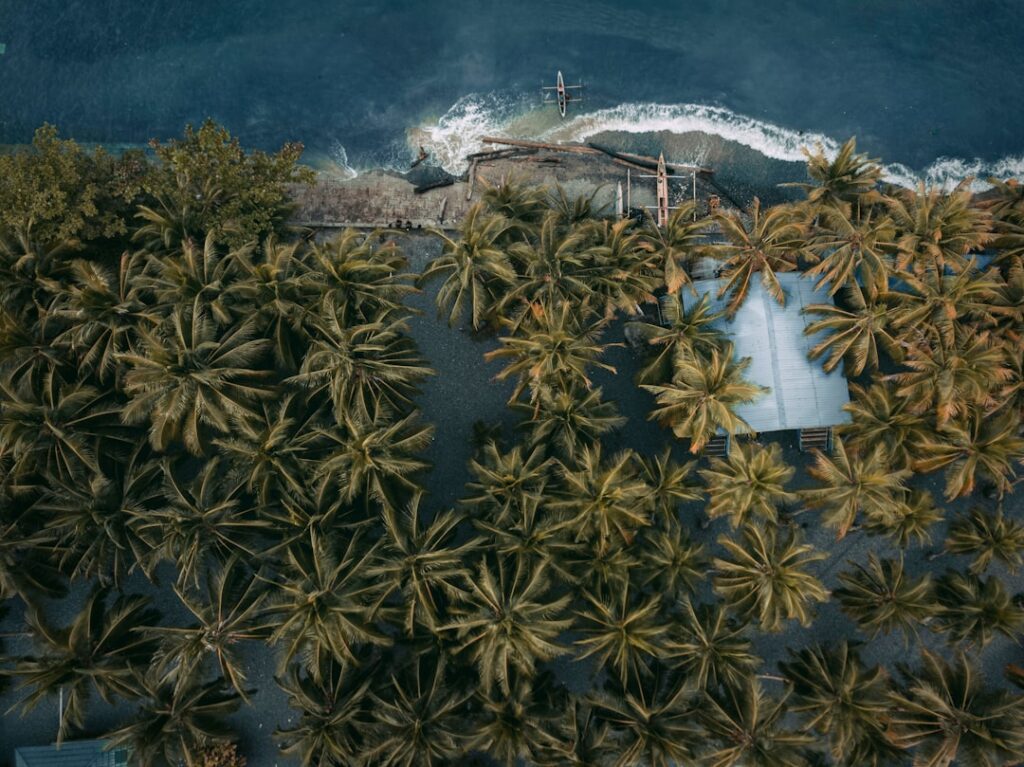
Person wearing blue red and yellow knit cap, Tari’s Region, Papua New Guinea
Art, Music & Nightlife
In Tari, art is not separate from life; it is life. The most stunning art is living and moving: the breathtaking self-decoration of the Huli Wigmen. The process of creating the *Hela Huli* wig is a years-long ritual. Young men live in segregated *”wig schools”* (*Harambe*) under the guidance of a master, following strict diets and rituals to grow their hair, which is then cut and fashioned into the iconic circular, horned wigs. These wigs, adorned with feathers of the Raggiana bird-of-paradise, cassowary plumes, and flowers, are masterpieces. The accompanying body paint, using sacred yellow ochre, white clay, and red pigments, tells stories of clan, status, and purpose.
Music is predominantly vocal and rhythmic, centered around *sing-sings* (festivals). The deep, rhythmic drumming and the powerful, unison chanting are meant to stir the spirit and tell ancestral stories. There is no “nightlife” in a Western sense. After dark, life retreats to the family hearth. However, during major festivals like the **Tari Show** (usually held in August), the entire region erupts in a days-long explosion of music, dance, and competition. Dozens of clans gather in a spectacular display of plumage and pride. It is an unparalleled cultural experience, where the line between performer and participant dissolves completely.
Practical Guide
- Getting There: Fly into Port Moresby (POM), then take an Air Niugini or PNG Air flight to Tari (TIZ). Flights are limited and weather-dependent; book well in advance. Check schedules and book at Skyscanner
- Getting Around: On foot in town. For visiting villages, you must hire a 4WD vehicle with a local driver/guide. Expect to pay around 300-500 PGK ($85-$140 USD) per day, depending on distance and negotiations. Never venture off alone.
- Where to Stay: Your best (and safest) options are the renowned **Ambua Lodge** (a premium eco-lodge 45 mins from Tari) or the more basic but reliable **Tari Gap Lodge**. Homestays can be arranged through reputable guides. Check Booking.com for Ambua Lodge.
- Best Time: The dry season, from May to October. This is when trails are passable, skies are clearer, and major cultural shows are held. Avoid the heavy rains of the wet season (Dec-Mar).
- Budget: This is not a budget destination. Between flights, mandatory guided tours, and lodge stays, plan for a minimum of $250-$400 USD per person per day. This includes guide fees, lodging, meals, and transport.
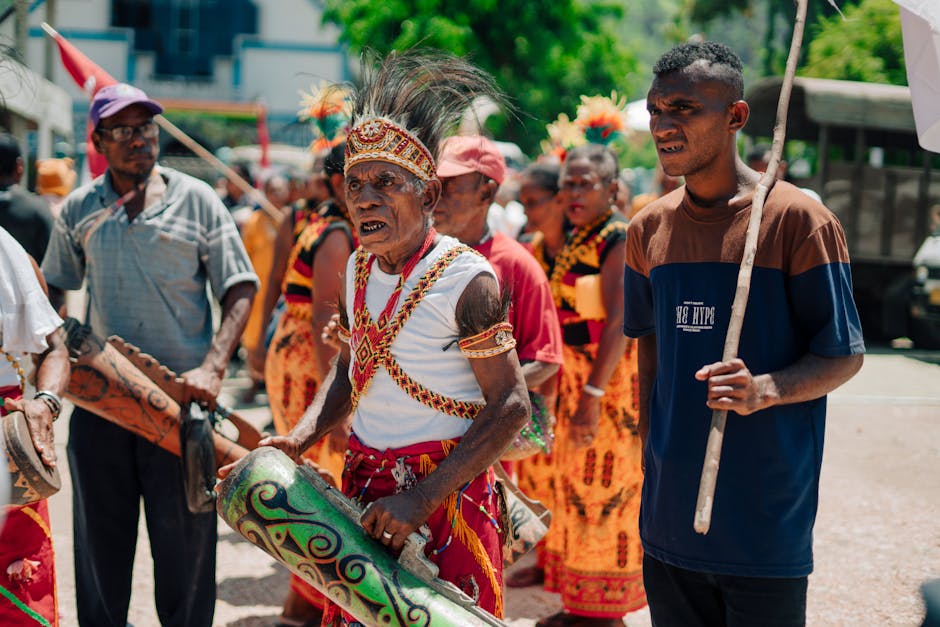
Vibrant cultural parade featuring traditional Papua costumes and instruments., Tari’s Region, Papua New Guinea
What Surprises First-Time Visitors
The first surprise is the sheer, breathtaking beauty. Many arrive expecting only dense jungle, but Tari sits in a stunning, temperate highland valley of rolling hills, perfect gardens, and misty mountains. The air is cool and fresh, a world away from the tropical coast. The second, more profound surprise, is the gentle nature of personal interaction. Despite media portrayals of highlands strife, one-on-one encounters are marked by quiet curiosity, shy smiles, and immense dignity. You are assessed not by your wealth, but by your respect.
Finally, travelers are often startled by the living, practical nature of the traditions. That magnificent wig isn’t a costume kept in a trunk; it’s a man’s most prized possession, worn with solemn pride. The ancestral stories aren’t myths; they are maps and moral codes. You realize you are not looking at a historical reenactment, but at a vibrant, adaptive culture that has chosen to maintain its core identity while navigating the 21st century. The resilience and depth of Huli society leaves a lasting impression far deeper than any souvenir.
Your Tari’s Region Questions
Is it safe to travel to Tari? Safety requires careful planning and respect. The tribal conflict you may have heard about is real, but it is inter-clan and localized. As a visitor, you are neutral. Your safety hinges on using a highly reputable, locally-respected guide from a company like **Trans Niugini Tours** or **PNG Trekking Adventures**. They know the current situation, have relationships with clans, and will navigate protocols. Never travel without one. Follow their instructions implicitly, especially regarding photography and restricted areas.
How do I take photos respectfully? Photography is a sensitive issue. Never, ever point your camera randomly. Always, always ask permission through your guide. For portraits, a small payment (5-10 PGK) is customary and appreciated. Some ceremonial items or sacred sites are strictly off-limits for photos. Your guide will advise you. Remember, you are photographing people, not zoo exhibits. A respectful approach often leads to more meaningful interactions and better photos.
What should I pack? Pack for cool, wet, and muddy conditions. Essentials include sturdy, broken-in hiking boots, quality rain gear, warm layers (fleece, merino wool), a good hat, and strong insect repellent. Bring a headlamp, as electricity can be unreliable. Pack small gifts for hosts: tobacco sticks (a traditional courtesy), salt, or useful items like bush knives (machetes) can be appropriate, but consult your guide first. Most importantly, bring an open mind, immense patience, and a spirit of humility.

Colorful festival parade featuring participants in traditional attire and h…, Tari’s Region, Papua New Guinea

