
Where the Spirits Walk: Journey into the Heart of the Huli Wigmen (2026)
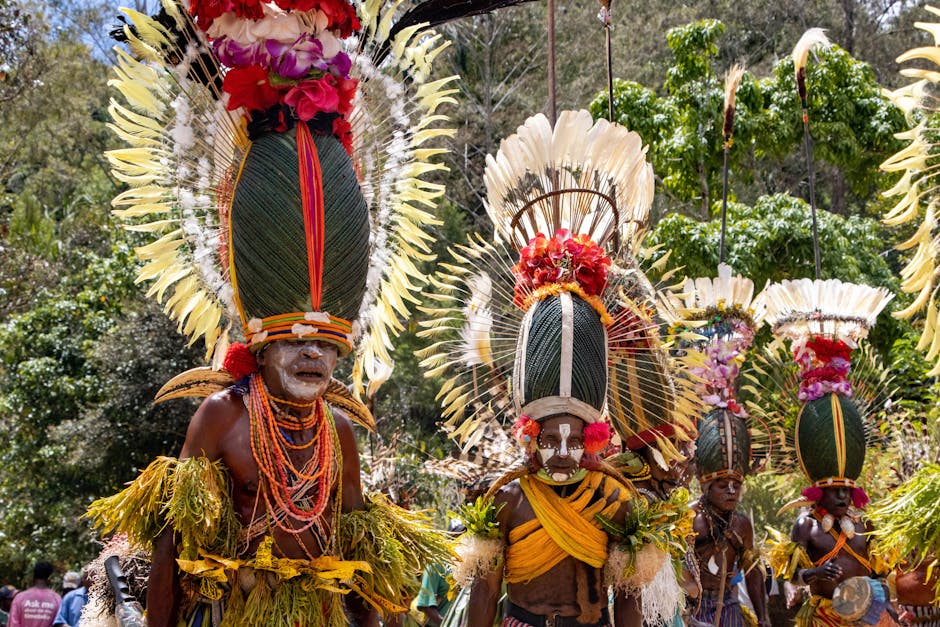
In 1935, Australian prospector Jack Hides and his patrol officer James O’Malley became the first outsiders to document the Tari Basin. As they descended from the mist-shrouded mountains, they were met not with hostility, but with a breathtaking spectacle: Huli warriors, faces painted in brilliant ochre and yellow, adorned with towering headdresses of human hair and bird-of-paradise plumes. Hides wrote of a “living tapestry of color and pride,” a moment that marked not conquest, but the world’s astonished introduction to one of its most intact cultures.
The Story Behind Tari’s Landscape
To understand Tari is to understand a history measured not in centuries of written records, but in generations of oral tradition and a profound connection to the land. The Huli people, the dominant cultural group here, trace their ancestry back over 300 generations—more than 7,000 years—in this same fertile, highland valley. Their history is woven into the sweet potato gardens they cultivate, the sacred sites they protect, and the intricate clan alliances and disputes that have shaped their society. The arrival of Hides and O’Malley in the 1930s was a mere blink in this long timeline, a first tentative thread of contact with the outside world that would slowly weave into the fabric of their lives.
The real transformation began in the 1950s with the establishment of a permanent government station and, crucially, the arrival of missionaries and linguists. The translation of the Bible into the Huli language by missionaries like Father John Nilles became a pivotal point, creating a written form for a rich oral history. Yet, this integration has been remarkably balanced. While you’ll see steel tools and mobile phones, the core of Huli identity—their elaborate *bilas* (body decoration), their complex spiritual beliefs in ancestral spirits (*dama*) and nature spirits (*timongo*), and their legendary status as fearsome yet deeply principled warriors—remains vibrantly, defiantly alive. This is not a culture preserved in a museum, but one that actively negotiates its place in the modern world on its own terms.
Neighborhood by Neighborhood: Valleys of Life
Tari Township: The Gentle Crossroads
Tari town, the administrative center, is your gateway and a fascinating study in gentle juxtaposition. The main strip is a slow-paced collection of trade stores, simple guesthouses, and the bustling market. The air hums with the sound of PMVs (Public Motor Vehicles) loading up with people and produce, and the scent of diesel mingles with wood smoke and earth. This is where you’ll arrange guides, buy supplies, and feel the practical pulse of the region. Key spots include the small airstrip, where watching the tiny planes navigate the mountain walls is a daily drama, and the Tari Market itself. Here, mothers sell bundles of *kaukau* (sweet potato), greens, and peanuts, while men might display hand-carved bows or packets of betel nut. It’s functional, friendly, and utterly unpretentious—a place to observe the quiet commerce of contemporary highland life.
The Clan Territories: The Living Heart
Venture just beyond the township, and you enter the true heart of Tari: the sprawling, green clan territories. This is not a neighborhood of streets, but of winding footpaths connecting scattered *haus tambaran* (spirit houses), family compounds, and vast, meticulously maintained sweet potato gardens. The architecture is organic: round houses with towering thatched roofs, built from forest materials, designed to be cool and dark inside. The character is defined by the people. You might walk through the territory of the Haroli clan and see young *wigmen* in training, living in secluded bachelor huts for up to 18 months as they grow and decorate the magnificent wigs that are central to Huli identity. The sensory detail is profound: the rustle of kunai grass, the distant call of a bird-of-paradise, the rich, damp smell of the earth, and the sight of smoke curling from a cooking fire against a backdrop of endless green ridges.
Koroba and Margarima: The Cultural Peripheries
A longer journey on rugged roads takes you to districts like Koroba and Margarima, where the Huli culture expresses itself with subtle regional variations. These areas feel even more remote, with a stronger emphasis on traditional law and custom. In Margarima, you’re closer to the sacred Mount Ambua, a place shrouded in spirit stories. The atmosphere here is one of deeper seclusion. The gardens are steeper, the mists cling longer, and the sense of stepping back in time is amplified. Travelers often discover that ceremonies here can feel less staged for outsiders and more intimately connected to the local community’s own cycles of life, dispute, and celebration. It’s a landscape where every hill and waterfall has a name and a story known only to the clans that have lived there for millennia.
The Local Table: What the Huli Actually Eat
Huli cuisine is a testament to subsistence and the supremacy of a single, glorious tuber: the sweet potato, or *kaukau*. This is not a food culture of complex sauces or varied courses; it is one of earthy, satisfying sustenance drawn directly from the rich volcanic soil. The Huli diet is built around the *mumu*, an underground oven of hot stones. A typical family meal involves wrapping bundles of kaukau, along with greens like *kumu* (similar to spinach), and perhaps pieces of pork on rare celebratory occasions, in banana leaves. These parcels are placed on the stones, covered with more leaves and earth, and left to steam for hours. The result is smoky, sweet, and incredibly tender.
For the traveler, participating in a mumu is a essential experience, often arranged by your guide with a local family. You must also try *pitpit* (a native sugarcane) roasted over an open fire. In Tari town, your best bet for a simple, hearty meal is at a guesthouse like the **Ambua Lodge** or the **Tari Guesthaus**, where they serve large plates of rice, kaukau, and tinned fish or corned beef. For the truly immersive experience, visit the **Tari Market** in the early morning (around 7 AM) and look for the women selling roasted kaukau—it will cost you less than K5 (about $1.50 USD) and is the most authentic breakfast you can find.

Couple in traditional dress stands in lush grassland with mountainous background, Tari’s Landscape, Papua New Guinea
Art, Music & Nightlife
The creative expression in Tari is inseparable from ceremony and daily life. The art is worn on the body. The spectacular *bilas* of the Huli wigmen is a living gallery: wigs adorned with feathers of the Raggiana and Superb birds-of-paradise, faces painted with sacred yellow ochre (*ambua*) and red clay, chests draped with kina shells and seeds, and belts of lustrous animal fur. This artistry is not for sale in a gallery; it is prepared for the monumental **Sing-Sings**, cultural shows that are the pinnacle of Tari’s “nightlife.” The most famous is the **Huli Wigmen Cultural Show**, held near Tari town. While not on a fixed monthly schedule, they are often arranged for visiting groups. The rhythmic, thunderous chanting, the synchronized stomping that shakes the ground, and the dazzling visual spectacle under the highland sun is an artistic performance of overwhelming power.
Music is primarily vocal and percussive. The deep, rhythmic chanting (*wi*), accompanied by the beat of kundu drums, tells stories of ancestors, battles, and the land. There are no bars or clubs in the Western sense. After dark, life retreats to the family roundhouses, lit by firelight. Your “nightlife” will consist of sharing stories with your guide and hosts, listening to the chorus of insects and frogs, and gazing at a sky ablaze with stars unobscured by any light pollution—a silent, majestic show of its own.
Practical Guide
- Getting There: Fly from Port Moresby (Jackson’s International, POM) to Tari (TIZ) on Air Niugini or PNG Air. Flights are daily but weather-dependent; always allow buffer days. Book at Skyscanner to compare.
- Getting Around: You must hire a local guide/translator (K150-250/day). Travel between sites is by 4WD on extremely rough roads or by foot. PMVs are for the very adventurous only. Budget K300-500/day for a vehicle and driver.
- Where to Stay: The iconic **Ambua Lodge** (from $350/night) offers stunning views and comfort. In Tari town, the **Tari Guesthaus** is basic but clean (around K200/night). Check Booking.com for Ambua Lodge.
- Best Time: The dry(er) season, May to October. Days are sunny (around 75°F/24°C), nights are cool, and roads are marginally more passable.
- Budget: A realistic daily budget for a guided tour, including mid-range lodging, meals, transport, and guide fees, is $400-$600 USD per person. Independent budget travel is extremely challenging and not recommended.

Tribal warrior with body paint and bow in Jayapura’s lush jungle., Tari’s Landscape, Papua New Guinea
What Surprises First-Time Visitors
Most travelers arrive expecting a “primitive” culture and are instead humbled by its profound complexity and the sharp intellect of the people. The Huli are master negotiators and orators, with a social structure and customary law (*wantok* system) that is incredibly nuanced. You’ll be surprised by the gentle hospitality; despite their warrior history, visitors who come with respect are welcomed with quiet curiosity and kindness. The misconception of inherent danger is quickly replaced by an awareness of a deeply regulated society where custom dictates behavior.
The sheer, breathtaking beauty of the landscape is another common surprise. The Tari Basin is a mosaic of emerald ridges, deep gorges, and waterfalls, often veiled in ethereal morning mists that roll in like silent waves. It feels both immense and intimate. Furthermore, travelers often discover that the act of giving small, useful gifts (like salt, tobacco, or biros) is an important cultural courtesy when visiting a clan, but that overt displays of wealth or haggling over handicrafts is deeply frowned upon. The economy here is still one of relationship and exchange, not just currency.
Your Tari’s Landscape Questions
Is it safe to travel to Tari? Safety in Tari is contextual. Tribal fighting (*raskolism*) does occur between clans, but it is highly localized and targeted. As a visitor with a reputable local guide, you are considered a neutral guest and are insulated from these conflicts. Your guide’s knowledge and relationships are your greatest security. The main risks are health-related (malaria, tropical infections) and the challenging terrain. Following your guide’s instructions explicitly is non-negotiable.
How do I arrange a visit to a Huli wigmen school? You cannot simply show up. Visits must be arranged in advance through a registered tour operator or a trusted local guide from your lodge. These are not tourist attractions but active, sacred spaces for young men. A visit involves a customary gift (usually around K50-100 per person, arranged by your guide) to the school’s master, and strict protocols regarding photography and behavior must be followed. It is a privilege, not a right.
What should I absolutely pack? Beyond standard trekking gear, pack for mud and cool temperatures: waterproof boots with excellent grip, quick-dry clothing, a warm fleece for evenings, a high-quality rain jacket, and a sturdy daypack. Essential non-clothing items include a powerful headlamp, a comprehensive first-aid kit, strong insect repellent (DEET), malaria prophylaxis, a water purification system, and plenty of spare batteries. Also, bring small, sealed gifts for hosts—notebooks, pencils, salt, and tobacco are highly appreciated.

A beautiful aerial view of Port Moresby at sunrise, Tari’s Landscape, Papua New Guinea

