
Salt, Sweat, and Sunset: The Living Heart of Lac Rose, Senegal (2026)
In 1973, a Citroën 2CV sputtered to a halt on the white-crusted shore. Inside, a French journalist named Jean du Boisberranger stared, disbelieving, at the water. He had heard rumors of a pink lake, but the reality was a surreal, bubblegum-hued mirror stretching to the horizon. His subsequent article in *Paris Match* did not just describe a natural wonder; it introduced the world to the *or blanc*—the white gold—and the indomitable spirit of the Senegalese salt harvesters, the ***Tiougoune***, who had known its secrets for generations.
The Story Behind Lac Rose, Senegal
Long before it captivated the world, Lac Rose, or Retba as it’s known locally, was a quiet giant in the Sahel. Its story is not one of kings and conquests, but of earth, water, and relentless work. The lake’s astonishing color, a seasonal spectacle most vibrant in the dry season from November to June, is a scientific ballet performed by the *Dunaliella salina* algae. These microscopic organisms produce a red pigment to protect themselves from the lake’s extreme salinity—a staggering 40% salt content, higher than the Dead Sea. This very salinity is what drew people to its shores.
While salt harvesting here is centuries old, the modern chapter began in the 1970s. Following droughts that crippled peanut farming, Senegal’s government, under President Léopold Sédar Senghor, actively promoted salt extraction as an alternative livelihood. Men from across the region arrived, transforming the lake into a hive of industry. They are the true architects of Lac Rose’s contemporary culture. Using only wooden poles and hand-woven baskets, they spend up to seven hours a day immersed in the corrosive brine, their skin protected by a layer of shea butter. Each man harvests over a ton of salt daily, a backbreaking labor that forms the economic and cultural bedrock of the entire area. The lake’s fame was cemented globally when it served as the finish line for the grueling Paris-Dakar Rally from 1979 to 2007, its pink waters a surreal welcome for dust-caked racers.
Neighborhood by Neighborhood
The Salt Shore (Le Bord du Lac)
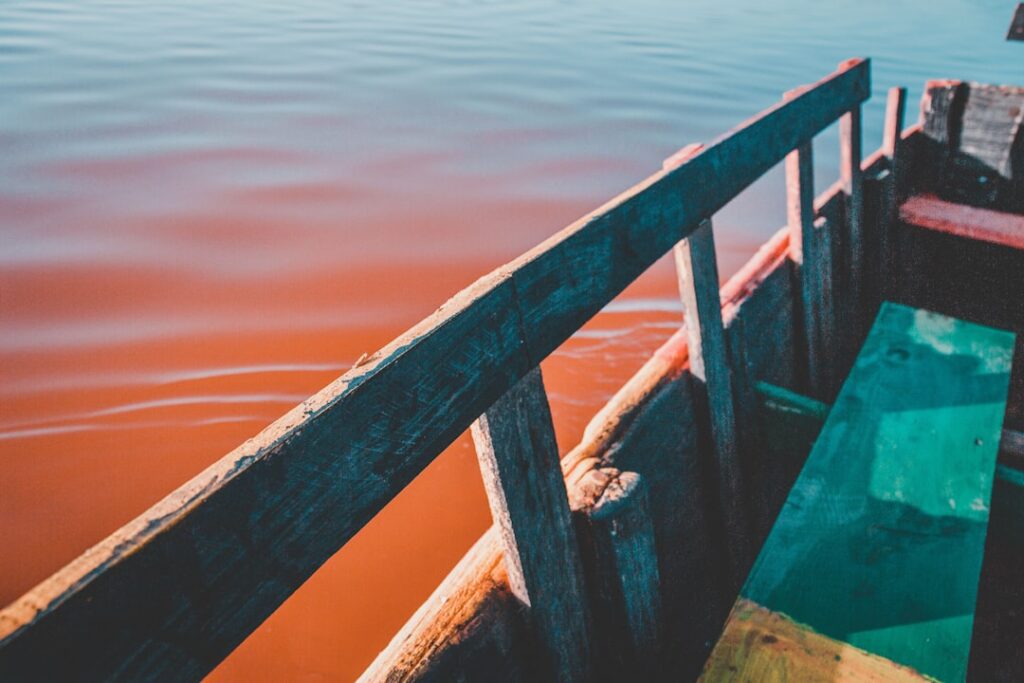
This is the visceral, beating heart of Lac Rose. Your first step here is onto a crust of salt that crackles underfoot like snow. The air is thick with the scent of brine and the rhythmic, percussive sound of shovels scraping lakebed salt into pirogues. You don’t just observe life here; you feel it. From dawn until early afternoon, you’ll see the *Tiougoune* at work, their muscular forms silhouetted against the impossible pink water. Small mountains of salt, gleaming white under the sun, dot the landscape, awaiting transport. This is a neighborhood of industry, not leisure. The architecture is functional: simple wooden shacks for tools, colorful pirogues resting on the salt pan. Your best bet is to hire a local guide (around 5,000 CFA / $8 for an hour) for a pirogue tour; they’ll explain the process and even let you try floating effortlessly in the dense, buoyant water.
Keur Bernard (The Village)
A short walk from the lake’s edge, Keur Bernard is where life settles after the day’s harvest. This is a traditional Wolof village of sandy streets, single-story homes with painted facades, and the gentle hum of community. Unlike the stark shore, here you’re greeted by the shade of acacia trees and the vibrant colors of bougainvillea. Children play soccer with makeshift balls, and women prepare meals in courtyards. The architecture is classic Sahelian, with flat roofs and open courtyards. You’ll find small, family-run boutiques selling water, snacks, and local crafts. The pace here is deliberate and social. Travelers often discover that sitting for a moment under a tree invites conversation and offers a genuine glimpse into the domestic rhythm that supports the lake’s industry.
The Tourist Corridor (Route du Lac)
Stretching along the main road from the highway to the lake, this area caters directly to visitors. It’s a world apart from the Salt Shore, lined with hotels, restaurants, and souvenir stalls. While it lacks the raw authenticity of the other neighborhoods, it serves a purpose. Here you’ll find amenities like Le Lodge du Lac Rose, with its pool and restaurant, and smaller auberges offering basic rooms. The architecture is a mix of purpose-built lodges and converted villas. The street life is a negotiation—vendors will offer everything from polished salt crystals to painted masks. Savvy visitors know to use this as a base, not the sole experience. Your best bet for an authentic meal here is to look for the smaller, open-air *dibiteries* (grill shops) rather than the hotel buffets.
The Local Table: What the Tiougoune Actually Eat
Food here is fuel, designed to sustain the immense physical labor of salt harvesting. The cuisine is hearty, Wolof-inspired, and deeply communal. The day starts before sunrise with a strong, sweet *café Touba* and perhaps some fried dough balls (*beignets*). Lunch, the main meal, is often brought to the shore by family members. You’ll see groups of harvesters gathering around a shared bowl, eating with their right hands—a practice that connects them directly to their food.
The defining ingredient is fish, sourced from the Atlantic just 5km away, providing a crucial contrast to the inland salt. The one dish you must seek out is **Thieboudienne** (pronounced *cheb-oo-jen*), Senegal’s national dish. At Lac Rose, it takes on a special significance. It’s a magnificent one-pot wonder of fish (often grouper or sea bass), rice, and vegetables (tomatoes, carrots, cabbage, eggplant) stewed in a rich tomato and fish broth. The secret is the fermented conch (*yet*) and a handful of dried *thiéboudienne* herbs that give it a unique, umami depth. For the most authentic experience, ask your guide if you can join a family meal, or head to **Chez Salim** in Keur Bernard. It’s not a fancy restaurant but a family compound where, for about 2,500 CFA ($4), you’ll be served a heaping plate of the real deal.

An ostrich looking at the camera with a blue sky in the background, Lac Rose, Senegal
Art, Music & Nightlife
The creative pulse of Lac Rose isn’t found in galleries or concert halls; it’s woven into the fabric of daily life. The art is functional and beautiful: the brightly painted wooden pirogues, each with its own geometric design; the hand-woven baskets used for salt; the vibrant fabrics of the women’s dresses. You can find craftsmen in Keur Bernard carving small souvenirs, but the true artistry is in the landscape itself—the contrast of white salt pyramids, pink water, and blue sky is a living canvas.
Music is the soundtrack of respite. After sunset, you might hear the soft strum of a *kora* (a 21-string harp-lute) from a village compound or the rhythmic beats of *djembe* drums. The true musical spectacle, however, happens during festivals. The **Festival du Lac Rose**, usually held in December or January, transforms the area. It’s a celebration of Peul (Fulani) culture, featuring spectacular traditional wrestling (*Lutte avec frappe*), parades of elaborately braided Peul women, and nights filled with the hypnotic melodies of Peul flute and vocal music. It’s a time when the area’s cultural diversity shines brightest.
Practical Guide
- Getting There: Lac Rose is 35km northeast of Dakar. Fly into Blaise Diagne International Airport (DSS). From Dakar, your best bet is to hire a private taxi for the day (negotiate to 25,000-30,000 CFA / $40-$50 round-trip) or join a guided tour. Book flights at Skyscanner
- Getting Around: On arrival, everything is walkable between the shore and villages. For the pirogue tour, you’ll need to hire a boatman/guide (5,000 CFA). Local *cars rapides* (colorful minibuses) are an adventure but not practical for most visitors.
- Where to Stay: For authenticity, choose a small auberge in Keur Bernard like **La Maison du Lac**. For more comfort, **Le Lodge du Lac Rose** on the Tourist Corridor has a pool. Check Booking.com
- Best Time: November to June. This is the dry season when the pink color is most intense and the salt harvest is in full swing. Avoid the rainy season (July-October) when the color fades.
- Budget: A modest daily budget, excluding a Dakar hotel, is 25,000-35,000 CFA ($40-$55). This covers transport from Dakar, guide fees, meals, and simple lodging.

Drone shot of a colorful canoe navigating the orange waters of Lake Retba, Lac Rose, Senegal
What Surprises First-Time Visitors
Most travelers arrive expecting a serene, Instagram-ready pink lake. The first surprise is the sheer scale of human industry. Lac Rose is not a placid tourist attraction; it’s a vibrant, noisy, and physically demanding workplace. The sight of hundreds of men engaged in such ancient, arduous labor is profoundly humbling and recontextualizes the beauty of the place. The pink color itself is a surprise—it’s not a constant neon hue. It changes with the light, most vibrant at midday under direct sun, shifting to softer pastels at dawn and dusk. On cloudy days, it can appear a more muted salmon or even grey.
The second surprise is the warmth and openness of the people, despite the harshness of their work. The *Tiougoune* are often willing to share their stories and explain their craft. Visitors are frequently struck by the lack of self-pity; there is a palpable sense of pride and community. You leave not just with photos of a pink lake, but with a deep respect for the human endeavor that defines it. The misconception that this is a “beach day” destination is quickly corrected; this is a cultural immersion into a unique way of life.
Your Lac Rose, Senegal Questions
Is it safe to swim in Lac Rose? Yes, it is perfectly safe to float in the lake. The extreme salinity makes you incredibly buoyant—you’ll bob like a cork. However, the water is highly corrosive. You must rinse off with fresh water immediately after (most guides will provide a jug). Any small cuts or scrapes will sting intensely, and the salt can be harsh on your eyes and hair. Locals recommend coating your skin in shea butter before entering, just as they do.
Can I visit as a day trip from Dakar, or should I stay overnight? You can absolutely do it as a day trip; most tours from Dakar allocate 4-6 hours for the visit. However, staying one night allows you to experience the lake at both sunset and sunrise, when the light is magical and the shore is quieter. You’ll also have the chance for a more relaxed evening in the village, which many travelers find to be the most rewarding part of the experience.
How should I ethically interact with the salt harvesters? Always ask permission before taking close-up photographs of individuals at work. A smile and a polite “*Salam aleikum*” go a long way. Hiring a local guide from the community is the best way to ensure your visit is respectful and that your money supports them directly. If you wish to give something, consider buying a bag of salt directly from a harvester’s pile (a small bag costs about 1,000 CFA) rather than from a tourist stall. This puts money straight into the hands of the worker.

Scenic view of Torrevieja’s pink salt lake with a distant city skyline., Lac Rose, Senegal
Frequently Asked Questions About Salt
Is Salt worth visiting?
Yes, Salt offers unique attractions and experiences for travelers.
How many days do I need in Salt?
2-4 days is ideal for first-time visitors to Salt.
What is the best time to visit Salt?
Spring and fall offer the best weather for visiting Salt.
{“@context”: “https://schema.org”, “@type”: “FAQPage”, “mainEntity”: [{“@type”: “Question”, “name”: “Is Salt worth visiting?”, “acceptedAnswer”: {“@type”: “Answer”, “text”: “Yes, Salt offers unique attractions and experiences for travelers.”}}, {“@type”: “Question”, “name”: “How many days in Salt?”, “acceptedAnswer”: {“@type”: “Answer”, “text”: “2-4 days is ideal for first-time visitors to Salt.”}}, {“@type”: “Question”, “name”: “Best time to visit Salt?”, “acceptedAnswer”: {“@type”: “Answer”, “text”: “Spring and fall offer the best weather for visiting Salt.”}}]}
Ready to Visit Salt?
Start planning your trip today. Compare hotels, find the best tours, and get insider tips.
Your adventure in Salt starts here →
Related Guides
Explore more destinations similar to Salt:

