
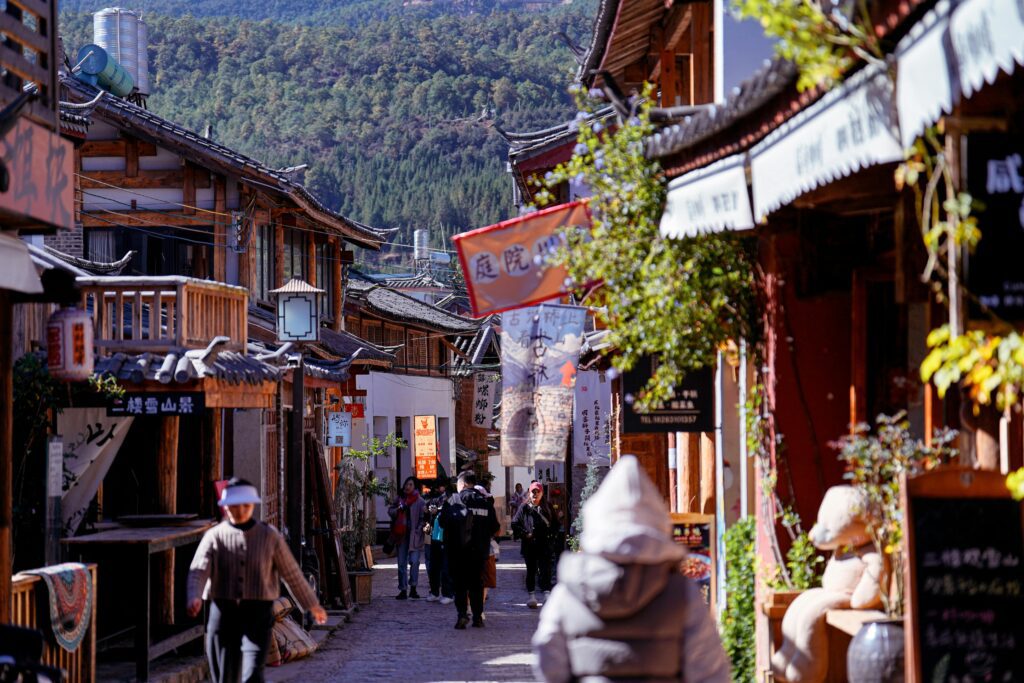
Introduction: The Hidden Gem of Yunnan
Imagine waking up to the soft whisper of prayer flags fluttering in the wind, as the first rays of sunlight illuminate the snow-capped peaks surrounding you. The air is crisp, carrying the faint scent of burning juniper from morning rituals. This is Yubeng, a secluded Tibetan village nestled in China’s Yunnan province, where time seems to stand still.

I first discovered Yubeng five years ago, drawn by its unspoiled beauty and the rich culture of the local Tibetan community. Known as the “Village Behind the Clouds” due to its high altitude (3,000m) and frequent misty weather, Yubeng remains one of China’s best-kept secrets. Unlike the tourist-heavy Lijiang or Shangri-La, Yubeng offers raw, unfiltered beauty—a place where prayer wheels spin with the wind and yaks graze freely on alpine meadows.
This comprehensive Yubeng travel guide covers:
✅ Best time to visit Yubeng (April–October for blooming meadows & clear skies)
✅ Top attractions (Sacred Waterfall, Ice Lake Trail, Tibetan culture)
✅ Detailed 3-day itinerary (hiking, hot springs, local cuisine)
✅ Essential travel tips (costs, packing list, transportation)
✅ Personal anecdotes (my unforgettable encounters with locals)
✅ Local customs & etiquette (how to respect Tibetan traditions)
✅ Restaurant recommendations (where to find the best yak butter tea)
Whether you’re a hiker, culture seeker, or solitude lover, this guide ensures you make the most of your Yubeng adventure.
Best Time to Visit Yubeng: Seasonal Breakdown
1. Spring (April–June)
- Weather: 5°C–15°C, wildflowers in full bloom, occasional rain showers.
- Why Visit? Perfect for photography and moderate hiking. The rhododendrons paint the valleys in shades of pink and red, creating a surreal landscape.
- Festival Alert: Tibetan New Year (Losar) in March features vibrant masked dances and butter lamp ceremonies. Locals wear traditional chubas (robes) and share tsampa (roasted barley flour) with visitors.
- Drawback: Trails can be muddy—pack waterproof gear.
2. Summer (July–August)
- Weather: 10°C–20°C, frequent afternoon rain (pack a waterproof jacket!).
- Why Visit? Lush greenery, fewer crowds than autumn. The mist rolling over the mountains adds a mystical vibe.
- Unique Experience: Join locals in harvesting Cordyceps sinensis (caterpillar fungus), a prized medicinal herb.
- Drawback: Leeches are active—wear high socks and insect repellent.
3. Autumn (September–October)
- Weather: 5°C–18°C, golden forests & clear skies.
- Why Visit? Ideal for trekking—best visibility of Kawagarbo Peak (6,740m). The Milky Way is visible on clear nights.
- Local Insight: Autumn is pilgrimage season. You’ll see devout Tibetans prostrating their way to the Sacred Waterfall.
- Drawback: Accommodations book up fast—reserve 2–3 months ahead.
4. Winter (November–March)
- Weather: -10°C–5°C, heavy snow (some trails close).
- Why Visit? Serene snowscapes, frozen waterfalls, and hot springs steamy against the cold.
- Advisory: Only for experienced hikers with crampons. Many guesthouses close; pack extra supplies.
Verdict: September–October is the best time to visit Yubeng for balanced weather and scenery.
How to Get to Yubeng: Transport Guide
Step 1: Fly to Shangri-La (Diqing Airport)
- From Beijing/Shanghai: Direct flights via China Eastern (~3 hrs, ¥1,200–1,800).
- From Kunming: Daily flights (1.5 hrs, ¥500–800). Book early—flights fill quickly in peak season.
Step 2: Shangri-La to Xidang Village
- By Bus: ¥100, 6 hours (departs 8 AM from Shangri-La Bus Station). Stops include Nixi for a bathroom break.
- Private Jeep: ¥800–1,200 (4 hrs, fits 4–6 people). Negotiate with drivers outside the airport.
- Scenic Detour: Ask the driver to stop at Baima Snow Mountain Pass for panoramic views.
Step 3: Xidang to Yubeng
- Trekking: 6–8 hours (18 km) through alpine forests. The trail gains 1,200m elevation—pace yourself!
- Mule Ride: ¥150–200 (book at Xidang trailhead). Mules carry bags, not riders—ideal if you’re fatigued.
- Local Tip: Buy a wooden trekking pole (¥20) from Xidang vendors—it’s a lifesaver on steep descents.
Pro Tip: Arrive in Xidang by 2 PM to start hiking before dark. The last stretch (1.5 hrs) is poorly lit.
Top 5 Attractions in Yubeng
1. Sacred Waterfall (神瀑)
- Difficulty: Easy (2-hour hike from Upper Yubeng).
- Highlight: Tibetan pilgrims bathe in its “holy waters” for blessings. The waterfall is believed to cleanse sins—join them in circling it three times clockwise.
- Sensory Detail: The roar of the falls mixes with chanting; the spray leaves rainbows in the sunlight.
- Caution: Rocks are slippery—wear grippy shoes.
2. Ice Lake (冰湖)
- Difficulty: Challenging (6–8 hours round trip). The final 1 km is a 45-degree scramble—use ropes fixed to boulders.
- Pro Tip: Pack energy bars and a thermos of hot tea. The lake is frozen until June; in summer, it’s a turquoise jewel.
- Wildlife Spotting: Look for blue sheep and Himalayan marmots near the lake.
3. Xidang Hot Springs
- Cost: ¥50 (soak sore muscles post-trek). The pools are rustic but clean, with mountain views.
- Best Time: Sunset, when the Meili Snow Mountains glow pink. Locals swear the sulfur-rich waters cure arthritis.
4. Ninong Valley
- Activity: Horseback riding (¥200/hr) through emerald pastures dotted with wild strawberries.
- Hidden Gem: A 1-hour side trail leads to Ninong Monastery, where monks offer butter tea to visitors.
5. Tibetan Monasteries
- Don’t Miss: Morning prayer sessions at Lama Temple (6 AM). The rhythmic chanting and butter lamp flickers are hypnotic.
- Etiquette: Walk clockwise around stupas; don’t touch murals or artifacts.
3-Day Yubeng Itinerary
Day 1: Arrival & Acclimatization
- Morning: Bus from Shangri-La to Xidang. Stop at Nixi Village for lunch—try their black pottery yak stew (¥60).
- Afternoon: Trek to Lower Yubeng. Stay at Yubeng Snow Mountain Guesthouse (¥150/night; heated blankets!).
- Evening: Yak meat hotpot dinner (¥80) at the guesthouse. Share stories with other travelers by the fireplace.
Day 2: Sacred Waterfall & Ice Lake
- 6 AM: Sunrise hike to Sacred Waterfall. Pack a kata (white silk scarf) to offer at the shrine.
- 1 PM: Picnic lunch by the lake (order a packed meal from your guesthouse).
- 4 PM: Soak in Xidang Hot Springs. Watch for golden eagles soaring above.
Day 3: Ninong Valley & Departure
- Morning: Horseback ride through Ninong. Visit a nomad family’s tent for fresh yak milk (¥10).
- Afternoon: Jeep back to Shangri-La. Stop at Feilaisi Temple for sunset views of Kawagarbo.
Local Cuisine: Must-Try Dishes
- Yak Butter Tea (¥15): Salty and energizing—perfect for cold mornings. Best at Tashi’s Tea House (Lower Yubeng).
- Tsampa (Barley Flour) (¥20): Mixed with tea for a traditional Tibetan breakfast. Add sugar if the saltiness is too strong.
- Grilled Yak Meat (¥50): Try it at Yubeng Family Kitchen—their chili-marinated skewers are legendary.
- Thenthuk (Hand-Pulled Noodle Soup) (¥30): Warms you up after hikes. Pema’s Café adds wild mushrooms foraged locally.
Personal Anecdote: I still dream about the smoky yak skewers from a roadside stall near the waterfall! The chef, an elderly woman named Dolma, laughed as I fumbled with chopsticks—then taught me to eat like a local, using my hands.
Travel Tips for Yubeng
- Packing List:
- Waterproof hiking boots (La Sportiva or Merrell recommended)
- Altitude sickness pills (Diamox; start taking them 1 day before arriving)
- Cash (no ATMs in Yubeng! Budget ¥500–800/day)
- Portable oxygen canister (¥50 in Shangri-La pharmacies)
- Wi-Fi: Spotty—buy a China Mobile SIM in Shangri-La for 4G.
- Cultural Tip: Don’t point at people or religious objects—use an open palm instead.
FAQ Section
1. Is Yubeng suitable for beginners?
Yes, but train for steep trails. The Sacred Waterfall hike is manageable; for Ice Lake, hire a guide (¥300/day). Mules are available for tough sections.
2. Are permits required?
No, but foreigners need a Tibet Travel Permit if visiting other Tibetan areas (e.g., Lhasa).
3. Can I visit Yubeng in winter?
Only with a guide—snow blocks some paths. Guesthouses like Yubeng Khawa Karpo Lodge stay open year-round.
4. How to avoid altitude sickness?
Ascend slowly, drink 3L of water daily, and avoid alcohol. Coca leaves (sold in Shangri-La) help with nausea.
5. Is Yubeng crowded?
Autumn sees the most tourists (especially Chinese Golden Week). For solitude, visit in May or late October.
6. Can I charge electronics in Yubeng?
Yes, but power outages are common. Bring a portable charger (20,000mAh recommended).
Conclusion: Start Your Yubeng Adventure Today!
Yubeng is more than a destination—it’s a spiritual journey through misty valleys and ancient traditions. Whether you seek challenging hikes or serene moments by a glacial lake, this guide ensures you’re prepared.
Ready to explore? Book your trip now before peak season hits!
Keywords:
Yubeng travel best time to visit Yubeng what to do in Yubeng Yubeng China attractions Yubeng trekking guide

