
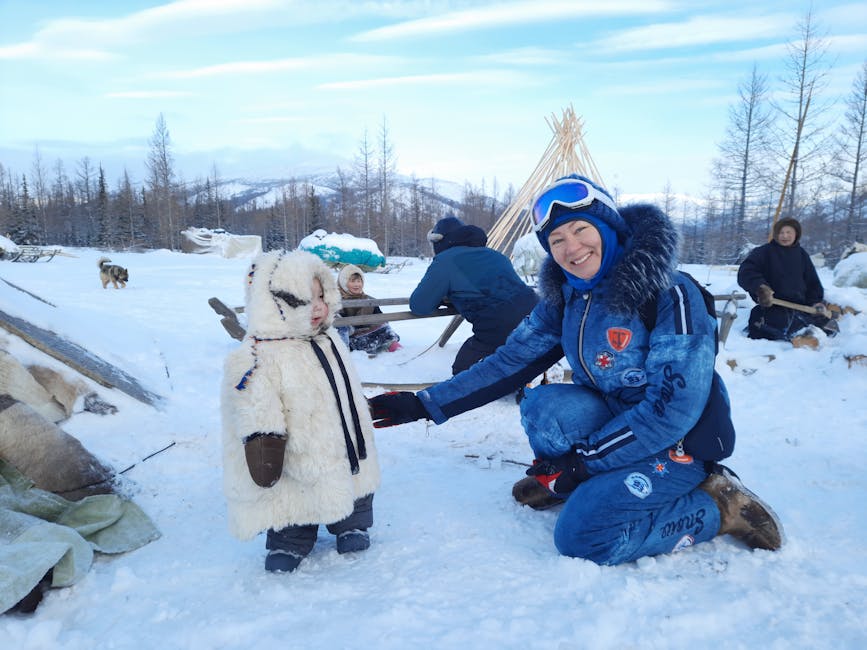
Yamalo-Nenets Autonomous Okrug, Russia: Hidden Tundra, Reindeer & Arctic Light (2026)
What if you could stand where the endless Siberian taiga meets the Arctic Ocean, under a sky that dances with green fire for 200 nights a year? Yamalo-Nenets Autonomous Okrug, a region larger than France with a population under 550,000, proves that the planet’s most extreme environments hold its most profound beauty. Here, the indigenous Nenets people have followed reindeer migrations for a thousand years, and modern cities rise from the permafrost atop the world’s largest natural gas reserves. This is not a typical holiday; it’s a journey to the edge of the map.
Why Yamalo-Nenets Autonomous Okrug, Russia Stands Out
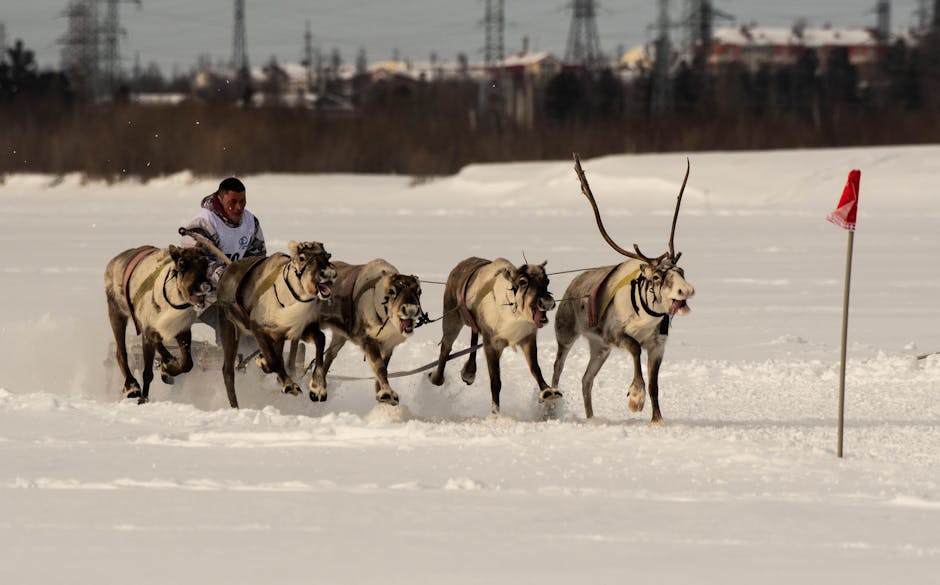
Exciting reindeer sled race captured in snowy Novy Urengoy, Yamalo-Nenets Autonomous Okrug, Russia
- Historic Architecture: The Gubkinsky Museum of the Development of the North, built in the late Soviet era, showcases the stark, utilitarian architecture of the “conquerors of the North” and the region’s dramatic 20th-century transformation.
- Cultural Scene: The Reindeer Herder’s Day festival in Nadym or Yar-Sale, typically in March or April, is a breathtaking spectacle of traditional races on reindeer sleds, lassoing competitions, and vibrant Nenets folk music.
- Local Specialties: You must try stroganina – paper-thin shavings of raw, frozen whitefish or muksun, seasoned only with salt and pepper, a delicacy that captures the pure, crisp taste of the Arctic.
Pro Tip: For the iconic Northern Lights, target late January to March. The skies are darkest, the air is crisp, and the famous “white nights” of summer, where the sun barely sets, haven’t begun. Book any guided tundra tour or homestay with a Nenets family well in advance—these are not walk-up experiences.
Map of Yamalo-Nenets Autonomous Okrug, Russia
Use these interactive maps to explore Yamalo-Nenets Autonomous Okrug, Russia and plan your route:
📍 View Yamalo-Nenets Autonomous Okrug, Russia on OpenStreetMap
🗺️ Open Yamalo-Nenets Autonomous Okrug, Russia in Google Maps
Planning Your Trip: Practical Essentials
Getting There and Around
- By Air: The main international gateway is Salekhard Airport (SLY), with direct flights from Moscow (Domodedovo, Sheremetyevo) on airlines like Aeroflot and UTair. Novy Urengoy (NUX) is another major hub. Book flights at Skyscanner for best deals.
- By Train: The mighty Russian railway reaches Labytnangi (across the river from Salekhard) via the “Trans-Polar Mainline”. The journey from Moscow takes about 48 hours. For tundra access, the Obskaya–Bovanenkovo line, the world’s northernmost railway, is industrial but sometimes accessible with special permits. Reserve tickets at Trainline or the national railway website.
- By Car: Driving is for the truly adventurous, involving the “Winter Roads” (Zimniks)—ice roads over frozen rivers and tundra that only exist from December to April. Outside of that, ground travel is mostly off-road. Compare car rentals at RentalCars.com if you plan to stay within city limits.
- Local Transport: Within cities like Salekhard or Novy Urengoy, buses and taxis are standard. For travel between settlements or into the tundra, your only reliable options are organized tours, all-terrain vehicles (like tracked Trekol vehicles), or in winter, snowmobiles and helicopters.
Best Time to Visit
Choosing when to visit defines your experience entirely. The region operates on two starkly different calendars: the accessible, mild summer and the harsh, magical winter. Savvy travelers pick based on the phenomena they wish to witness.
| Season | Weather | Highlights |
|---|---|---|
| Summer (Jun–Aug) | Surprisingly mild, 10°C to 20°C (50°F to 68°F), with the midnight sun and mosquito-heavy tundra. | Accessible hiking, river boat tours on the Ob, cultural festivals, and 24-hour daylight. Fewer tourists than winter. |
| Winter (Dec–Feb) | Extremely cold, -20°C to -35°C (-4°F to -31°F), with polar night in December and limited daylight. | Prime Northern Lights viewing, ice fishing, reindeer sledding, and the surreal beauty of the frozen landscape. Peak for unique festivals. |
| Shoulder (Apr–May/Sep–Oct) | Unpredictable and transitional. Apr/May sees melting snow; Sep/Oct has early snowfalls and rapidly cooling temps. | Lower prices and unique “change of seasons” scenery. However, transport can be difficult as ice roads melt and regular roads are muddy. |
Budgeting for Yamalo-Nenets Autonomous Okrug, Russia
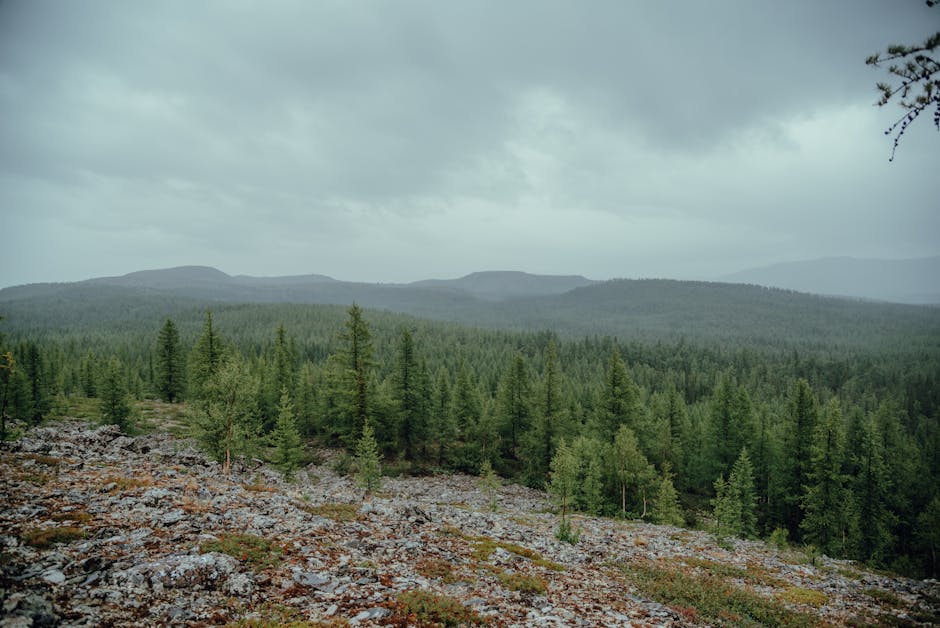
Lush coniferous forest under a cloudy sky in Russia’s Yamal-Nenets region., Yamalo-Nenets Autonomous Okrug, Russia
| Category | Budget | Mid-range | Luxury |
|---|---|---|---|
| Accommodation | Hostel/Guesthouse: 2,000-3,500 RUB/night | Standard Hotel: 5,000-8,000 RUB/night | Premium Hotel (e.g., in Novy Urengoy): 10,000+ RUB/night |
| Meals | Cafeteria/Street Food: 500-800 RUB/meal | Local Restaurant: 1,200-2,000 RUB/meal | Fine Dining (limited): 3,500+ RUB/meal |
| Transport | City Bus: 50 RUB/ride | Inter-city Taxi/Tour Transfers: 2,000-5,000 RUB/day | Private 4×4/Helicopter Tundra Tour: 15,000+ RUB/day |
| Activities | Free museum days, city walks | Guided museum tour, short tundra trip: 4,000-7,000 RUB | Multi-day Nenets homestay, Northern Lights safari: 20,000+ RUB |
| Daily Total | 4,000-6,000 RUB | 12,000-20,000 RUB | 40,000+ RUB |
Top Attractions and Must-See Sights
| Attraction | Description | Hours | Entry Fee |
|---|---|---|---|
| Mamontov Hill (Salekhard) | An archaeological site with a stunning panoramic view of the Ob River and the city, famous for prehistoric mammoth bone discoveries. | 24/7 (outdoor site) | Free |
| Shemanovsky Museum (Salekhard) | The premier museum for understanding Nenets culture, Arctic wildlife, and the region’s geology, housed in a unique modern building. | 10:00-18:00 (Wed-Sun) | ~400 RUB |
| The Arctic Circle Monument (Salekhard) | A striking, modern stele on the Polar Circle line at 66°33’N. Crossing this symbolic line is a rite of passage for visitors. | 24/7 (outdoor site) | Free |
| Obskaya–Bovanenkovo Railway | Witnessing this industrial marvel, a railway built on permafrost stretching into the gas fields, showcases human endeavor in the Arctic. | Access via special tour only | Tour dependent, ~10,000+ RUB |
3-Day Itinerary: Yamalo-Nenets Autonomous Okrug, Russia’s Highlights & Hidden Gems
Day 1: Salekhard – Gateway to the Arctic
- Morning (9:00 AM): Start at the Shemanovsky Museum (400 RUB) to build foundational knowledge. Don’t miss the exquisite collection of traditional Nenets malitsa (reindeer fur coats).
- Afternoon (1:00 PM): Walk to the Arctic Circle Monument for photos, then have lunch at Restaurant Ob (~1,500 RUB) trying their ukha (Arctic fish soup). Afterwards, climb Mamontov Hill for breathtaking views.
- Evening (7:00 PM): Enjoy a hearty dinner at Stary Salekhard restaurant. If visiting in winter, your guide will take you to a dark spot outside the city for Northern Lights viewing from 10:00 PM onward.
Day 2: Tundra Immersion & Nenets Culture
- Morning (8:00 AM): Depart with a pre-booked guide for a tundra excursion (from 8,000 RUB). Travel by all-terrain vehicle to a nearby nomadic camp, where you’ll learn about reindeer herding.
- Afternoon (12:30 PM): Share a simple lunch with a Nenets family, likely featuring reindeer meat and strong tea. Participate in setting up a chum (traditional tent).
- Evening (6:00 PM): Return to Salekhard. For dinner, seek out a café like “Sever” to sample stroganina and pelmeni with reindeer filling.
Day 3: Modern Arctic & Departure
- Morning (10:00 AM): Fly or take a winter road transfer to Novy Urengoy (flight ~1.5 hrs, from 5,000 RUB). Visit the Museum of Gas Industry to understand the force that built the modern cities.
- Afternoon (1:30 PM): Lunch at Cafe Uyut in Novy Urengoy. Then, take a walk through the city to see the stark contrast between Soviet-era blocks and modern energy-company-built infrastructure.
- Evening (6:00 PM): Depart from Novy Urengoy Airport (NUX) or enjoy a final “Arctic” dinner at the restaurant in your hotel before an early departure.
Cultural Insights & Etiquette
- Language: Russian is essential. Nenets languages are spoken in communities. Learn basics: Спасибо (spa-see-ba – thank you), Здравствуйте (zdra-stvooy-tye – hello). English is rare outside major hotels.
- Customs: When visiting a Nenets chum, always move clockwise inside. It’s polite to try offered food, even just a small piece. Never whistle indoors—local superstition says it brings poverty.
- Tipping: Not widely expected, but 5-10% in restaurants for good service is appreciated. For private guides or drivers, 10% is a generous and welcome gesture.
- Dress Code: Practicality rules. In winter, invest in serious thermal layers. In summer, waterproof boots and insect repellent are non-negotiable. Dress modestly when visiting cultural sites.
- Business Hours: Shops typically open 10:00-19:00. Museums often have a weekday closure (like Monday or Tuesday). Major holidays (New Year, Orthodox Christmas) can shut things down for days.
Where to Eat: Yamalo-Nenets Autonomous Okrug, Russia’s Best Bites
Dining here is an exploration of survival and tradition. The cuisine is hearty, protein-rich, and designed for the climate. You’ll find a blend of classic Russian staples and unique Northern specialties centered around fish, reindeer, and berries preserved from the short summer.
Must-Try Local Specialties
- Stroganina: The ultimate Arctic appetizer. Thinly sliced frozen raw fish (muksun, nelma, or chir). The best is found in specialized cafes or, authentically, in tundra camps.
- Reindeer Meat: Served stewed, in soups, or as steaks. It’s lean, rich in flavor, and a staple. Try it in shangi (small pies) or as a main course.
- Cloudberry Jam: A prized amber-colored berry that grows in the marshes. It’s tart, sweet, and served with tea or pancakes. Locals treasure it as a vitamin C source.
Restaurant Recommendations by Budget
| Type | Restaurant | Specialty | Price Range |
|---|---|---|---|
| Budget | Stolovaya No. 1 (Salekhard) | Classic Russian canteen with daily rotating dishes like borscht and cutlets. | 300-600 RUB |
| Mid-range | Restaurant Ob (Salekhard) | Reliable for local fish dishes and Russian-European cuisine in a comfortable setting. | 1,200-2,500 RUB |
| Fine dining | Premier Restaurant (Novy Urengoy, in the “Spetzstroy” complex) | Upscale interpretations of Northern cuisine and international dishes, with extensive wine lists. | 3,500+ RUB |
Where to Stay
Accommodation ranges from functional Soviet-era hotels to modern business-class establishments in the gas cities. The true “hidden gems” are the homestays with Nenets families, which must be arranged through reputable tour operators. Compare prices and book at Booking.com or Airbnb for apartments.
Best Neighborhoods for Accommodation
- Salekhard City Center: The most convenient base for first-time visitors, close to museums, the monument, and restaurants. Offers the widest range of hotels, from the older “Polyarnaya Zvezda” to newer options.
- Novy Urengoy: The modern “gas capital.” Choose this for more contemporary, business-style hotels and amenities if your itinerary focuses on the eastern part of the region or industrial tourism.
- Tundra Camps: Not a neighborhood, but the most unique option. Staying in a chum provides an unparalleled cultural immersion. Book through specialized agencies like “Yamal Tour” or “Arctic Travel.”

Beautiful Yamalo-Nenets Autonomous Okrug, Russia scenery
FAQs: Your Yamalo-Nenets Autonomous Okrug, Russia Questions Answered
1. Is Yamalo-Nenets Autonomous Okrug, Russia safe at night?
The cities like Salekhard are generally safe, but standard precautions apply. The real safety considerations are environmental: extreme cold in winter, unpredictable weather, and remote terrain. Never venture into the tundra without an experienced guide, proper gear, and communication devices.
2. What currency is used and are credit cards accepted?
The Russian Ruble (RUB) is the currency. Credit/debit cards (Visa, Mastercard) are widely accepted in city hotels, restaurants, and supermarkets. However, you must carry substantial cash for

