
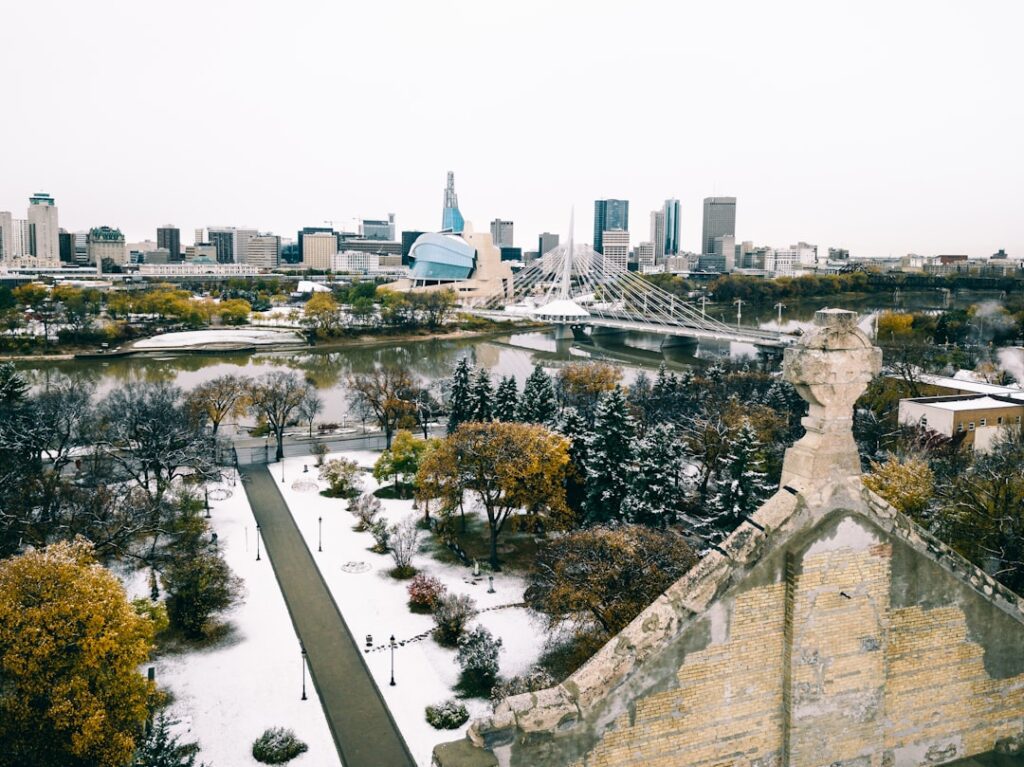
Winnipeg, Canada’s Stunning History, Art & Northern Lights (2025)
What if one of North America’s most significant historical intersections was also a world-class arts capital? Winnipeg proves this is true. As the historic heart of the Métis Nation and the “Gateway to the West,” this city at the forks of the Red and Assiniboine rivers was once the continent’s busiest fur trading hub. Today, that same crossroads energy fuels a cultural scene so vibrant it boasts more live music venues per capita than any other Canadian city. You’ll find a place where Indigenous heritage, architectural grandeur, and a fiercely independent arts spirit converge under vast prairie skies.
Why Winnipeg, Canada Stands Out

Aerial view of city buildings during night time, Winnipeg, Canada
- Historic Architecture: The 1914 Manitoba Legislative Building is a neoclassical marvel filled with Masonic symbolism, including the famous Golden Boy statue.
- Cultural Scene: The Winnipeg Folk Festival, held each July in Birds Hill Park, is a legendary 5-day celebration of global music and community.
- Local Specialties: You must try a Fat Boy burger—a local diner classic featuring a saucy, seasoned beef patty on a steamed bun, best enjoyed with a side of chili.
Pro Tip: For the best balance of weather, events, and manageable crowds, target the shoulder months of May or September. You’ll catch the tail end of the performing arts season, pleasant temperatures for walking, and far fewer tourists than the peak summer festival rush.
Map of Winnipeg, Canada
Use these interactive maps to explore Winnipeg, Canada and plan your route:
📍 View Winnipeg, Canada on OpenStreetMap
🗺️ Open Winnipeg, Canada in Google Maps
Planning Your Trip: Practical Essentials
Getting There and Around
- By Air: Winnipeg Richardson International Airport (YWG) is served by major carriers like Air Canada, WestJet, and Delta. A taxi to downtown costs a flat rate of $30-$35, while the public 15-Fort Garry bus is just $3. Book flights at Skyscanner for best deals.
- By Train: VIA Rail’s iconic Canadian transcontinental service stops at Winnipeg Union Station, connecting to Toronto and Vancouver. The journey from Toronto takes roughly 36 hours—a classic rail adventure. Reserve tickets at Trainline or the national railway website.
- By Car: Winnipeg is a major highway junction at the crossroads of the Trans-Canada Highway (East-West) and Highway 75 (North-South to the US). Downtown parking can be pricey; your best bet is using parkades ($10-$15/day). Compare car rentals at RentalCars.com.
- Local Transport: Winnipeg Transit buses are comprehensive. A single fare is $3.15, but savvy visitors get the $6.70 day pass for unlimited travel. The downtown area, The Forks, and Exchange District are very walkable. Check official city transport websites for passes and schedules.
Best Time to Visit
Winnipeg is a city of extremes, offering distinct charms in every season. Summer is for festivals and patio life, winter for cozy cultural pursuits and potential aurora sightings, while the shoulder seasons provide a quiet, comfortable urban exploration.
| Season | Weather | Highlights |
|---|---|---|
| Summer (Jun–Aug) | Warm, 20°C to 26°C (68°F-79°F), long sunny days, occasional thunderstorms. | Peak festival season (Folk Fest, Fringe), bustling patios at The Forks, river walks. High crowds and hotel rates. |
| Winter (Dec–Feb) | Very cold, -10°C to -20°C (14°F to -4°F), often dipping lower. Snowy and crisp. | Festival du Voyageur (Feb), skating on the Red River Mutual Trail, cozy museum days. Chance to see Northern Lights on city outskirts. |
| Shoulder (Apr–May/Sep–Oct) | Mild, 5°C to 15°C (41°F-59°F), pleasant for walking, unpredictable rain. | Fewer crowds, lower prices, beautiful fall colors in Assiniboine Park, spring arts openings. Ideal for city sightseeing. |
Budgeting for Winnipeg, Canada

Aerial view of green grass field, Winnipeg, Canada
| Category | Budget | Mid-range | Luxury |
|---|---|---|---|
| Accommodation | Hostel/Dorm: $35-$50, Budget Hotel: $90-$120 | Boutique Hotel/B&B: $150-$220 | Historic Luxury Hotel: $280-$400+ |
| Meals | Food truck/Diner: $8-$15 per meal | Restaurant: $20-$40 per meal | Fine dining tasting menu: $80-$120+ |
| Transport | Bus Day Pass: $6.70 | Taxis/Rideshare: $15-$25 per trip | Private Car Rental: $70+/day |
| Activities | Many free museums, parks, The Forks | Paid museum entry: $10-$20, Guided Tour: $30-$50 | Private cultural tours, VIP festival passes |
| Daily Total | $70-$100 | $180-$280 | $450+ |
Top Attractions and Must-See Sights
| Attraction | Description | Hours | Entry Fee |
|---|---|---|---|
| The Forks National Historic Site | A 6,000-year-old meeting place at the river confluence, now a vibrant market, park, and cultural hub. | Market: 9am-9pm daily; grounds 24/7 | Free (Market & Grounds) |
| Canadian Museum for Human Rights | An architectural marvel and the only museum in the world dedicated to human rights education. | Wed-Sun 10am-5pm (extended in summer) | $18 Adult |
| Assiniboine Park & Zoo | Home to the Journey to Churchill exhibit, featuring polar bears and other Arctic species in immersive habitats. | Park: 9am-dusk; Zoo: 9am-5pm (summer 9am-7pm) | Park: Free; Zoo: $24.95 Adult |
| The Exchange District National Historic Site | Over 30 blocks of stunning early 20th-century architecture, now housing galleries, theatres, and chic restaurants. | Public streets always open; business hours vary | Free (Walking) |
3-Day Itinerary: Winnipeg, Canada’s Highlights & Hidden Gems
Day 1: Historic Heart & Culinary Crossroads
- Morning (9 AM): Start at The Forks Market. Grab a coffee from Fools & Horses and explore the indoor market’s artisan shops. Climb the Tower for a 360-degree view of the rivers.
- Afternoon (12 PM): Walk across the Esplanade Riel pedestrian bridge to St. Boniface, Winnipeg’s French Quarter. Visit the stunning St. Boniface Cathedral ruins and the adjacent museum ($8). For lunch, locals swear by the croque-monsieur at Resto Gare.
- Evening (6 PM): Return to The Forks for dinner at Passero in the Johnston Terminal, known for its creative, locally-sourced Italian small plates. End the night with a stroll along the riverwalk.
Day 2: Arts, Architecture & Awe
- Morning (10 AM): Dive into the Exchange District. Take a guided walking tour with Exchange District Biz ($15) to learn about the terracotta architecture. Pop into the Winnipeg Art Gallery-Qaumajuq to see the world’s largest public collection of contemporary Inuit art ($18).
- Afternoon (1 PM): Lunch at Clementine for their famous creative brunch dishes (try the shakshuka). Then, visit the Canadian Museum for Human Rights (book timed tickets online). Allow at least 3 hours to fully engage with the powerful exhibits.
- Evening (7 PM): Enjoy pre-theatre dining at Deer + Almond, a trendy spot in the Exchange. Then, catch a show at the Royal Manitoba Theatre Centre or a concert at the Burton Cummings Theatre.
Day 3: Parks, Polar Bears & Local Legends
- Morning (9 AM): Take the 10 bus or a 15-minute drive to Assiniboine Park. Explore the beautiful English Garden and Leo Mol Sculpture Garden. Then, head into the Assiniboine Park Zoo to visit the majestic polar bears in the Journey to Churchill exhibit ($24.95).
- Afternoon (1 PM): Have lunch at the park’s The Park Cafe. Then, travel to the historic neighbourhood of Wolseley for a coffee at Thom Bargen. Browse the independent shops along Westminster Avenue.
- Evening (6 PM): For your final dinner, experience a true Winnipeg institution: Rae’s Bistro on Academy Road. Afterwards, if it’s summer, catch a Winnipeg Goldeyes baseball game at Shaw Park downtown. In winter, opt for hot drinks and board games at a local cafe like Little Sister Coffee Maker.
Cultural Insights & Etiquette
- Language: English is predominant. In St. Boniface, you’ll hear French. Greetings in Michif (the Métis language) like “Taanishi” (Hello) are appreciated. A simple “Thank you” is always “Merci.”
- Customs: Winnipeg has a strong Indigenous and Métis presence. Acknowledge you are on Treaty 1 territory and the homeland of the Métis Nation. It’s respectful to learn a bit about this history. The city is also famously friendly—don’t be surprised by casual conversations with strangers.
- Tipping: Standard across Canada: 15-20% in sit-down restaurants, $1-$2 per drink for bartenders, a few dollars for taxi drivers. Tip tour guides 10-15% if you enjoyed the service.
- Dress Code: Casual but practical. Winters demand serious gear: a heavy parka, insulated boots, hat, and gloves are non-negotiable. Summers are casual; smart-casual attire is fine for most theatres and nicer restaurants.
- Business Hours: Most shops are open 10am-6pm, Monday-Saturday, with limited Sunday hours (often 12-5pm). Restaurants typically serve lunch 11:30am-2pm and dinner from 5pm. Major holidays (Christmas, New Year’s Day, Canada Day) see most businesses closed.
Where to Eat: Winnipeg, Canada’s Best Bites
Winnipeg’s food scene is a delicious reflection of its heritage: Ukrainian, Polish, Indigenous, and French influences blend with prairie staples. You’ll find everything from innovative fine dining to legendary, no-frills comfort food joints where the locals queue up.
Must-Try Local Specialties
- Fat Boy Burger: A Winnipeg diner icon. It’s a thin, well-seasoned patty with a specific sauce (often a tangy, meaty chili-like topping), served on a steamed bun. Head to VJ’s Drive Inn or Junior’s on St. Mary’s Road for the authentic experience.
- Perogies: A legacy of the city’s strong Ukrainian community. For homemade-style, Seine River Café in St. Boniface is a favorite. For a modern twist, try the braised short rib perogies at Feast Café Bistro, which highlights Indigenous fusion cuisine.
- Goldeye: A smoked fish from Lake Winnipeg, often served as an appetizer. The best place to try it is at The Forks Market, where vendors serve it on crackers or in dips.
Restaurant Recommendations by Budget
| Type | Restaurant | Specialty | Price Range |
|---|---|---|---|
| Budget | Boon Burger (Exchange District) – All-vegan burger joint | Famous Faux Bacon Cheeseburger & sweet potato fries | $10-$15 per meal |
| Mid-range | Segovia (Wolseley) – Rustic Spanish tapas | Small plates like patatas bravas, grilled octopus, and paella | $40-$60 per person |
| Fine dining | 529 Wellington (Wellington Crescent) – Classic steakhouse | Impeccable steaks, extensive wine list, legendary soufflés | $100+ per person |
Where to Stay
Winnipeg’s best accommodations are clustered in a few key areas: downtown for proximity to major sights, The Exchange for historic charm, and Corydon Avenue for a vibrant, village-like feel. Compare prices and book at Booking.com or Airbnb for apartments.
Best Neighborhoods for Accommodation
- Downtown/The Forks: The most convenient location. You’re within walking distance of the CMHR, The Forks, and the arena district. Pros: Central, walkable. Cons: Can be quiet at night outside of event nights. Suits: First-time visitors and business travelers.
- The Exchange District: Full of character in heritage buildings. This is the arts and nightlife hub, with galleries, theatres, and top restaurants on your doorstep. Pros: Incredible atmosphere, great dining. Cons: Can be noisy on weekend nights. Suits: Culture lovers and nightlife seekers.
- Corydon Village: Known as “Little Italy,” this strip is lined with cafes, gelato shops, and restaurants. It has a lively, local, and slightly bohemian vibe. Pros: Great local flavor, excellent food. Cons: Requires a bus or short drive to downtown sights. Suits: Foodies and those wanting a neighborhood feel.

A brick patio with a pergolated roof and white flowers in the foreground, Winnipeg, Canada
FAQs: Your Winnipeg, Canada Questions Answered
1. Is Winnipeg, Canada safe at night?
Like any mid-sized city, Winnipeg has areas that are safer than others. The main tourist areas—The Forks, Exchange District, Corydon Avenue, and Osborne Village—are generally safe at night with normal urban awareness. It’s advisable to stick to well-lit, populated streets and use common sense. Taxis or rideshares are recommended for longer distances after dark.
2. What currency is used and are credit cards accepted?
Canada uses the Canadian Dollar (CAD). Credit cards (Visa, MasterCard) are widely accepted almost everywhere, including taxis and most market stalls. It’s still wise to carry some small bills and coins for tips, farmers’ markets, or very small businesses. U.S. dollars are not commonly accepted.

