
Vinales, Cuba’s Best Mogotes, Tobacco & Timeless Traditions (2025)
What if you could walk through a landscape that time forgot? Vinales, Cuba proves that some places remain beautifully unchanged, with limestone mogotes dating back 160 million years and tobacco farming methods preserved since the 1800s. While Havana pulses with energy, here you’ll find farmers plowing with oxen and rolling cigars exactly as their great-grandfathers did. This UNESCO World Heritage site offers one of the Caribbean’s most authentic cultural experiences, where the rhythm of rural Cuba continues undisturbed by modern pressures.
Why Vinales, Cuba Stands Out

Green trees and grass field near mountain during daytime, Vinales, Cuba
- Historic Architecture: The 1909 Casa de la Cultura showcases traditional wooden colonial architecture with ornate fretwork and wraparound porches.
- Cultural Scene: The weekly guateque festival features spontaneous music, dancing, and storytelling passed down through generations.
- Local Specialties: You must try guarapo – fresh sugarcane juice pressed before your eyes and mixed with lime.
Pro Tip: Visit between December and February when tobacco harvesting is in full swing and the weather is perfect for hiking – you’ll avoid both the summer crowds and rainy season while seeing Vinales at its most active.
Map of Vinales, Cuba
Use these interactive maps to explore Vinales, Cuba and plan your route:
📍 View Vinales, Cuba on OpenStreetMap
🗺️ Open Vinales, Cuba in Google Maps
Planning Your Trip: Practical Essentials
Getting There and Around
- By Air: Fly into Juan Gualberto Gómez Airport (VRA) in Varadero, served by Air Canada, Sunwing, and European carriers. Book flights at Skyscanner for best deals.
- By Train: No direct rail service to Vinales – the nearest station is in Pinar del Río, 30 minutes away. Reserve tickets at Trainline or the national railway website.
- By Car: Drive from Havana via Autopista Nacional (2.5 hours) – rental cars available but book months ahead. Compare car rentals at RentalCars.com.
- Local Transport: Horseback ($15-20/day), bicycle rentals ($5/day), or collective taxis ($5-10 per short trip) are your best options for exploring the valley.
Best Time to Visit
Vinales enjoys a tropical climate with distinct dry and wet seasons – savvy travelers target the dry winter months for optimal hiking and tobacco farm access.
| Season | Weather | Highlights |
|---|---|---|
| Summer (Jun–Aug) | 28-32°C, high humidity, afternoon thunderstorms | Lush green landscapes, fewer tourists, but some trails may be muddy |
| Winter (Dec–Feb) | 22-26°C, low humidity, minimal rainfall | Perfect hiking weather, tobacco harvesting season, peak visibility for photography |
| Shoulder (Apr–May/Sep–Oct) | 25-29°C, occasional brief showers | Best value accommodation, comfortable temperatures, flowering season in September |
Budgeting for Vinales, Cuba

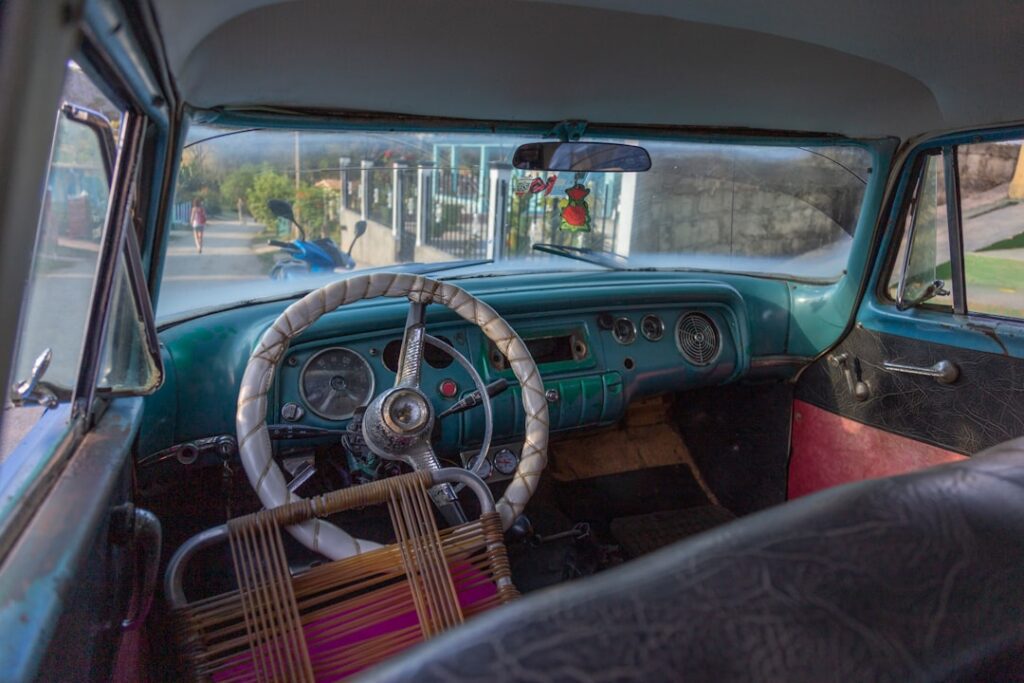
Green classic car on road during daytime, Vinales, Cuba
| Category | Budget | Mid-range | Luxury |
|---|---|---|---|
| Accommodation | $15-25 (casa particular) | $40-60 (boutique B&B) | $100+ (luxury finca) |
| Meals | $5-8 (local paladares) | $12-20 (restaurant meals) | $30+ (farm-to-table dining) |
| Transport | $5 (bicycle rental) | $20 (horseback tour) | $50 (private taxi driver) |
| Activities | $0-10 (hiking, village walks) | $15-25 (cigar farm tours) | $40+ (private guided experiences) |
| Daily Total | $25-45 | $75-110 | $180+ |
Top Attractions and Must-See Sights
| Attraction | Description | Hours | Entry Fee |
|---|---|---|---|
| Valle de Vinales Lookout | Breathtaking panoramic view of the mogotes and tobacco fields from elevated vantage point | 24/7 | Free |
| Indian Cave (Cueva del Indio) | Boat ride through underground river system with spectacular limestone formations | 9 AM-5 PM | $5 CUC |
| Mural de la Prehistoria | Giant 120-meter cliff painting depicting evolution, created in 1961 | 8 AM-6 PM | $3 CUC |
| Finca Agroecologica El Paraiso | Organic farm with incredible valley views and legendary farm-to-table lunches | 10 AM-8 PM | Free (pay for meal) |
3-Day Itinerary: Vinales, Cuba’s Highlights & Hidden Gems
Day 1: Valley Exploration & Tobacco Culture
- Morning: 7:30 AM horseback riding tour ($20) through tobacco fields – your guide will explain the entire cigar-making process from planting to rolling.
- Afternoon: 12:30 PM lunch at Finca Agroecologica El Paraiso ($12) featuring their famous roasted pork and 25-dish vegetable buffet with panoramic valley views.
- Evening: 6 PM sunset at Los Jazmines lookout followed by dinner at Balcon del Valle specializing in ropa vieja and live traditional music.
Day 2: Caves & Countryside
- Morning: 8 AM visit to Cueva del Indio ($5) before the crowds arrive – the boat through illuminated caverns reveals stunning stalactite formations.
- Afternoon: 1 PM hike to Palenque de los Cimarrones, a historic maroon community site, then lunch at Casa de Don Tomas with their signature criollo chicken.
- Evening: 7 PM cigar-rolling demonstration at your casa particular ($10) where you’ll learn to identify quality tobacco leaves and roll your own cigar.
Day 3: Local Life & Departure
- Morning: 7 AM bicycle rental ($5) to visit the morning farmers market and coffee plantation where you’ll taste freshly roasted Cuban coffee.
- Afternoon: 12 PM tobacco farm visit to see the drying barns and purchase authentic farm-rolled cigars at half the Havana price.
- Evening: 6 PM farewell dinner at El Olivo with their famous mojitos and lemon chicken before your evening transfer back to Havana.
Cultural Insights & Etiquette
- Language: Basic Spanish phrases like “buenos días” and “gracias” go far – locals appreciate the effort even if your pronunciation isn’t perfect
- Customs: Always ask permission before photographing people – a simple “¿Foto?” with a smile usually gets warm approval
- Tipping: Tip 10% in restaurants, $1-2 for guides, and small gifts like soap or school supplies are appreciated by families
- Dress Code: Casual but modest – lightweight fabrics, covered shoulders for village visits, sturdy shoes for farm terrain
- Business Hours: Most shops open 9 AM-5 PM with siesta closure 1-3 PM, Sunday limited hours, always confirm appointments
Where to Eat: Vinales, Cuba’s Best Bites
Vinales dining revolves around paladares (family-run restaurants) serving criollo cuisine – expect generous portions of rice, beans, roasted meats, and fresh tropical fruits sourced from nearby farms.
Must-Try Local Specialties
- Ropa Vieja: Shredded beef in tomato sauce with rice – best at Balcon del Valle where they slow-cook it for 4 hours
- Tostones: Twice-fried plantain slices with garlic mojo – street vendors near the baseball stadium make them fresh
- Cerdo Asado: Whole roasted pork marinated in sour orange – Finca Agroecologica’s version feeds 4 people with all the fixings
Restaurant Recommendations by Budget
| Type | Restaurant | Specialty | Price Range |
|---|---|---|---|
| Budget | El Campesino (town center) | Massive $6 lunch plates with fresh juice | $5-8 |
| Mid-range | Casa de Don Tomas (main street) | Traditional Cuban classics with live music | $12-18 |
| Fine dining | El Olivo (valley road) | Fusion cuisine with organic ingredients | $25-35 |
Where to Stay
Most visitors prefer casas particulares (licensed homestays) over hotels – you’ll get authentic hospitality, home-cooked meals, and invaluable local advice. Compare prices and book at Booking.com or Airbnb for apartments.
Best Neighborhoods for Accommodation
- Vinales Town Center: Walking distance to restaurants and shops, but can be noisy – perfect for first-time visitors wanting convenience
- Valley Road Casas: 10-15 minute walk from town with stunning mogote views and peaceful atmosphere – ideal for photographers and nature lovers
- Outlying Fincas: Working farms offering complete rural immersion – best for travelers seeking authenticity over convenience

Man in brown cowboy hat sitting on blue floor, Vinales, Cuba
FAQs: Your Vinales, Cuba Questions Answered
1. Is Vinales, Cuba safe at night?
Extremely safe – the close-knit community looks out for visitors. Still, take normal precautions like using a flashlight on unlit country roads and securing valuables in your accommodation.
2. What currency is used and are credit cards accepted?
Cuba uses two currencies: Cuban Convertible Peso (CUC) for tourists and Cuban Peso (CUP) for locals. Bring enough cash (Euros or Canadian dollars avoid extra fees) – credit cards from US banks don’t work, and ATMs are unreliable.
3. How do I get from the airport to Vinales?
From Varadero Airport, take a pre-booked taxi ($80-100, 2.5 hours) or shuttle bus. From Havana, Viazul bus ($12, 3 hours) or collective taxi ($25 per person). Book airport transfers at GetYourGuide for convenience.
4. Do I need to speak the local language?
Basic Spanish helps tremendously in rural Vinales – while some tourism workers speak English, your casa particular host and farmers likely won’t. Download a translation app or bring a phrasebook.
5. What’s the appropriate dress code?
Lightweight, breathable clothing that covers shoulders and knees for village respect. Sturdy walking shoes are essential – leave heels and formal wear behind. A wide-brimmed hat and rain jacket are wise additions.
Final Thoughts: Vinales, Cuba Awaits
Vinales offers something increasingly rare in our connected world: genuine cultural preservation and breathtaking natural beauty untouched by mass tourism. Here, you’re not just observing Cuban life – you’re participating in centuries-old traditions, sharing meals with farming families, and understanding the soul of this remarkable country. Travelers often discover that the simple moments – sipping coffee on a porch at sunrise, watching tobacco leaves flutter in the breeze, exchanging smiles with local children – become their most cherished memories. Your best bet is to embrace the slower pace, engage with the welcoming community, and let Vinales work its timeless magic on you. Don’t miss the early morning mist rising between the mogotes – it’s a sight that will stay with you long after you’ve returned home.

