
Ural Mountains, Russia’s Amazing Frontiers, Folklore & Geological Wonders (2026)
Ask locals about the Ural Mountains, and they’ll tell you about the legendary “Mansi Giant,” a mythical stone figure said to guard the secrets of the range. Most guidebooks miss this folklore completely, focusing solely on the “border between Europe and Asia” marker. The reality is a 2,500-kilometer spine of ancient rock, where travelers discover not just a continent’s divide, but a realm of dense taiga, abandoned Soviet-era towns, and a raw, untamed beauty that feels worlds away from Moscow’s bustle.
Why Ural Mountains, Russia Stands Out

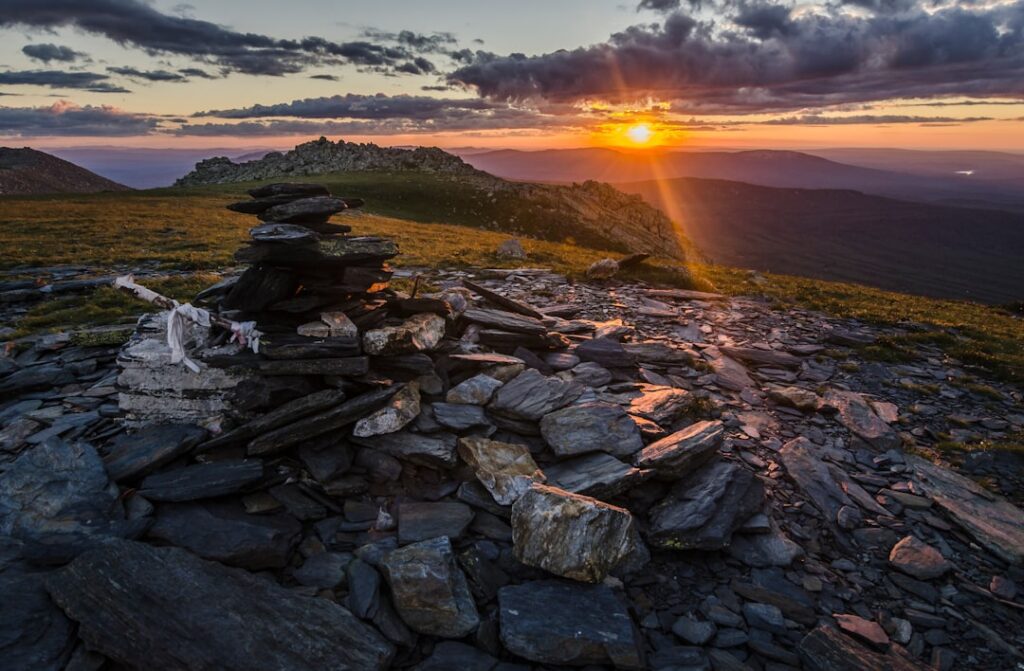
A view of a mountain range at sunset, Ural Mountains, Russia
- Historic Architecture: The Nevyansk Leaning Tower, built in 1725 by the industrialist Demidov family, is shrouded in legends of secret workshops and a mysterious “humming” spire.
- Cultural Scene: The annual “Baba Yaga Festival” in the village of Kukoboy celebrates the famous Slavic forest witch with theatrical performances, crafts, and a giant gingerbread house.
- Local Specialties: You must try Ural pelmeni, hearty Siberian dumplings traditionally stuffed with a mix of three meats (beef, pork, lamb) and served with smetana (sour cream) and vinegar.
Pro Tip: For the best experience with manageable weather and minimal insects, target the “Golden Autumn” period from late August to mid-September, when the taiga erupts in fiery colors, or the crisp, snowy weeks of late February to March for pristine winter sports conditions.
Map of Ural Mountains, Russia
Use these interactive maps to explore Ural Mountains, Russia and plan your route:
📍 View Ural Mountains, Russia on OpenStreetMap
🗺️ Open Ural Mountains, Russia in Google Maps
Planning Your Trip: Practical Essentials
Getting There and Around
- By Air: Major gateways are Koltsovo Airport (SVX) in Yekaterinburg and Bolshoye Savino Airport (PEE) in Perm. Aeroflot, S7, and Ural Airlines offer domestic connections. From SVX, take the Aeroexpress train (30 mins, ~150 RUB) or taxi (~800 RUB) to the city center. Book flights at Skyscanner for best deals.
- By Train: The iconic Trans-Siberian Railway runs through the region. Yekaterinburg is a major stop; the journey from Moscow takes about 26 hours. For regional travel, slower elektrichka (commuter trains) connect towns. Reserve tickets at Trainline or the national railway website.
- By Car: Renting a car (with a reliable 4×4 for remote areas) offers maximum freedom on the M5 and R242 highways. Parking is generally easy and inexpensive outside major cities. Compare car rentals at RentalCars.com.
- Local Transport: In cities like Yekaterinburg, use trams, trolleybuses, and the metro (single ride ~35 RUB). For reaching natural parks, marshrutkas (fixed-route minibuses) are common but schedules can be informal. Check official city transport websites for passes and schedules.
Best Time to Visit
The Urals offer dramatically different experiences each season. Summer is ideal for hiking and lake swimming, while winter transforms the region into a snowy wonderland perfect for skiing and frosty photography. Shoulder seasons provide quieter exploration with stunning natural transitions.
| Season | Weather | Highlights |
|---|---|---|
| Summer (Jun–Aug) | Mild, 15°C to 25°C (59°F-77°F); long days, occasional rain, and mosquitoes in deep forest. | Prime hiking in Taganay National Park, river rafting on the Chusovaya, and visiting open-air museums. Moderate crowds. |
| Winter (Dec–Feb) | Very cold, -10°C to -20°C (14°F to -4°F), often dropping lower. Heavy snowfall and short daylight hours. | World-class skiing at resorts like Bannoye, ice climbing on frozen waterfalls, and the magical “Snegurochka” (Snow Maiden) festivals. Few tourists. |
| Shoulder (Apr–May/Sep–Oct) | Unpredictable; Apr-May sees melting snow (“rasputitsa” mud season), Sep-Oct offers crisp air and 5°C-15°C (41°F-59°F). | September’s golden autumn is spectacular for photography. Fewer crowds, lower prices, but some mountain passes may close by late October. |
Budgeting for Ural Mountains, Russia

Green tree with brown leaves during daytime, Ural Mountains, Russia
| Category | Budget | Mid-range | Luxury |
|---|---|---|---|
| Accommodation | Hostel dorm: 600-1000 RUB/night | 3-star hotel or apartment: 2500-4000 RUB/night | Boutique hotel or ski resort lodge: 6000+ RUB/night |
| Meals | Stolovaya (cafeteria) or street food: 300-500 RUB/meal | Local restaurant with drink: 800-1500 RUB/meal | Fine dining in Yekaterinburg: 2500+ RUB/meal |
| Transport | Public transport & marshrutkas: ~500 RUB/day | Intercity train/taxi & car rental: 1500-2500 RUB/day | Private driver/guided tours: 4000+ RUB/day |
| Activities | Hiking, city museums: 0-1000 RUB/day | National park fees, guided tours: 1500-3000 RUB/day | Heli-skiing, exclusive expeditions: 8000+ RUB/day |
| Daily Total | 2000-3000 RUB | 6000-9000 RUB | 15,000+ RUB |
Top Attractions and Must-See Sights
| Attraction | Description | Hours | Entry Fee |
|---|---|---|---|
| Europe-Asia Obelisk, Yekaterinburg | Stand with one foot in Europe and the other in Asia at this iconic, if kitschy, monument 17km from the city. | Open 24/7 | Free |
| Taganay National Park | A hiker’s paradise of jagged ridges, stone rivers, and mystical peaks like Otkliknoy Greben, offering breathtaking vistas. | Park office 9 AM-6 PM; trails accessible 24/7 | ~150 RUB park ecology fee |
| Ganina Yama Monastery | A serene, wooden monastery complex built on the tragic site where the remains of the last Tsar, Nicholas II, and his family were initially disposed of in 1918. | 7 AM – 9 PM daily | Free (donations welcome) |
| Perm-36 Museum | A sobering, preserved Soviet labor camp that serves as a powerful memorial to the victims of political repression. | 10 AM – 5 PM (Wed-Sun) | ~400 RUB |
3-Day Itinerary: Ural Mountains, Russia’s Highlights & Hidden Gems
Day 1: Yekaterinburg: History & The Continental Divide
- Morning (7-9 AM): Start at the Church on the Blood, built on the site of the Ipatiev House where the Romanovs were executed. The adjacent museum opens at 10 AM, so admire the architecture first.
- Afternoon (12-3 PM): Take a taxi (~800 RUB round-trip) to the Europe-Asia Obelisk. For lunch, head back to city center and try Pelmeni Club on Malysheva Street for their classic Ural pelmeni set (~450 RUB).
- Evening (6-8 PM): Stroll along the City Pond (Plotinka), the city’s birthplace. Enjoy dinner at Dacha restaurant, known for its rustic Russian cuisine and cozy interior—try the borscht and syrniki (~1200 RUB).
Day 2: Into the Southern Urals: Nature & Legends
- Morning (7 AM): Take an early intercity train from Yekaterinburg to Zlatoust (~4 hours, 700 RUB). From there, a pre-booked taxi (~1500 RUB) takes you to the entrance of Taganay National Park.
- Afternoon (12-3 PM): Hike the relatively accessible trail to the Valley of Fairy Tales, a surreal landscape of weathered stone figures. Pack a picnic lunch, as options are limited inside the park.
- Evening (6-8 PM): Return to Zlatoust. For a unique experience, have dinner at Stary Gorod, a restaurant specializing in game dishes like elk steak, reflecting the region’s hunting traditions (~1300 RUB). Overnight in a local guesthouse.
Day 3: Industrial Heritage & The Leaning Tower
- Morning (8 AM): Travel by train from Zlatoust to Nevyansk (~5 hours with a change, ~1000 RUB). The journey itself offers beautiful Ural scenery.
- Afternoon (1-3 PM): Explore the enigmatic Nevyansk Leaning Tower (guided tour ~350 RUB). Legend claims its tilt was intentional, and its spire once housed a secret laboratory. Grab a quick lunch at the nearby Kofeynya u Bashni cafe.
- Evening (6 PM): Return to Yekaterinburg. For a final memorable meal, visit Zhili-Byli, a folk-style restaurant with live music and an extensive menu of Ural and Siberian dishes—don’t miss the venison shashlik (~1500 RUB).
Cultural Insights & Etiquette
- Language: Russian is essential outside major hotels. Learn Cyrillic basics and key phrases: “Spasibo” (Thank you), “Gde tualet?” (Where is the toilet?). Younger urbanites may speak some English.
- Customs: When invited to a home, always bring a small gift (chocolates, flowers—avoid even numbers). Toasting is a serious ritual during meals; wait for the host and maintain eye contact.
- Tipping: Not traditionally expected, but becoming common in cities. Round up the bill or leave 5-10% in restaurants if service was good. Not typical for taxis.
- Dress Code: Practical and warm layers are key. For visiting Orthodox churches, women should cover their heads and shoulders, and men should avoid shorts.
- Business Hours: Shops typically open 9 AM-7 PM, museums often have a day off (often Monday). Many services close for a long lunch (1 PM-2 PM). Major holidays like New Year and May Day see widespread closures.
Where to Eat: Ural Mountains, Russia’s Best Bites
Ural cuisine is hearty, meat-centric, and designed to fuel long winters and physical labor. It’s a fusion of Russian staples with influences from indigenous Mansi and Komi peoples, featuring game, forest berries, mushrooms, and preserved foods. Dining ranges from Soviet-era canteens to modern establishments reinterpreting classics.
Must-Try Local Specialties
- Ural Pelmeni: Smaller and denser than other versions, often served in a clear broth (pokhlyobka) or with butter and vinegar. Try them at dedicated pelmennayas like Pelmennaya No. 1 in Yekaterinburg.
- Shangi: Soft, open-faced yeast buns topped with potato, cottage cheese, or sour cream. A perfect snack found in bakeries and markets like Yekaterininsky Central Market.
- Morozhenoe (Russian Ice Cream): Creamy, dense, and famously delicious even in winter. Look for the Chistaya Liniya brand in kiosks or try a classic plombir at a café.
Restaurant Recommendations by Budget
| Type | Restaurant | Specialty | Price Range |
|---|---|---|---|
| Budget | Stolovaya No. 1 (Yekaterinburg) | Authentic Soviet-era canteen experience with blini, kotleti, and salads. | 300-500 RUB |
| Mid-range | Pashtet (Perm) | Modern takes on Ural game and foraged ingredients in a stylish setting. | 1000-1800 RUB |
| Fine dining | Tiffon (Yekaterinburg) | Elegant European-Russian fusion with an extensive wine list and impeccable service. | 2500+ RUB |
Where to Stay
Your base depends on your interests: Yekaterinburg for urban culture and transport links, smaller towns like Zlatoust or Miass for direct mountain access, or specialized ski resorts. Booking ahead is wise, especially during festivals. Compare prices and book at Booking.com or Airbnb for apartments.
Best Neighborhoods for Accommodation
- Yekaterinburg City Center: Close to major sights, restaurants, and transport hubs. Ideal for first-time visitors and those using trains. Can be noisy. Suits urban explorers.
- Zlatoust/Taganay Gateway Area: Small-town atmosphere at the foot of the mountains. Offers guesthouses and simple hotels. Perfect for dedicated hikers and nature lovers seeking early trail access.
- Bannoye Lake/Abzakovo: Resort areas with modern hotels, ski-in/ski-out access, and spa facilities. Best for winter sports enthusiasts and those seeking a relaxed, scenic retreat, but remote from cultural sites.

A mountain range with clouds, Ural Mountains, Russia
FAQs: Your Ural Mountains, Russia Questions Answered
1. Is Ural Mountains, Russia safe at night?
City centers like Yekaterinburg are generally safe for travelers at night using common sense. However, venturing into remote natural areas or unlit outskirts after dark is not recommended due to wildlife (including bears in deep taiga) and limited emergency services. Always inform someone of your hiking plans.
2. What currency is used and are credit cards accepted?
The Russian Ruble (RUB) is the currency. Credit/debit cards (Visa, Mastercard) are widely accepted in cities and tourist areas. However, in small towns, rural guesthouses, and for marshrutkas, cash is king. Always carry sufficient rubles. ATMs are readily available in urban

